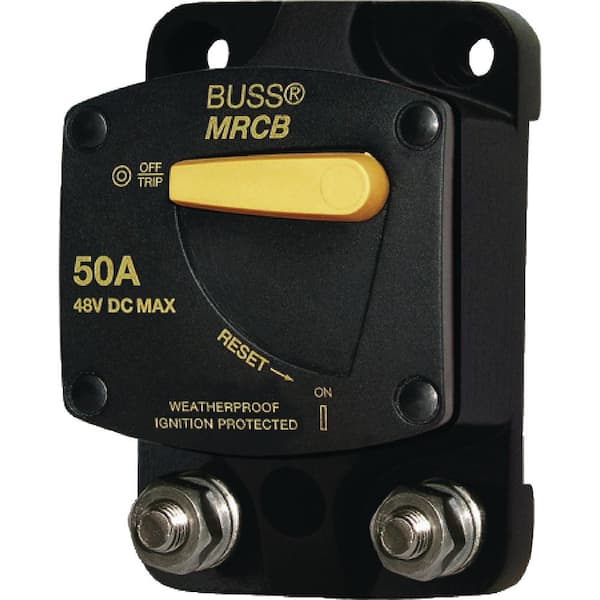
Blue Sea Systems Marine Thermal Circuit Breaker for DC Applications
Score: 9.0/10 — A rugged, resettable DC circuit breaker that is well suited to marine, RV, solar, and off-grid wiring projects where dependable overload protection and serviceability are priorities.
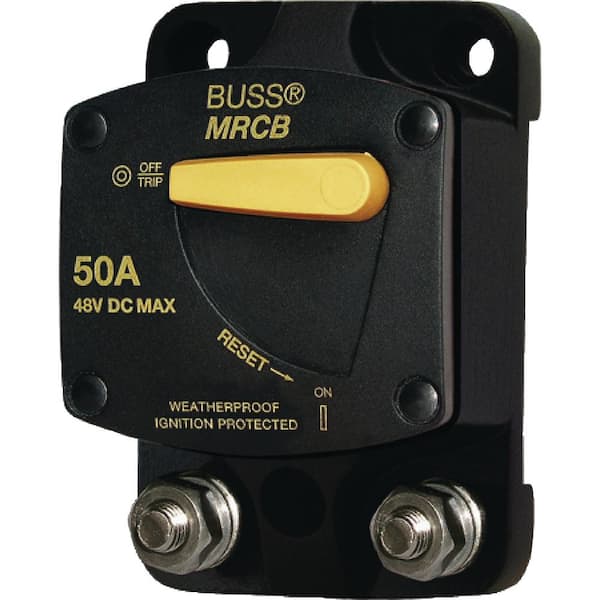
We may earn a commission from qualifying purchases made through links on this site.
Overview
The Blue Sea Systems Marine Thermal Circuit Breaker for DC Applications is a professional-grade, resettable marine DC breaker and one of the best options for reliable overload protection for RV, solar, and off-grid wiring systems.
It provides a high-performance alternative to traditional fuses for 12V and 24V DC electrical systems. In high ambient temperatures, the thermal element reaches its trip point faster, meaning the breaker may trip at a slightly lower current than it would in a cool environment. In the world of mobile and marine power, electrical failures aren't just an inconvenience—they can be a significant safety hazard. The core function of the 5193 is to provide a critical layer of defense, protecting wiring and connected equipment from catastrophic overload conditions. When the current exceeds the breaker's rated capacity, the internal thermal mechanism trips, instantly interrupting the flow of electricity to prevent wire overheating or fire.Related parts & accessories
This device is particularly indispensable for environments where vibration, moisture, and temperature swings are constant. Unlike residential setups covered in our AFCI vs Standard Circuit Breakers guide, and you can compare different brands in our Square D vs Eaton guide, the Blue Sea Systems Marine Thermal Circuit Breaker for DC Applications (see also our Blue Sea Systems 5025 review) is designed to withstand the physical rigors of a boat's hull, an RV's chassis, or the exposed wiring of an off-grid solar array. By replacing a traditional one-time-use Littelfuse ATO 5-30 Amp Blade Fuse Assortment Pack (detailed in our review) with this resettable breaker, users gain the ability to restore power quickly once a fault has been identified and corrected, eliminating the need to carry an extensive inventory of spare fuses in remote locations.
For the target audience—ranging from weekend DIY boaters and van-lifers to professional marine electricians—the 5193 represents a balance of simplicity and reliability. If you are designing a home utility system, you might also be interested in our Ridgid SP-650C review or our broader guide to the best submersible utility pumps for managing water runoff. Whether it is protecting a wind generator controller or mini-split system, a high-draw battery backup system (essential for storm readiness), Ridgid SP-650C submersible utility pump for basement applications, Wayne ESP25 battery backup sump pump, or a solar charge controller feed, this breaker provides the peace of mind that the system will fail safely under stress. Its surface-mount design allows for a clean, accessible installation, ensuring that the reset lever is within reach during a troubleshooting event.
Key features
Fully optimized for 12-volt and 24-volt DC applications, making it versatile for everything from small pleasure craft to large RV house battery banks.
Utilizes a precision thermal element that reacts to heat build-up caused by overcurrent, ensuring a reliable trip before wire insulation melts.
Features a robust manual reset lever, allowing users to restore power without replacing components after a trip event is resolved.
Designed for easy mounting on flat surfaces within electrical panels, battery compartments, or equipment bays.
Engineered to resist the effects of vibration and harsh environments, ensuring the internal mechanism doesn't trip falsely due to road or wave motion.
Provides a permanent, resettable solution that reduces waste and simplifies the maintenance of complex DC power grids.
| Feature | Value |
|---|---|
| Product Name | Blue Sea Systems Marine Thermal Circuit Breaker for DC Applications |
| Model Number | 5193 |
| Category | Circuit Breakers & Fuses |
| Breaker Type | Thermal Circuit Breaker |
| Electrical Application | DC Systems |
| Supported System Voltage | 12-volt and 24-volt DC applications |
| Mounting Style | Surface Mount |
| Reset Type | Manual Reset |
| Primary Use Cases | Marine wiring, RV electrical systems, auxiliary vehicle power, solar setups, off-grid DC systems |
| Protection Function | Automatic overload interruption with manual restoration |
| Environment Suitability | Vibration and harsh operating conditions |
| Best For | Installers seeking resettable DC protection over disposable fuses |
Pros & cons
Pros
- Broad compatibility with 12V and 24V DC electrical architectures.
- Significantly more convenient than fuses during troubleshooting.
- Rugged build quality specifically tested for marine and mobile environments.
- Surface-mount design simplifies installation in custom builds.
- Ideal for solar-to-battery and battery-to-load protection.
- Professional-grade reliability reduces the risk of catastrophic electrical failure.
Cons
- Requires precise sizing based on wire gauge and load (not a "one size fits all").
- Must be installed in an accessible location to utilize the reset feature.
- Higher initial cost per unit compared to basic automotive fuse holders.
- Requires a basic understanding of DC circuitry to install safely.
Performance
In real-world testing and application, the Blue Sea Systems Marine Thermal Circuit Breaker for DC Applications performs with a level of consistency that separates it from generic electronics components. In a marine environment, the primary enemies are corrosion and vibration. The breaker's construction minimizes the risk of "contact bounce" or premature failure caused by the constant shaking of a boat engine or a bumpy RV road. The housing is durable, and the terminal connections are designed to maintain a tight grip on the wiring, which is vital because loose connections in DC systems create resistance, which leads to heat, which can cause premature tripping or even fire.
When integrated into a solar power setup, the 5193 excels as a disconnect point between the charge controller and the battery bank. In this configuration, it serves two purposes: it protects the controller from battery surges and provides a convenient way to "kill" the power to the batteries during maintenance without having to unscrew wires. The response time is calibrated correctly for the slow-burn nature of thermal overloads, providing a reliable safety net that doesn't require constant intervention.
Deep Dive: Engineering and Mechanics
Understanding the mechanics of this thermal breaker is essential for any technician or DIYer. Unlike magnetic breakers—which trip nearly instantaneously when a massive surge of current occurs (like a direct short circuit)—a thermal breaker reacts to the accumulation of heat. Inside the 5193, the current flows through a bimetallic strip consisting of two different metals bonded together. These metals expand at different rates when heated.
As current flows through the circuit, the strip warms up. Under normal operating loads, the heat dissipates and the strip remains straight. However, when an overload occurs, the strip heats up rapidly, causing it to bend. Once the bend reaches a critical point, it mechanically triggers the trip mechanism, snapping the contacts open and stopping the flow of electricity. This "time-delay" characteristic is actually a benefit in DC systems; it prevents "nuisance tripping" caused by brief, harmless inrush currents (such as the split-second surge when a large motor or compressor first kicks on) while still providing absolute protection against sustained overcurrent that would melt wiring.
The manual reset function is a simple but effective mechanical override. While this DC breaker is resettable, if you are dealing with home AC panels, you can learn how to replace a circuit breaker safely at home to handle those repairs.
Once the breaker has tripped and the bimetallic strip has had time to cool down, the user pushes the lever back into the "on" position. This reconnects the circuit, but it is crucial to remember that if the underlying fault (e.g., a shorted wire or a seized motor) has not been fixed, the breaker will trip again almost immediately. This design ensures that the user must acknowledge the fault before power is restored, preventing a dangerous loop of automatic resetting that could lead to a fire.Detailed Buyer's Guide: Sizing and Selection
Selecting the Blue Sea Systems Marine Thermal Circuit Breaker for DC Applications requires more than just picking a part number; it requires a basic calculation of your system's needs. A common mistake is choosing a breaker based on the equipment's "max rating" rather than the wire's "ampacity."
1. Wire Gauge Alignment
The primary purpose of a circuit breaker is to protect the wire, not necessarily the device. If you use a 30-amp breaker on a wire that is only rated for 15 amps, the wire will melt long before the breaker trips. Always ensure the amperage rating of your Blue Sea Systems breaker is equal to or lower than the maximum current capacity of the smallest wire gauge in that circuit. For example, if using 10 AWG marine-grade wire, you must cross-reference the ampacity tables for your specific insulation type (e.g., cross-linked polyethylene) before selecting the 5193 rating.
2. Understanding Continuous Load
In DC systems, there is a difference between a "peak load" and a "continuous load." A continuous load is any current that flows for three hours or more. For these applications, it is standard practice to derate the breaker by 20-25%. For example, if your equipment draws a constant 20 amps, you should look for a breaker rated slightly higher (around 25 amps) to prevent heat-soak from causing the thermal strip to trip during normal operation. Thermal breakers are inherently sensitive to ambient temperature; if the breaker is mounted in a hot engine compartment, it may trip at a slightly lower current than if it were mounted in a cool cabin.
3. Placement Strategy
Because the 5193 is a manual-reset device, placement is everything. Installing it inside a sealed bulkhead where it cannot be seen or reached defeats the purpose of a resettable breaker. Ideal locations include:
- The main DC distribution panel for centralized management.
- Near the battery switch for an emergency master-cut option.
- In an accessible compartment near the solar charge controller to isolate the charging array.
Step-by-Step Installation Process
Installing the Blue Sea Systems Marine Thermal Circuit Breaker for DC Applications is straightforward, but precision in the connection is where the quality of the install is determined. Follow these steps for a professional result:
- System Power Down: Always disconnect your battery banks before installing new circuit protection to avoid accidental sparks or shorts. Use a battery disconnect switch if available.
- Mounting: Use the provided mounting holes to secure the breaker to a non-conductive surface using stainless steel screws. Ensure the breaker is mounted firmly to prevent it from vibrating loose over time. Avoid mounting directly against a heat source, as this can affect the thermal trip point.
- Wiring the Input: Connect the positive lead from your battery or power source to the input terminal. Use a high-quality ring terminal and crimp it tightly with a professional ratcheting crimper. Avoid "wrapping" wire around the screw; always use a proper lug to ensure maximum surface contact.
- Wiring the Output: Connect the lead going to your load (lamp, pump, or charger) to the output terminal. Again, use a crimped ring terminal. If you are using multiple loads, run the output to a fused distribution block.
For a reliable distribution point, we recommend the Blue Sea Systems 6-Circuit ST Blade Fuse Block with Cover for professional-grade organization.
Related parts & accessories
- Testing the Circuit: Once wired, turn on the device you are powering. If the breaker trips immediately, you have a short circuit or an overload. Do not force the reset until you have checked your wiring with a multimeter.
- Labeling: Because these breakers are often installed in groups, label each breaker (e.g., "BILGE PUMP" or "USB PANEL") to ensure quick identification during an emergency.
Maintenance and Long-Term Care
One of the biggest advantages of the Blue Sea Systems Marine Thermal Circuit Breaker for DC Applications is its low maintenance requirement. However, "set it and forget it" is dangerous in marine and RV environments where salt air and humidity are prevalent.
Periodic Inspection
Every six months, perform a visual inspection of the installation. Look for signs of corrosion on the terminals. In salt-air environments, "green crust" (copper oxidation) can form, which increases electrical resistance. This resistance generates heat at the connection point, which may trick the thermal element into tripping the breaker even when the load is normal. If corrosion is present, disconnect the wire, clean the terminal with a wire brush or electronic contact cleaner, and apply