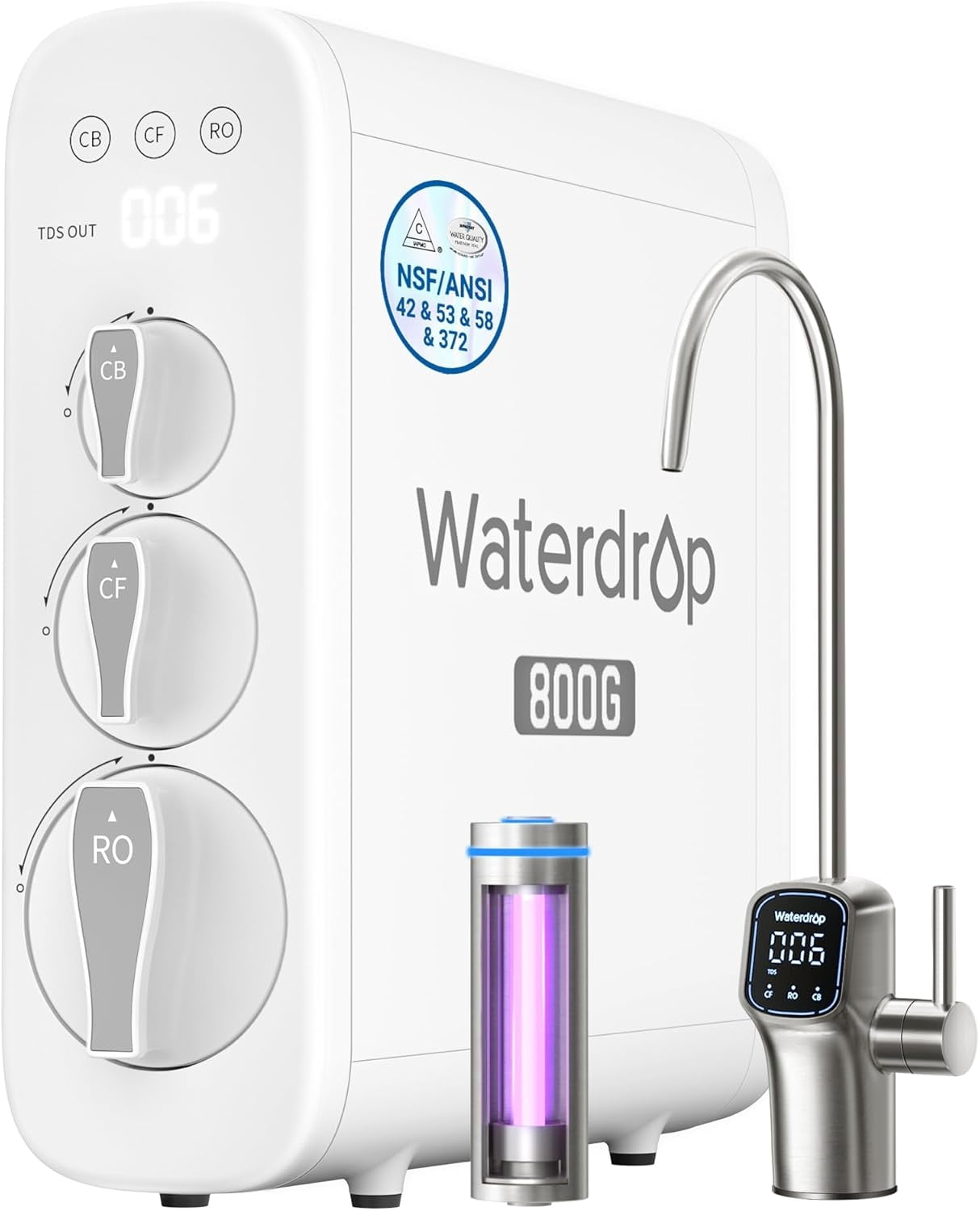
If you are wondering if Waterdrop's Waterdrop Tankless Under-Sink Reverse Osmosis System 800 GPD is worth it, the answer depends on your need for flow rate and space. As a high-capacity tankless option, it eliminates the bulky storage tank while maintaining a rapid 800 GPD output. This guide looks at whether this high-flow system is worth buying, who it suits best, and the technical trade-offs to know before installation.
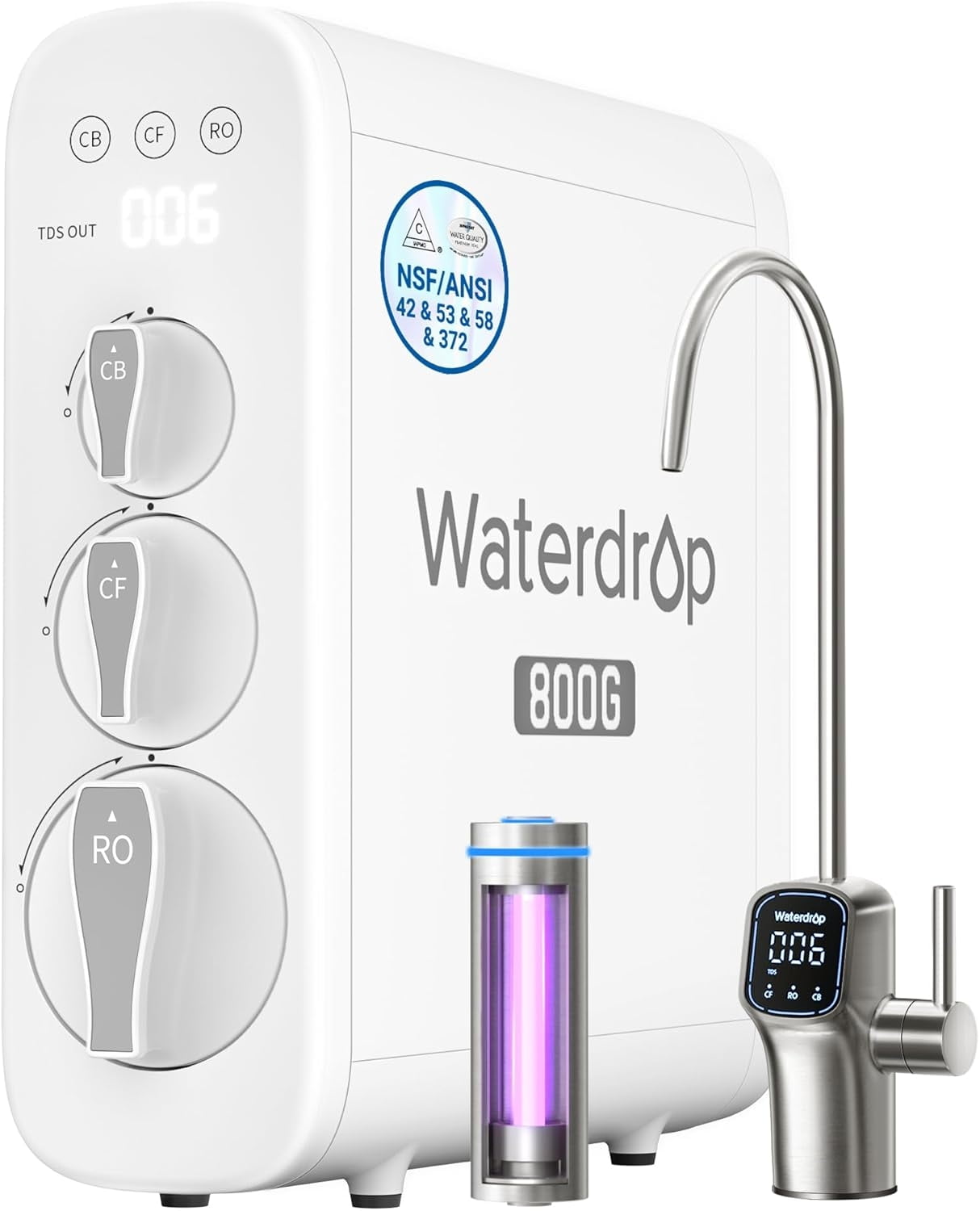
Best Overall: Waterdrop Tankless Under-Sink Reverse Osmosis System 800 GPD
Score: 9.1/10. A strong pick for households that want fast-flowing, tankless reverse osmosis filtration with a compact footprint, straightforward filter changes, and long-term convenience compared with bottled water or Brita Standard 10-Cup Pitchers.
Waterdrop Tankless Under-Sink Reverse Osmosis System 800 GPD
The Waterdrop Tankless Under-Sink Reverse Osmosis System 800 GPD is a compact under-sink reverse osmosis system designed for daily drinking water. It is engineered for homeowners who want cleaner, better-tasting drinking water directly from the kitchen sink without using a traditional pressurized storage tank. Its core appeal is simple: it combines reverse osmosis filtration, high daily production capacity, and a compact under-sink layout in one modern system.
With an 800 GPD (Gallons Per Day) rating, this model is built for faster dispensing than many entry-level RO systems. This high flow rate makes it especially useful for families, frequent cooks, coffee and tea drinkers, or anyone who regularly fills pitchers, bottles, pots, and pet bowls. The tankless design also helps avoid the "stale water" taste some buyers associate with older tank-style RO systems, where water sits in a plastic reservoir for hours or days.
Filtration performance is the heart of the G3P800. The system targets a wide array of contaminants including lead, chlorine, fluoride, and total dissolved solids (TDS). By forcing water through a semi-permeable membrane, the system strips away impurities that standard carbon pitchers often miss. While actual reduction performance depends on your incoming water quality and maintenance schedule, the G3P800 is aimed squarely at households looking to eliminate common taste, odor, and chemical issues from their tap water.
Maintenance is where the G3P800 distinguishes itself from traditional RO setups. The twist-and-lock filter replacement mechanism is significantly more approachable than systems that require wrestling with filter housings, heavy wrenches, or messy sump canisters. If you want a long-term alternative to bottled water but do not want a high-maintenance water treatment setup that requires a plumbing degree to service, this system provides a streamlined user experience.
Pros
- Tankless design saves significant under-sink cabinet space.
- 800 GPD rating supports fast, on-demand filtered-water dispensing.
- RO filtration targets dissolved solids and heavy metals.
- Effective alternative for reducing reliance on single-use plastic bottles.
- Twist-and-lock filters simplify routine replacement.
- Modern, streamlined layout is convenient for everyday use.
Cons
- Requires under-sink installation and a dedicated faucet connection.
- Recurring costs for replacement filters over the system's life.
- May be overkill for buyers only needing basic chlorine reduction.
- Performance is contingent on proper installation and maintenance.
- Removes beneficial minerals along with contaminants.
| Spec | Waterdrop Tankless Under-Sink Reverse Osmosis System 800 GPD |
|---|---|
| Model Number | G3P800 |
| System Type | Tankless Reverse Osmosis (RO) |
| Rated Production | 800 Gallons Per Day (GPD) |
| Primary Targets | Lead, Chlorine, Fluoride, TDS |
| Filter Mechanism | Twist-and-Lock Cartridges |
| Installation | Under-Sink / Hard-piped |
This buying guide may support the site through affiliate partnerships. Recommendations are based on product fit, features, and buyer use case.
Understanding the Technology: How the G3P800 Works
To understand why the Waterdrop Tankless Under-Sink Reverse Osmosis System 800 GPD is a step up from basic filtration, it is important to understand the process of Reverse Osmosis (RO). Unlike standard filtration, which simply traps particles in a mesh or charcoal bed, RO uses a semi-permeable membrane to separate pure water molecules from contaminants.
Technical Insight: In a standard RO process, water is pushed through a membrane with microscopic pores. Because impurities are larger than water molecules, they are blocked and then flushed away as "waste water," leaving only purified water to pass through to your faucet.
The Tankless Advantage
Traditional RO systems rely on a storage tank because the RO membrane filters water very slowly. The tank acts as a reservoir, filling up over several hours so that when you turn the tap, you have a pressurized burst of water. However, tanks take up massive amounts of space and can occasionally harbor bacteria or lead to a "stagnant" taste.
The G3P800 uses a high-pressure pump and a high-flux membrane to produce water on-demand. This means the water is filtered the moment you open the valve. This eliminates the need for a 3-to-5 gallon tank and ensures that every glass of water is fresh and has just passed through the filtration stages. This "direct-flow" approach is significantly more hygienic and space-efficient.
Multi-Stage Purification Deep Dive
The system doesn't rely on the RO membrane alone. It uses a sequence of filters to protect the membrane and polish the final taste. This layered defense ensures that the most expensive part of the system—the RO membrane—lasts as long as possible.
If you prefer water with added minerals, the Express Water 10-Stage Alkaline Reverse Osmosis Under-Sink Water Filter System offers a remineralized alternative.
- Pre-Filtration: This stage removes sediment, rust, and larger particles. Without this step, microscopic debris would clog the RO membrane's pores almost immediately, leading to a total system failure or a drastic drop in water pressure.
- Carbon Filtration: Activated carbon is used to absorb chlorine and organic chemicals. This is critical because chlorine can actually chemically degrade the RO membrane over time. By stripping the chlorine early, the system protects its core component and removes the "chemical" taste from city water.
- RO Membrane: The core stage that removes dissolved solids, fluoride, lead, and other microscopic pollutants. This is the only stage capable of removing TDS (Total Dissolved Solids), which are minerals and salts dissolved in the water.
- Post-Filtration: A final polish to ensure the water tastes crisp and clean before reaching your glass. This removes any residual odors that might have occurred during the internal transit of the water through the system's tubing.
Detailed Buyer's Guide: Is an 800 GPD System Right For You?
When shopping for RO systems, the "GPD" (Gallons Per Day) rating is the most critical spec. Many budget systems (such as the iSpring 6-Stage Under-Sink Reverse Osmosis System
Related parts & accessories
) offer 50 or 100 GPD, which can result in a slow trickle at the faucet. The 800 GPD rating of the Waterdrop G3P800 puts it in the high-performance category.Who Needs 800 GPD?
If you are a single person who only drinks one glass of water a day, 800 GPD is more than you need. However, for the average household, it provides a seamless experience. Consider the G3P800 if:
- You cook with filtered water: Filling a large pasta pot can take minutes on a low-GPD system; the G3P800 handles this in seconds, meaning you aren't standing around waiting for a pot to fill.
- You have a large family: Multiple people using the system simultaneously won't experience a drop in pressure. It provides a consistent stream regardless of how many glasses are being filled in succession.
- You use a water dispenser: If you fill a large 64oz HydroFlask or pitcher daily, high flow rates prevent the "waiting game" and make the transition from bottled water much easier.
Comparing RO vs. Carbon Filtration
Many buyers confuse Reverse Osmosis with standard carbon filtration (like the Brita Standard 10-Cup Pitcher with 1 Filter). While carbon filters are great for removing chlorine and improving taste, they generally cannot remove dissolved solids (TDS), fluoride, or heavy metals like lead effectively.
Warning: If your water report shows high levels of arsenic, nitrates, or fluoride, a standard carbon filter will not be enough. An RO system like the G3P800 is necessary for these specific contaminants.
The Cost of Ownership and Long-Term Value
The initial purchase price is only one part of the equation. All RO systems require recurring maintenance. The G3P800 utilizes proprietary twist-and-lock filters. While these are more expensive than generic "drop-in" filters used in old-school systems, they save significant time and eliminate the risk of leaks caused by improper manual tightening of filter housings.
When calculating the value, compare the annual cost of G3P800 replacement filters against the cost of buying cases of bottled water. For a family of four, the RO system typically pays for itself within the first year. Furthermore, the reduction in plastic waste provides an environmental value that is not reflected in the financial ledger but is a significant benefit for eco-conscious homeowners.
Installation and Setup Expectations
The Waterdrop G3P800 is designed for "DIY-friendly" installation, but it is not a "plug-and-play" device like a pitcher. It requires a permanent installation under your kitchen sink. Understanding the requirements beforehand prevents a mid-installation trip to the hardware store.
Required Infrastructure
To install this system, you will need the following three key elements:
- A Power Outlet: Tankless RO systems require electricity to power the internal pump. If you're renovating your utility area and looking for other high-efficiency appliances, see our A.O. Smith EES-40 review for tips on optimizing under-sink and utility space. Unlike tank-based systems, tankless RO systems require electricity to power the internal pump that forces water through the membrane. If you don't have a GFI outlet under your sink, you may need an electrician or a high-quality extension lead.
- A Faucet Hole: You will need a hole in your countertop or sink for the dedicated filtered-water faucet (if you're upgrading your sink, check our MOEN Chateau 7430 guide for a matching main tap). If you don't have an existing hole (e.g., from a soap dispenser), you will need to drill one using a hole saw.
- Cold Water Line Access: The system tees into your existing cold water supply line. You cannot run an RO system on a hot water line, as high temperatures can damage the RO membrane.
Step-by-Step Installation Logic
While the manual provides a specific guide, the logical flow of installation generally follows these stages:
- Mounting: The unit is typically mounted to the side of the cabinet wall using screws to keep the floor clear. This prevents the system from being knocked over and allows for better organization of other under-sink items.
- Plumbing Feed: You connect the feed water adapter to your cold water pipe. This involves shutting off the main valve, cutting into the line (or using a T-adapter), and running the tubing into the G3P800 unit.
- Drain Line Connection: RO systems produce waste water (brine). You must connect the drain line to your sink's drain pipe using the provided saddle valve or adapter. This is a critical step; if the drain line is not properly secured, you risk leaking water into your cabinet (in cases of major leaks, you may need submersible utility pumps to clear the area).
- Faucet Setup: The dedicated faucet is installed on the counter and connected to the system via tubing. If you are upgrading your entire sink area, you might also consider a high-quality main tap like the Pfister Stellen LG529-STGS or MOEN Chateau 7430 (compare these in our Kohler Artifacts guide for high-end options). This faucet is separate from your main kitchen tap.
- The Critical Flushing Period: After installation, it is critical to run the system for several minutes. This flushes out any carbon fines (tiny black particles from the carbon block) or air bubbles from the new filters. Do not drink the first few gallons of water.
Advanced Maintenance and Troubleshooting
Maintaining an RO system is far simpler than the installation process, but consistency is key to ensuring water purity and system longevity. The G3P800 is designed to alert the user when maintenance is required, removing the guesswork associated with older systems.
Understanding Filter Lifespans
Not all filters in the G3P800 are replaced at the same interval. Because the system uses a multi-stage approach, the pre-filters (sediment and carbon) typically wear out faster than the RO membrane itself. The pre-filters act as the "shield," absorbing the brunt of the contaminants to protect the expensive RO membrane.
Depending on your local water quality (TDS levels, sediment density, and chlorine concentration), you may find that filters need changing more or less frequently than the manufacturer's suggested timeline. Hard water areas with high mineral content tend to clog pre-filters faster, potentially reducing the flow rate over time.
The "Twist-and-Lock" Advantage
In traditional RO systems, changing a filter involves using a plastic wrench to unscrew a heavy canister, removing a saturated filter, cleaning the housing, and then tightening the canister back down—often resulting in slow drips if the O-ring isn't perfectly seated. The G3P800 eliminates this frustration. The twist-and-lock design allows you to swap cartridges in seconds without tools, drastically reducing the "friction" of maintenance and ensuring a leak-free seal every time.
Common Troubleshooting Scenarios
Pro Tip: If you notice a sudden drop in water pressure or a slower flow rate at the faucet, check your pre-filters first. A clogged sediment filter is the