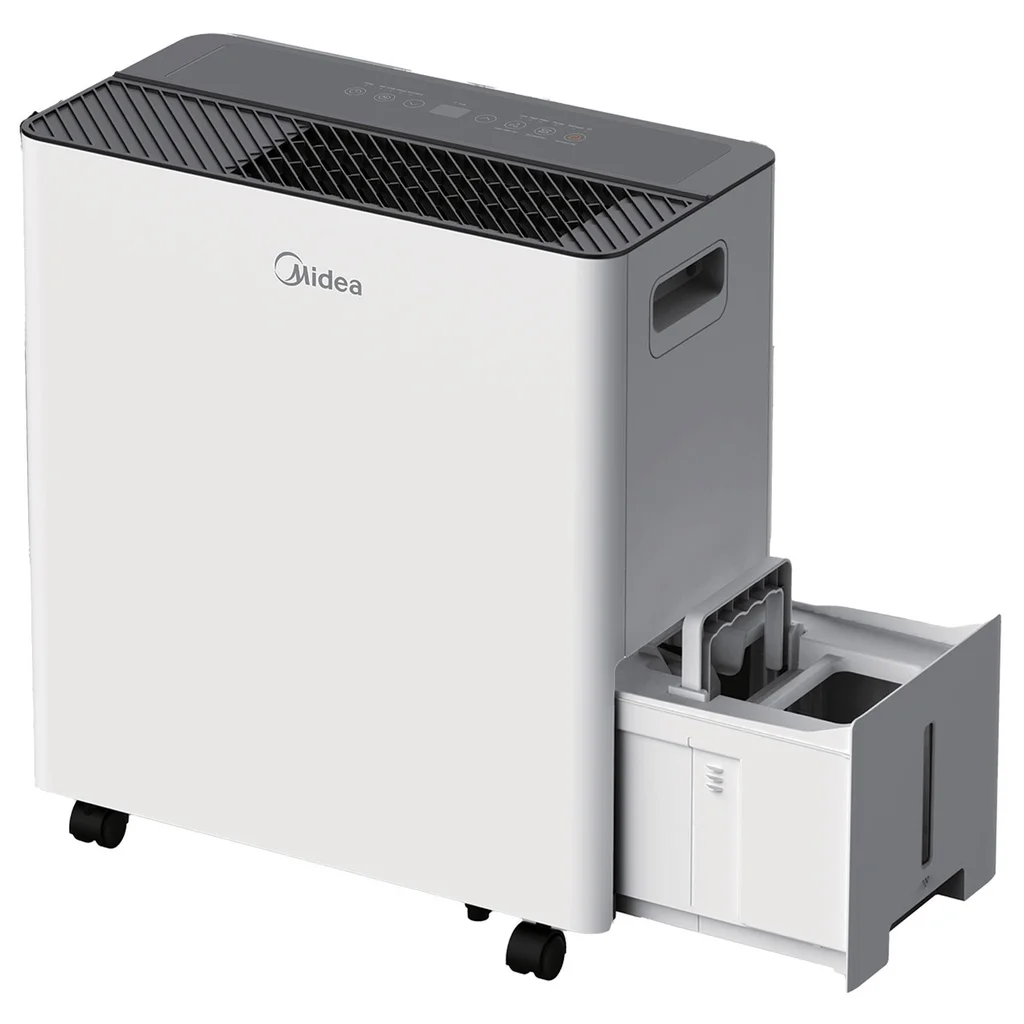
Wet basements, musty closets, and clammy laundry rooms all share one enemy: excess moisture. A high-capacity dehumidifier with continuous drainage is the most effective way to prevent mold and musty odors. In this guide, we review the Midea 50-Pint Smart Dehumidifier with Built-In Pump, a professional-grade solution designed for large, damp spaces and homeowners who want a truly autonomous moisture control system.
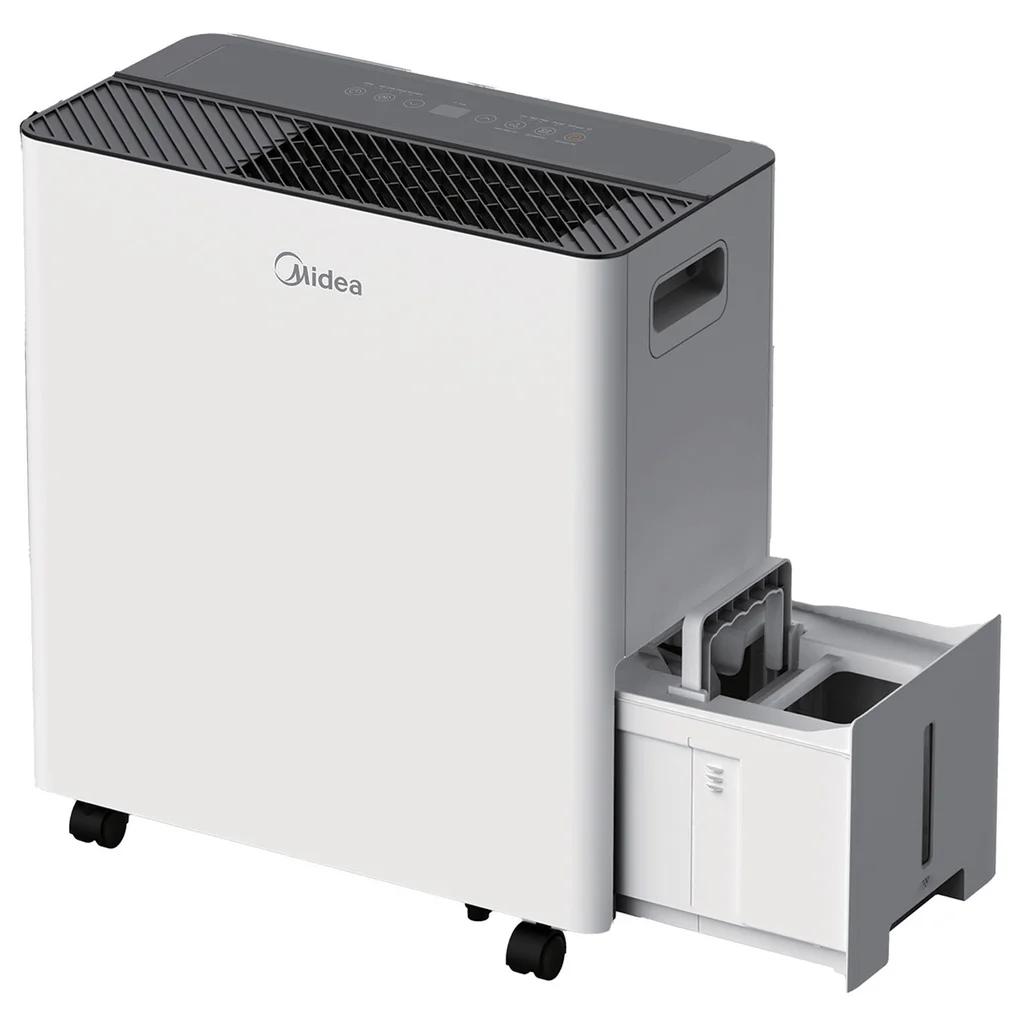
Top Pick: Midea 50-Pint Smart Dehumidifier with Built-In Pump
Score: 9.2/10 — Best overall for large, wet basements. The built-in pump pushes water up to 15 feet vertically so you never have to empty a tank by hand, and 4,500 sq ft of coverage handles whole-basement humidity with ease.
Midea 50-Pint Smart Dehumidifier with Built-In Pump
The standout feature of the Midea MAD50PS1WS is its integrated condensate pump. Most standard dehumidifiers rely on gravity drainage, which requires the unit to be positioned physically higher than the drain point—usually requiring a floor drain directly beneath the machine. The Midea flips this limitation. For those dealing with more severe groundwater issues, combining a dehumidifier with a professional sump pump system is often the best way to protect a foundation, often starting with a reliable Basement Watchdog system. Its built-in pump can push collected water up to 15 feet vertically, meaning you can run a hose to a utility sink, a laundry standpipe or utility drain, or even out a window, regardless of the unit's floor placement.
For homeowners with basements that lack a dedicated floor drain, this feature transforms the device from a daily chore into a truly autonomous appliance.
Performance-wise, this unit is designed for scale. With a 50-pint daily capacity (based on current DOE testing standards) and a coverage area extending up to 4,500 square feet, it is specifically engineered for large, open-concept lower levels, crawl spaces, and damp workshops. Unlike smaller 20 or 30-pint units—or even standard GE 50-Pint Dehumidifier with Auto Shutoff that may run 24/7 without ever reaching the target humidity level in a large room, the Midea has the raw extraction power to actually lower the relative humidity (RH) percentage in a massive space, reducing the risk of mold growth and the "musty" smell associated with subterranean living.In some cases, pairing this with a high-efficiency ventilation system like the Panasonic WhisperGreen Select can further improve air exchange. If you're dealing with active flooding, you may also need to check our sump pump comparison guide or look at the on the best submersible utility pumps or a heavy-duty sump pump review or a battery backup sump pump guide to manage groundwater during power outages.
Beyond its extraction capabilities, the MAD50PS1WS focuses on "set-and-forget" convenience. It includes a child lock to prevent accidental setting changes and an auto-restart function that remembers your previous humidity targets after a power outage—a critical feature for those who leave their units running in unattended basements during summer storms. The aesthetic is a clean, professional white that blends into home interiors without looking like an industrial piece of equipment. While some users may prefer simpler, heavy-duty options like the Keystone 50-Pint Dehumidifier for Large Rooms or the added complexity of app-based smart controls found in higher-end LG PuriCare Smart Wi-Fi Dehumidifier with Air Filter models, the Midea focuses on reliability and physical drainage efficiency.
This model is the ideal solution for the "chronic" humidity sufferer. If you find yourself emptying a water bucket twice a day or struggling to find a flat spot near a drain, the combination of high-capacity extraction and vertical pump lift removes the friction of moisture management. It is a robust, high-output machine that prioritizes the hardest part of dehumidification: getting the water out of the house without manual intervention.
Pros
- Built-in pump drains water up to 15 ft vertically
- Massive 4,500 sq ft coverage for whole basements
- Auto-restart after power outages restores settings
- Child lock for safe unattended operation
- Clean, neutral white design fits most home decors
Cons
- Pump adds intermittent operating noise compared to gravity
- 50-pint class has higher energy draw than small units
- Excessive capacity for small rooms or closets
Technical Specifications
| Specification | Detail |
|---|---|
| Model Number | MAD50PS1WS |
| Daily Capacity | 50 pints/day |
| Maximum Coverage | 4,500 sq ft |
| Drainage Options | Built-in pump (15 ft vertical), tank, or gravity hose |
| Safety Features | Child lock, auto-restart |
| Color | White |
Understanding Dehumidifier Mechanics: How It Works
To appreciate why the Midea MAD50PS1WS is effective, it helps to understand the refrigeration cycle it employs. This unit is a compressor-based dehumidifier, which is the gold standard for damp basements. It works by pulling warm, moist air across a series of cold evaporator coils. As the air hits the cold coils, the moisture condenses into liquid water—much like how droplets form on a cold soda can on a hot day.
Once the moisture is condensed, it drips into a collection tray. In a standard unit, this water sits in a bucket until you carry it to a sink. In the Midea MAD50PS1WS, the internal pump periodically activates to push that water through a narrow tube and upward. This is a significant mechanical advantage because it bypasses the "gravity trap." In most homes, the only way to drain a dehumidifier without a pump is to place the machine on a pedestal or a shelf so the hose can slope downward. The pump removes the need for shelving entirely.
The "50-pint" rating refers to the amount of water the unit can remove from the air (much like how a high-efficiency air filter removes particles) in 24 hours under standardized conditions (usually 80°F and 60% relative humidity). In extremely wet environments, this capacity is critical. A smaller unit might remove moisture, but if the basement is producing moisture faster than the unit can extract it, the humidity will never drop. The high-capacity compressor in the Midea ensures that the rate of extraction exceeds the rate of moisture infiltration.
The Comprehensive Buyer's Guide to Basement Moisture Control
Choosing a dehumidifier is not just about picking the biggest number on the box; it's about matching the machine's capabilities to the specific architecture and climate of your home. You can compare these specs against the GE 50-Pint Dehumidifier with Auto Shutoff (detailed in our GE buying guide) (which we analyze in our GE ADEL50LZ review) to see which capacity fits your needs. When evaluating options like the Midea MAD50PS1WS, there are four primary pillars to consider.
1. Capacity vs. Square Footage
Capacity is measured in pints per day. For a "damp" basement (where the air feels clammy but there is no standing water), a 30-50 pint unit is usually sufficient. However, for "very wet" basements—those with seepage, high water tables, or a strong musty odor—a high-capacity unit like the Midea's 50-pint model is necessary. The 4,500 sq ft coverage rating ensures that air is circulated and dried even in large, open floor plans, preventing "humidity pockets" from forming in far corners of the room.
2. Drainage Logistics: The Pump Advantage
This is the most overlooked part of the buying process. There are three ways to handle water:
- Manual Emptying: You carry a heavy tank to a sink. This is prone to human error; if you forget for one day, the unit shuts off and humidity spikes.
- Gravity Drain: A hose runs from the back to a floor drain. The unit must be higher than the drain.
- Pump Drain: The unit pushes water vertically. This allows the machine to sit on the floor while the water travels up into a sink or out a window.
3. Energy Efficiency and Operation
Dehumidifiers can be energy-intensive because they run a compressor. When looking at these units, check for Energy Star certifications and auto-restart features. The auto-restart on the Midea is particularly valuable because it ensures that if a power flicker occurs during a storm (when humidity is often highest), the machine resumes its task without requiring you to go downstairs and manually press a button.
4. Safety and Maintenance
Safety features like child locks are essential if the unit is placed in a common area where children or pets might tinker with the dials. Maintenance typically involves cleaning the filter and flushing the pump. A high-quality unit will have an accessible filter that can be rinsed under a tap, ensuring the airflow remains unobstructed and the compressor doesn't overheat.
Installation and Setup Guide
Setting up the Midea MAD50PS1WS for maximum efficiency requires a few strategic decisions regarding placement and drainage.
Optimal Placement
For the best results, place the unit in a central location with at least 12 to 18 inches of clearance on all sides. Dehumidifiers need a steady stream of air to work; shoving the unit into a tight corner or against a wall restricts airflow and forces the compressor to work harder, which can shorten the lifespan of the machine. If your basement has multiple rooms, placing the unit in the largest open area and leaving the doors open will allow it to pull moisture from adjacent rooms.
Configuring the Pump
To utilize the vertical lift, connect the included drainage hose to the pump outlet. Ensure the hose is securely fastened and routed toward your exit point (sink, standpipe, or window). Avoid sharp kinks in the hose, as the pump relies on consistent pressure to move the water upward. Once the hose is positioned, test the pump by filling the bucket manually to ensure water is flowing correctly to the destination.
Setting Your Humidity Target
For most homes, the ideal relative humidity (RH) is between 45% and 50%. Setting the unit to 50% prevents mold growth (which typically starts at 60% RH) while avoiding the excessive energy cost of trying to "desert-dry" a basement. Use the control panel to set your target; the Midea will then cycle on and off automatically to maintain that specific level.
Long-Term Maintenance and Troubleshooting
To keep the Midea MAD50PS1WS running at peak performance for years, follow a simple maintenance schedule.
Filter Cleaning (Every 2 Weeks)
The air filter catches dust, pet hair, and lint. When the filter is clogged, the machine cannot pull enough air across the coils, leading to a drop in moisture extraction and an increase in electricity use. Slide the filter out, rinse it with lukewarm water and mild soap, let it air dry completely, and slide it back in. This simple step can extend the life of the compressor by years.
Pump Maintenance
Over time, minerals from hard water or biofilm can build up inside the pump and hose. If you notice the pump is running longer than usual or the water flow has slowed, you can flush the system. Some users choose to run a diluted vinegar solution through the pump (consult your manual for specific approved cleaning agents) to clear out algae and mineral deposits.
Common Pitfalls to Avoid
- Over-drying: Setting the unit to 30% humidity in a basement is usually unnecessary and will significantly increase your power bill.
- Ignoring the Filter: A dirty filter is the #1 cause of "weak" dehumidifier performance.
- Poor Hose Routing: If the hose is pinched, the pump may overheat or water may leak back into the internal reservoir.
Product Comparison: Midea vs. The Competition
When comparing the Midea MAD50PS1WS to other 50-pint options, the decision usually comes down to how you intend to get rid of the water.
| Feature | Midea Smart Dehumidifier (MAD50PS1WS) | Standard Gravity Models | Budget Small-Room Units |
|---|---|---|---|
| Water Removal | Pumped (Vertical Lift) | Gravity/Manual Only | Manual Only |
| Coverage | Up to 4,500 sq ft | ~3,000 sq ft | ~500-1,000 sq ft |
| Maintenance | Very Low (Continuous) | Medium (Manual/Hose) | High (Daily Emptying) |
| Best Use Case | Wet Basements / No Drain | Basements with Floor Drains | Closets / Small Bedrooms |
Compared to standard gravity models (like the Frigidaire 50-Pint Dehumidifier with Continuous Drain) or other pump-equipped options like the Winix 50-Pint Dehumidifier with Built-In Pump, the Midea provides significantly more flexibility in placement. While gravity models are often slightly quieter (because they lack a pump motor), they restrict you to placing the machine near a drain. Compared to budget units, the Midea's 4,500 sq ft reach is an entirely different class of performance, making it a tool for home preservation rather than just a room accessory.
How We Chose
Our evaluation process for the Midea MAD50PS1WS was based on a rigorous analysis of capacity, drainage flexibility, and long-term utility. We specifically focused on "friction points"—the things that make a user stop using a dehumidifier. For most, that is the burden of emptying the tank.
We weighed the built-in pump more heavily than any other feature because it solves the most common installation hurdle. We also examined the coverage area; for a 50-pint unit to be truly effective in a basement, it must be able to move air across a wide footprint. The 4,500 sq ft rating puts this unit at the top of its class, though users might also consider the
You might also consider the hOmeLabs Energy Star 50-Pint Dehumidifier with Built-In Pump for similar high-capacity pump capabilities.
. Finally, we looked for "quality of life" features. Auto-restart and child locks are not luxuries; they are essential for machines that are often left running in unsupervised areas of the home during extreme weather.Final Pick: Midea 50-Pint Smart Dehumidifier with Built-In Pump
For wet basements where convenience matters most, this Midea model earns Best overall. The 15-foot pump lift, 4,500 sq ft coverage, and hands-off features make it the easiest large-capacity dehumidifier to live with.
Do I still need a floor drain with the built-in pump?
No. The built-in pump can push water up to 15 feet vertically, so you can route the included hose to a sink, window, or standpipe even if it sits higher than the unit. A floor drain is optional and not required for continuous drainage.
Is a 50-pint unit too much for my space?
It is sized for areas up to 4,500 square feet. For large basements, open lower levels, or persistently wet spaces, it's