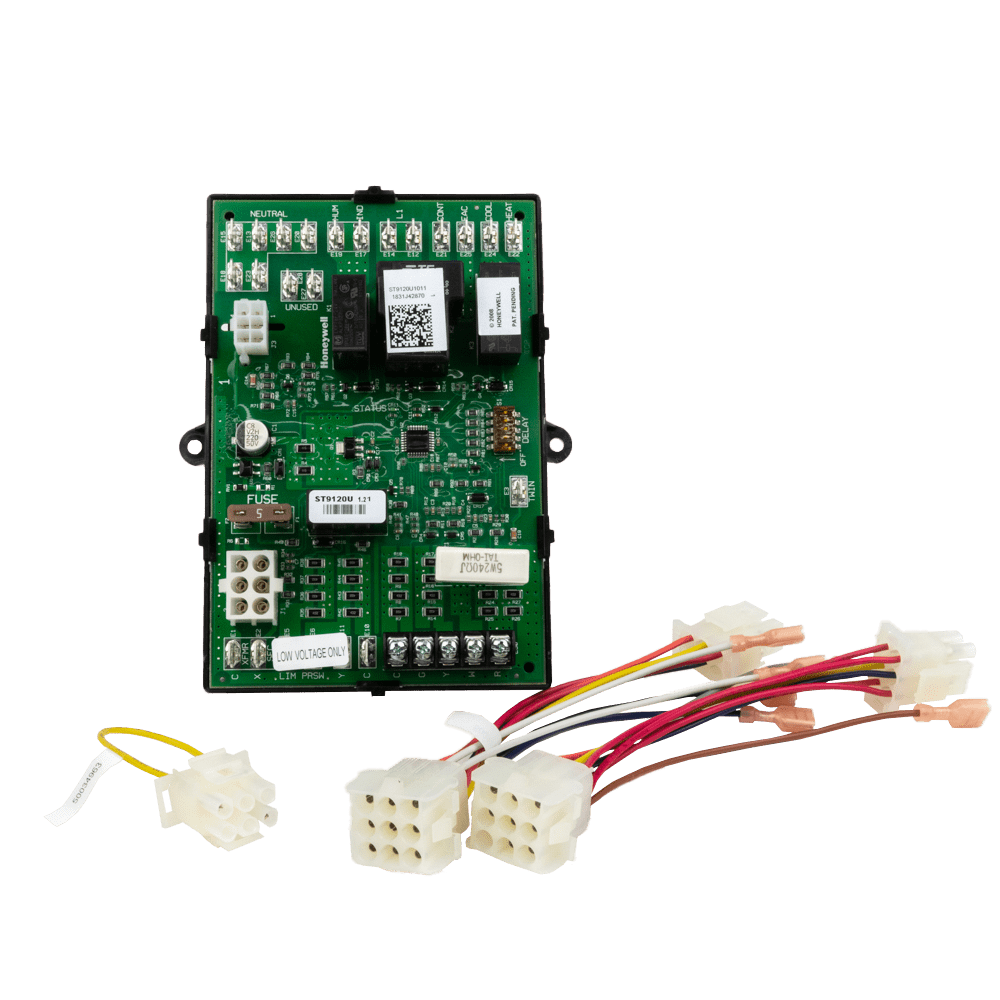
When a furnace fan timer fails, it often leads to short cycling, delayed blower operation, or inefficient airflow. For homeowners and technicians seeking a reliable, universal fix, the Honeywell Home Universal Electronic Furnace Fan Timer Control Board (and its Honeywell ST9400C alternative) is a top-rated universal replacement for forced-air furnace timing systems (such as those utilizing a White-Rodgers Universal Integrated Furnace Ignition Control Board for ignition issues). It provides a practical way to restore precise blower timing without the expense of replacing the entire furnace control system (explore more options in our comprehensive guide to the best furnace control boards). For a detailed look at how it performs in the field, read our Honeywell (ST9400C) review for a deeper dive into real-world performance.
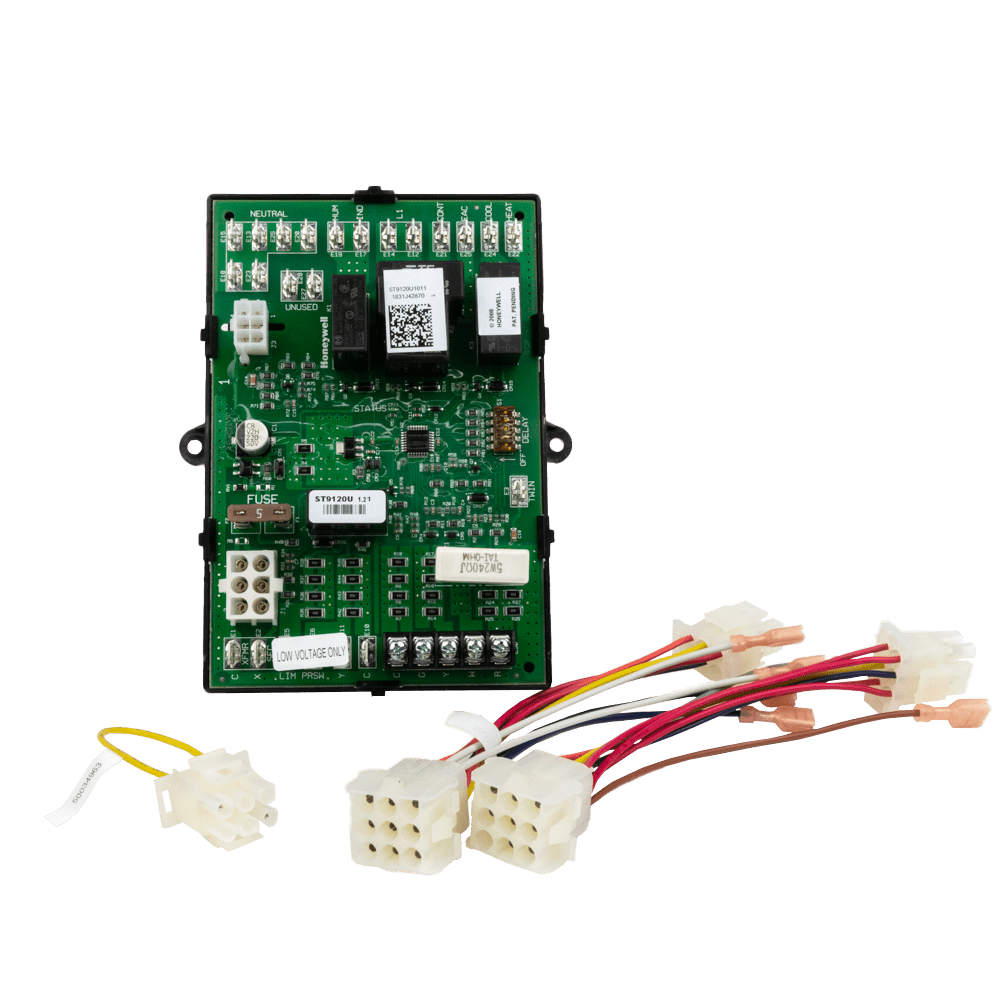
Best Overall: Honeywell Home Universal Electronic Furnace Fan Timer Control Board
Score: 9.0/10. A versatile replacement fan timer board with adjustable blower delay settings and broad forced-air furnace compatibility for reliable fan control repairs.
Honeywell Home Universal Electronic Furnace Fan Timer Control Board
The Honeywell Home Universal Electronic Furnace Fan Timer Control Board (Model ST9400C) serves as the "brain" for the blower motor's timing cycle in forced-air heating systems (see our detailed Honeywell (ST9400C) review for a performance breakdown).
Looking for a reliable replacement? Check the current price for the Honeywell ST9400C here.
In a standard furnace, the burner heats the heat exchanger first; if the blower motor started immediately, it would push cold air into the living space. Conversely, if the blower stopped the instant the burner shut off, a significant amount of residual heat would remain trapped in the heat exchanger, potentially leading to overheating or wasted energy.Ensure your system operates efficiently with the Honeywell Home Universal Electronic Furnace Fan Timer Control Board.
The ST9400C manages these critical intervals with precision. For a broader look at your options, see our guide to the best furnace control boards.
For those looking to upgrade their overall home heating setup, our MrCool DIY Mini-Split buying guide offers a great alternative for supplemental heating.The primary strength of the ST9400C is its flexibility. Unlike OEM boards that are hard-coded for a specific furnace model, this Honeywell Home Universal Electronic Furnace Fan Timer Control Board features adjustable fan-on and fan-off delay settings. This allows a technician to tune the blower's behavior to the specific thermal mass of the furnace's heat exchanger. By adjusting these dials, you can minimize the "cold blast" at the beginning of a cycle and ensure that the blower runs just long enough to exhaust the remaining heat from the system, improving overall home comfort and equipment efficiency.
For HVAC professionals, the ST9400C is a critical "truck stock" item. Because it is designed to be compatible with a wide array of forced-air furnace brands, it eliminates the need to hunt for obscure, discontinued manufacturer parts for older systems. For the experienced DIYer, it provides a documented path to restoring a system that is otherwise functioning well but suffering from erratic blower behavior—such as a fan that won't turn off or a fan that refuses to kick in until the limit switch trips.
It is important to note that the ST9400C is a functional replacement component, not a system upgrade. It does not add "smart" features or WiFi connectivity; rather, it restores the fundamental electrical timing required for a furnace to operate safely and comfortably. When replacing a failed timer, this board provides a dependable, industry-standard solution that stabilizes the airflow and protects the heat exchanger from overheating. For a deeper dive into real-world performance, see our complete Honeywell Home ST9400C review for a detailed performance breakdown. You can also explore other home climate solutions, such as our guide on how to tell if your furnace ignition module has failed or our MrCool DIY Mini-Split guide, to ensure your entire HVAC system and indoor air quality are running efficiently.
Pros
- Universal-style replacement design for a wide range of furnace service situations
- Adjustable fan-on and fan-off delays for better blower timing
- Can help improve comfort by reducing poorly timed blower operation
- Useful for technicians carrying common furnace replacement parts
- Good fit when the original fan timer board has been diagnosed as failed
Cons
- Requires careful compatibility checks before installation
- Not a plug-and-play fix for every blower or furnace issue
- Installation may require professional HVAC knowledge
- Incorrect wiring or delay settings can affect furnace performance
Deep Dive: How the ST9400C Controls Your HVAC Airflow
To understand why the Honeywell ST9400C is essential, one must understand the sequence of operation in a forced-air furnace. The process typically follows a strict chronological order: Ignition, Warm-up, Distribution, and Cooling. The fan timer board is the primary controller for the final two stages.
The Fan-On Delay (The "Warm-up" Phase)
When your thermostat calls for heat, the gas valve opens and the burners ignite. The metal of the heat exchanger begins to absorb this heat. If the blower motor started the moment the gas ignited, the air moving across the heat exchanger would be cold. The ST9400C implements a "Fan-On Delay." This is a programmed pause—usually lasting from 30 to 90 seconds—that allows the heat exchanger to reach a temperature where it can effectively heat the air. By adjusting the fan-on delay on the ST9400C, users can ensure the air entering the vents is warm from the very first second the blower engages.
Without this delay, the home experiences "cold drafting." This is not only uncomfortable but also inefficient, as the air is moved before it has absorbed the maximum thermal energy from the burners. In some older systems, a failed fan-on delay can lead to excessive condensation on the heat exchanger, potentially shortening the lifespan of the metal through increased corrosion. For those managing air quality alongside system repairs, maintaining clean airflow with high-quality filters is essential to protect your new control board from dust buildup.
The Fan-Off Delay (The "Cool-down" Phase)
Once the thermostat is satisfied and the burners shut off, the heat exchanger is still incredibly hot. If the blower stopped immediately, that heat would simply soak into the furnace cabinet or, in worst-case scenarios, trigger a high-limit safety switch that shuts the system down prematurely. The ST9400C manages the "Fan-Off Delay," keeping the blower running for several minutes after the flame is gone. This "blow-down" period extracts the remaining energy from the metal, pushing a final wave of warmth into the home and cooling the equipment to prevent thermal stress on the furnace components.
Proper fan-off timing is a critical safety feature. If the heat is not evacuated, the internal temperature of the furnace cabinet can rise to dangerous levels, causing the insulation to degrade or causing the furnace to "trip" its safety limits. By extending the blower run time via the ST9400C, you ensure the system enters a dormant state safely and maximizes the fuel efficiency of every ignition cycle.
Technical Specifications & Compatibility
| Specification | Honeywell Home Universal Electronic Furnace Fan Timer Control Board |
|---|---|
| Model Number | ST9400C |
| Product Type | Electronic Furnace Fan Timer Control Board |
| Category | Furnace Parts & Components |
| Primary Function | Regulates blower motor fan-on and fan-off timing |
| Delay Settings | Field-Adjustable (Potentiometers) |
| Application | Forced-Air Furnaces (Universal Application) |
| User Base | HVAC Technicians and Experienced DIYers |
The Buyer's Guide: Is the ST9400C Right for Your Repair?
Replacing a control board is a significant repair. Before purchasing the Honeywell ST9400C, you must perform a diagnostic "sanity check" to ensure the timer board is actually the root cause of the problem. Replacing a board when the motor is the real issue is a common and costly mistake (see our guide on Furnace Draft Inducer Motor vs. Blower Motor to help diagnose the root cause). In the world of HVAC repair, where understanding how to choose the right furnace draft inducer motor or evaluating components like the Nordyne furnace part (see our review) can prevent unnecessary part swaps, can prevent "parts cannoning"—throwing parts at a problem without a diagnosis—which often leads to wasted money and extended downtime during winter months. This is a common pitfall across all home utilities, from furnace boards to choosing a utility pump, such as the one in our Ridgid SP-650C sump pump buying guide or Wayne ESP25 battery backup systems. For other critical home utility repairs, refer to our professional plumbing guides for similar component replacements for plumbing fixes. Knowing when to repair versus replace—such as when to choose the right furnace draft inducer motor—is a key part of home maintenance. If you decide a full system replacement is necessary, our MrCool DIY Mini-Split buying guide can help you navigate modern options.
If you find the issue is actually ignition-related rather than timing—which is common in older forced-air systems—we recommend the White-Rodgers Universal Integrated Furnace Ignition Control Board.
Signs Your Fan Timer Board has Failed
- The Blower Never Starts: If the burners are firing and the furnace is getting hot, but the fan never turns on (until the furnace shuts down due to overheating), the timer board may be dead or the relay has failed. (If the system fails to ignite entirely—see our guide on how to tell if your furnace ignition module has failed—you may need a Carrier Bryant Payne Furnace Hot Surface Igniter Replacement or a Honeywell Home Universal Intermittent Pilot Ignition Control Module (read our detailed Honeywell S8610U Review)).
- The Blower Runs Perpetually: If the heat is off but the fan continues to blow for hours, the fan-off relay on the board may be stuck in the "closed" position, effectively bypassing the timer.
- Cold Air Blasts: If the fan kicks in immediately upon ignition without any delay, the fan-on timing circuit has likely failed, causing immediate discomfort.
- Short Cycling: Erratic timing can confuse the furnace's integrated safety controls, leading to frequent on-and-off cycles as the system struggles to reach the correct temperature threshold.
Caution: If your blower motor is making a humming noise but not spinning, the problem is likely a failed start capacitor or a seized motor bearing, NOT the control board. Replacing the ST9400C will not fix a mechanical motor failure.
Compatibility Verification
While labeled "Universal," this term in the HVAC industry means "compatible with most standard systems," not "fits every single furnace ever made." You must verify three critical factors before installation to avoid damaging the new board or your furnace.
- Voltage: Ensure your furnace uses standard 24V control circuitry. For those handling the power disconnect, refer to our guide on replacing circuit breakers safely (and learn about AFCI vs standard breakers) to ensure the system is fully depowered. Most residential North American furnaces do, but some specialized industrial or very old systems may use different voltages that would fry the ST9400C instantly.
- Blower Type: This board is designed for standard PSC (Permanent Split Capacitor) motors. If you have a high-efficiency ECM (Electronically Commutated Motor) with its own onboard logic and variable speed control, a universal timer board like the ST9400C may not be compatible or necessary, as the ECM logic typically handles its own ramping.
- Wiring Diagrams: Compare the terminal labels on your old board (e.g., Common, Hot, Blower, Thermostat) with the ST9400C wiring schematic. If your current board has a vastly different number of terminals or uses a proprietary plug-in harness, you will need to be comfortable with manual wire stripping and crimping.
Installation and Setup Logic
Installing the ST9400C is a process of electrical migration. Since it is a universal part, it will rarely "plug and play" with the original wiring harness. You will likely need to strip wires, use crimp connectors, and follow the provided schematic closely. This is not a "snap-in" part; it is a component that requires intentional electrical integration.
Technicians often pair these boards with reliable components like the Packard 2-Pole 30-Amp HVAC Contactor (see our Packard (C230B) review) during full system refreshes.
The Wiring Phase
Before removing the old board, identify the "Hot" wire (providing power)—always ensuring you've followed a safe depowering process—the "Common" or ground wire, the wire leading to the blower motor relay, and the signal wire from the thermostat. The ST9400C expects a 24V signal to initiate the timing sequence. Once the old board is removed, mount the ST9400C