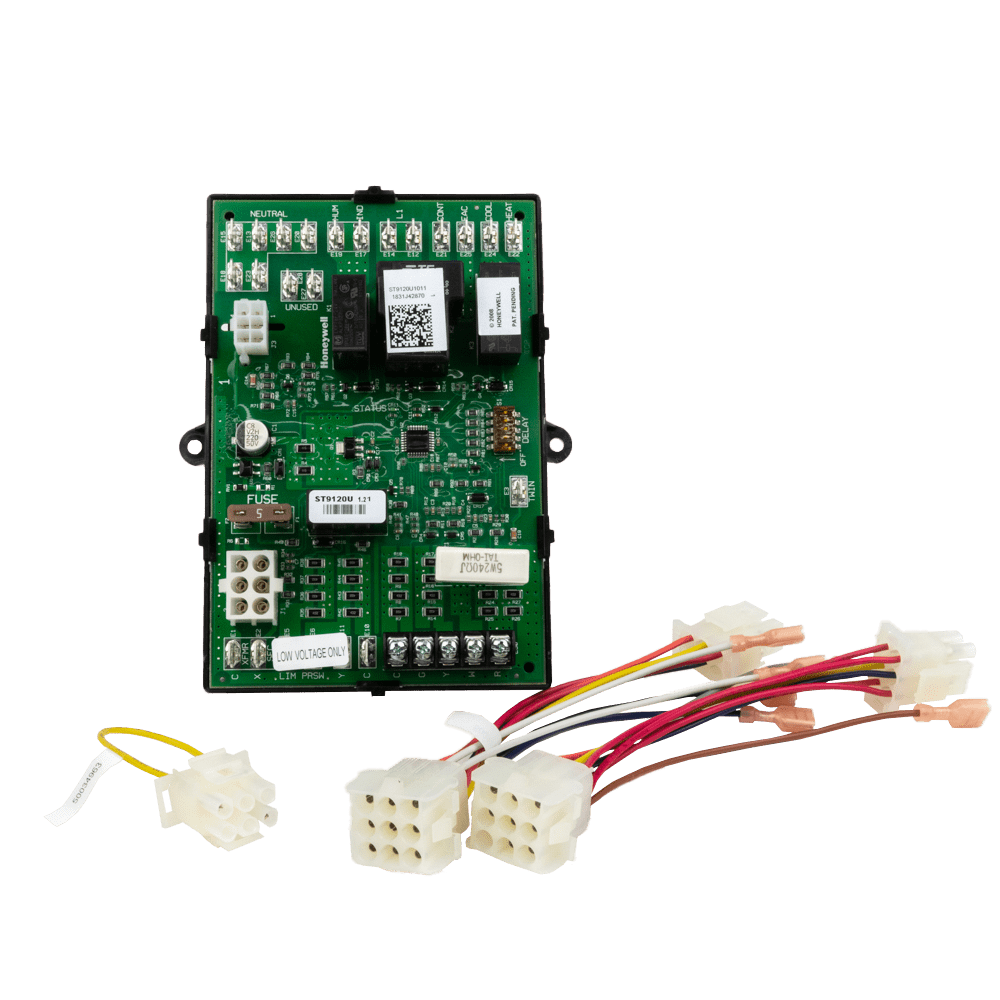
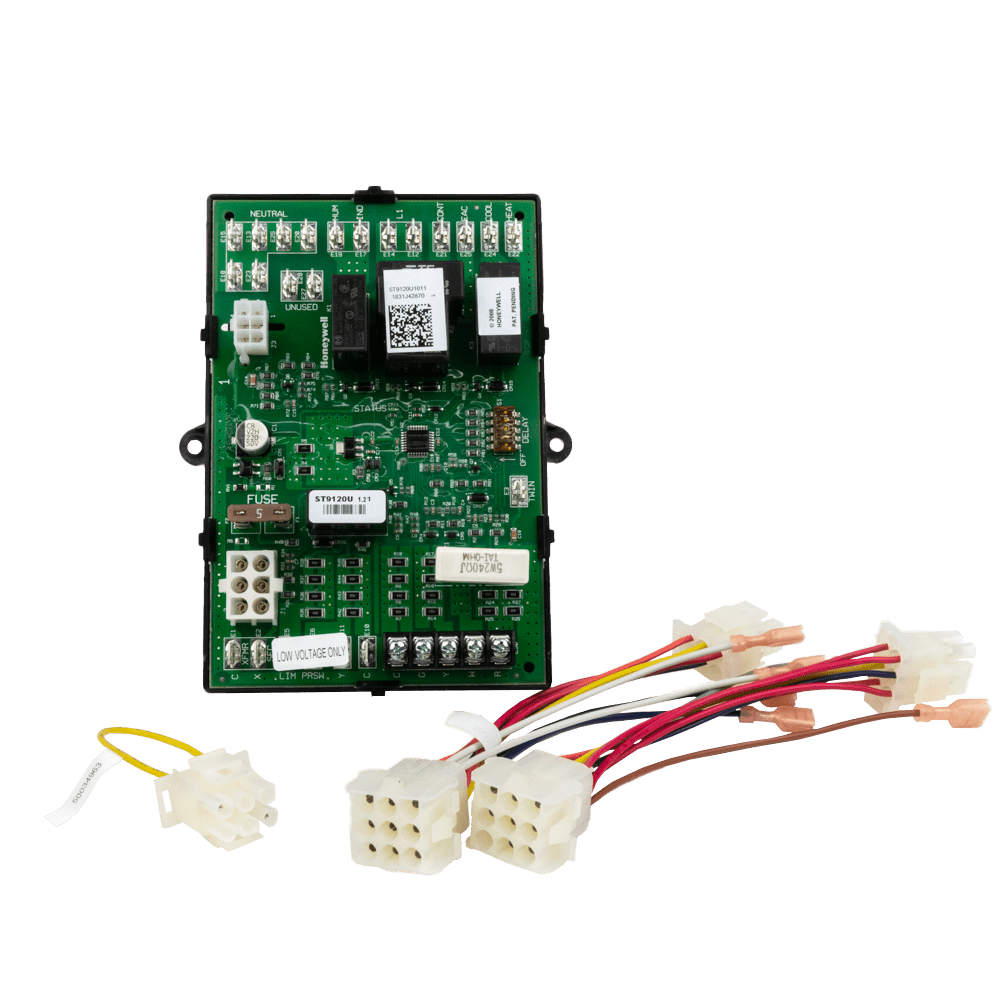
Honeywell Home Universal Electronic Furnace Fan Timer Control Board (ST9400C)
Score: 8.6/10 — The Honeywell Home Universal Electronic Furnace Fan Timer Control Board (ST9400C) is a professional-grade, adjustable solution for replacing faulty blower timing circuits. Engineered for compatibility across multiple HVAC brands, it is the ideal choice for technicians and skilled DIYers aiming to eliminate cold drafts and restore peak furnace efficiency. For those maintaining overall system air quality, we also recommend checking the Filtrete furnace air filter review. We recommend the Honeywell Home Universal Electronic Furnace Fan Timer Control Board for those looking to avoid a full system replacement. For those considering a total upgrade, our MrCool DIY mini-split buying guide offers a modern alternative.
This review contains affiliate links. We may receive a commission for purchases made through these links at no extra cost to you.
Overview
The Honeywell Home Universal Electronic Furnace Fan Timer Control Board is a professional-grade replacement component designed to regulate the precise timing of a forced-air furnace blower motor, preventing cold drafts and improving overall heating efficiency. If you're comparing different options, see our comprehensive guide to the best furnace control boards for a detailed market analysis.
Related parts & accessories
In a standard heating cycle, the blower motor doesn't simply turn on the moment the burners ignite; it requires a precise delay to allow the heat exchanger to warm up. Similarly, it shouldn't shut off the instant the burners stop, as there is significant residual heat in the system that can be pushed into the living space. The ST9400C manages these critical intervals.
This is not a "smart" home upgrade or a consumer-facing interface. Rather, it is a service-oriented electronic component intended to restore original equipment manufacturer (OEM) functionality when a primary fan timer or control board fails (learn how to tell if your furnace ignition module has failed). When a blower motor runs continuously, fails to start, or shuts off too early, the control board is often the culprit (similar to how failures manifest when choosing the right furnace draft inducer motor), sometimes requiring a complementary fix like the Honeywell Home Universal Intermittent Pilot Ignition Control Module (read our full review here), or a Carrier Bryant Payne Furnace Hot Surface Igniter Replacement.
The Honeywell Home Universal Electronic Furnace Fan Timer Control Board provides a cost-effective alternative to replacing an entire integrated control board or the furnace itself. Restore your blower timing for a fraction of the cost of a full board replacement.
The "universal" nature of this board makes it a staple for HVAC technicians and property maintenance teams, though those looking for complete system upgrades might consider our comprehensive guide to the best furnace control boards for more information on high-efficiency alternatives and timing control solutions. While it is designed to be compatible with a vast array of furnace brands (similar to the versatility seen in the Nordyne 903106 review), it is not a "plug-and-play" device in the sense of a USB peripheral. It requires a technician or a highly skilled homeowner who can navigate furnace wiring, understand voltage requirements, and safely operate electrical testing equipment (see our guide on home electrical safety). For the right system, it offers a focused, adjustable, and durable way to bring blower timing back under control—see our broader Honeywell ST9400C component review for more context, ensuring the HVAC system operates at peak efficiency and comfort.
Key Features
Offers precise fan-on and fan-off delay settings, allowing installers to tune the blower behavior to the specific thermal characteristics of the furnace.
Engineered to be a versatile substitute for a wide range of forced-air furnace applications across different legacy brands.
Directly regulates the timing of the blower motor to ensure conditioned air is moved only when the heat exchanger is at the appropriate temperature.
Designed for rapid repair scenarios where only the timing circuit has failed, avoiding the need for a full system overhaul.
By reducing "cold blasts" at the start of a cycle and capturing residual heat at the end, it improves overall household temperature stability.
Built to the standards required by HVAC professionals for long-term reliability in high-heat environments.
| Feature | Value |
|---|---|
| Product Name | Honeywell Home Universal Electronic Furnace Fan Timer Control Board |
| Model Number | ST9400C |
| Brand | Honeywell Home |
| Product Category | Furnace Parts & Components |
| Product Type | Universal electronic furnace fan timer control board |
| Primary Function | Regulates forced-air furnace blower motor timing |
| Adjustable Settings | Fan-on delay and fan-off delay |
| Intended System Type | Forced-air furnaces |
| Best Use Case | Replacing a failed fan timer or blower timing control board |
| Typical Installer | HVAC technician, maintenance professional, or experienced DIYer |
| Compatibility | Broad furnace replacement use (Verification required) |
| Installation Complexity | Moderate to Advanced |
Pros & Cons
Pros
- Customizable delay settings allow for a tailored HVAC experience.
- High compatibility across multiple furnace brands reduces the need for niche parts.
- Significantly cheaper than replacing an entire integrated control assembly.
- Reduces energy waste by maximizing residual heat extraction.
- Robust construction suitable for the harsh environment of a furnace cabinet.
Cons
- Requires advanced electrical knowledge for safe installation.
- Not a true "one-size-fits-all"; wiring must be carefully matched.
- Does not add smart capabilities or connectivity to the furnace.
- Incorrect timing adjustments can lead to overheating or inefficient operation.
- Requires manual calibration via physical dials or switches.
Performance
In real-world application, the Honeywell Home Universal Electronic Furnace Fan Timer Control Board performs its narrow role with high reliability. When installed in a system with a failed OEM board, the most immediate improvement is the restoration of the "comfort curve." The absence of that initial cold blast and the extended warmth at the end of the cycle make the furnace feel "newer" and more responsive.
The adjustability of the board is where the ST9400C truly shines. No two homes are the same; a furnace in a small cottage needs different timing than one in a large two-story colonial. Technicians have noted that the ability to fine-tune the delays allows them to solve specific customer complaints—such as "the air isn't hot enough" (which is often actually a fan-on delay that is too short) or "the furnace shuts off too fast" (which suggests the fan-off delay needs extending).
From a durability standpoint, the board is designed to withstand the vibration and temperature fluctuations inherent in a furnace plenum. However, the performance is entirely dependent on the quality of the installation. A loose wire or a poorly crimped connection can lead to intermittent blower failure, which is a safety hazard. If you are unsure if the issue is the blower or the inducer, check our comparison of furnace draft inducer motors vs. blower motors. When wired correctly and calibrated, the ST9400C is an "install and forget" component that can last for years.
Value for Money
The primary value proposition of the Honeywell Home Universal Electronic Furnace Fan Timer Control Board is cost avoidance. In many older furnace systems, the integrated control board is a proprietary part that can be prohibitively expensive—sometimes costing hundreds of dollars—or, worse, completely obsolete. When only the timer circuit fails, replacing the entire board is an unnecessary expense.
The Honeywell Home Universal Electronic Furnace Fan Timer Control Board acts as a surgical replacement. By isolating the fan timing function, it allows a homeowner or technician to bypass a failed OEM timing circuit and restore full operation for a fraction of the cost of a full board replacement. Furthermore, it provides a level of customization that OEM boards often lack; the adjustable dials allow the user to optimize the furnace for their specific home's ductwork and thermal mass.
For a professional HVAC contractor, the value lies in the "universal" aspect. Carrying a variety of ST9400C boards in a service van reduces the need to make multiple trips to a supply house for brand-specific timers. This increases billable efficiency and reduces the downtime for the customer.
Professionals often pair these timing boards with reliable components like the Packard 2-Pole 30-Amp HVAC Contactor for a complete electrical refresh (see our Packard C230B review for more details).
For the DIYer, the value is in the ability to extend the life of an older, reliable furnace without needing to invest in a whole-system replacement or a completely different setup for more modern, zoned heating.How the Honeywell ST9400C Furnace Fan Timer Works: A Technical Deep Dive
To understand the value of the Honeywell Home Universal Electronic Furnace Fan Timer Control Board, one must understand the thermodynamics of a forced-air furnace. When a thermostat calls for heat, the burners ignite and heat the heat exchanger. If the blower motor started immediately, it would push cold air through the vents for several minutes until the metal of the heat exchanger actually became hot. This is known as a "cold draft" and is a primary source of discomfort in older heating systems.
The ST9400C introduces a Fan-On Delay. This electronic timer ensures that the blower remains off for a set number of seconds after the burners are lit. This allows the heat exchanger to reach a critical temperature, ensuring that the first breath of air pushed into the home is warm. Without a functioning timer like the ST9400C, a furnace may suffer from "short-cycling" or cause the occupants to feel chilled even while the furnace is technically running.
Conversely, when the thermostat is satisfied and the burners shut off, the heat exchanger is still glowing hot. If the blower stopped immediately, all that energy would be wasted, and the furnace might even overheat its own internal cabinet. The Fan-Off Delay keeps the blower running for a specified duration after the heat source is gone. This "overrun" period extracts the remaining thermal energy from the metal and delivers it to the rooms, increasing the overall efficiency of the heating cycle.
The ST9400C handles these logic gates electronically, replacing older mechanical timers that were prone to wearing out or failing due to heat exposure. By using solid-state components, Honeywell provides a more stable and repeatable timing sequence that can be adjusted to the specific size of the ductwork and the BTU output of the furnace.
Comprehensive Installation & Setup Guide
Installing the Honeywell Home Universal Electronic Furnace Fan Timer Control Board (ST9400C) is a task that requires caution and a systematic approach. Because this device interacts with both high-voltage blower motors and low-voltage control signals, safety is the absolute priority.
Pre-Installation Checklist
- Power Off: Ensure the furnace power switch is off and the circuit breaker is flipped. Verify with a non-contact voltage tester (see our guide on home electrical safety) (and understand AFCI vs standard circuit breakers for panel safety) (similar to safety precautions detailed in our guide on replacing circuit breakers safely or our Eaton BRCAF115 review regarding panel safety). For those managing overall basement electrical safety, our Wayne ESP25 review also covers critical power redundancy for your basement utility area.
- Documentation: Take high-resolution photos of the existing wiring on the old board from multiple angles.
- Labeling: Use masking tape or wire labels to mark every wire (e.g., "T-stat," "Blower Power," "Limit Switch").
- Tool Kit: Have a screwdriver set, wire strippers, crimp connectors, and a digital multimeter ready.
Step-by-Step Installation Process
- Removal: Carefully unscrew the failed timer board from the furnace chassis. Avoid pulling on the wires; ins