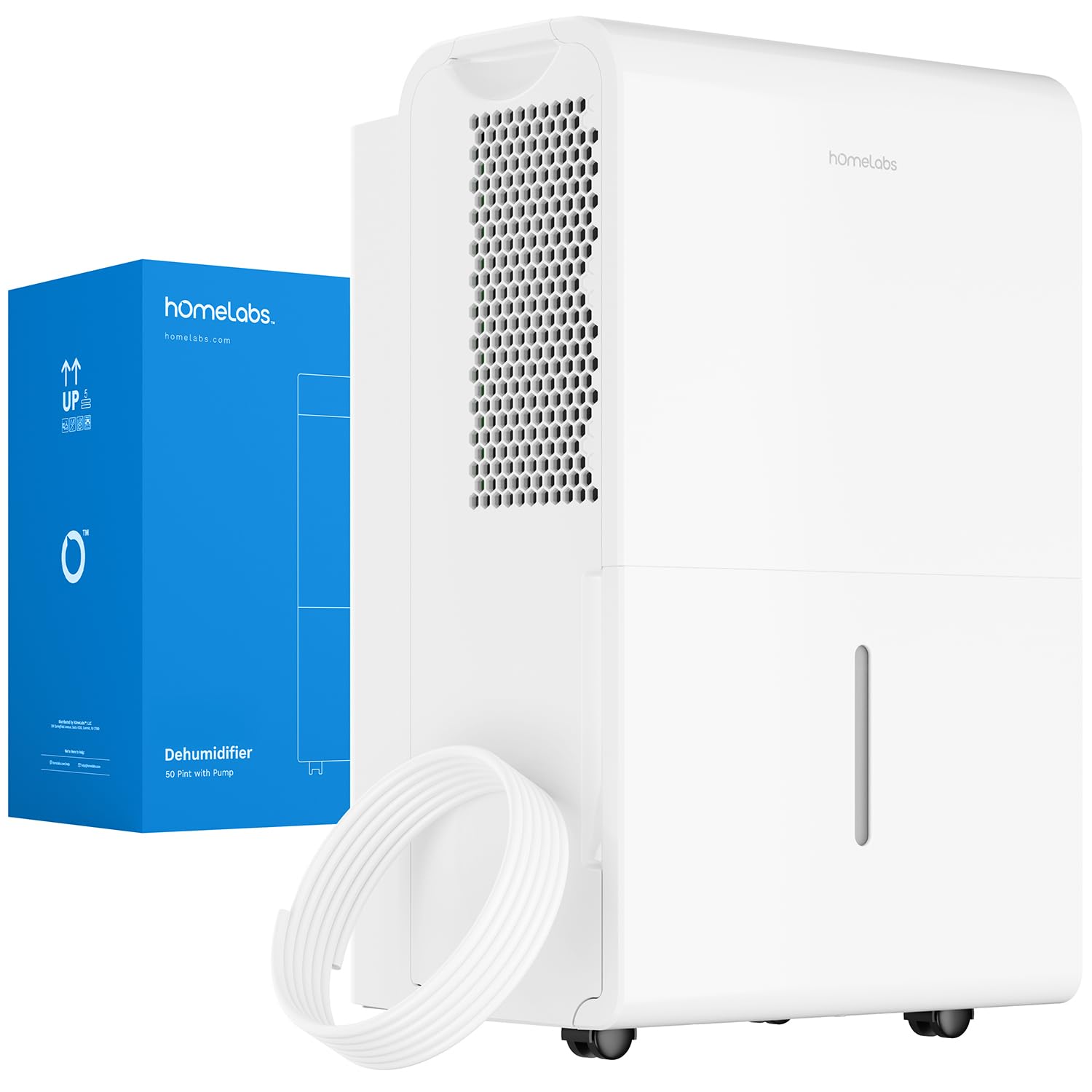
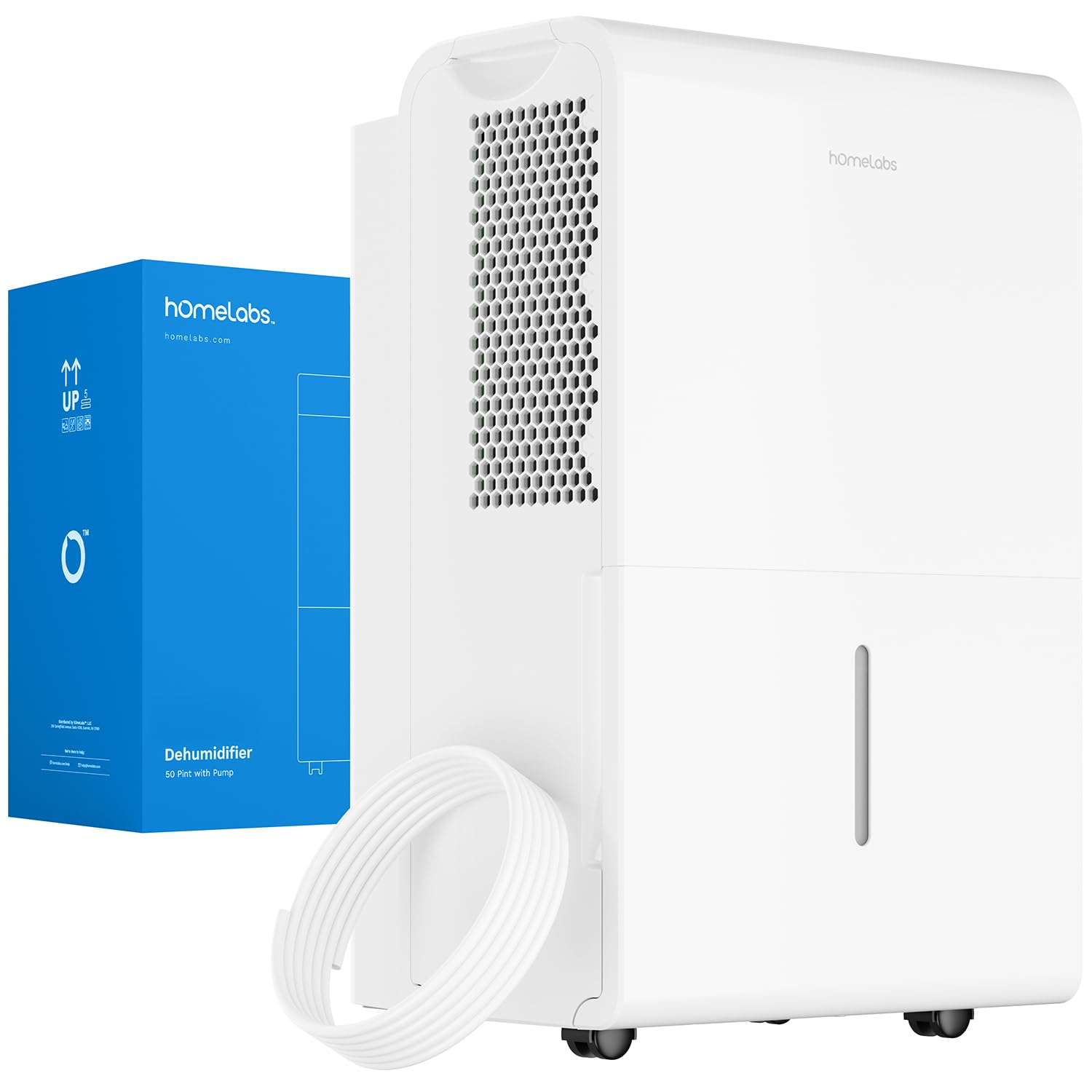
If you're shopping for a high-capacity, budget-friendly dehumidifier for damp spaces (and perhaps looking for a complete basement waterproofing strategy), the hOmeLabs Energy Star 50-Pint Dehumidifier with Built-In Pump is an energy-efficient solution for managing basement moisture, reducing humidity, and preventing mold—providing a professional-grade alternative to bulky units for precise moisture control. It has become a top choice for renters and basement owners needing professional-grade humidity relief without the need for permanent plumbing. This complete buying guide breaks down specs, real-world performance, pros and cons, and everything you need to know before you buy.
Check the latest price for the hOmeLabs 50-Pint Dehumidifier.
TL;DR — Quick Summary
- The hOmeLabs HME020031N is a 50-pint energy-efficient dehumidifier designed for moisture control in rooms up to approximately 1,500–2,000 sq ft.
- It features continuous drainage via a built-in pump, eliminating the need for frequent manual tank emptying.
- Setup is straightforward with the built-in pump, allowing for easy drainage without permanent plumbing.
- Best suited for basements, damp crawlspaces, and large rooms.
- Key trade-off: while highly efficient, it requires a power outlet near the drainage point.
Our Top Pick for Basement Moisture Control
The hOmeLabs HME020031N earns its place as a solid budget-friendly dehumidifier for damp spaces, delivering reliable moisture extraction and ease of use with its integrated pump. Score: 8.2 / 10.
hOmeLabs HME020031N: In-Depth Review
Design & Build Quality
If you are weighing this against other high-capacity models, such as the GE 50-Pint Dehumidifier with Auto Shutoff (see our GE ADEL50LZ review for a detailed performance breakdown and comparison). The HME020031N sports a clean, all-white tower-style cabinet that measures roughly 12 × 13 × 28 inches — compact enough to tuck beside a nightstand or slide into a corner office without dominating the space—similar to how a compact front-load washer saves room in tight laundry areas. The plastic housing feels sturdy for a unit at this price tier, and the caster wheels roll smoothly across both hardwood and low-pile carpet. The top-mounted control panel features clearly labeled buttons alongside a small LED display that shows the current temperature and selected mode. There's nothing flashy here, but the minimalist aesthetic blends into most modern interiors without complaint.
The unit is designed for easy placement in damp areas. Unlike standard dehumidifiers that require frequent bucket emptying, this model's built-in pump allows it to push water vertically to a sink or drain. The water reservoir is oversized for those who prefer manual emptying, but for maximum convenience, running the pump hose to a floor drain is recommended. For a complete approach to managing wet basements (which often requires a combination of dehumidification and active pumping), see our Basement Watchdog BW1033 guide or our Ridgid SP-650C sump pump guide or our guide to the best submersible utility pumps. For added peace of mind during storms, we also recommend the Wayne ESP25 battery backup system.
One design nuance worth noting: the air intake and exhaust are both located at the rear, which means the unit works best when pulled a few inches away from the wall. Blocking the intake grilles significantly hampers performance. Overall, the build strikes the right balance between lightweight portability and enough solidity that you won't worry about the wheels giving out mid-summer.
Dehumidification Performance
Rated at 50 pints per day, the HME020031N is designed for heavy-duty moisture removal. Unlike smaller units, this high-capacity model is effective in rooms up to 2,000 sq ft. The built-in pump is the standout feature here, allowing the unit to push water vertically into a sink or shower, which is a massive upgrade over manually carrying heavy water buckets across a basement.
The unit cycles between two fan speeds and uses a high-efficiency compressor system. It quickly lowers relative humidity levels in a 1,500 sq ft area, preventing that 'heavy' feeling in the air. For those also upgrading their home ventilation, the Panasonic WhisperGreen Select guide is a great resource for managing airflow. To further improve air quality while reducing moisture, consider a high-efficiency filter like those found in our Filtrete MERV-12 review for better indoor air quality. For those looking for a more permanent cooling and humidity solution, our MrCool DIY Mini-Split guide or LG Window AC review (which is often a better bet for combined cooling and moisture control) for a comprehensive look at zoned cooling and climate control. Once the target humidity level is reached, the unit cycles on and off to maintain the setpoint automatically. The 24-hour programmable timer is a genuine quality-of-life feature — allowing you to schedule moisture removal during specific times of the day.
Noise Levels
High-capacity dehumidifiers are rarely whisper-quiet, and the HME020031N sits in the typical range of 52–56 dB on high fan and around 48–50 dB on low fan with the compressor running. That's roughly equivalent to a steady rainfall or a moderately busy office background hum. Most users report it's easy enough to sleep through on low once you're accustomed to the white-noise character. On high fan with the compressor active, it becomes more noticeable — fine for a home office where you're focused on work, but potentially disruptive for light sleepers in very small rooms.
Energy Efficiency
The HME020031N is Energy Star certified, ensuring it operates efficiently while pulling moisture from the air. This is critical for basement use where the unit may run for several days straight. We recommend pairing this with a proper drainage strategy; for severe water issues, see our guide to the best submersible utility pumps. For general maintenance, see our Ridgid SP-650C sump pump review for the best way to handle groundwater. The auto-restart feature after power outages is a small but welcome touch (for those with severe flood risks, we also recommend a Wayne ESP25 battery backup system) that ensures your basement stays dry even after a brief grid hiccup.
Pros
- Built-in pump eliminates manual draining
- Energy Star certified for lower utility bills
- High capacity (50-pint) for large rooms
- Easy-to-use digital humidity control
- Auto-restart after power outages
- Caster wheels for easy portability
- Quiet operation on low settings
- Competitive price for pump-equipped units
Cons
- No Wi-Fi or smart home integration
- Noise levels can be noticeable on high settings
- Requires a dedicated outlet for optimal safety
- Basic aesthetic may not suit all decors
Full Specifications
| Specification | Detail |
|---|---|
| Model Number | HME020031N |
| Coverage Area | Up to 2,000 sq ft |
| Dehumidification Capacity | 50 Pints per day |
| Drainage Method | Built-in Pump / Manual Tank |
| Fan Speeds | 2 (Low / High) |
| Temperature Range | 41°F – 95°F |
| Voltage | 115V / 60Hz |
| Noise Level | ~52–56 dB (high), ~48–50 dB (low) |
| Timer | 24-hour programmable |
| Remote Control | Yes (included) |
| Auto-Restart | Yes |
| Smart Home / Wi-Fi | No |
| Dimensions (H × W × D) | ~28 × 13 × 12 inches |
| Weight | ~52 lbs |
| Window Kit Compatibility | Horizontal sliding windows (26–47 in width) |
| Refrigerant | R-410A |
| Warranty | 1 year limited |
Who Should Buy the hOmeLabs HME020031N?
✅ Great Fit
- Homeowners with damp basements or crawlspaces
- People living in high-humidity climates (South/Coast)
- Those who want to avoid manual tank emptying
- Users seeking an Energy Star rated efficient unit
- People needing a high-capacity (50-pint) solution
- Users wanting smart options may consider the LG PuriCare Smart Wi-Fi Dehumidifier with Air Filter or the Midea 50-Pint Smart Dehumidifier with Built-In Pump.
If you need a similar pump-driven system, the Winix 50-Pint Dehumidifier with Built-In Pump is another high-capacity alternative.
❌ Look Elsewhere If…
- You need a unit for a space larger than 2,000 sq ft
- Smart home / app control is a priority (see our GE ADEL50LZ buying guide for a comparison of 50-pint units)
- You live in an extremely hot or humid climate (you may need a Keystone 50-Pint Dehumidifier for Large Rooms, the GE 50-Pint Dehumidifier with Auto Shutoff, or the Frigidaire 50-Pint Dehumidifier with Continuous Drain)
- Energy efficiency is your primary concern
- You want ultra-quiet operation (under 45 dB)—in that case, the LG PuriCare Smart Wi-Fi Dehumidifier with Air Filter is a strong contender.
Setting Up the hOmeLabs Dehumidifier: Step-by-Step
- Unbox and inspect: Remove all packing materials. Ensure the remote control and pump hose are included.
- Upright resting period: If the unit was shipped on its side, allow it to stand upright for at least 2 hours before powering on to allow refrigerant oils to settle.
- Position the unit: Place the unit on a flat surface. Ensure there is at least 12 inches of clearance around the air intake and exhaust for maximum airflow.
- Configure drainage: Either insert the water collection bucket or connect the pump hose to your desired exit point (e.g., a sink or floor drain).
- Power on: Plug into a grounded 115V outlet. We recommend a dedicated circuit to avoid tripping breakers during compressor start-up.
- Set humidity target: Use the control panel to set your desired humidity level (typically 45–50% for comfort).
- Test the pump: If using the built-in pump, run the unit until the reservoir fills slightly to ensure water is flowing correctly through the hose.
Maintenance Tips to Maximize Lifespan
Dehumidifiers require minimal but consistent maintenance to operate efficiently and avoid early failure. Here's what to do and when:
Every 2 Weeks (During Heavy Use)
- Remove and rinse the air filter under cool water (see our Filtrete MERV-12 filter review for tips on airflow efficiency)
- Allow filter to fully air-dry before reinstalling
- Check drain tray or drainage hose for blockages
- Wipe down exterior vents with a dry cloth