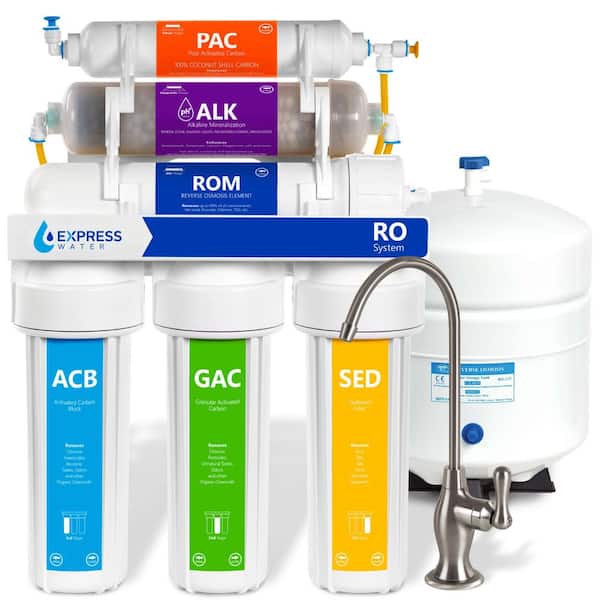
If you want under-sink drinking water filtration that goes beyond a basic carbon filter, the Express Water Under-Sink Reverse Osmosis System with Alkaline Remineralization and UV Sterilization by Express Water is built for buyers who want reverse osmosis, alkaline remineralization, and UV sterilization in one system. This guide explains who it suits, what its 10-stage design is meant to do, and what to consider before installing it under your kitchen sink.
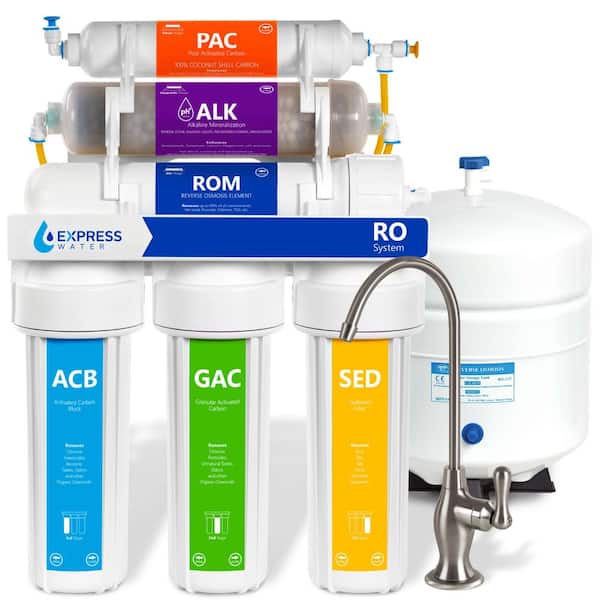
Best Overall: Express Water Under-Sink Reverse Osmosis System with Alkaline Remineralization and UV Sterilization
Score: 9.1/10. A strong all-in-one choice for households that want RO filtration, improved mineral taste, and an added UV stage for broader contaminant coverage.
Express Water Under-Sink Reverse Osmosis System with Alkaline Remineralization and UV Sterilization
The Express Water Under-Sink Reverse Osmosis System with Alkaline Remineralization and UV Sterilization is a comprehensive 10-stage drinking water solution designed for buyers who find standard 5-stage systems, like the iSpring 6-Stage Under-Sink Reverse Osmosis Water Filter, insufficient.
The Express Water Under-Sink Reverse Osmosis System is engineered to address a wide spectrum of water quality issues, combining mechanical filtration, chemical adsorption, membrane separation, mineral addition, and biological sterilization into a single point-of-use installation. This system is particularly appealing to health-conscious consumers who are concerned not only with the removal of contaminants but also with the pH balance and mineral content of their drinking water.For those wondering if they need point-of-use or a whole-home solution, comparing these to a GE GXWH40L whole house water filter guide or an Aquasana SimplySoft Salt-Free Whole-House Water Conditioner can help determine the best scale of filtration. For more on system-wide protection, see our Culligan WH-HD200-C whole-house filtration guide. The core of the system is the high-efficiency reverse osmosis (RO) membrane. Unlike simple carbon filters that rely on adsorption, the RO membrane uses a semi-permeable barrier to block dissolved solids, heavy metals, and microscopic impurities. However, the "pure" water produced by standard RO is often slightly acidic and stripped of beneficial minerals, which can lead to a "flat" or metallic taste. To solve this, the ROALK10DCG incorporates an alkaline remineralization stage. This stage carefully reintroduces calcium, magnesium, and other essential minerals back into the water stream, effectively raising the pH level and creating a smoother, more natural taste profile that mimics high-quality spring water.
What sets this model apart from many competitors is the integration of a UV sterilization lamp. While the RO membrane removes most physical contaminants, UV light provides an electronic barrier against biological threats. The UV stage disrupts the DNA of bacteria, viruses, and cysts, ensuring that the water reaching your glass is biologically safe. This makes the system an excellent choice for homes using well water or municipal systems where biological safety is a primary concern. When you combine these features with the initial sediment and carbon pre-filters, the result is a professional-grade filtration suite tucked neatly beneath your kitchen cabinetry.
Pros
- 10-stage design offers broader filtration than many basic RO systems
- Alkaline remineralization helps improve taste and raise pH after RO filtration
- UV sterilization stage adds protection against biological contaminants
- Good fit for buyers who want a complete under-sink drinking water solution
- Competitive option for a system with RO, remineralization, and UV in one package
Cons
- Requires significant under-sink cabinet space for the filter assembly and tank
- Installation is more involved than a faucet-mounted or countertop filter
- RO systems produce wastewater (brine) as part of the filtration process
- Multiple stages mean more filter replacement points over the product's life
- UV stage requires a power outlet near the installation area
This buying guide contains affiliate links. We may earn a commission if you buy through these links, at no extra cost to you. Recommendations are based on product fit, features, and buyer needs.
Detailed Specifications
| Spec | Express Water ROALK10DCG |
|---|---|
| Model Number | ROALK10DCG |
| Category | Water Softeners & Filters |
| System Type | Under-sink Reverse Osmosis (RO) |
| Filtration Stages | 10-Stage Comprehensive |
| Primary Technology | Reverse Osmosis + UV Sterilization |
| Mineral Addition | Alkaline Remineralization |
| Sterilization | UV Lamp |
| Installation | Under-sink with dedicated faucet |
| Best For | Comprehensive drinking water treatment |
How a 10-Stage System Actually Works
Looking for a comprehensive solution? The Express Water Under-Sink Reverse Osmosis System uses a 10-stage process to ensure maximum purity.
To the average consumer, "10 stages" can sound like marketing jargon, but in this system, it represents a specific sequence of chemical and mechanical processes. Understanding this flow helps you understand why this system is more capable than a standard pitcher filter.
The Pre-Filtration Phase
Before water ever hits the delicate RO membrane, it must be "cleaned" to prevent the membrane from clogging. This starts with sediment filters that catch larger particles like sand, rust, and silt. These physical barriers protect the downstream components from abrasive materials that could cause premature wear or leakage. Following this are carbon-based filters. Carbon is essential for removing chlorine and chloramines; these chemicals are used by cities to sanitize water, but they can degrade the RO membrane if not removed first. Carbon filters use adsorption to trap organic compounds and chemical odors, ensuring the water is chemically "stable" before it reaches the membrane.
The Reverse Osmosis Process
The heart of the system is the RO membrane. Using pressure, water is forced through a microscopic mesh. This process removes dissolved solids (TDS) such as arsenic, fluoride, lead, and nitrates. Because the pores are so small, only water molecules can pass through, while most impurities are rejected. This stage also separates "pure" water from "waste" water. The waste water, containing the concentrated contaminants, is flushed down the drain. This is the most aggressive part of the filtration process and is responsible for the extreme purity of the water produced.
Post-Filtration and Value Addition
After the membrane, the water is stored in a pressurized tank. As you turn on the faucet, the water passes through the final stages. First, it hits the alkaline remineralization filter. This is where the "dead" RO water is revitalized with minerals like calcium and magnesium, balancing the pH to a more alkaline level. This process doesn't just improve the taste; it makes the water more biologically compatible with the human body. Finally, the water passes through the UV sterilization chamber. The ultraviolet light kills any remaining bacteria or viruses that might have survived the previous stages, ensuring the water is safe for immediate consumption.
Installation and Setup Guide
Installing the Express Water Under-Sink Reverse Osmosis System is a significant home improvement project. Unlike a "plug-and-play" countertop unit, this requires plumbing and electrical work. (If you are doing a wider basement or utility remodel, you may also want to check our Ridgid SP-650C sump pump guide for drainage solutions). Prospective buyers should evaluate their technical skill level or budget for a professional plumber.
Space Requirements
You will need a dedicated section of your under-sink cabinet. The system consists of the filter housing, the storage tank, and the UV assembly. It is recommended to clear at least 24 inches of width and depth to allow for the tubing to bend without kinking. Ensure that the area is dry and that there is a path for the drain line to reach your sink's plumbing. Because the tank is a pressurized vessel, it should be positioned stably to avoid tipping, which could stress the connection lines.
The Faucet Installation
This system requires a dedicated drinking water faucet. If you are upgrading your kitchen fixtures—perhaps considering a Pfister Stellen faucet for a modern look—you might also consider a MOEN Chateau 7430 faucet (see our detailed review) for your main tap to match the high-end feel of a professional filtration setup. You will either need to drill a hole in your countertop (if you have a stone or laminate surface) or replace an existing soap dispenser. This faucet is separate from your main kitchen tap, ensuring that you only use the filtered water for drinking and cooking, which preserves the lifespan of the filters. If you have a granite countertop, you will likely need a diamond-core drill bit to create the opening.
Electrical Needs
Because this system includes a UV sterilization lamp, it requires a constant power source. You will need an available GFCI outlet under the sink. If you do not have one, you may need an electrician to install a new outlet or use a heavy-duty extension cord from a nearby plug, though a dedicated outlet is the safest and most stable option. The UV lamp must remain on to ensure that any water sitting in the post-RO lines is constantly treated.
Long-Term Maintenance and Filter Lifecycle
A 10-stage system provides superior water, but it requires a commitment to maintenance. If filters are neglected, the system's efficiency drops, and in some cases, the filters can become breeding grounds for the very contaminants they are meant to stop.
Filter Replacement Schedule
To keep the Express Water Under-Sink Reverse Osmosis System running at peak performance, follow this general replacement cadence:
- Sediment and Carbon Pre-filters: Typically replaced every 6 to 12 months. These take the brunt of the work and clog the fastest.
- RO Membrane: Usually lasts 2 to 5 years depending on your source water's TDS levels. If you notice a significant drop in water flow or a change in taste, it may be time for a replacement.
- Alkaline Remineralization Filter: Generally replaced every 12 months to ensure the pH levels remain consistent and minerals are properly added.
- UV Lamp: The bulb typically needs replacement once a year. UV lamps lose their intensity over time, meaning they may still light up but no longer emit the specific wavelength required to kill pathogens.
Monitoring Water Quality
We recommend purchasing a handheld TDS (Total Dissolved Solids) meter. Proper maintenance is key for all filtration setups, including larger units like the GE GXWH40L whole house water filter system. By testing the water before and after the RO stage, you can mathematically determine when the membrane is failing. If the TDS of the output water begins to climb toward the level of the input water, the membrane has reached the end of its life and is no longer effectively rejecting dissolved solids.
Comparison: ROALK10DCG vs. Other Filtration Types
| Feature | Standard Pitcher | 5-Stage RO | Express Water ROALK10DCG |
|---|---|---|---|
| Contaminant Removal | Basic (Chlorine/Taste) | High (Heavy Metals/TDS) | Maximum (TDS + Bio-contaminants) |
| Water pH | Neutral/Unchanged | Slightly Acidic | Alkaline (Balanced) |
| Sterilization | None | Mechanical only | UV-C Light Sterilization |
| Installation Effort | Zero | Moderate | High |
| Maintenance Cost | Low | Medium | Medium-High |
Common Pitfalls to Avoid
Many buyers rush into purchasing a high-stage system without considering the logistical realities. Here are the most common mistakes we see with RO installations.
Ignoring the Water Pressure
Reverse osmosis requires a certain amount of incoming water pressure. For those dealing with extreme hard water that can scale up these systems, pairing an RO unit with a GE GXWH40L whole house water filter or a Culligan Whole House Heavy-Duty Sediment Water Filter or a dedicated softener like the Fleck Digital Metered Ion-Exchange Water Softener can extend the life of your filters. If your home has very low water pressure (common in some rural areas or older homes) or severe scaling issues that might benefit from a Whirlpool Water Softener, the RO system may struggle to produce water efficiently, leading to slow tank refill times and an increase in wastewater. In these cases, a booster pump may be necessary, adding further complexity and cost to the installation.
Overlooking the UV Power Supply
A common mistake is forgetting that the UV sterilization lamp requires a 24/7 power connection. Some users try to use a switched outlet, but if the UV lamp is turned off, the water remaining in the lines is no longer being sterilized. This defeats the purpose of the biological safety stage. Ensure your electrical plan accounts for a dedicated, always-on power source.
Deep Dive: The Science of Alkaline Remineralization
To truly appreciate the ROALK10DCG, it is important to understand why "pure" water isn't always "better" water. Standard reverse osmosis is so effective that it removes not only the bad stuff (like lead and arsenic) but also the good stuff (like calcium and magnesium).
Water that has been stripped of all minerals tends to have a low pH, making it acidic. While drinking slightly acidic water is generally safe, some people find it has a bitter, "hungry" taste. Furthermore, the body utilizes minerals in drinking water to maintain electrolyte balance. By adding the remineralization stage, Express Water transforms the distilled-quality output of the RO membrane into a balanced beverage.
The remineralization cartridge contains a blend of crushed minerals. As the purified water passes through this medium, it dissolves small amounts of these minerals. This process naturally raises the pH from an acidic range (often 5.5 to 6.5) up to a more alkaline ra