As an affiliate, we may earn a commission from qualifying purchases made through links on this page, at no additional cost to you.
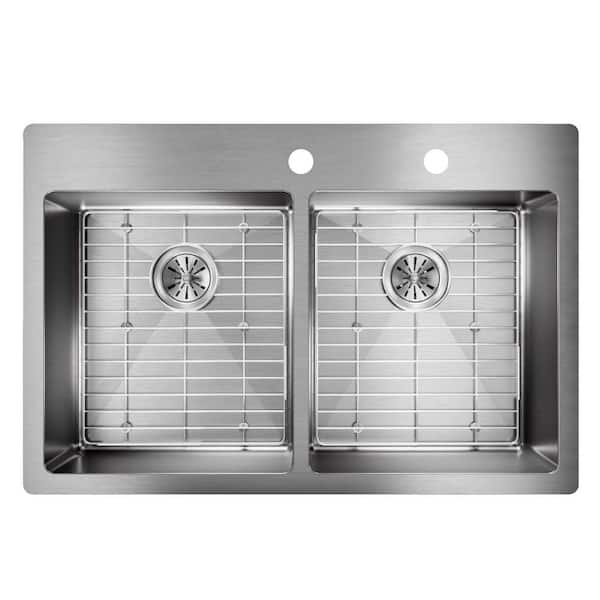
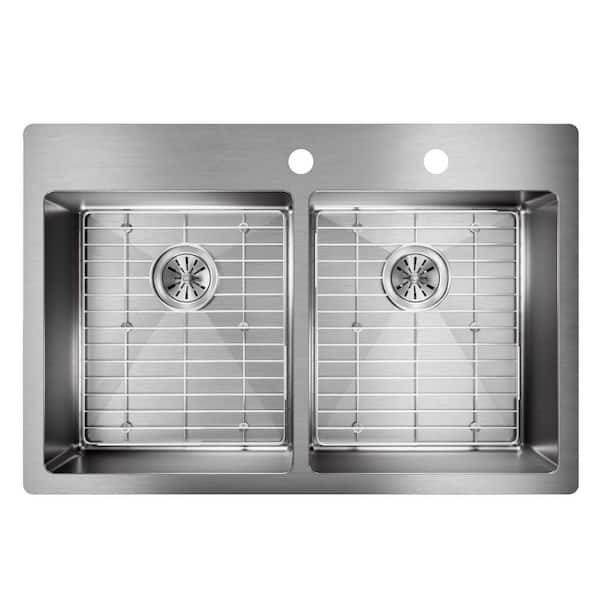
Elkay Crosstown Double Bowl Undermount Stainless Steel Kitchen Sink (ECTRUD33179DBG)
Score: 8.4/10 — A versatile 33-inch undermount solution that solves the double-bowl dilemma with a smart 60/40 split and professional-grade sound dampening.
Overview
The Elkay Crosstown Double Bowl Undermount Stainless Steel Kitchen Sink is designed to solve the most common frustration found in traditional double-bowl configurations: the "too small to be useful" syndrome. By combining a professional-grade build with a strategic asymmetric layout, this 33-inch sink maximizes usable workspace for home cooks.
Looking for a high-performance workstation? The Elkay Crosstown Double Bowl Undermount Stainless Steel Kitchen Sink (ECTRUD33179DBG) offers a professional-grade 60/40 split for maximum utility.
In many standard 50/50 split sinks, neither basin is wide enough to accommodate a full-sized baking sheet or a large stockpot without tilting, which often leads users to abandon one side entirely. The Elkay Crosstown solves this by employing an asymmetric 60/40 configuration, providing one substantial primary basin for heavy-duty cleaning and a secondary basin for rinsing, prepping, or soaking small items.
Crafted from durable T304 stainless steel, this sink is designed for the modern home cook. If you are planning a full kitchen refresh, you may also want to consider our MOEN Chateau 7430 faucet guide or read our detailed MOEN Chateau 7430 review or a complete Kohler Artifacts faucet guide to complete the setup. This sink is designed for the modern home cook who balances high-volume meal preparation with a desire for an understated, professional aesthetic. By utilizing an undermount installation, the sink sits flush beneath the countertop, eliminating the "lip" found in drop-in models. This allows for a seamless transition from counter to basin, making it significantly easier to wipe crumbs and liquids directly into the sink without fighting a raised metal edge.
Beyond the layout, the Crosstown series focuses on the sensory experience of the kitchen. Through a combination of gauge-specific steel, heavy-duty sound-deadening pads, and a sprayed undercoating, Elkay has mitigated the "clanging" noise typically associated with stainless steel. For busy households where the kitchen is the hub of activity, this reduction in acoustic pollution makes the environment feel more refined and less like a commercial scullery.
Key Features
Optimizes workspace by providing one large bowl for cookware and one smaller bowl for utility tasks.
Industry-standard 18-gauge steel offers a balance of rigidity and cost-effectiveness with high corrosion resistance.
Integrated rubber pads and sprayed undercoating reduce the noise of running water and clattering dishes.
Custom-fit stainless steel grids protect the basin surface from scratches and improve water drainage.
Softly curved corners provide a modern look while remaining easy to clean with a standard sponge.
A matte-textured surface that effectively masks water spots, fingerprints, and minor surface scuffs.
| Feature | Specification |
|---|---|
| Model Number | ECTRUD33179DBG |
| Outer Dimensions | 33" L x 19" W |
| Configuration | 60/40 Double Bowl Undermount |
| Main Bowl Depth | 9 inches |
| Secondary Bowl Depth | 7 inches |
| Material | 18-Gauge T304 Stainless Steel |
| Drain Diameter | 3-1/2" Standard |
| Finish | Brushed Satin |
| Accessories Included | Two Stainless Steel Bottom Grids |
| Installation Type | Undermount |
Pros & Cons
Strengths
- Highly functional 60/40 bowl distribution fits real-world cookware.
- Generous 9-inch depth in the primary basin prevents splashing.
- Bottom grids included as standard, preventing costly add-ons.
- Superior noise reduction compared to budget stainless sinks.
- Sleek undermount profile enables faster countertop cleanup.
- Satin finish is forgiving with daily wear and tear.
Limitations
- 18-gauge steel is slightly thinner than premium 16-gauge options.
- The 7-inch secondary bowl is too shallow for oversized pots.
- Requires professional countertop fabrication for installation.
- No basket strainers included in the box.
- Not suitable for laminate countertops.
Performance
In real-world application, the Elkay Crosstown ECTRUD33179DBG excels where versatility is required. The 60/40 split is the "goldilocks" of sink layouts. During testing, a standard half-sheet baking pan fits comfortably in the larger 18-inch basin, allowing for a full soak without the pan leaning precariously against the wall. Meanwhile, the smaller basin proves invaluable for rinsing vegetables or holding a colander, keeping the primary washing area clear for larger pots.
Acoustically, the sink performs significantly better than entry-level models. The sprayed undercoating and rubber pads effectively deaden the vibration of the steel. When the faucet is running at full pressure, there is a muted "thrum" rather than a loud, echoing metallic ring. This makes the kitchen feel quieter, especially during the frantic pace of dinner preparation.
The brushed satin finish is a standout for maintenance. Stainless steel is notorious for showing "rainbow" streaks and calcium deposits from hard water. While the ECTRUD33179DBG does not eliminate these, the satin texture diffuses light, making water spots far less noticeable than they would be on a mirrored or polished finish. The 10mm radius corners are also a practical victory; they are tight enough to look contemporary but avoid the "dead zones" of zero-radius sinks where grime can accumulate in a sharp 90-degree angle.
Pro Tip: To maximize the utility of the 60/40 split, install your garbage disposal in the smaller basin. This keeps the larger basin completely open for soaking oversized pots and pans without the restriction of a disposal unit's plumbing footprint.
Deep Dive: How an Undermount Stainless Sink Works
To understand the value of the Elkay Crosstown, one must understand the engineering of the undermount system. Unlike drop-in sinks, which rely on a flange resting on top of the counter, the ECTRUD33179DBG is suspended from beneath the countertop. This creates a structural bond where the weight of the sink, and the water it holds, is supported by the cabinet base and a series of heavy-duty clips or adhesives applied to the underside of the stone.
The use of T304 stainless steel is critical here. T304 is a chromium-nickel alloy, which creates a "passive layer" of chromium oxide on the surface. This invisible layer protects the iron in the steel from oxidizing (rusting) when exposed to water and oxygen. The 18-gauge thickness refers to the thickness of the sheet metal; while 16-gauge is thicker, 18-gauge is the industry standard for residential use, providing enough structural integrity to prevent bowing under the weight of a full basin of water without adding unnecessary cost.
The sound-dampening system works on the principle of vibration absorption. Stainless steel is a natural resonator. By bonding rubberized pads to the exterior walls and applying a thick, sprayed-on sound-deadening coating, Elkay breaks the surface tension of the metal. This prevents the sink from acting like a bell, absorbing the kinetic energy of falling water or clinking silverware and converting it into heat rather than audible sound.
Comprehensive Buyer's Guide: Choosing the Right Sink
When shopping for a kitchen sink, the choice often boils down to material, mounting style, and configuration. If you are also updating your plumbing lines, be sure to check our SharkBite coupling guide to ensure leak-free connections. Here is how the Elkay Crosstown ECTRUD33179DBG fits into the broader market.
Material Analysis
Stainless steel remains the most popular choice for high-utility kitchens due to its heat resistance and durability. Compared to fireclay or cast iron, stainless steel is lighter and less prone to chipping. However, it can scratch. For those seeking a different material feel, the Blanco Empressa 1-3/4 Low Divide Undermount Kitchen Sink offers a distinct alternative to traditional stainless steel. The inclusion of bottom grids in the Crosstown model is a critical feature, as it creates a physical barrier between heavy pots and the steel surface, significantly extending the lifespan of the finish.
For those considering alternatives, composite granite sinks, such as the Blanco Precis Compact Single-Basin Undermount Kitchen Sink in Anthracite SILGRANIT, offer more color options and are nearly silent, but they lack the timeless professional look of the Elkay Crosstown and can be more susceptible to cracking under extreme impact. Fireclay models, such as the Sinkology Turner 33-Inch Double Bowl Fireclay Farmhouse Apron Front Kitchen Sink in Crisp White or the Ruvati Fireclay 30-inch Farmhouse Apron-Front Kitchen Sink, are stunning for farmhouse styles but are significantly heavier and requires more robust cabinetry support.
Configuration Comparison
- Single Bowl: Options like the Kohler Vault 35-1/2" x 21-1/4" Undermount Single Bowl Kitchen Sink are best for those who exclusively wash very large items (turkey trotters, industrial pans) and don't mind a cluttered sink.
- 50/50 Double Bowl: Aesthetic symmetry, but often results in two basins that are both too small for large items.
- 60/40 Double Bowl (Elkay Crosstown): The ideal compromise, offering a "utility" side and a "prep" side.
Mounting Options
Undermount sinks provide a seamless look and are the gold standard for granite and quartz installations. The primary trade-off is that they require professional installation and a compatible countertop. If you are installing a laminate or tile countertop, a drop-in sink is mandatory, as these materials cannot support the weight of a suspended sink and are not waterproof on their underside.
Installation and Setup Guide
Installing the Elkay Crosstown ECTRUD33179DBG is a multi-stage process that typically involves a countertop fabricator and a plumber. Because it is an undermount model, the sink cannot be "dropped in" after the counter is installed; it must be integrated during the counter installation process.
Step 1: Cabinet Preparation
Ensure your sink base cabinet is at least 36 inches wide. This provides the necessary clearance for the 33-inch sink and allows room for the mounting clips to be secured to the sides of the cabinet walls. Check that the cabinet floor is level to ensure the sink sits flat, preventing drainage issues. If the cabinet is slightly out of square, use plastic shims to level the support rails.
Step 2: Countertop Cutout
The fabricator will create a cutout in the stone (granite, quartz, etc.) based on the sink's exact dimensions. The edges of this cutout are polished to ensure a clean look. The sink is then typically "dry-fitted" to ensure a perfect match before any adhesive is applied. It is vital to verify the 60/40 orientation matches your desired faucet placement—don't accidentally install the smaller basin where you intended the main wash area to be.
Step 3: Mounting and Sealing
The sink is hoisted into place from below. High-strength silicone sealant is applied to the rim to create a watertight seal between the stainless steel and the stone. Since you're already planning the install, consider browsing our Pfister Stellen faucet guide to ensure your fixture matches the new sink's profile. Mounting clips (often provided by the fabricator or Elkay) are tightened to pull the sink tight against the underside of the counter. Using a specialized undermount sink harness can help maintain tension during the curing process of the silicone.
Step 4: Plumbing Connection
The 3-1/2" drain openings are then connected to the plumbing. For those managing larger water removal tasks in the home, see our guide on the best submersible utility pumps for draining water fast. While finalizing your setup, ensure you have the right fixture. To help you choose, we've put together a comprehensive MOEN Chateau 7430 faucet buying guide; we specifically recommend pairing it with a high-quality fixture; see our detailed MOEN Chateau 7430 review, the Kohler Artifacts K-72759-VS review: Classic Pull-Down Faucet for a classic look, or our Pfister Stellen review for a budget-friendly high-value option. If installing a garbage disposal, it is highly recommended to place it in the larger 9-inch bowl to maximize the space for food scraps. The P-trap and drain lines should be checked for leaks using a flashlight and dry paper towels during the first few fills. Ensure the tailpiece is tightened securely to prevent slow leaks that can damage the cabinet floor.
Maintenance and Long-Term Care
To keep the Elkay Crosstown looking new, follow a specific maintenance regimen. For those in regions with high mineral content, we recommend checking our GE GXWH40L whole house water filter guide to prevent permanent staining. Daily care is essential to maintain the finish. If you are dealing with hard water, consider installing a whole-house filtration system to protect your fixtures. Stainless steel is durable, but it is not indestructible. If you struggle with mineral buildup from hard water, pairing your sink with a whole house water filter can significantly reduce the frequency of deep cleaning.
Maintenance Tip: Always wipe the sink dry after the final cleanup of the night. This prevents the buildup of mineral deposits (limescale) and keeps the satin finish looking consistent across the entire basin.
Daily Cleaning
Use a soft microfiber cloth and mild dish soap. Avoid using steel wool or abrasive scrubbing pads (like the green side of a heavy-duty sponge), as these can create micro-scratches in the satin finish, eventually making the sink look "cloudy." For stubborn food residue, a paste of baking soda and water is an effective, non-abrasive alternative. Always wipe in the direction of the brushed grain to maintain the visual consistency of the metal.
Avoiding Corrosion and Pitting
While T304 steel is corrosion-resistant, certain chemicals can break down the passive layer. Never use