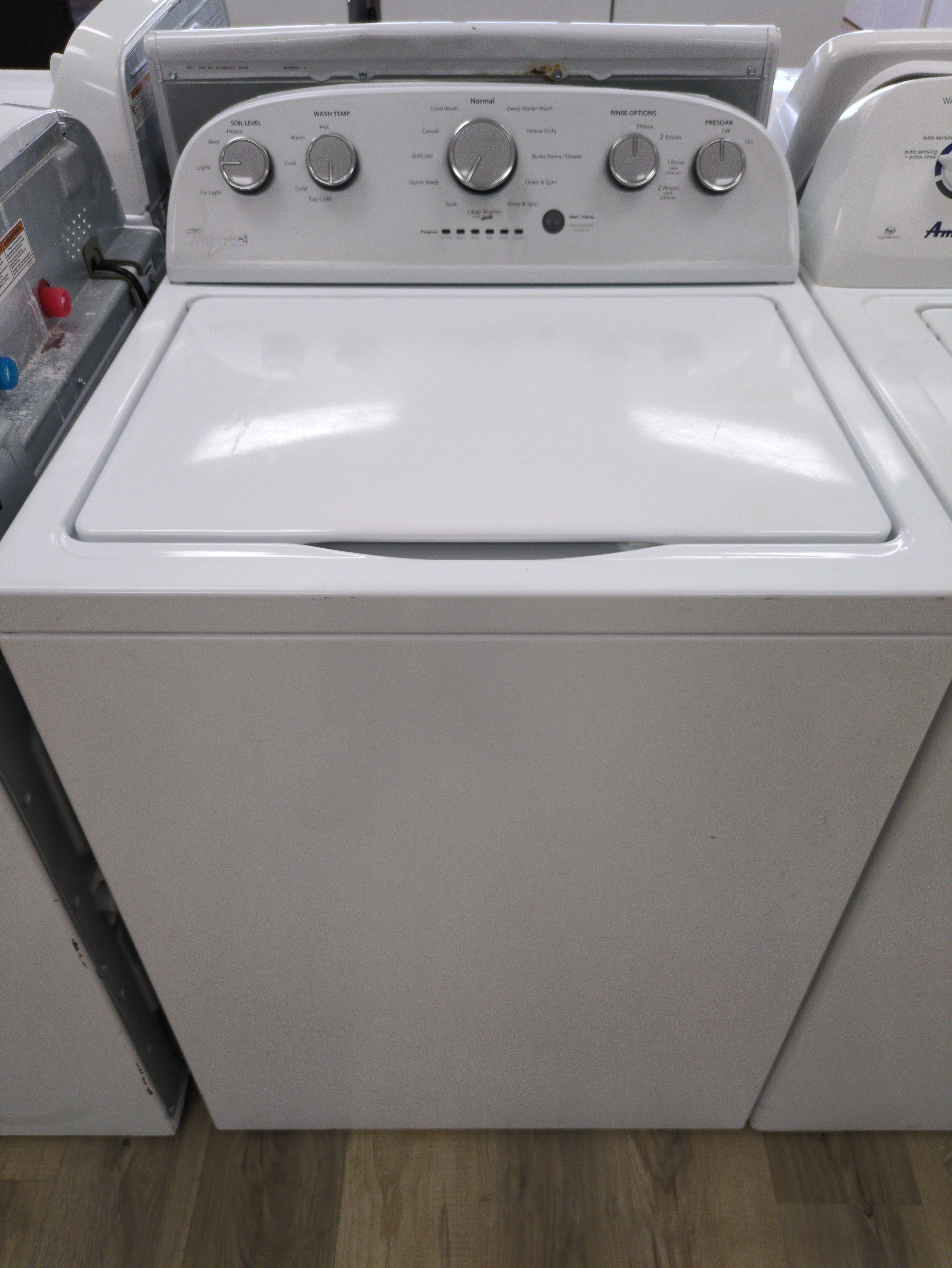
Whirlpool WTW5000DW 4.3 cu. ft. Top Load Washer
Score: 7.8/10 — A no-frills, dependable top-load washer that delivers solid everyday cleaning performance at a mid-range price, ideal for budget-conscious families who value reliability over smart features.
Overview
Our comprehensive review finds that the Whirlpool WTW5000DW 4.3 cu. ft. Top Load Washer is a highly reliable top-load washer and a budget-friendly choice for families who prefer traditional cleaning power over complex smart features. If you're searching for a dependable agitator washer that prioritizes durability and ease of use, this model (or a more compact alternative like the Amana Top-Load Washer) stands out as a pragmatic solution. Positioned squarely in the mid-range segment of the laundry appliance market, It foregoes the high-tech impeller designs found in premium high-efficiency (HE) models and instead leans on a traditional agitator configuration—a choice that speaks directly to users who trust proven mechanical cleaning over newer, sensor-heavy alternatives.
The result is a machine that feels familiar, straightforward, and refreshingly easy to operate for households of all ages.
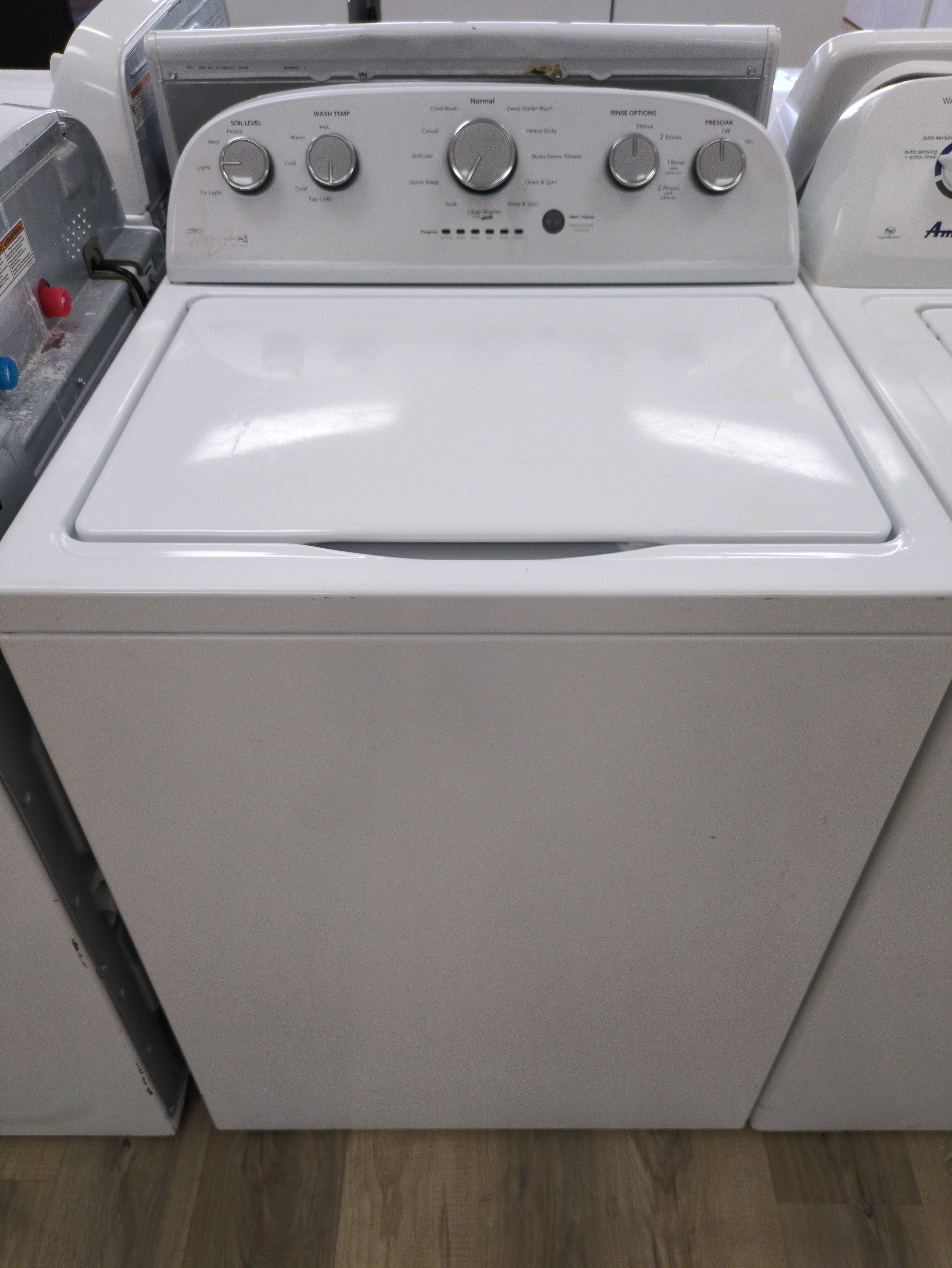
Designed with everyday families in mind, the WTW5000DW handles mixed loads of cotton, synthetics, and heavily soiled items with consistent results. Its intuitive rotary dial controls and clearly labeled cycle options mean there's virtually no learning curve, which makes it a strong candidate for first-time washer buyers or anyone replacing an older machine without wanting to relearn how to do laundry. The white cabinet and clean lines also ensure it blends unobtrusively into most laundry rooms.
While it won't win awards for energy efficiency or smart-home connectivity, the WTW5000DW earns its keep through durability, simplicity, and the quiet confidence of the Whirlpool brand. At a capacity of 4.3 cubic feet, it's large enough to handle a week's worth of laundry for a family of four without feeling cramped, yet compact enough to slot into standard laundry room footprints without modification.
Key Features
A full-size agitator provides mechanical scrubbing action that reliably lifts dirt and stains from everyday fabrics without relying on complex sensor systems.
Spacious enough for large family loads, comforters, and bulky items while remaining within a standard top-load footprint.
A generous selection of cycles covers everything from delicates and hand wash to heavy duty and quick wash.
Choose from hot, warm, cold, tap cold, and a warm rinse setting to match garment care labels precisely.
Fill the tub to the brim for heavily soiled loads or bulky items—a feature traditional-washer fans highly value.
Physical dial and push-button controls are intuitive, durable, and resistant to accidental setting changes.
| Feature | Value |
|---|---|
| Capacity | 4.3 cu. ft. |
| Configuration | Top Load |
| Agitator | Yes (Traditional) |
| Number of Wash Cycles | 12 |
| Water Temperature Options | 5 |
| Spin Speed | Up to 700 RPM |
| Soil Level Settings | 5 |
| Special Cycles | Heavy Duty, Delicates, Quick Wash, Hand Wash, Bulky Items |
| Wash Action Options | Deep Water Wash, Deep Rinse |
| Energy Star Certified | No |
| Controls | Rotary Dial + Push Button |
| Lid Type | Hinged Glass Lid |
| Color / Finish | White |
| Dimensions (H x W x D) | 43" x 27.5" x 26" |
| Weight | Approx. 150 lbs |
| Electrical Requirements | 120V / 60Hz / 15A |
| Warranty | 1-Year Limited Parts & Labor |
Pros & Cons
Pros
- Simple, intuitive rotary dial controls
- Traditional agitator cleans everyday loads effectively
- Deep Water Wash option for bulky or heavily soiled items
- 12 wash cycles cover most fabric and soil scenarios
- Solid build quality consistent with Whirlpool's reputation
- Hinged glass lid lets you monitor loads mid-cycle
- Competitive mid-range price point
- Standard electrical requirements
Cons
- Not Energy Star certified — higher utility costs over time
- No Wi-Fi connectivity or smart-home integration
- Agitator reduces usable drum space versus impeller models
- 700 RPM max spin leaves clothes wetter than HE rivals
- No steam cycle or sanitize option
- Noise level is moderate — not whisper-quiet
- Basic warranty coverage (1 year only)
Performance
In day-to-day use, the Whirlpool WTW5000DW punches reliably at its weight class.
Cotton t-shirts, denim jeans, and mixed synthetic loads come out clean and well-rinsed after a standard Normal cycle. The agitator does its job without being excessively rough on fabrics—moderate tangling of lightweight items can occur, but it's no worse than comparable agitator machines. Selecting the Delicates cycle with cold water and a reduced spin speed handles more fragile garments capably enough for most everyday use cases.
The Heavy Duty cycle, combined with hot water and the maximum soil setting, is where the WTW5000DW earns genuine praise. Work clothes stained with grease, grass, or food came out impressively clean in testing without the need for pre-treating in most instances. This is an area where the traditional agitator approach genuinely outperforms some sensor-driven impeller washers, which can be overly conservative with water levels and agitation intensity.
The 700 RPM maximum spin speed is a notable limitation. If you require a more efficient spin, such as that found in the LG TurboWash 360 Smart Front-Load Washer, or a different top-load approach, you might consider the LG Top-load washing machine as an alternative, or explore our LG WM1455HWA review if you have limited space. Loads come out noticeably wetter than what you'd experience with a 1,000–1,200 RPM front- or top-loader, which translates to longer drying times and slightly higher dryer energy costs. This won't be a dealbreaker for most buyers, but if you air-dry a significant portion of your laundry, it's worth factoring in. Cycle times on Normal hover around 50–60 minutes, while Quick Wash completes in a practical 28–30 minutes for lightly soiled, smaller loads.
Noise is moderate. The agitation phase produces a rhythmic swishing sound consistent with traditional top-loaders. The spin cycle is noticeably louder, particularly on high-speed settings. It won't wake a sleeping infant in an adjacent room in most home layouts, but it's not something you'd describe as quiet. Users with open-plan laundry rooms adjacent to living areas may want to schedule overnight cycles or pick off-hour usage windows.
How It Works: The Mechanics of Agitation
To understand the appeal of the Whirlpool WTW5000DW, one must understand the mechanical difference between an agitator and an impeller. In this model, the agitator is the central pillar that twists back and forth. This creates a physical scrubbing action, forcing clothes to rub against each other and the agitator itself. This is fundamentally more aggressive than impeller-style washers, which use a rotating disc at the bottom to move clothes through the water.
For the user, this means that heavily soiled fabrics—like denim or thick cotton towels—receive more direct mechanical energy. The water is pushed upward and outward, ensuring that detergent penetrates deep into the fibers. While this process can be slightly harder on very delicate fabrics, it is widely regarded as the most effective way to remove ingrained dirt without spending hours pre-treating every garment. The WTW5000DW optimizes this by offering varied soil levels, which adjust the duration and intensity of the agitation phase.
The water filling system is also traditional. (For those looking to optimize their home's hot water delivery, see our A.O. Smith EES-40 review). Unlike "High Efficiency" (HE) machines that use sensors to calculate the absolute minimum amount of water needed, the WTW5000DW allows for more manual control. This is why the "Deep Water Wash" is such a selling point; it allows the user to override the automatic settings and fill the tub higher, which prevents clothes from becoming bunched up and ensures that every item is fully submerged and agitated.
Beyond the physical agitation, the WTW5000DW employs a specialized transmission system that manages the torque required to move heavy, wet laundry. The motor is designed for high-torque starts and stops, which is why you hear that distinct "thump-thump" sound during the wash cycle. This mechanical robustness is a key part of why these machines often last longer than complex electronics-heavy models; there are fewer fragile sensors and less software-driven "guessing" regarding load weight and water levels.
Installation and Setup
Installing the Whirlpool WTW5000DW is a straightforward process that can be handled by a homeowner with basic tools or a professional installer. Because it uses standard 120V electrical requirements and traditional hot/cold water hookups, it fits into almost any existing laundry room configuration without needing electrical upgrades.
Step 1: Leveling. The most critical part of the installation is leveling the machine. Because the WTW5000DW reaches 700 RPM during the spin cycle, an unlevel machine will vibrate excessively and may "walk" across the floor. Use a spirit level on the top of the cabinet and adjust the leveling legs by rotating them until the machine is perfectly flat. This minimizes noise and protects the internal suspension.
Step 2: Hose Connection. Use high-quality rubber hoses and ensure they are tightened securely. We recommend installing burst-proof braided stainless steel hoses to prevent leaks, as the pressure during the fill and drain cycles can wear down standard rubber over time. Ensure the drain hose is secured in the standpipe with a U-shape to prevent siphoning.
Step 3: Calibration/First Run. Before loading the machine for the first time, run a "Clean Washer" cycle or a short Normal cycle with no clothes and a small amount of detergent. This clears any factory residues and allows you to confirm that the water is filling and draining correctly without the risk of ruining a load of laundry.
Environmental Considerations: Ensure there is at least one inch of clearance around the sides and back of the machine to allow for airflow and to prevent the chassis from rubbing against walls during the high-speed spin cycle. If you are installing this in a garage or basement (where you might also use a GE ADEL50LZ dehumidifier to manage moisture), consider using a vibration pad under the legs to further dampen noise and protect the floor from micro-scratches. For those installing laundry rooms in basements, ensuring proper flood protection with a Ridgid SP-650C sump pump (or explore our Basement Watchdog BW1033 review for another reliable option) (see our comprehensive guide to the best submersible utility pumps) (see our Wayne CDU980E vs Zoeller M53 comparison guide) is critical for protecting your appliances.
Maintenance Guide for Longevity
To keep the Whirlpool WTW5000DW running efficiently for a decade or more, a simple maintenance routine is essential. Because this is a traditional agitator machine, it is less prone to the "moldy smell" associated with front-loaders, but it still requires care.
- Drum Cleaning: Every 30 days, run a cycle with a dedicated washing machine cleaner or a cup of white vinegar. This removes detergent buildup and mineral deposits from hard water that can cling to the agitator and drum.
- Detergent Choice: While this is not a strict HE-only machine, using too much detergent can lead to "sudsing" or residue on clothes. Follow the manufacturer's guidelines on the detergent bottle; more soap does not equal cleaner clothes and can actually clog the pump over time.
- Lid Seal Care: Wipe down the rim of the tub and the underside of the glass lid weekly. Lint and soap scum can accumulate here, potentially preventing a tight seal or leading to odors.
- Hose Inspection: Once a year, check the water inlet hoses for bulges, cracks, or leaks. Replacing hoses every five years is a standard industry recommendation to avoid catastrophic indoor flooding.
- Lint Filter/Drain Check: Periodically ensure the drain area is clear. If you notice the machine is taking longer to drain, check the drain hose for kinks or obstructions.
For those living in hard-water areas, we strongly recommend the use of a GE GXWH40L whole house water filter or adding a water-softening agent to each load. Calcium and magnesium buildup can crystallize on the agitator's bearings and the internal pump, leading to increased noise and reduced mechanical efficiency over time. If you notice a "grinding" sound during the spin cycle, it is often a sign that mineral buildup is affecting the balance of the drum.
The Buyer's Guide: Is This Washer Right For You?
Choosing a washing machine often comes down to a trade-off between efficiency, capacity, and cleaning power. The Whirlpool WTW5000DW sits in a specific niche. To determine if it fits your needs, consider the following criteria:
1. Your Typical Load Type
If your laundry consists mostly of gym clothes, heavy towels, and denim, the WTW5000DW is an excellent choice. The mechanical action of the agitator is far superior for scrubbing out sweat, mud, and grease. However, if you frequently wash high-end lingerie, silk blouses, or extremely delicate vintage fabrics, you may find the agitator too aggressive. While the "Delicates" cycle helps, an impeller or front-load machine is inherently gentler on fibers.
2. Your Utility Budget
This machine is not Energy Star certified. This means it will use more water and more electricity per load than a high-efficiency (HE) alternative. For a household doing 5-7 loads a week, the difference in the monthly utility bill might be negligible (a few dollars). If you're looking