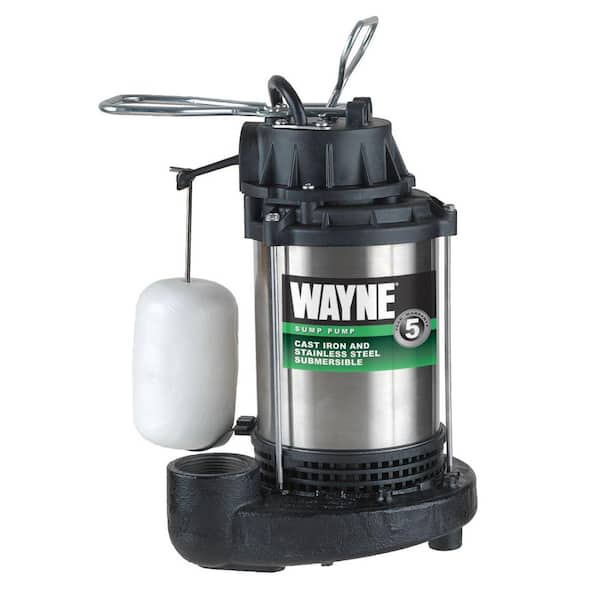
A flooded basement can cause thousands of dollars in damage within hours — the right sump pump is your first and most critical line of defense. The Wayne 3/4 HP Submersible Cast Iron and Steel Sump Pump has earned a devoted following among homeowners and contractors alike, but is its blend of cast iron durability and 3/4 HP muscle the right fit for your situation?
>TL;DR — Wayne CDU980E at a Glance
- Motor: 3/4 HP permanent split capacitor
- Max flow: 4,600 GPH at 0 ft. head
- Construction: Cast iron volute, stainless steel motor housing
- Switch type: Vertical float switch (adjustable)
- Discharge: 1-1/2 in. NPT top outlet
- Best for: Moderate-to-heavy water intrusion, larger basements, high-demand applications
- Bottom line: One of the most capable mid-range submersible sump pumps available for residential use
Our Top Pick: Wayne CDU980E 3/4 HP Submersible Sump Pump
The Wayne CDU980E delivers contractor-grade cast iron and stainless steel construction with genuinely impressive pumping performance, all at a price that undercuts many heavy-duty competitors. It earns a 9.2 / 10 overall — the best combination of durability, flow rate, and value you'll find in this class.
Wayne CDU980E: In-Depth Review (See our full review here)
Build Quality & Materials
The first thing you notice about the CDU980E is its weight — this pump is solid. The volute (the water-moving chamber) is cast iron—a key feature discussed in our Wayne CDU980E vs Zoeller Mighty-Mate Submersible Sump Pump comparison guide, chosen specifically because it dissipates heat effectively, resists corrosion in typical basement water chemistry, and simply lasts longer under continuous cycling than comparable plastic housings. The motor casing is stainless steel, which adds corrosion resistance where the pump is most vulnerable to mineral-laden water sitting against it over years of service.
The suction screen is also stainless steel mesh, helping prevent debris from entering and fouling the impeller. Wayne uses a dual-seal design on the motor shaft — an oil-lubricated lower seal and a water-resistant upper seal — to protect the motor windings from moisture intrusion even under prolonged submersion. This two-barrier approach is a feature you typically see on commercial-grade equipment, not $200–$300 residential pumps.
The impeller itself is cast iron with a semi-open design that allows it to pass small solids (up to approximately 3/8 in.) without clogging, which is particularly useful in older pit liners that may shed debris over time. Wayne backs all of this with a 3-year limited warranty — above average for the category.
If you've ever bought a budget pump with a polypropylene body and watched it crack, warp, or develop leaks around the fitting within a few seasons, the CDU980E's materials feel like a genuine upgrade. For many homeowners, this is their second or third sump pump after having been burned by cheaper options — and the construction here is notably more serious. For those weighing different brands, our Ridgid SP-650C buying guide for wet basements provides a great comparison of cast iron options.
Motor & Pumping Performance
The 3/4 HP permanent split capacitor (PSC) motor is the heart of the CDU980E. PSC motors run cooler and more efficiently than shaded-pole motors, making them better suited to frequent on/off cycling in high-water-table situations. Wayne rates the motor at 9.2 amps on a standard 115V/60Hz circuit — a dedicated 15-amp circuit is sufficient, though a 20-amp circuit is always preferable for longevity.
Peak flow is rated at 4,600 GPH (gallons per hour) at 0 ft. vertical head. At a more realistic 10 ft. of head (the elevation from the pit floor to where water exits your discharge pipe outside), flow drops to approximately 3,100 GPH — still excellent for nearly any residential basement. At 20 ft., you're looking at around 2,000 GPH, which covers even homes with significant vertical discharge runs.
What these numbers mean in practice: during a heavy storm event where water is pouring in rapidly, the CDU980E can keep up with inflow that would overwhelm a 1/2 HP pump. For a deeper dive into how it stacks up against other heavy-hitters, see our Wayne CDU980E vs Zoeller M53 comparison guide to see how it handles extreme flooding. Homeowners in low-lying areas, properties near bodies of water, or homes with older, less-effective waterproofing membranes benefit most from this extra headroom. It's also worth noting that a pump running at 60–70% of capacity will run cooler and last longer than one constantly pushed to its limit.
Float Switch & Controls
The CDU980E uses a vertical float switch mounted directly to the pump body. This is an important design choice: unlike tethered float switches that swing in an arc and can tangle on the pit walls or the pump itself, the vertical switch moves straight up and down along the body. This makes it far more reliable in narrow 18-inch diameter pits that are common in older homes.
The float activation point is adjustable, letting you set the water level at which the pump kicks on — useful for fine-tuning how much water accumulates before the motor runs, which directly affects cycle frequency and motor longevity. The switch is pre-set from the factory to activate at roughly 5 inches of water depth and shut off at approximately 2.5 inches, but these can be adjusted by repositioning the float rod clip.
One limitation: the CDU980E does not include a built-in alarm or water-level alert. If you want notification that the pump has activated (or, more critically, that it has failed), you'll need to add a separate sump pump alarm — an inexpensive but important addition for any basement with finished living space or stored valuables.
Installation & Fit
Installation is straightforward for a competent DIYer. The top-mounted 1-1/2 in. NPT discharge outlet connects to standard PVC pipe, and Wayne includes a 1-1/4 to 1-1/2 in. adapter so you can use either pipe size depending on your existing setup. The pump requires a minimum pit diameter of 11 inches (though 18 inches is recommended for comfortable installation and service access). The unit weighs approximately 20 lbs., which is heavier than plastic alternatives but manageable for a single person during installation.
You'll want to install a check valve on the discharge line to prevent water from flowing back into the pit when the pump shuts off — this is best practice with any sump pump and prevents the motor from short-cycling. The CDU980E does not include a check valve in the box, so budget for one separately if you're building a new installation from scratch.
Pros
- Cast iron volute and stainless steel housing for superior durability
- Impressive 4,600 GPH peak flow rate for a residential pump
- Vertical float switch works reliably in narrow pits
- Dual-seal motor protection for extended service life
- Semi-open impeller passes small solids without clogging
- 3-year limited warranty — above category average
- Compatible with standard 1-1/2 in. PVC discharge piping
- Adjustable activation water level
Cons
- Heavier than plastic competitors (~20 lbs.) — minor installation inconvenience
- No built-in alarm or WiFi connectivity
- Check valve not included
- Higher price than entry-level 1/2 HP pumps
- Overkill for very light water intrusion scenarios
This guide contains affiliate links. We may earn a commission if you purchase through our links, at no extra cost to you. Our recommendations are based on independent research and testing criteria.
Full Specifications
| Specification | Detail |
|---|---|
| Model Number | CDU980E |
| Motor Size | 3/4 HP |
| Motor Type | Permanent Split Capacitor (PSC) |
| Voltage / Hz | 115V / 60 Hz |
| Amperage Draw | 9.2 A |
| Max Flow (0 ft. head) | 4,600 GPH |
| Flow at 10 ft. head | ~3,100 GPH |
| Flow at 20 ft. head | ~2,000 GPH |
| Max Head | 25 ft. |
| Discharge Size | 1-1/2 in. NPT (adapter for 1-1/4 in. included) |
| Volute Material | Cast Iron |
| Motor Housing Material | Stainless Steel |
| Impeller Material | Cast Iron |
| Impeller Type | Semi-open (passes solids up to ~3/8 in.) |
| Switch Type | Vertical float switch (adjustable) |
| Activation Depth | ~5 in. (factory setting, adjustable) |
| Shut-off Depth | ~2.5 in. (factory setting, adjustable) |
| Minimum Pit Diameter | 11 in. (18 in. recommended) |
| Seal Type | Dual seal (oil-lubricated lower, water-resistant upper) |
| Weight | ~20 lbs. |
| Warranty | 3-year limited |
| Certifications | UL Listed |
Key Feature Breakdown
Cast Iron Volute
Superior heat dissipation and corrosion resistance compared to thermoplastic housings. Extends pump life in high-cycle environments.
Stainless Steel Motor Housing
Resists rust and mineral deposits where the pump body is most exposed to standing water over years of service.
PSC Motor Technology
Runs cooler and draws less startup current than shaded-pole designs. Better suited to frequent cycling in high water table conditions.
Vertical Float Switch
Eliminates tangle risk in narrow pits. Adjustable activation depth lets you customize cycle behavior for your pit's characteristics.
Dual-Seal Motor Protection
Two independent barriers protect motor windings from moisture. Standard on commercial pumps, less common in this price bracket.
Semi-Open Impeller
Handles small debris without jamming, reducing service calls and maintenance in real-world basement pit conditions.
How the CDU980E Compares
| Feature | Wayne CDU980E (3/4 HP) | Wayne CDU800 (1/2 HP) | Typical 3/4 HP Plastic Competitor |
|---|---|---|---|
| Motor Size | 3/4 HP | 1/2 HP | 3/4 HP |
| Max Flow | 4,600 GPH | 3,400 GPH | 3,700–4,200 GPH (varies) |
| Volute Material | Cast Iron | Cast Iron | Thermoplastic |
| Motor Housing | Stainless Steel | Stainless Steel | Thermoplastic |
| Switch Type | Vertical Float | Vertical Float | Tethered or Vertical (varies) |
| Dual Seal | Yes | Yes | Usually No |
| Warranty | 3 Years | 3 Years | 1–2 Years (typical) |
| Typical Weight | ~20 lbs. | ~17 lbs. | 10–15 lbs. |
| Built-in Alarm | No | No | Rarely |
| Best For | High demand, larger basements | Moderate demand, typical homes | Budget-conscious buyers |
Alternatives Worth Considering
If the CDU980E isn't quite the right fit, several other submersible sump pumps cover adjacent use cases:
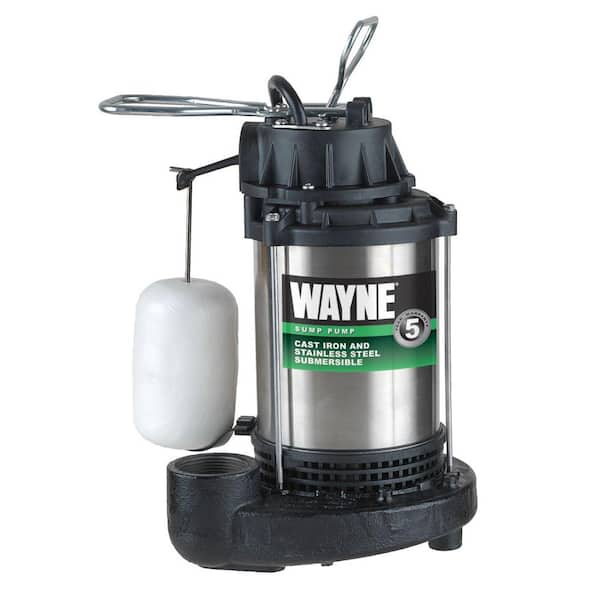
- Zoeller Mighty-Mate Submersible Sump Pump 1/3 HP Cast Iron: A long-trusted 1/3 HP cast iron pump for moderate-demand basements where the CDU980E's 3/4 HP capacity is more than needed.
- Ridgid Cast Iron Submersible Sump Pump Half Horsepower: A 1/2 HP cast iron pump that sits between the CDU800 and CDU980E in capacity. See our Ridgid SP-650C review or detailed buying guide for wet basements for