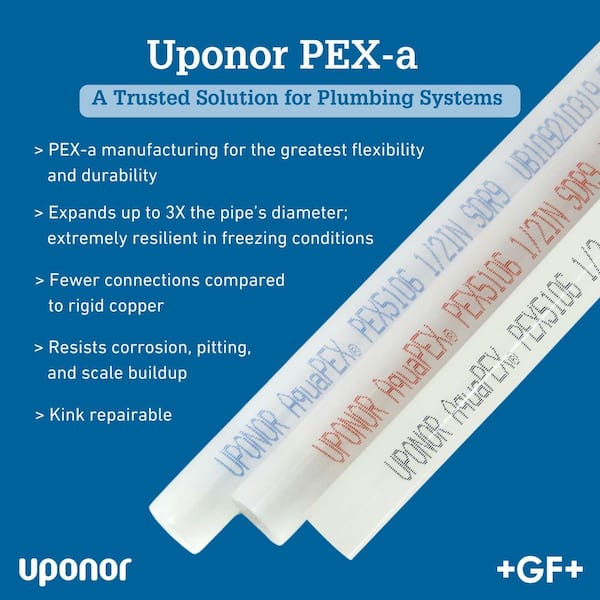
Choosing high-performance hydronic tubing is critical for preventing system corrosion and ensuring long-term reliability. In this guide, we explore why Uponor AquaPEX Oxygen Barrier PEX-A Tubing is the professional standard for closed-loop radiant heating and cooling. When planning a basement utility layout, it is essential to coordinate your piping with other infrastructure, such as the systems detailed in our review of the Ridgid SP-650C water pump or our sump pump buying guide. For comprehensive basement water management, you can also review the Basement Watchdog BW1033 or the Wayne ESP25 battery backup pump.
Best Overall Hydronic Tubing: Uponor AquaPEX Oxygen Barrier PEX-A Tubing
Score: 9.3/10. A professional-grade, flexible PEX-A tubing solution featuring an integrated oxygen barrier, making it the gold standard for closed-loop radiant heating and cooling systems where corrosion prevention and ease of installation are critical.
Uponor AquaPEX Oxygen Barrier PEX-A Tubing Guide
The Uponor AquaPEX Oxygen Barrier PEX-A Tubing is engineered specifically for the rigors of closed-loop hydronic heating and cooling systems.
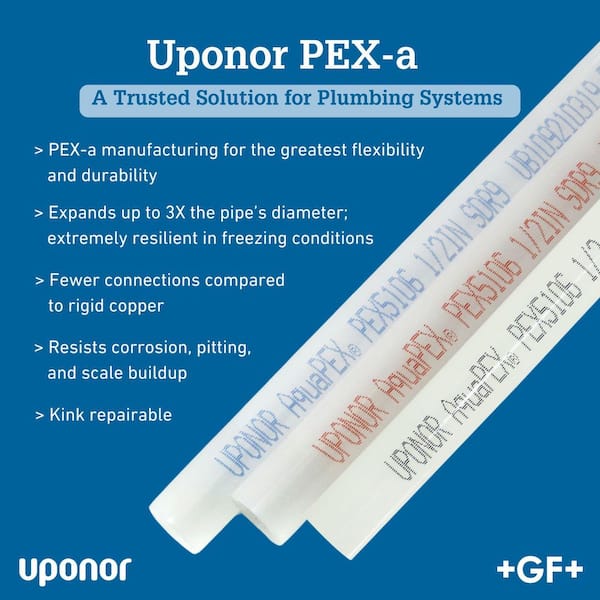
The AquaPEX barrier effectively halts this process, preserving the integrity of the entire mechanical loop.
The defining characteristic of this tubing is its PEX-A construction. PEX-A is created through a peroxidized cross-linking process that results in a more flexible, "memory-retaining" material than PEX-B or PEX-C. For the installer, this means the tubing can be bent around tight corners or routed through complex joist bays with significantly less effort and a lower risk of kinking. Even if the tubing is accidentally kinked during installation, the PEX-A material allows for a degree of recovery that is not possible with other PEX variants, reducing waste and installation time.
For those planning a radiant layout, the Uponor AquaPEX Oxygen Barrier PEX-A Tubing is the recommended choice for long-term durability.
This tubing is most effectively deployed in radiant floor heating layouts—though for those seeking air-based alternatives, our MrCool DIY mini-split buying guide for efficient ductless alternatives to hydronic distribution. It is particularly valuable in high-end residential and commercial retrofits where existing structural obstacles make rigid piping impractical. Because it is designed for closed-loop use, it provides the necessary thermal stability and chemical resistance required for the glycol or water mixtures typically used in these systems.
Before specifying this product, professionals should ensure they have the correct expansion tools and fittings. Much like how a Pelican PC600 water softener or a Fleck 5600SXT system protects piping from scale (essential for overall plumbing health)—which is key to long-term integrity. The Uponor system is designed for an expansion-based fitting method, which ensures a permanent, leak-free connection by expanding the pipe and allowing it to shrink back over the fitting. For those working on simpler water line repairs, exploring how high-quality water softener systems like the Fleck 5600SXT protect your lines can provide a helpful contrast in installation speeds for those performing standard potable water repairs.
Users should carefully verify that the model F1040750OB matches their project's specific diameter and length requirements to avoid procurement delays.Pros
- PEX-A construction offers superior flexibility for complex routing
- Integrated oxygen barrier prevents corrosion in metal system components
- Higher resistance to freeze-damage compared to PEX-B/C
- Expansion fitting compatibility ensures highly reliable, leak-free joints
- Ideal for long-term radiant floor heating stability
Cons
- Not intended for use as a general potable-water substitute
- Requires specific expansion tools for proper installation
- Higher initial cost compared to non-barrier PEX options
- Requires careful verification of local building codes for hydronic use
| Specification | Details |
|---|---|
| Catalog Model | F1040750OB |
| Material | PEX-A Cross-linked Polyethylene |
| Barrier Type | Integrated Oxygen Diffusion Barrier |
| Primary Application | Closed-loop Hydronic Heating/Cooling |
| Typical Uses | Radiant Floor, Fan Coils, Hydronic Distribution |
| Key Advantage | Maximum flexibility and corrosion protection |
Deep Dive: How Oxygen Barrier PEX-A Works
For professional hydronic installations, Uponor AquaPEX Oxygen Barrier PEX-A Tubing is essential because of the unique chemistry of closed-loop systems. In a standard water pipe, water is constantly refreshed. However, in a hydronic heating loop, the same water (or glycol mix) circulates for years. Over time, oxygen from the outside air can actually migrate through the microscopic pores of standard polyethylene plastic. This is known as oxygen diffusion.
When oxygen enters a system containing iron, steel, or copper, it triggers a chemical reaction that produces rust (iron oxide) and scale. This buildup does more than just "clog" the pipes; it can cause "pitting" in the heat exchanger of a boiler, leading to catastrophic leaks. The AquaPEX tubing solves this by incorporating an EVOH (Ethylene Vinyl Alcohol) layer. This layer acts as a molecular sieve that is virtually impermeable to oxygen, ensuring that the internal environment of the heating loop remains anaerobic and protected.
The efficacy of the EVOH layer in the Uponor AquaPEX model is measured by the Oxygen Transmission Rate (OTR). High-quality barrier tubing significantly reduces the amount of oxygen that enters the system per square meter of pipe per day. This is critical because once oxygen is introduced into a closed system, it is incredibly difficult to remove without a full system drain and flush. By preventing the ingress of oxygen at the source—the pipe walls—Uponor extends the lifespan of the circulating pump and the heat source by decades.
Furthermore, the PEX-A structure provides a unique advantage in thermal expansion. All pipes expand and contract as they heat and cool. PEX-A's molecular structure allows it to absorb these thermal stresses more effectively than rigid copper or less flexible PEX-B. This means there is less stress on the fittings over thousands of heating and cooling cycles, which is the primary cause of joint failure in older hydronic systems.
The PEX-A Advantage: Flexibility and Memory
The "A" in PEX-A refers to the method of cross-linking. While PEX-B uses a chemical foaming agent and PEX-C uses electronic irradiation, PEX-A uses a peroxide method. This creates a more uniform molecular structure. The result is a pipe that is not only more flexible but has "shape memory."
In a radiant floor installation, the tubing must be laid in tight "S" patterns (serpentine) or spirals. PEX-A can be bent to a tighter radius without stressing the wall of the pipe. Furthermore, if an installer over-bends the pipe, it can be heated and expanded to return to its original shape, a feature that eliminates the need to cut out and replace kinked sections of tubing.
This "memory" is a result of the high degree of cross-linking achieved during the peroxide process. When you expand a PEX-A pipe with a tool, you are essentially stretching the molecular bonds. When the tool is removed, the material naturally wants to snap back to its original diameter. This creates a constant, compressive force around the fitting, which is why expansion fittings are considered the most leak-proof method of joining PEX tubing.
From a labor perspective, the flexibility of the Uponor AquaPEX Oxygen Barrier PEX-A Tubing translates to fewer fittings. In a traditional copper system, every turn requires an elbow fitting. Every fitting is a potential leak point. With AquaPEX, you can route a single continuous run of tubing through several turns, reducing the number of joints required and significantly lowering the long-term risk of leaks hidden beneath a concrete slab.
Comprehensive Buyer's Guide for Hydronic Tubing
When shopping for hydronic tubing, the Uponor AquaPEX Oxygen Barrier PEX-A Tubing is a top professional choice.
There are several critical factors that should dictate your purchase. Selecting the wrong material can lead to system inefficiency or, in worst-case scenarios, total system failure.
1. Closed-Loop vs. Open-Loop Systems
The first question every buyer must answer is whether their system is closed or open. For those considering alternative high-efficiency heating solutions beyond hydronics, you may find our MrCool DIY mini-split buying guide useful for comparing ductless options.
Regardless of the heat delivery method, ensuring the structural safety of your utility room is paramount; we recommend reviewing how replacing circuit breakers safely protects your electrical panel during these renovations.
An open system (like a traditional water heater) is constantly replenished. A closed system (like a radiant floor) is sealed. If you are building a closed system, an oxygen barrier is non-negotiable. Without it, you are inviting corrosion into the heart of your heating system.
If you use non-barrier PEX in a closed-loop system, you may notice a "sludge" forming in your system over time.
To prevent similar sediment issues in your main plumbing, we recommend integrating a high-capacity filtration system like the Waterdrop G3P800 RO system or exploring Culligan whole-house filtration to protect both your hydronic and potable water lines.
This sludge is the result of oxidized metal particles circulating through the loop. Maintaining clean water throughout the home also protects high-end fixtures like the MOEN Chateau 7430 kitchen faucet from sediment buildup. This not only reduces the heat transfer efficiency of your radiant floors but can also clog the small orifices in your manifold, leading to uneven heating across different rooms.2. Material Grade (PEX-A vs. B vs. C)
While all three are "PEX," they behave differently during installation:
- PEX-A: Most flexible, allows for expansion fittings, best for complex layouts. Uponor AquaPEX uses this grade to ensure maximum longevity and ease of install.
- PEX-B: Stiffer, typically uses crimp rings. More prone to kinking and requires more fittings to navigate turns.
- PEX-C: Similar to B but uses a different cross-linking method; generally less common in high-end hydronic systems.
3. Thermal Conductivity and Diameter
The diameter of the tubing (such as the 3/4" size offered in this Uponor model) affects the flow rate and heat delivery. Larger diameters move more water but may be harder to bend and require more space in the slab. Smaller diameters are easier to route but may increase the pressure drop across the system, requiring a more powerful circulation pump—similar to the high-capacity options detailed in our Ridgid SP-650C water pump review—to move the water through the longer loops.
4. Pressure and Temperature Ratings
Hydronic systems often operate at higher temperatures than standard potable water lines. The Uponor AquaPEX is rated for the high-temperature environments typical of boiler systems. When selecting tubing, always verify the maximum operating temperature. If you are using a high-temperature boiler (above 180°F)—similar to the high-temp considerations discussed in our Honeywell ST9400C furnace component review—you must ensure the tubing and the installation method (including the fasteners) can withstand the thermal expansion without degrading the material.
Installation and Setup Process
Installing the Uponor AquaPEX F1040750OB requires a departure from traditional plumbing methods. Because PEX-A is designed for expansion, the process is different from the "clamp and crimp" method used with PEX-B.
The Expansion Method
The expansion process involves using a specialized tool to stretch the tubing and the fitting. When the tool is removed, the tubing "remembers" its original shape and shrinks tightly around the fitting. This creates a mechanical bond that is often superior to crimping because it does not restrict the flow of water within the pipe (no "necking" at the joint). This preserves the full internal diameter of the pipe, reducing turbulence and pressure loss.
Step-by-Step Layout for Radiant Floors
- Note: If you are installing in a basement, ensuring the environment is dry is key; check our IPX4 ventilation guide or learn how AFCI circuit breakers provide critical safety (especially in wet areas) in damp basements or a Panasonic WhisperGreen Select buying guide for moisture control tips before pouring concrete.
- Subfloor Preparation: Ensure the floor is level and clear of debris. Install high-density insulation boards (EPS or XPS) to prevent heat loss into the ground or subfloor, which forces the system to work harder and increases energy costs.
- Fastening: Use specialized staples or clips to secure the AquaPEX tubing in the specified spacing (typically 6" to 12" apart). Be careful not to overdrive staples, as this can deform the pipe.
- Bending: Gently guide the tubing into the serpentine pattern. Avoid sharp 90