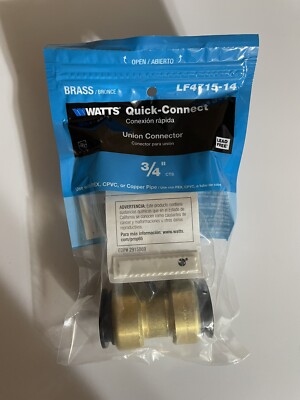
Joining two male-threaded pipe ends sounds simple, but the fitting you choose determines whether the connection stays leak-free and code-compliant for decades. For potable water lines, that means lead-free brass and an NSF/ANSI 61 rating.
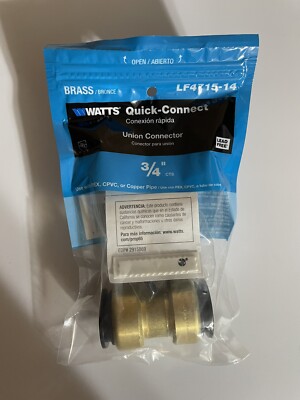
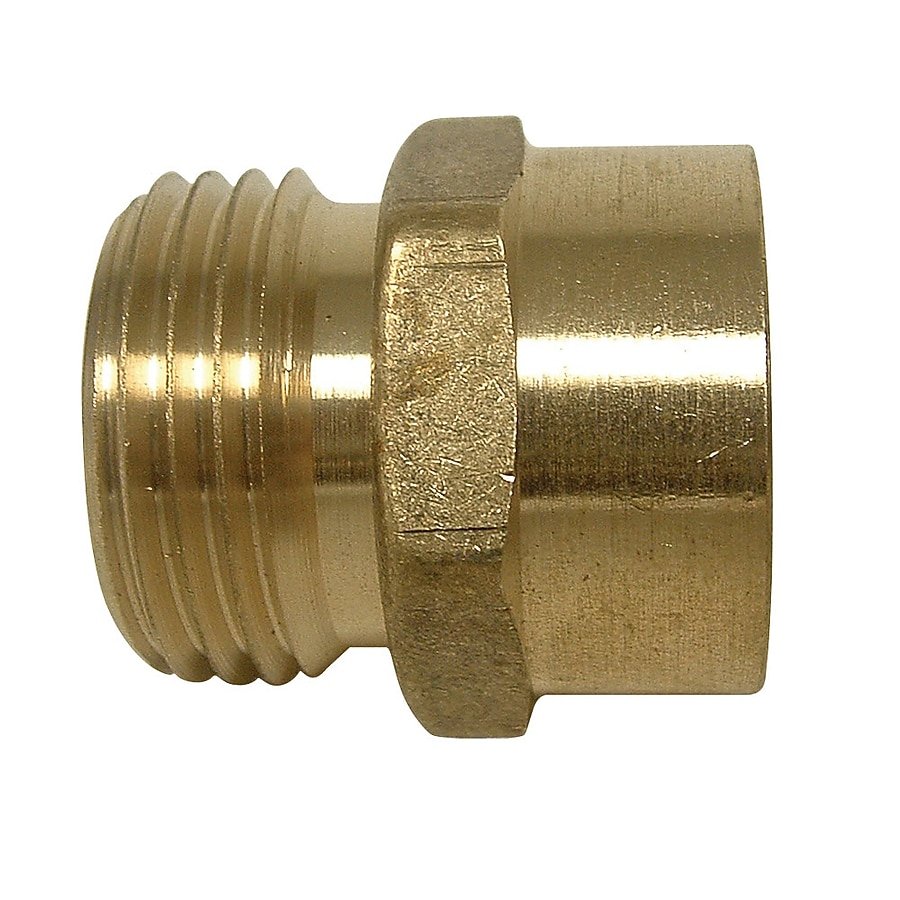
This guide covers the Watts 3/4 inch Lead-Free Brass FPT Coupling and explains exactly where it fits in a residential 3/4-inch potable-water plumbing job.
Top Pick: Watts 3/4 inch Lead-Free Brass FPT Coupling
Score: 9.2/10 — A durable, code-compliant lead-free brass coupling that joins two male-threaded NPT pipe or fitting ends cleanly, making it the go-to choice for potable water supply connections.
Watts 3/4 inch Lead-Free Brass FPT Coupling
For those wanting a real-world test of this part, see our Watts LFA-3/4 review. The Watts 3/4 inch Lead-Free Brass FPT Coupling is a precision-engineered brass fitting designed with female pipe threads on both ends.
Its primary function is to connect two male-threaded NPT (National Pipe Tapered) pipe or fitting ends within a 3/4-inch diameter line. Because both ends accept standard male NPT threads, it slots into common residential plumbing configurations without the need for expensive adapters or specialized industrial tooling.The defining technical feature of this component is its lead-free brass construction. In the world of residential plumbing, "lead-free" isn't just a marketing term; it is a regulatory necessity. This coupling is certified to NSF/ANSI 61, the gold standard for materials that come into direct contact with drinking water. This certification ensures that the brass alloy does not leach harmful levels of lead or other contaminants into the water supply, making it safe for lines feeding kitchen faucets, bathroom fixtures, dishwashers, and whole-house water filtration systems.
Brass is selected for this coupling not only for its health certifications but for its inherent material properties. Compared to galvanized steel, lead-free brass offers superior resistance to corrosion and mineral buildup, which are the primary causes of joint failure over time. For professional plumbers and DIYers alike, the LFA-3/4 represents a "set it and forget it" solution for extending supply lines or repairing damaged sections of a threaded run. While Apollo Half-Inch White PEX-B Flexible Water Pipe Tubing Coil may be preferred for long, winding runs, the LFA-3/4 is the essential connector for the rigid, threaded transition points of a home's infrastructure.
Installation is straightforward but requires attention to detail. Users should apply a high-quality pipe thread sealant or PTFE (Teflon) tape to the mating male threads before threading the pipe ends into the coupling. Because it follows the NPT standard, the threads are tapered, meaning the seal tightens as the fitting is screwed in. It is critical to tighten the connection to a snug fit using a pipe wrench or crescent wrench, while avoiding over-torquing, which can crack the brass or strip the threads. Once installed, every joint should be pressure-tested before the plumbing is enclosed within walls or cabinetry to ensure a permanent, leak-free seal.
Pros
- Lead-free brass certified to NSF/ANSI 61 for potable water
- Female NPT on both ends for standard threaded connections
- Corrosion-resistant brass for long service life
- Compatible with common 3/4" NPT fittings
- Suitable for both professional and DIY installations
Cons
- Connects only male-threaded pipe or fittings
- Fixed 3/4" size; not compatible with other line diameters
- Requires external thread sealant or PTFE tape
- Less forgiving of misalignment than SharkBite 1/2 inch Push-to-Connect Ball Valve options
We may earn a commission on purchases made through links on this page, at no extra cost to you.
| Specification | Detail |
|---|---|
| Model Number | LFA-3/4 |
| Size | 3/4 inch |
| Connection Type | Female NPT (FPT) both ends |
| Material | Lead-free brass |
| Certification | NSF/ANSI 61 (drinking water) |
| Compatibility | Standard NPT fittings |
| Typical Use | Residential water supply lines |
The Comprehensive Guide to Threaded Brass Couplings
When selecting a fitting for a residential water system, the difference between a "good" fit and a "code-compliant" fit can be the difference between a successful inspection and a costly tear-out. A coupling is one of the simplest components in a plumbing system, yet it bears the brunt of water pressure and thermal expansion. To truly understand why the Watts LFA-3/4 is the industry standard, we must examine the engineering behind it.
Understanding the Mechanics of NPT Threads
The "FPT" in the Watts LFA-3/4 stands for Female Pipe Thread. This follows the National Pipe Tapered (NPT) standard. Unlike parallel threads found on bolts, NPT threads are tapered. As you screw the female coupling onto a male pipe, the diameter of the male pipe slightly increases while the female opening slightly decreases. This creates a wedge-like seal that physically forces the threads together.
This tapered design is critical for high-pressure environments. Because the fit becomes tighter as the coupling is rotated, it creates a mechanical interference fit. However, the metal-to-metal contact of tapered threads is rarely perfectly smooth. This is why the use of PTFE tape or pipe dope is non-negotiable. These sealants fill the microscopic gaps between the threads, preventing "weeping" leaks—tiny, slow drips that can eventually lead to structural rot, mold growth, or water damage inside walls.
From a physics perspective, the NPT thread acts as a tapered seal. The seal is formed not just by the tightness of the screw, but by the deformation of the thread peaks into the valleys of the mating part. In the case of the Watts LFA-3/4, the brass alloy is engineered to provide exactly the right amount of ductility—it is hard enough to maintain structural integrity under pressure, but soft enough to "seat" against the male threads without immediate cracking.
The Critical Importance of Lead-Free Brass
In the past, brass contained significant amounts of lead to make the metal more malleable and easier to machine. However, lead is a potent neurotoxin. The NSF/ANSI 61 standard strictly regulates the allowable lead content in plumbing components. The Watts LFA-3/4 is engineered with a specific alloy that maintains the strength and corrosion resistance of traditional brass while removing the toxicity risk.
When shopping for couplings, never assume a brass fitting is "lead-free" unless it specifically carries the NSF/ANSI 61 mark or a lead-free certification. Using non-certified brass in a drinking water line is a violation of most modern building codes and poses a long-term health risk to the inhabitants of the home. Lead-free brass is specifically designed to withstand the chemistry of treated city water, including the chlorine and fluorides used in municipal systems, which can sometimes aggressively attack lower-grade metals.
Furthermore, the chemical composition of lead-free brass prevents "dezincification." Dezincification occurs when zinc is selectively leached from the alloy, leaving behind a porous, brittle copper structure that is prone to pinhole leaks. The high-grade alloy used in the Watts LFA-3/4 is formulated to resist this process, ensuring that the fitting does not degrade internally even when exposed to highly acidic or alkaline water conditions common in certain geographic regions.
Pro Tip: If you are working on a renovation in an older home, you may encounter "iron pipe" threads. While the LFA-3/4 will physically thread onto iron, be mindful of galvanic corrosion—the reaction that occurs when two dissimilar metals touch. Using a dielectric union or a specific high-grade sealant can mitigate this risk and prevent the pipes from seizing over time.
Installation Step-by-Step
Installing the Watts LFA-3/4 is a fundamental skill for any homeowner or technician. While it seems intuitive, following a professional sequence ensures that the joint remains leak-free for its entire service life. Follow these steps for a professional-grade seal:
- Clean the Threads: Use a wire brush or a damp cloth to remove any burrs, old sealant, or debris from the male pipe ends. Even a tiny piece of grit can prevent the coupling from seating fully or create a gap where water can escape. If you are reusing a pipe, check for "mushrooming" at the end of the threads, which can prevent the coupling from engaging properly.
- Apply Sealant: Wrap PTFE tape (Teflon tape) clockwise around the male threads. Wrap it 3 to 5 times, ensuring the tape is tight against the metal and does not overlap the very end of the pipe, which could cause the fitting to cross-thread. Alternatively, apply a thin layer of non-hardening pipe dope. For high-pressure lines, some professionals combine both tape and dope for a "belt-and-suspenders" approach.
- Hand-Tighten First: Thread the LFA-3/4 onto the pipe by hand. This is the most critical step to ensure the threads are properly aligned. If you feel resistance immediately, stop and back out; forcing the coupling with a wrench can lead to cross-threading, which permanently ruins the brass threads. You should be able to get several turns in by hand before needing a tool.
- Final Torque: Use a pipe wrench or adjustable wrench to tighten the coupling. (For those transitioning to expansion systems, a tool like the Milwaukee M12 ProPEX Expansion Tool Kit is the industry standard for PEX-A). Turn it until it is snug, then give it another quarter to half-turn. Avoid "over-tightening," as brass is more malleable than steel and can deform or crack if subjected to excessive torque. Over-tightening can also "crush" the PTFE tape, pushing it out of the threads and actually creating a leak path.
- Pressure Test: Turn on the water supply slowly. Use a dry paper towel to wipe the joint; if the towel stays dry, the seal is successful. If you see moisture, tighten slightly further. Do not rely on a visual check alone, as microscopic "weepers" are often invisible to the eye but will leave a mark on a paper towel.
Maintenance and Longevity
Once installed, a brass coupling like the LFA-3/4 typically requires zero maintenance for decades. Unlike rubber gaskets or O-rings, which degrade under UV light or thermal stress, the brass body of the LFA-3/4 is incredibly stable. However, it is still prudent to perform periodic checks, especially in high-stress areas of the home such as basements (where you might use high-capacity sump pumps or refer to our guide on the best submersible utility pumps), crawlspaces, or near A.O. Smith water heaters.
Identifying Signs of Wear
While rare, certain signs can indicate that a coupling needs attention:
- Surface Oxidation: A green patina (verdigris) is common on brass and usually doesn't indicate failure. However, if you see heavy white or green crusting (mineral buildup), it often signals a slow, "weeping" leak that has been evaporating over months. This buildup is the result of calcium and magnesium in the water crystallizing on the surface.
- Stress Cracks: In areas subject to extreme temperature swings—such as uninsulated crawlspaces or outdoor enclosures in winter—check for hairline fractures in the brass body. These are often caused by freeze-thaw cycles where water expands inside the fitting, putting immense outward pressure on the walls of the coupling.
- Mechanical Shift: If the pipes attached to the coupling are bumped or shifted due to house settling or nearby construction, the seal may be compromised. Any movement in a rigid threaded joint can break the "wedge" of the NPT seal, leading to a sudden leak.
Warning: Never apply excessive heat (like a torch) to a threaded brass coupling to "loosen" it unless you are prepared to replace the fitting. High heat can degrade the integrity of the lead-free alloy and ruin the thread precision, making a leak-free seal impossible upon re-installation.
Comparing Coupling Types: Brass vs. Alternatives
While the Watts LFA-3/4 is a premium choice, it is helpful to know how it compares to other common coupling methods in residential plumbing. Choosing the right material depends on the existing pipe type, the local building code, and the desired longevity of the installation.
| Feature | Lead-Free Brass (LFA-3/4) | PEX Push-Fit | Copper Sweat (Solder) | PVC/CPVC |
|---|---|---|---|---|
| Installation | Threaded (Medium) | Push-to-Connect (Easy) | Soldering (Hard) | Solvent Weld (Medium) |
| Durability | Very High | High | Excellent | Moderate |
| Cost | Low to Moderate | High | Low (Materials) | Very Low |
| Code Status | Potable Certified | Potable Certified | Potable Certified | Application Specific |
| Life Expectancy | 50+ Years | 20-30 Years | 50+ Years | 15-25 Years |
When to Choose the Watts LFA-3/4 Over Other Options
The Watts LFA-3/4 is the superior choice when you are dealing with existing threaded infrastructure. If your home has a mix of galvanized steel and newer copper or PEX, and you are using threaded adapters, the LFA-3/4 provides a rigid, high-strength transition that does not rely on rubber O-rings (which can perish) or solder (which requires a flame in potentially dangerous areas).
Compared to our SharkBite 1/2-Inch Coupling guide, the brass coupling is significantly more durable and less prone to failure under extreme pressure spikes. While push-fit is faster to install, the threaded connection of the LFA-3/4 is often viewed as more "permanent" by master plumbers. For a main water line or a critical branch where you cannot risk a leak behind a finished wall, the reliability of a threaded brass connection is unmatched.
The Buyer's Guide to Sizing and Selection
Choosing the right coupling isn't just about the brand; it's about ensuring the specifications match your system perfectly. While the LFA-3/4 is a standard 3/4-inch fitting, a common mistake for DIYers is confusing Nominal Pipe Size (NPS) with Actual Outer Diameter (OD).
Understanding 3/4" Nominal Sizing
In the world of NPT fittings, "3/4 inch" does not mean the hole is exactly 0.75 inches wide. Nominal sizing is a legacy system. A 3/4-inch NPT pipe actually has an outer diameter of approximately 1.05 inches. If you measure the outside of your pipe with a caliper and see roughly 1 inch, you are likely looking for a 3/4-inch fitting. If you try to use a fitting based on the literal measurement of the pipe's interior, you will end up with a coupling that is either too loose to seal or too tight to thread.
Material Grade: Lead-Free vs. Standard Brass
You may find "standard" brass couplings at hardware stores that are significantly cheaper than the Watts LFA-3/4. These are often intended for irrigation, pneumatic (air) lines, or industrial oil systems. They contain lead to increase machinability. Using these in a residential drinking water line is a violation of the Safe Drinking Water Act (SDWA) in the United States and similar regulations globally. The cost difference between a standard coupling and a lead-free one is negligible compared to the health risks and the potential cost of failing a home inspection during a property sale.
FPT vs. MPT: Knowing Your Ends
The Watts LFA-3/4 is an FPT (Female Pipe Thread) coupling. This means it is designed to slide *over* a male thread. If