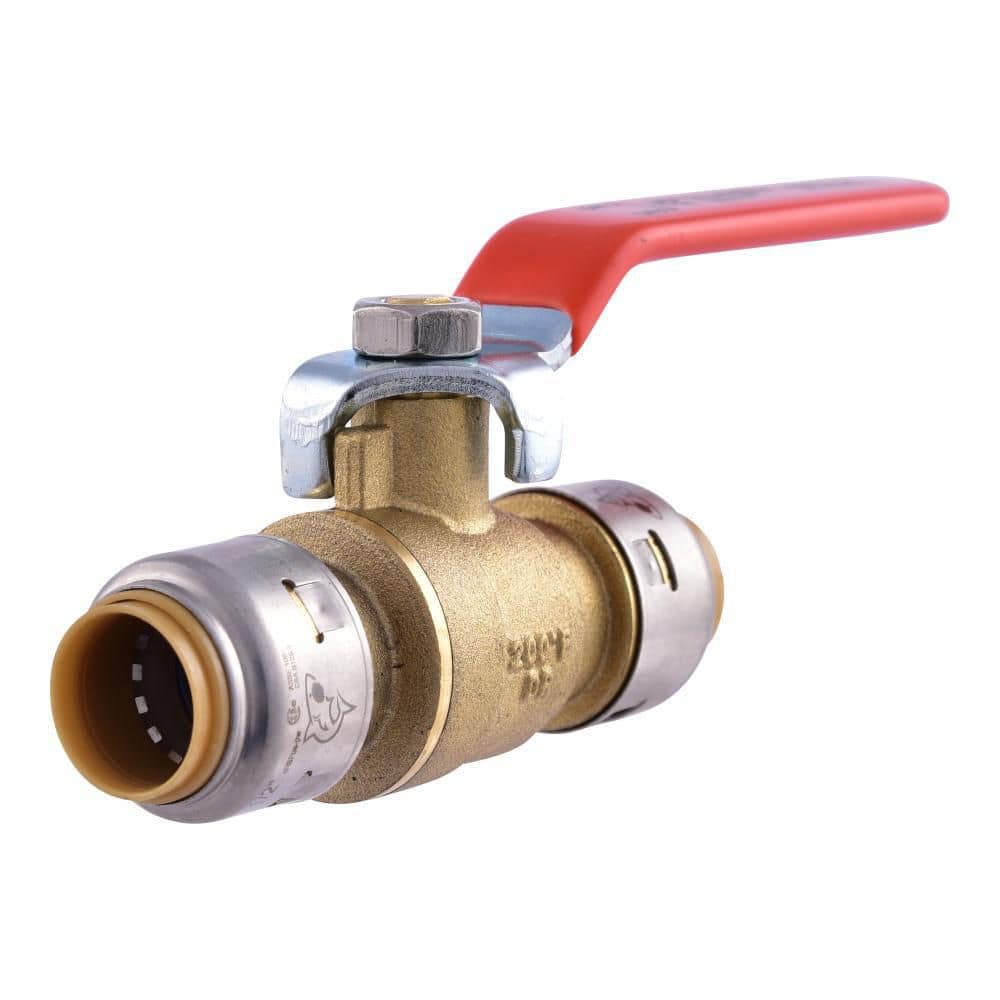
Shutting off a water line used to mean firing up a torch and sweating copper joints—a skill that intimidates many DIYers. The SharkBite 1/2 inch Push-to-Connect Ball Valve (22222A) promises a different path: push the valve onto your pipe and you're done. In this buying guide, we explore whether this tool-free convenience holds up for real plumbing repairs.
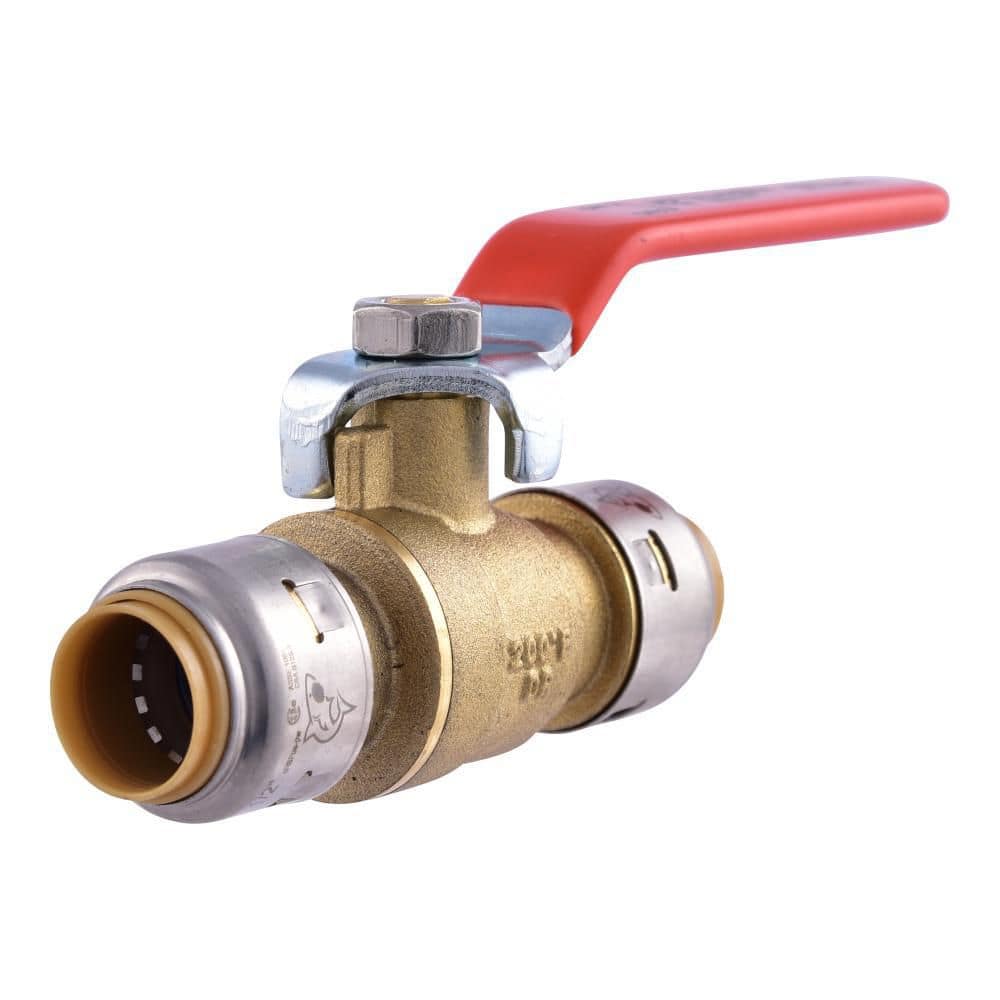
Top Pick: SharkBite 1/2 inch Push-to-Connect Ball Valve
Score: 9/10. Best overall for fast, solder-free shutoff on copper, CPVC, or PEX—an excellent value for DIY repairs and emergency fixes alike.
TL;DR: The SharkBite 22222A is a 1/2-inch quarter-turn ball valve that connects without tools, soldering, or clamps. It works across copper, CPVC, and PEX, handles both hot and cold lines, and is ideal when you want a reliable shutoff installed in seconds.
SharkBite 1/2 inch Push-to-Connect Ball Valve
The SharkBite 1/2 inch Push-to-Connect Ball Valve (model 22222A) is built around one simple idea: removing the skill barrier from plumbing connections. Instead of soldering, gluing, or crimping, you push the valve onto a properly cut and deburred pipe, and an internal collet with stainless steel teeth grips the pipe while an O-ring seals the joint. The result is a watertight connection that takes seconds rather than minutes.
Its standout feature is universal compatibility. The same valve fits 1/2-inch copper, CPVC, Apollo Half-Inch White PEX-B Flexible Water Pipe Tubing Coil, and PEX-C without adapters. This is a genuine advantage when you're working on a mixed-material system or aren't sure what's behind the wall. The quarter-turn handle gives you clear, positive shutoff—horizontal for open, perpendicular for closed—so there's no ambiguity about whether the water is off.
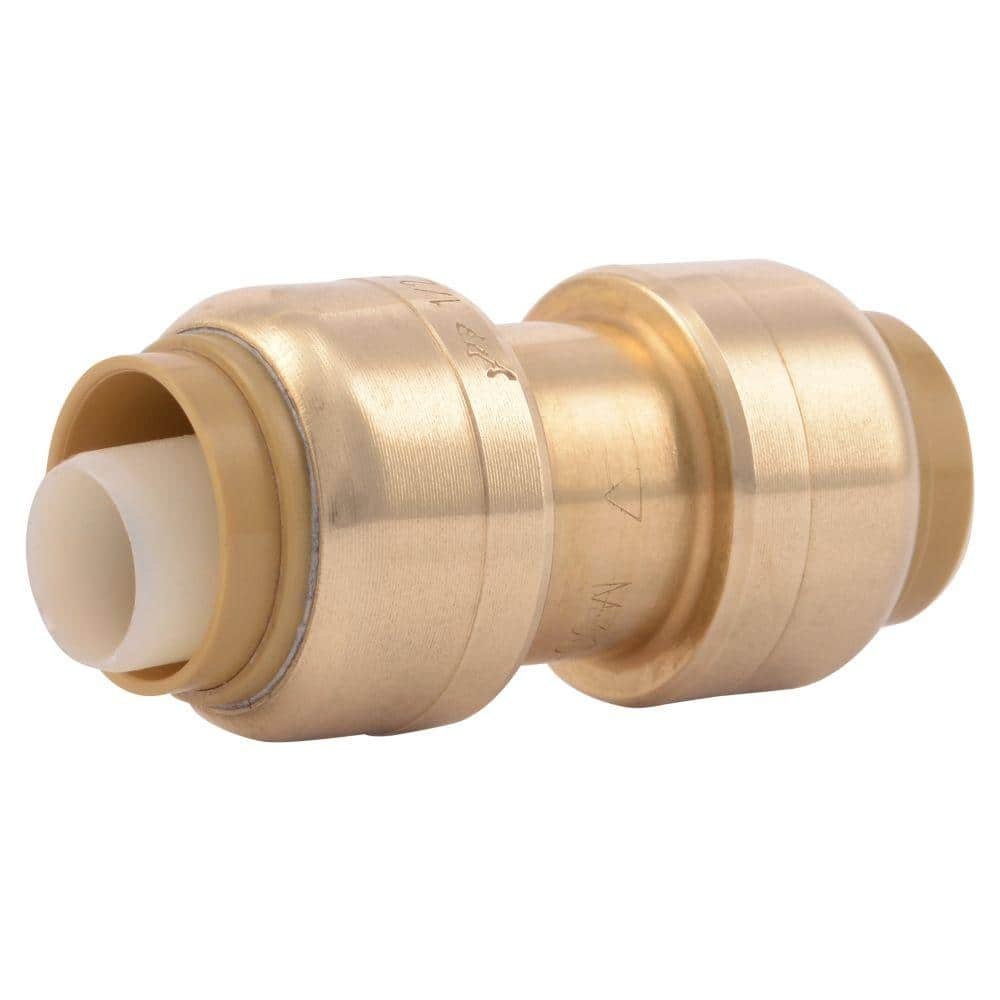
Because it's rated for both hot and cold water lines, the 22222A is flexible enough for supply lines feeding sinks, toilets, A.O. Smith EES-40 water heater, and appliances. The push-to-connect design is also removable with a disconnect tool, meaning you can reposition or reuse the valve, unlike a permanent soldered joint. If you are looking for a simpler coupling rather than a full valve, check out our SharkBite 1/2-Inch Coupling buying guide or explore the
If you need a more professional-grade connection for larger lines, consider the Watts 3/4 inch Lead-Free Brass FPT Coupling.
review for more professional-grade options.This valve is ideal for DIY homeowners tackling repairs without specialized tools, and for professional plumbers who want to speed up routine jobs. If you are upgrading your home's plumbing infrastructure, consider pairing your new valves with a GE GXWH40L whole house water filter or improving your basement protection with a Ridgid SP-650C sump pump for cleaner water throughout the system. If you value working time over material cost, or you simply don't want to deal with open flame near framing and drywall, this is a compelling choice.
| Specification | Detail |
|---|---|
| Model number | 22222A |
| Pipe size | 1/2 inch |
| Connection type | Push-to-connect (tool-free) |
| Compatible pipe | Copper, CPVC, PEX |
| Valve type | Quarter-turn ball valve |
| Water temperature | Hot and cold rated |
| Category | Pipes & Fittings |
Pros
- No soldering, gluing, or clamping required
- Works with copper, CPVC, and PEX in one fitting
- Quarter-turn handle gives clear open/closed shutoff
- Rated for both hot and cold water lines
- Removable and reusable with a disconnect tool
Cons
- Higher per-unit cost than a soldered valve
- Requires a clean, deburred, properly measured pipe end
- Not suitable for permanently buried or concealed joints in some codes
Deep Dive: How Push-to-Connect Technology Works
To understand why the 22222A is so effective, it helps to look at the internal engineering. Traditional plumbing relies on thermal fusion (soldering) or mechanical compression (crimping). SharkBite utilizes a three-part system to ensure a leak-free seal without these tools.
First, there is the stainless steel grip ring. This ring consists of a series of sharp, precision-engineered teeth. When you push the pipe into the valve, these teeth bite into the outer wall of the pipe, creating a mechanical lock that prevents the pipe from slipping out under pressure. This is why a clean, square cut is critical; if the pipe is slanted, the teeth may not engage evenly. This mechanical lock is designed to withstand significant axial force, ensuring that even if the pipe is bumped or shifted, the valve remains seated.
Second is the elastomeric O-ring. This is the primary seal. As the pipe passes through the grip ring, it hits the O-ring, which compresses against the pipe wall. This creates a watertight barrier that can withstand the standard pressures of a residential water system. The O-ring is designed to maintain its flexibility and seal even as temperatures fluctuate between hot and cold. Because the O-ring is made of a high-grade polymer, it resists degradation from the chemicals often found in treated municipal water.
Finally, the polymer body/housing provides the structural integrity to hold the grip ring and O-ring in precise alignment. Because the 22222A uses a brass body for the valve itself, it offers the durability of a professional-grade fitting with the ease of a consumer-grade installation. This brass construction prevents the valve from warping under high pressure, which is a common failure point in cheaper plastic-bodied alternatives.
The synergy of these three components—the grip ring, the O-ring, and the brass body—allows the SharkBite system to create a seal that is effectively "permanent" yet reversible. This is a stark contrast to soldering, where the bond is chemical and thermal, making removal impossible without destroying the fitting and the pipe.
Step-by-Step Installation Guide
While the 22222A is marketed as "tool-free," a successful installation actually requires a few preparatory steps to avoid the most common cause of failure: leaks due to improper pipe preparation. Following these steps ensures your plumbing remains dry for decades.
1. Cutting the Pipe
Precision is the most important factor in plumbing. Use a dedicated pipe cutter rather than a hacksaw. A hacksaw often leaves jagged edges and removes too much material, which can compromise the seal. A rotating pipe cutter ensures a perfectly square cut, allowing the valve to slide on straight. If the cut is angled, the pipe may not seat deeply enough to engage the grip ring fully, leading to a "blowout" under high pressure.
2. Deburring and Cleaning
This is the most skipped step and the most common reason for leaks. After cutting, use a deburring tool or a small piece of sandpaper to smooth the inside and outside edges of the pipe. Any metal shavings or plastic burrs can slice the O-ring as the valve is pushed on, leading to a slow drip. For PEX and CPVC, ensure no plastic shards are hanging off the edge. For copper, ensure the edge is smooth to the touch.
3. Marking the Insertion Depth
The 22222A must be fully seated to work. If you only push it halfway, it may feel secure but will fail under pressure. Use a permanent marker or a depth gauge to mark how far the valve needs to go onto the pipe. For a 1/2-inch pipe, refer to the manufacturer's depth specifications to ensure the pipe has passed through the grip ring and is seated against the internal stop. This visual confirmation removes the guesswork from the installation.
4. The Push
Align the valve and push firmly until you feel it "bottom out." You should feel a distinct stop. If the pipe doesn't go in all the way, do not force it; re-examine the pipe for burrs or debris. The "bottom out" sensation indicates that the pipe has cleared the O-ring and hit the back of the fitting housing.
5. Testing the Seal
Slowly open the main water supply. Do not blast the system with full pressure immediately. Watch the joint closely for "weeping" (tiny drops). If it leaks, you can use a SharkBite disconnect clip to remove the valve, re-clean the pipe, and try again. We recommend wiping the joint with a dry paper towel; the towel will reveal a tiny leak that the naked eye might miss.
Buyer's Guide: When to Choose the 22222A vs. Traditional Fittings
Choosing a shutoff valve involves balancing cost, time, and longevity. Here is how the SharkBite 22222A stacks up against the alternatives in various residential scenarios.
Solder/Sweat Fittings
Soldering is the "gold standard" for permanence. Once copper is sweated, it is effectively one piece of metal. However, soldering requires a propane torch, solder, flux, and significant safety precautions (especially in wall cavities where insulation can catch fire). The 22222A is the better choice for emergency repairs where you cannot shut off the entire house or where an open flame is dangerous. It also eliminates the need for "fluxing," which can leave corrosive residues if not cleaned properly.
Crimp/Clamp Fittings (PEX)
Crimp fittings are very reliable and generally cheaper per unit than SharkBite. However, they require a specialized crimping tool that can cost between $40 and $150. If you are only installing one or two valves, buying a professional system like the Milwaukee M12 ProPEX Expansion Tool Kit is an unnecessary expense. The 22222A allows you to get the same reliability as Uponor AquaPEX White PEX-A Tubing Coil without the investment in specialty tools. For a full-house repipe, crimps are more economical; for a single-valve replacement, the 22222A wins on value.
Compression Fittings
Compression fittings use a nut and a ferrule to squeeze the pipe. They are common for sink supply lines but can be prone to leaking over time if the pipe is slightly out of round. The 22222A's O-ring system is generally more forgiving of minor pipe imperfections than a rigid compression ferrule. Additionally, compression fittings require two wrenches to tighten, whereas the 22222A requires none.
| Feature | SharkBite 22222A | Soldered Copper | PEX Crimp | Compression |
|---|---|---|---|---|
| Install Time | Seconds | Minutes/Hours | Minutes | Minutes |
| Tool Requirement | None (Cut/Deburr) | Torch, Flux, Solder | Crimp Tool | Wrenches |
| Material Versatility | High (Cu, CPVC, PEX) | Low (Copper only) | Medium (PEX only) | Medium |
| Removability | Yes (with tool) | No (must cut out) | No (must cut out) | Yes |
| Unit Cost | Higher | Lowest | Low | Medium |
Maintenance and Long-Term Reliability
One of the biggest concerns with push-to-connect valves is whether they "last" as long as traditional plumbing. In most residential applications, the answer is yes, provided they are installed correctly. However, plumbing is subject to environmental stressors that require periodic attention.
Exercise the Valve
Ball valves can occasionally "stick" if they are left in one position for years, especially in areas with hard water. Calcium and magnesium deposits can build up around the ball, making it difficult to turn during an emergency. We recommend "exercising" your 22222A valve every six months. Simply turn the handle to the closed position and then back to open. This scrapes off mineral buildup and ensures the handle will actually work when you need to stop a leak in a hurry.
Monitoring the Seal
While SharkBite fittings are rated for long-term use, it is wise to check them during your seasonal home maintenance. Look for any sign of moisture or white mineral crusting around the entry point of the pipe. If you notice a slow drip, the most common cause is that the pipe shifted or was not fully seated during the initial installation. Because the 22222A is removable, you can fix this without replacing the entire pipe run.
Potential Pitfalls and How to Avoid Them
Even the simplest tools can be misused. To ensure your SharkBite 1/2 inch Push-to-Connect Ball Valve performs as expected, be aware of these common mistakes.
Another pitfall is the use of non-compatible pipes. While the 22222A works with Copper, CPVC, and PEX, it is not compatible with flexible tubing, corrugated piping, or old galvanized steel pipes. Attempting to force the valve onto an incompatible material will either fail to create a seal or, worse, crack the pipe wall. If you have galvanized steel, you must first install a threaded-to-copper adapter before using the SharkBite valve.
Finally, be mindful of the "hidden" cost of push-fit systems. Because the 22222A is significantly more expensive per unit than a $2 copper coupling, using them for a massive project (like repiping a whole basement) can add hundreds of dollars to your budget. These valves are "premium convenience" products; they are perfect for the a few critical shut-offs, but for bulk runs, consider a hybrid approach using crimps or solder where possible.
Comparative Analysis: DIY vs. Professional Use Cases
Who is the 22222A actually for? The answer depends on the scope of the work and the user's comfort level with tools.
The DIY Homeowner
For the person who owns a basic tool kit but doesn't have a plumbing license, the 22222A is a game-changer. It removes the fear of "ruining" a pipe with a bad solder joint. If you make a mistake, you simply disconnect the valve and try again. The ability to install a professional-grade shutoff valve in under a minute without risking fire in your walls is worth the higher price point for almost any homeowner.
The Professional Plumber
Plumbers often use SharkBite fittings for "rough-ins" or in tight spaces where a torch cannot safely reach. In a service call scenario—such as replacing a leaking toilet valve while the homeowner is watching—the 22222A allows the pro to finish the job in a fraction of the time. This