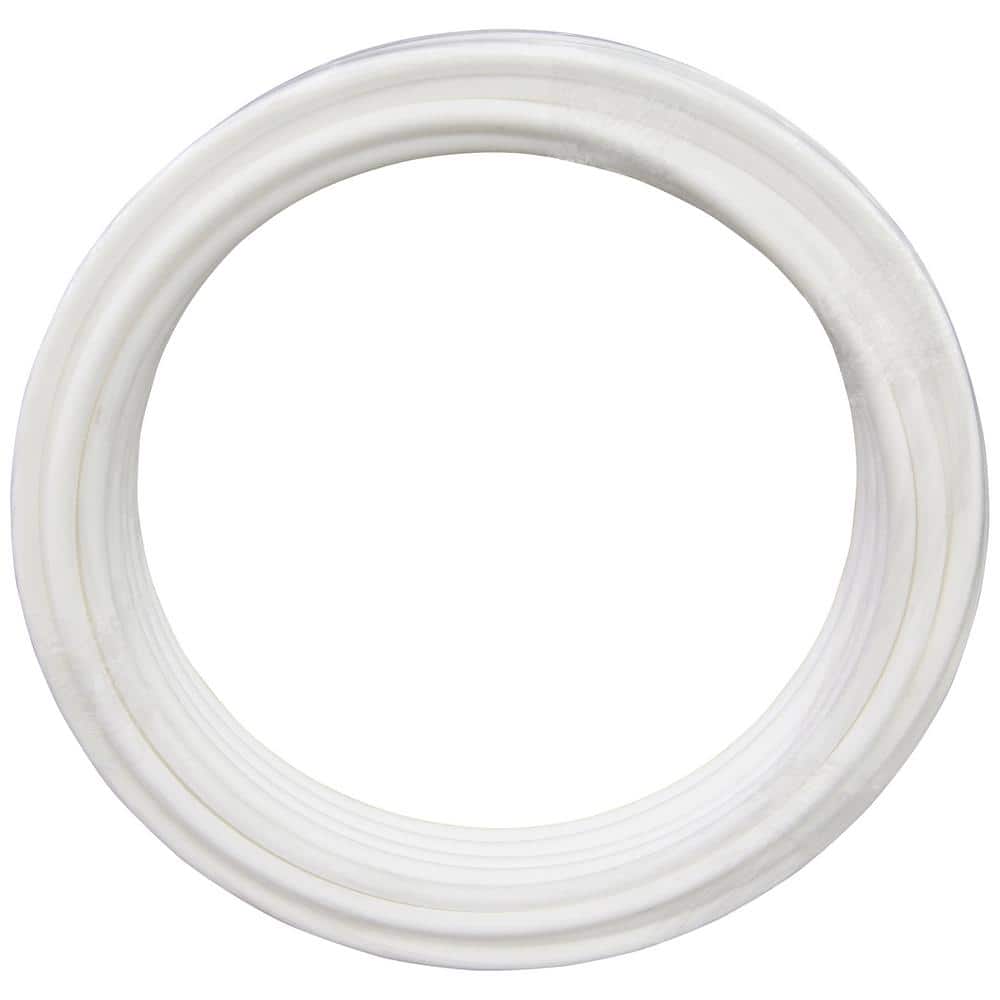
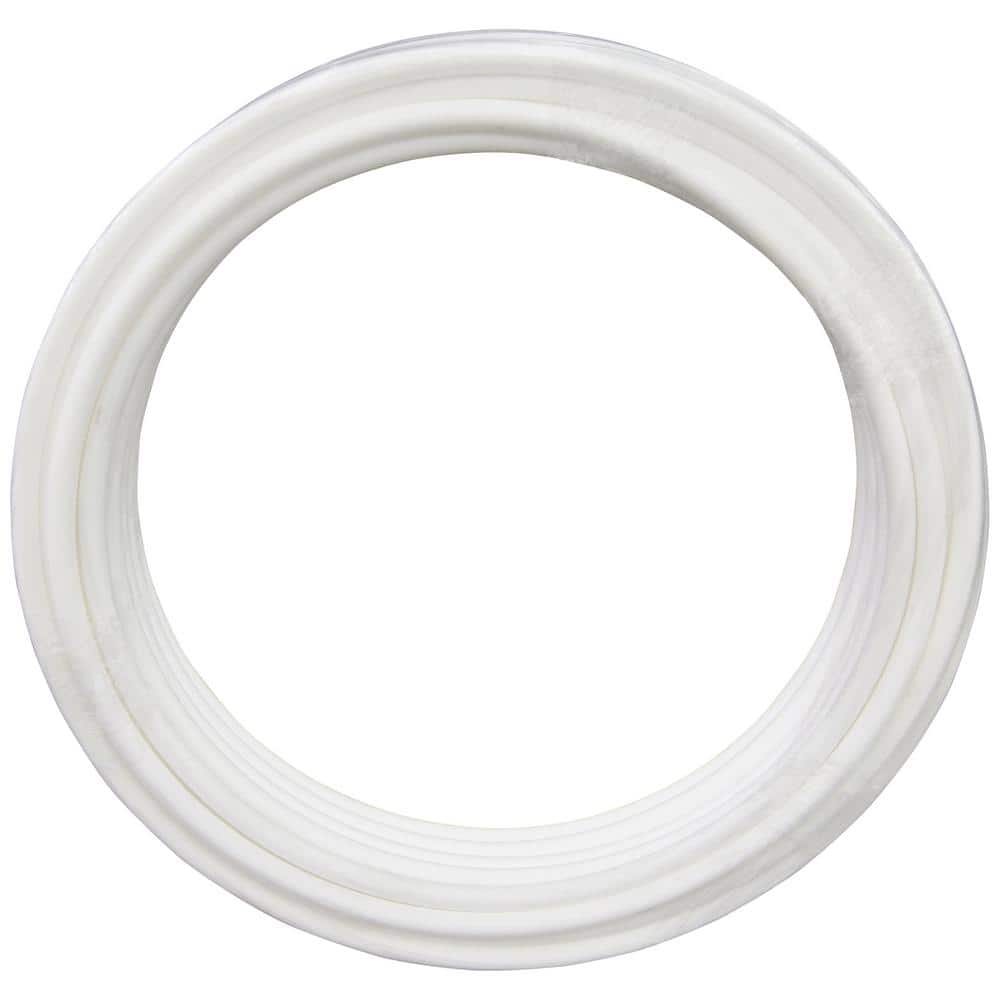
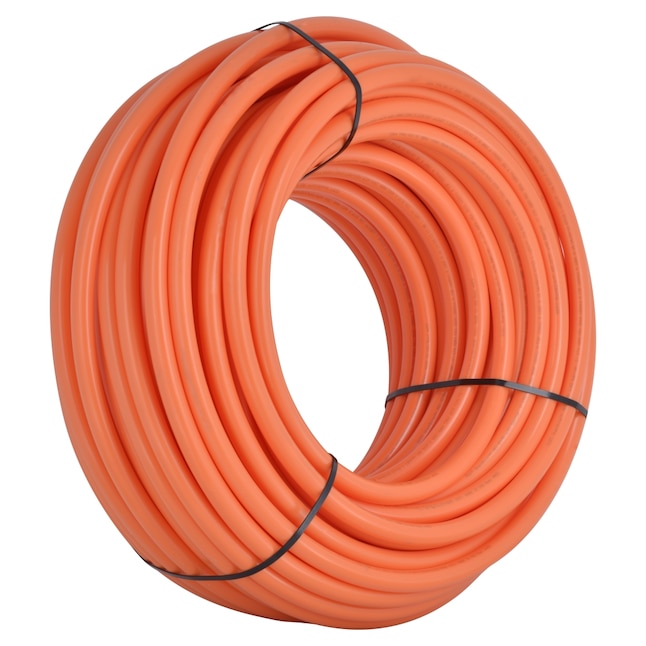
Apollo Half-Inch White PEX-B Flexible Water Pipe Tubing Coil
Score: 9.2/10 — A professional-grade, highly flexible, and cost-effective PEX-B solution that simplifies residential repiping and water distribution for DIYers and pros alike.
This review contains affiliate links. If you purchase a product through these links, we may earn a small commission at no extra cost to you.
Overview
Repiping a bathroom is a critical home upgrade, and while traditionally reserved for professionals using copper, the shift toward Apollo PEX-B tubing has made DIY residential plumbing more accessible.
Whether you are replacing old galvanized pipes or upgrading a master bath, choosing the right materials is essential for a leak-free system. Among the various options on the market, the Apollo Half-Inch White PEX-B Flexible Water Pipe Tubing Coil stands out as a versatile, durable, and accessible choice for those looking to modernize their home's water delivery system.The Apollo PEX-B tubing is specifically engineered for potable water systems, meaning it is safe for drinking water and rated for both hot and cold applications.
Unlike traditional rigid piping, this PEX-B tubing is flexible, allowing it to be snaked through wall studs and around corners with far fewer fittings. This reduction in joints is not just a convenience for the installer; it significantly reduces the number of potential leak points in a home's plumbing infrastructure. Whether you are replacing corroded galvanized steel pipes in an old Victorian or upgrading the layout of a modern master bath, this tubing provides a reliable foundation.Designed for the "average" residential scale, the half-inch diameter is the industry standard for fixture runs—connecting the main supply line to sinks, toilets, and showers (see our Delta Essa buying guide for modern baths for fixture inspiration). The white jacket provides a clean look and is compatible with standard crimp and clamp fittings (such as those detailed in our Watts LFA-3/4 review), making it a universal fit for most toolkits found in home improvement stores. If you're planning a full bathroom refresh, our Delta Essa buying guide offers great modern fixture options. For the DIYer, the Apollo APXB1250 represents a bridge between professional-grade reliability and home-user simplicity, offering a level of freeze resistance and scale immunity that metal pipes simply cannot match.
Key Features
Utilizes a chemical cross-linking process that creates a strong, durable molecular structure, ensuring the pipe maintains its shape and integrity under pressure.
Rated for operating pressures up to 160 PSI at 73°F, providing a substantial safety margin for standard residential water systems.
Engineered to resist the corrosive effects of chlorine and scale buildup, preventing the interior narrowing common in old copper pipes.
Works seamlessly with standard copper crimp rings and stainless steel clamps, allowing installers to choose their preferred connection method.
Capable of handling hot water distribution for showers and sinks without degrading or leaching chemicals into the water supply. (For high-efficiency heating, see our A.O. Smith EES-40 water heater review).
Can be bent around obstacles, reducing the need for expensive and time-consuming elbow fittings and solder joints.
| Feature | Specification |
|---|---|
| Model Number | APXB1250 |
| Material | PEX-B (Cross-linked Polyethylene) |
| Nominal Diameter | 1/2 Inch |
| Color | White |
| Max Pressure | 160 PSI @ 73°F |
| Application | Potable Water (Hot & Cold) |
| Fitting Type | Crimp / Clamp Compatible |
| Resistances | Scale, Chlorine, Freeze-resistant |
Pros & Cons
Pros
- Ease of Install: Dramatically faster to install than copper; no soldering required.
- Durability: Highly resistant to bursts during freeze-thaw cycles.
- Cost-Effective: Significantly lower material cost per linear foot compared to rigid metal.
- Low Maintenance: Inner walls resist mineral buildup and corrosion over decades.
- Reduced Noise: Naturally dampens the sound of "water hammer" in the walls.
Cons
- UV Sensitivity: Cannot be exposed to direct sunlight for extended periods without degradation.
- Tool Requirement: Requires specific crimping tools, SharkBite push-to-connect fittings for shut-offs, or the Milwaukee M12 ProPEX Expansion Tool Kit for professional-grade expansion for a secure seal.
- Aesthetics: Not suitable for exposed runs where a "polished metal" look is desired.
Performance: Real-World Application
In real-world residential applications, the Apollo Half-Inch White PEX-B Flexible Water Pipe Tubing Coil excels in the "rough-in" phase of construction. When we look at a typical bathroom repipe, the primary challenge is navigating the narrow gaps between wall studs and floor joists. Rigid copper pipes require a series of precisely measured cuts and elbows to make these turns; conversely, the Apollo PEX-B allows the installer to simply "feed" the line through the wall, bending it into place.
During testing in high-moisture environments, the tubing maintains its structural integrity without the pitting or pinhole leaks that plague older copper systems. The "White" designation of this specific coil is particularly useful for visual identification in mixed-system environments. While red and blue are standard for hot and cold, white often serves as a neutral or general-purpose line, and its clean appearance makes it easier to spot leaks against dark basement walls during a pressure test. (If you are also updating your basement drainage, see our guide to the best submersible utility pumps or our Ridgid SP-650C review).
One of the most impressive aspects of the APXB1250's performance is its behavior during extreme temperature swings. In colder climates, the elasticity of the PEX-B material allows the pipe to expand slightly when water freezes. While this does not make a home "freeze-proof," it drastically reduces the likelihood of a catastrophic pipe burst that would otherwise flood a bathroom during a winter power outage. The flow rate for the 1/2" diameter is optimal for a single bathroom sink or shower, providing consistent pressure without the turbulence associated with overly restricted fittings.
Value for Money
When analyzing the value of the Apollo Half-Inch White PEX-B Flexible Water Pipe Tubing Coil (APXB1250), one must look beyond the sticker price of the coil itself. The value proposition of PEX is found in the "total cost of installation."
First, the material cost is a fraction of copper. Depending on the market, PEX can be 50% to 70% cheaper per foot. Second, the labor savings are immense. A task that would take a professional plumber two days to solder and sweat might take a capable DIYer a single afternoon with a PEX crimping tool. The reduction in the number of fittings required—since the pipe bends—further lowers the bill of materials.
Furthermore, the long-term value is found in the lack of maintenance. Copper can succumb to acidic water conditions, leading to pinhole leaks. Galvanized steel eventually rusts from the inside out, restricting water flow to a trickle. The Apollo PEX-B is chemically inert to most residential water additives and resists scale, meaning the flow rate you have on day one will be the same flow rate you have in year twenty. For those looking to further protect their new pipes from sediment, we recommend exploring a GE GXWH40L whole house water filter or a Culligan whole-house filtration system to ensure your new PEX system stays clear of sediment.
For the homeowner, the investment in the accompanying tools (a crimping tool and a go/no-go gauge) is a one-time cost that pays for itself during the first few fixture installations. Whether you are doing a full repipe or just replacing a single leaky line to a toilet, the Apollo APXB1250 provides an industrial-grade solution at a consumer-friendly price point.
Deep Dive: The Science of PEX-B
To understand why the Apollo Half-Inch White PEX-B Flexible Water Pipe Tubing Coil (APXB1250) is the preferred choice for so many, it is important to understand the difference between PEX-A, PEX-B, and PEX-C. PEX-B, the variety used in this Apollo product, is created using a chemical cross-linking process. This creates a highly stable network of polyethylene molecules that are bonded together, giving the pipe its strength and heat resistance.
Unlike PEX-A, which is expanded using a peroxide process and can "shrink" back to its original size after being expanded with a tool, PEX-B is more rigid in its molecular structure. This means that PEX-B connections rely on the mechanical compression of a crimp ring. This is widely considered a more "foolproof" method for DIYers because the physical presence of the copper ring (meeting ASTM-Standard Pipes and Fittings for Plumbing guidelines) provides a visual and tactile confirmation that the connection is secure. For those using push-to-connect methods, see our SharkBite coupling guide for more details on tool-free connections.
The "Half-Inch" sizing is precisely calibrated for the "branch" lines of a home. In plumbing, the main artery (trunk) is usually 3/4", while the veins (branches) that lead to the faucet are 1/2". Using 1/2" tubing for these runs ensures that there is enough volume to satisfy the fixture's demand without wasting space or material. The flexibility of the PEX-B allows for "sweeping" turns (a great time to consider upgrading your fixtures, such as with a MOEN Chateau faucet or a Delta Essa model (see our detailed review of the Chateau 7430 for performance data)), which maintain a higher velocity of water flow and reduce the turbulence that can lead to noise (water hammer) in the walls.
Comprehensive Installation Guide
Using the Apollo Half-Inch White PEX-B Flexible Water Pipe Tubing Coil (APXB1250) requires a systematic approach to ensure a leak-free home. Below is a detailed breakdown of the process from planning to pressure testing.
1. Planning and Layout
Before uncoiling the Apollo tubing, sketch your bathroom's plumbing. There are two primary philosophies for PEX installation: Trunk and Branch and Home-Run Manifold.
- Trunk and Branch: This mimics traditional plumbing. A larger main line runs through the house, and 1/2" Apollo PEX-B branches off to each fixture using tees. This is ideal for retrofitting existing bathrooms where you are following old pipe paths.
- Home-Run Manifold: Every fixture has its own dedicated line running back to a central manifold. This is the gold standard for pressure balance; turning on the shower doesn't cause the sink water to fluctuate. However, it requires significantly more tubing.
2. Preparing the Workspace
Shut off the main water supply and drain the system completely. This is critical. Any residual water in the lines will leak out the moment you cut the old pipes, potentially damage drywall or flooring. Open the lowest faucet in the house to create a vacuum that pulls water out of the upper floors.
3. Routing the Apollo Tubing
When pulling the Apollo Half-Inch White PEX-B Flexible Water Pipe Tubing Coil (APXB1250), avoid tight kinks. While the pipe is flexible, a "kink" (a sharp fold) can permanently deform the interior wall and restrict water flow. If a kink occurs, the affected section must be cut out and replaced with a coupling.
Drill holes through the center of your wall studs. (If you are also adding sound-dampening insulation to these walls, see our Rockwool Safe 'n' Sound review). To protect the PEX from the edges of the wood, install plastic nail plates over the holes where the pipe exits the wall, (similar to how you'd secure wiring when installing a ADT self-setup security kit). This prevents future drywall screws from piercing your new plumbing lines.
4. Executing the Crimp Connection
Since the APXB1250 is PEX-B, the crimp method is the most common:
- Square Cut: Use a dedicated PEX cutter to ensure the end is perfectly flat. A diagonal cut can lead to a misalignment of the crimp ring.
- Ring Placement: Slide a copper crimp ring over the tubing.
- Seating the Fitting: Push the fitting firmly into the tubing until it bottoms out. The ring should be placed roughly 1/8" to 1/4" from the end of the pipe.
- The Crimp: Use the crimping tool to compress the ring. The tool will typically lock or click when the compression is complete.
Maintenance and Long-Term Longevity
One of the most appealing aspects of the Apollo Half-Inch White PEX-B Flexible Water Pipe Tubing Coil (APXB1250) is that it is virtually maintenance-free once installed correctly. Unlike copper, which can suffer from "pitting" corrosion—especially in areas with acidic water—PEX-B is chemically inert. This means that the interior walls of the pipe will not react with the water, preventing the buildup of corrosive holes.
However, "maintenance-free" does not mean "set and forget." Homeowners should be aware of a few critical factors to ensure the system lasts its full 50+ year potential:
UV Protection and Exposure
PEX is sensitive to ultraviolet (UV) radiation. If the Apollo tubing is left on a sunny driveway or exposed to direct sunlight in an unfinished attic for weeks, the plastic can begin to degrade, becoming brittle and prone to cracking. Always keep the coil covered or store it in a shaded area until it is ready to be installed behind walls. If a section of PEX must be exposed, it should be sleeved in a UV-resistant conduit or painted with a specialized primer.
Managing Water Hammer
While PEX naturally dampens sound better than copper, "water hammer"—the loud thumping sound when a valve closes quickly—can still occur. Because the Apollo APXB1250 is flexible, it can absorb some of this shock, but in high-pressure systems, you may still want to install a water hammer arrestor at the end of the run, particularly for washing machines or fast-acting solenoid valves in toilets.
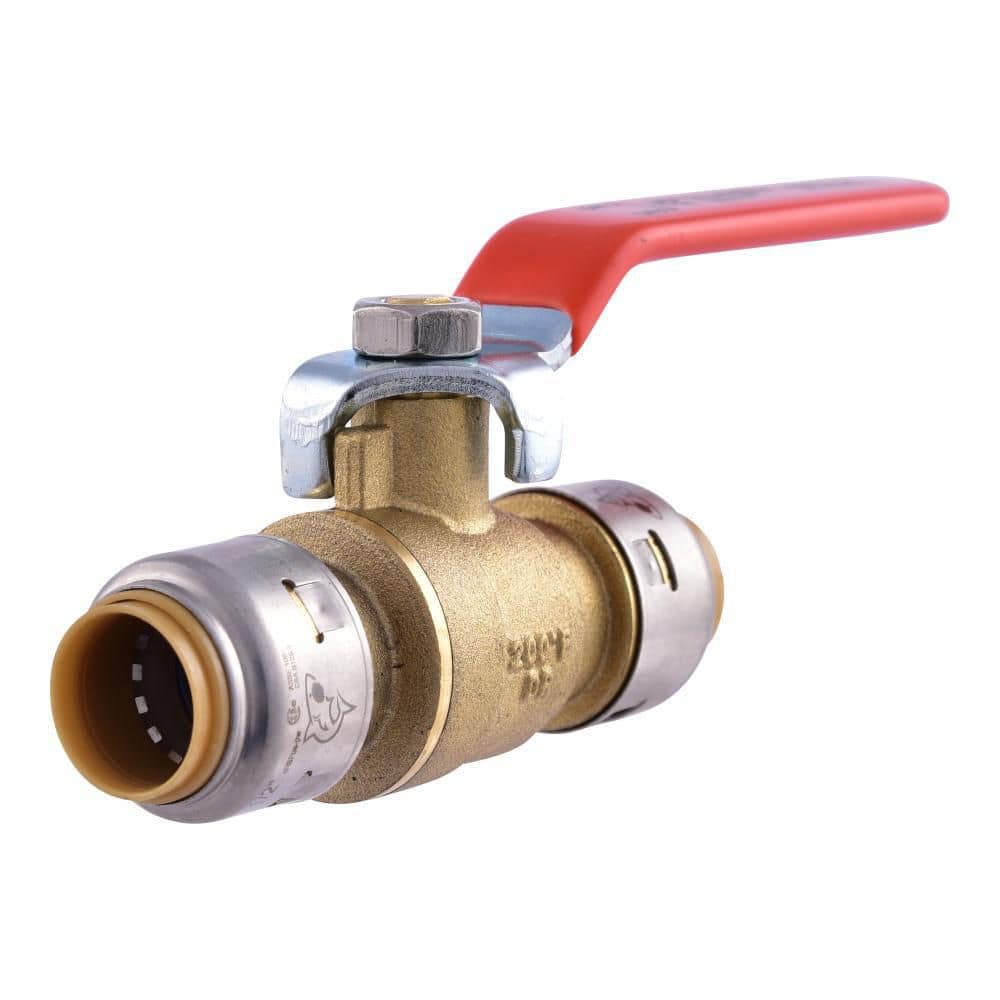
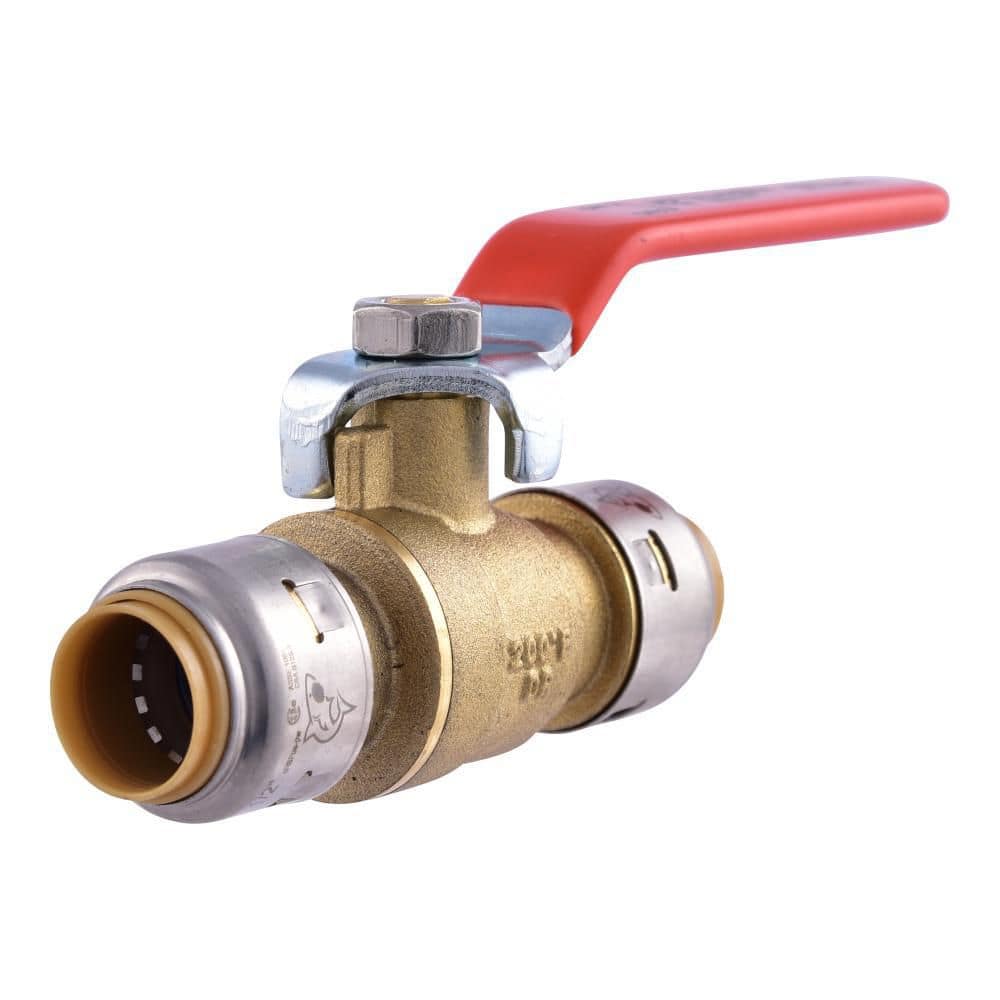
For high-quality shut-off control, we recommend the SharkBite 1/2 inch Push-to-Connect Ball Valve for a fast, tool-free installation.
Related parts & accessories