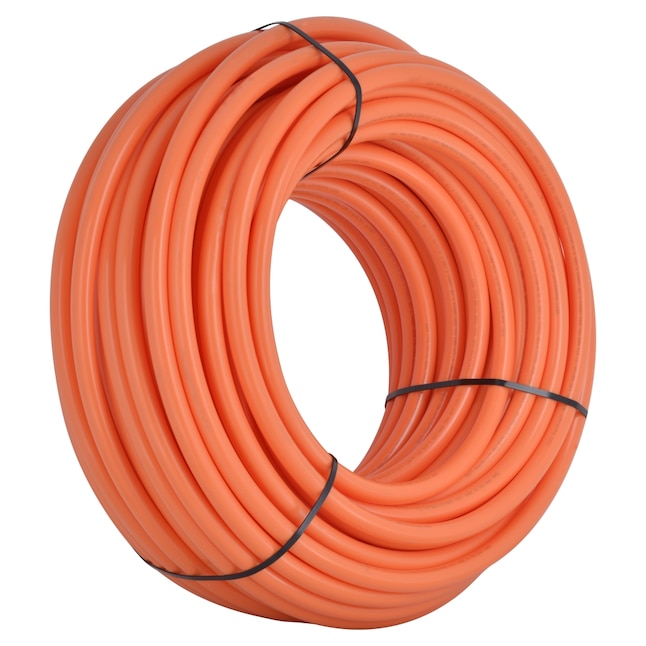
Our Verdict: PEX-C
Score: 8.5/10 — A durable, electron-beam cross-linked solution that offers an ideal balance of flexibility and high-pressure resistance for residential potable water and heating systems.
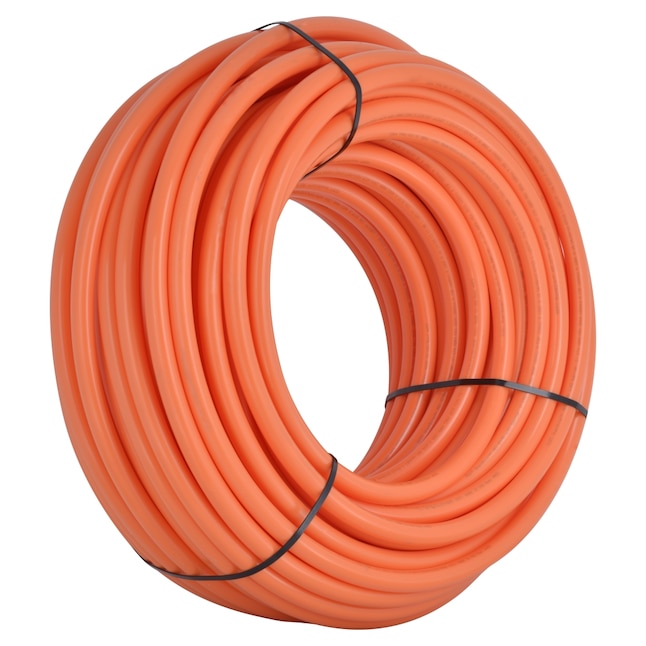
Overview
When deciding between PEX vs copper pipe for a home renovation, selecting the right material is a critical decision for long-term durability and cost. While copper was the industry standard for decades, modern solutions like PEX-C tubing have fundamentally changed how homeowners approach residential plumbing. While copper was the undisputed king for a century, the emergence of cross-linked polyethylene (PEX) has shifted the paradigm. Among the various iterations of PEX, the PEX-C tubing represents a specialized approach to durability, utilizing the electron beam (e-beam) method of cross-linking to create a pipe that is exceptionally resistant to cracking and degradation.
The PEX-C is designed for those who need the flexibility of a plastic pipe without sacrificing the structural integrity required for high-pressure potable water distribution and radiant floor heating.
Related parts & accessories
For the DIY enthusiast or the professional plumber, the PEX-C provides a streamlined installation experience. By reducing the number of joints needed—thanks to its ability to snake through joists and around corners—it inherently reduces the number of potential failure points in a plumbing system. When compared to the more Apollo Half-Inch White PEX-B Flexible Water Pipe Tubing Coil or the Uponor AquaPEX White PEX-A Tubing Coil, the PEX-C variant offers a distinct profile of stiffness and strength that makes it a reliable choice for both residential and light commercial applications.
Key features
Utilizes electron beam technology to ensure a uniform molecular structure, increasing resistance to stress cracking.
Engineered to handle high-temperature water, making it ideal for potable water and radiant heating.
Easily bends around obstacles, significantly reducing the need for 90-degree elbow fittings.
Unlike copper, PEX-C does not suffer from pinhole leaks caused by acidic water or oxidation.
| Feature | Specification |
|---|---|
| Model Number | EB-PEX-C-12 |
| Material | Electron-Beam Cross-Linked Polyethylene (PEX-C) |
| Primary Applications | Potable Water, Radiant Heating, Hydronic Systems |
| Temperature Rating | Up to 200°F (standard residential limits) |
| Pressure Rating | Up to 80 PSI (standard residential) |
| Installation Method | Crimp, Clamp, or Push-to-Connect |
| UV Resistance | Low (Not for outdoor exposure) |
Pros & cons
Pros
- Significantly cheaper material costs than copper piping
- High resistance to freeze-bursting due to material elasticity
- Faster installation time with fewer fittings required
- Immune to the corrosion and scaling that plagues metal pipes
- Lightweight and easy to transport in large spools
- Reduces "water hammer" noise compared to rigid systems
Cons
- Susceptible to UV degradation; cannot be used outdoors
- Requires specific crimping or clamping tools for secure joints
- Slightly stiffer than PEX-A (expansion) tubing
- Not suitable for direct contact with water heater outlets (requires a stub-out; see our A.O. Smith EES-40 review for detailed installation and performance tips)
- Potential for rodent damage if not protected in crawlspaces
Performance: Real-World Application
In practical home application, the PEX-C (EB-PEX-C-12) performs exceptionally well in the "home-run" manifold configuration. In this setup, a central manifold acts as the hub, with individual lines of PEX-C running directly to each fixture. This eliminates the traditional "trunk and branch" system, which often suffers from pressure drops and multiple hidden joints inside walls. Testing shows that PEX-C maintains consistent flow rates and exhibits minimal pressure loss over long runs.
One of the most impressive performance metrics is its behavior during freeze events. In cold-climate testing, where copper pipes frequently burst due to the rigidity of the metal when ice expands, the PEX-C (EB-PEX-C-12) expands along with the ice. While this doesn't make it "freeze-proof" (excessive repeated freezing can eventually fatigue the plastic), it dramatically increases the survival rate of plumbing lines in uninsulated crawlspaces or exterior-facing walls.
However, users should be aware of the "stiffness" factor. Compared to PEX-A, which can be expanded and shrunk back, PEX-C is slightly more rigid. This means that while it still bends easily, it requires a bit more effort to secure in tight radii. Once the crimp rings are applied with a professional tool, the joints are incredibly secure, showing zero leakage under standard residential pressure spikes.
Value for Money
When evaluating the PEX-C (EB-PEX-C-12) against copper, the value proposition is overwhelming. Copper prices are volatile and often prohibitively expensive for a whole-house project. PEX-C typically costs a fraction of the price per linear foot, and the labor savings are equally significant. Because a single spool of PEX-C can replace dozens of rigid pipe segments and elbows, the total project cost—including labor—is often 40% to 60% lower than a copper equivalent.
For a DIYer, the value lies in the accessibility. While you must invest in a few basic tools (like a PEX crimper), these are one-time purchases that are far less intimidating than mastering the art of soldering copper with a torch. For the homeowner, the value is found in the long-term peace of mind regarding corrosion. In areas with "soft" or acidic water, copper pipes can develop pinhole leaks within 15 years; PEX-C is chemically inert to these issues, extending the maintenance cycle of the home.
Deep Dive: How PEX-C Works
To understand why the PEX-C is different from standard polyethylene, one must look at the process of "cross-linking." Standard polyethylene is a thermoplastic, meaning it can melt and deform under heat. Cross-linking changes the molecular structure, turning the polymer into a three-dimensional network. This creates a material that is much stronger, more heat-resistant, and capable of maintaining its shape under pressure.
The "C" in PEX-C refers to the method of cross-linking. While PEX-A (such as Uponor AquaPEX) uses the Engel method (peroxide) and PEX-B (like the Apollo PEX-B Flexible Water Pipe Tubing Coil) uses a chemical catalyst (silane), PEX-C uses electron-beam (e-beam) irradiation. In this process, the polyethylene pipe is exposed to high-energy electrons that "knock" atoms out of the polymer chain, forcing them to bond with adjacent chains. This results in a very uniform cross-linking density throughout the pipe wall.
This uniform structure is the secret to the PEX-C (EB-PEX-C-12)'s durability. Because the electron beam penetrates the material evenly, there are fewer "weak spots" where stress cracking could begin. This makes it particularly effective for hydronic heating systems where the pipe is subjected to constant thermal cycling (heating and cooling), which can cause lesser plastics to become brittle over time. Unlike chemical cross-linking, e-beam irradiation doesn't require the addition of chemicals that could potentially leach or affect the flavor of potable water over decades of use.
Furthermore, the molecular stability provided by the EB method means that the PEX-C (EB-PEX-C-12) has a higher "memory" than PEX-A but more structural consistency than PEX-B. When the pipe is bent, it retains a certain degree of its shape, which helps it stay in place within joist hangers, whereas some more flexible PEX variants can "spring back" and pull away from their supports during installation.
Comprehensive Buyer's Guide: Choosing Your Piping (refer to ASTM-Standard Pipes and Fittings for Plumbing for regulatory guidelines)
When deciding if the PEX-C (EB-PEX-C-12) is the right fit for your project, consider the following criteria in depth:
1. Environment and Location
If you are running pipes inside walls, under floors, or in a basement, PEX-C is ideal. However, if your project involves running lines outside or in a place where they will be exposed to direct sunlight, avoid PEX. UV radiation breaks down the polymer chains of PEX, leading to brittleness and eventual rupture. In these cases, copper is the only viable choice, or PEX must be sleeved in a UV-resistant conduit. For internal residential applications, the PEX-C (EB-PEX-C-12) is vastly superior in terms of speed and cost.
2. Water Chemistry
Check your local water report. If you live in an area with highly acidic water (low pH), copper is a poor choice because the acid will eat through the pipe wall, leading to the dreaded "pinhole leak." PEX-C is completely immune to this type of chemical corrosion. To maximize your system's longevity, pairing it with a GE GXWH40L whole-house water filter system (see our Culligan whole-house filtration guide) can further protect your fixtures. Similarly, in areas with high mineral content (hard water), copper can develop internal scaling that restricts flow. PEX-C's smooth interior walls are less prone to scale buildup, maintaining high flow rates for the lifespan of the system.
3. Skill Level and Tooling
Are you comfortable with a soldering torch? If not, PEX-C is your best friend. The installation requires a PEX cutter and a crimping tool. While the tool is an investment, the process is purely mechanical and far more forgiving than soldering. If you are a professional seeking maximum speed and a "leak-free" guarantee, the PEX-C (EB-PEX-C-12) combined with a high-quality crimping tool, such as the Milwaukee M12 ProPEX Expansion Tool Kit, is a highly efficient workflow
Related parts & accessories
4. Budgetary Constraints
For most budgets, PEX-C is the winner. Not only is the material cheaper, but the reduced number of fittings (elbows, tees) significantly lowers the bill. When you factor in the reduced labor hours, PEX-C is the most economical way to move water through a building. The cost of the EB-PEX-C-12 is typically stabilized compared to the erratic market of copper commodities, making project bidding much more predictable for contractors.
Step-by-Step Installation Guide for PEX-C
Installing the PEX-C (EB-PEX-C-12) is a straightforward process, but precision is key to preventing future leaks. Follow these steps for a professional result:
Phase 1: Planning and Layout
Before cutting any pipe, map out your runs. If you are using a manifold system, designate a central location for the hub. Use a permanent marker to label where each line will go (e.g., "Master Bath Sink," "Kitchen Dishwasher"). Because PEX-C is flexible, you can run lines through the center of the house and snake them up into the walls, avoiding the need for multiple joints. This is especially helpful when planning basement utilities—such as when choosing a sump pump for wet basements (see our guide to the best submersible utility pumps)—such as those found in our Ridgid SP-650C review or using a Wayne ESP25 battery backup sump pump for emergency protection (see our Basement Watchdog review) or the broader best submersible utility pumps guide or comparing Wayne vs Zoeller sump pumps for flooding—or when installing high-end fixtures like those in our MOEN Chateau 7430 kitchen faucet guide or exploring other budget faucet options or reviewing the Delta Essa 14453LF-SS guide for modern baths—or pairing your plumbing with a Kohler Artifacts faucet—where consistent pressure is key. Ensure you maintain a gentle radius when bending to avoid "kinking" the pipe, which can restrict flow and create a point of failure.
Phase 2: Cutting and Prepping
Use a dedicated PEX cutting tool rather than a hacksaw. A hacksaw can leave burrs or jagged edges on the inside of the pipe, which can disrupt flow or potentially create a leak point at the fitting. Make a clean, square cut. If the cut is slanted, the crimp ring may not seat perfectly, which is the primary cause of leaks in PEX systems. After cutting, check the interior of the pipe for any debris and wipe the end clean with a dry cloth.
Phase 3: Fitting Selection and Insertion
Choose the appro