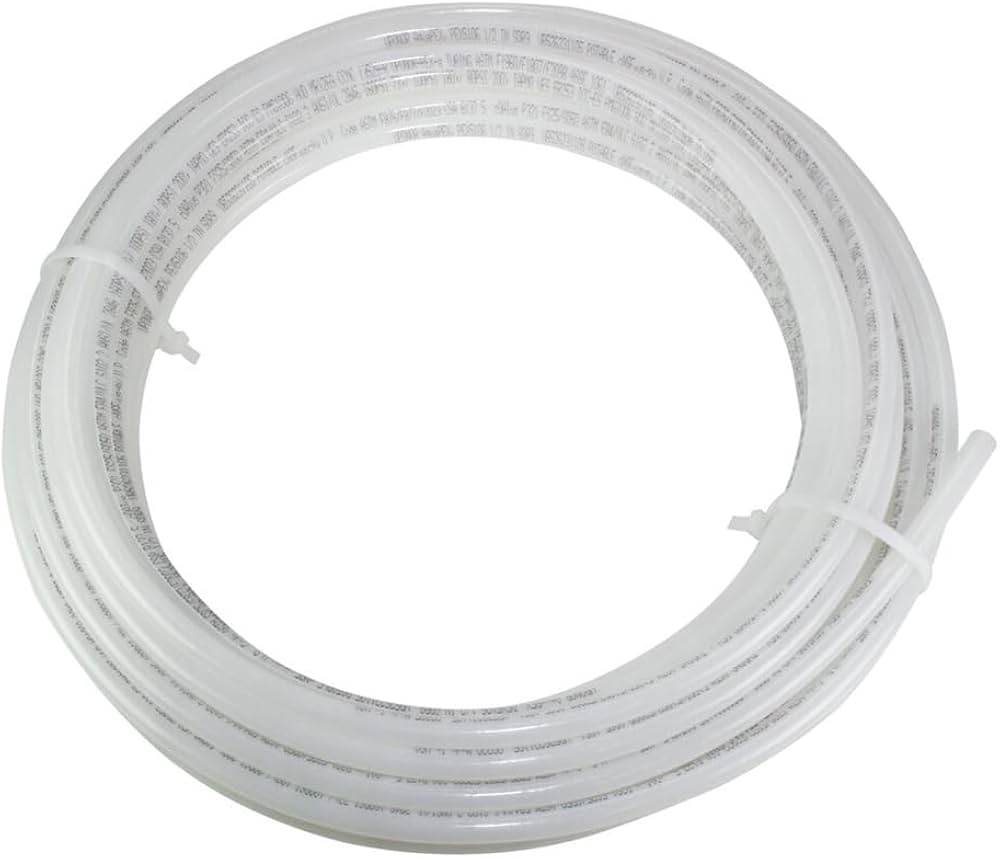
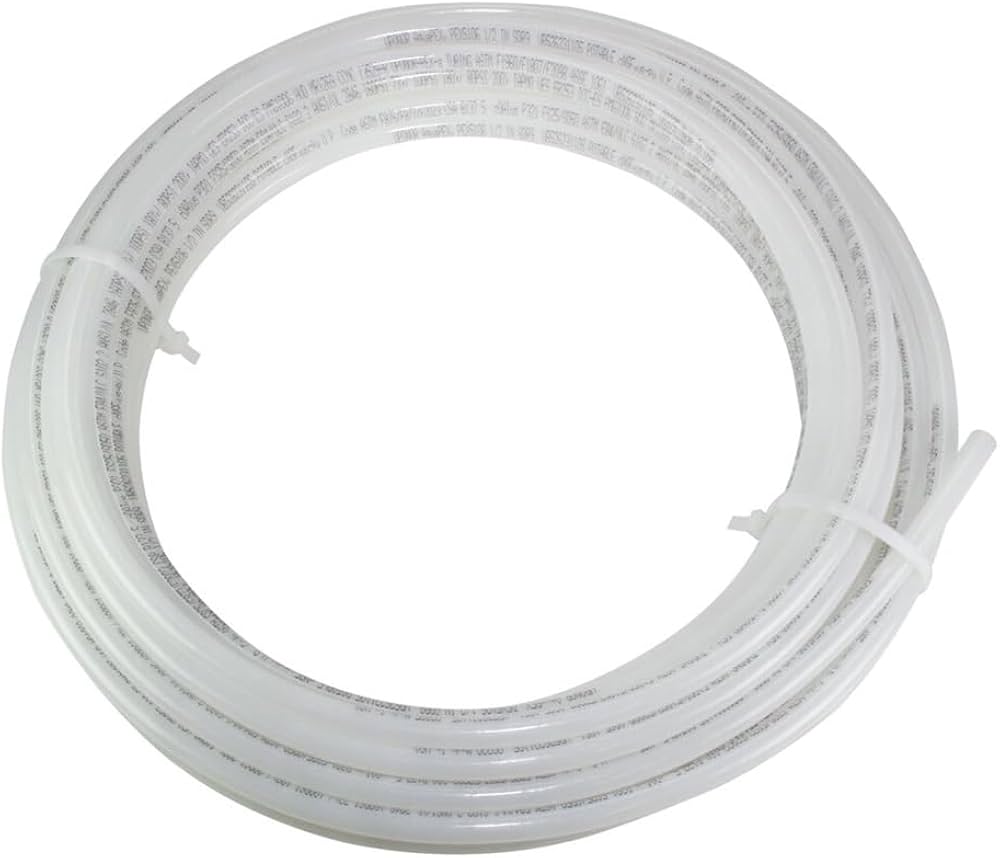
Uponor AquaPEX White PEX-A Tubing Coil (F1040500) — 9/10
The most flexible, freeze-resistant, and installer-friendly PEX pipe available, making it a premium but well-justified upgrade for whole-home plumbing, radiant heating, and any install where tight bends and rock-solid connections matter most.
Overview
The Uponor AquaPEX White PEX-A Tubing Coil represents the gold standard in modern residential and light-commercial plumbing. PEX-A—short for cross-linked polyethylene produced by the Engel (peroxide) method—is engineered to solve the primary pain points of traditional copper and lower-grade plastic piping. Unlike Apollo PEX-B Flexible Water Pipe (silane method) or PEX-C tubing (electron beam method), PEX-A achieves its cross-linking during the manufacturing process itself, resulting in a higher cross-link density and a material with genuine shape-memory properties.
This specific coil is designed for versatility. The white coloration allows it to serve as a universal medium for both hot and cold water supply lines, though it is frequently paired with red and blue coils in complex manifolds to maintain visual organization. The core advantage of the Uponor AquaPEX system is its "elastic memory." If the pipe is accidentally kinked during a pull through a wall cavity, a brief application of heat restores the material to its original cylindrical shape, eliminating the waste and labor associated with cutting out damaged sections.
This review is aimed at homeowners weighing a whole-home repipe, professional contractors evaluating material upgrades, and advanced DIYers tackling their first serious plumbing project. Whether you are installing a high-efficiency radiant floor heating loop, upgrading to a modern A.O. Smith water heater, or a traditional branch-and-tee supply layout, the Uponor AquaPEX (F1040500) provides a level of reliability and installation speed that is virtually unmatched in the "Pipes & Fittings" category. While the upfront cost is higher than PEX-B or CPVC, the reduction in fitting count and the increase in system longevity provide a compelling value proposition.
How PEX-A Technology Works
To understand why the Uponor AquaPEX White PEX-A Tubing Coil is superior, one must understand the molecular chemistry of the "Engel method." In PEX-A production, the cross-linking happens during the polymerization process. This means the molecular bonds are formed more uniformly and densely across the entire structure of the pipe. This creates a three-dimensional network of bonds that act like a structural skeleton, giving the pipe its characteristic resilience.
The Role of Shape Memory: Because of this dense, uniform cross-linking, PEX-A behaves more like a rubber band than a plastic tube. When you apply heat to a section of PEX-A, the molecular bonds "remember" the state they were in during the cooling process at the factory. This is why a kinked pipe can be "healed" with a heat gun. In contrast, PEX-B is much more rigid; once it kinks, the structural integrity is permanently compromised, and the only solution is to cut the segment out and insert a coupling, which introduces a new potential failure point into the system.
The Expansion Fitting Concept: The Uponor system utilizes an expansion-based connection rather than a compression-based one. In a PEX-B system, a metal ring is crimped around the pipe, squeezing it onto a fitting. In the PEX-A system (ProPEX), the pipe itself is expanded outward using a specialized tool. A fitting is then inserted, and the pipe naturally contracts back to its original size. This creates a 360-degree seal where the pipe actually wraps around the fitting, significantly reducing the risk of leaks and ensuring a full-bore flow path that is not restricted by the "shoulder" of a crimp ring. This full-bore flow is critical for maintaining water pressure in high-demand households.
Key Features
PEX-A retains a thermal memory of its original form. Kinked sections self-recover with heat, eliminating the need to cut out damaged runs.
Compatible with the ProPEX method: pipe is expanded, fitting is inserted, and the pipe contracts for a leak-proof, full-bore connection.
Highest cross-link density allows PEX-A to expand significantly before bursting, providing a safety margin in exposed runs.
Engineered to withstand chlorinated municipal water and common household chemicals, resisting degradation over decades.
Achieves the tightest bend radius of any PEX variant (~6× diameter), allowing curves around framing without unnecessary elbows.
A single material solution for both domestic water supply and closed-loop hydronic heating, simplifying procurement.
Full Specifications
| Feature | Value |
|---|---|
| Manufacturing Method | Engel (Peroxide) Cross-Linking |
| Cross-Link Density | ≥ 70% (ASTM-Standard Pipes and Fittings for Plumbing minimum) |
| Pressure Rating | 100 PSI @ 180 °F; 160 PSI @ 73 °F |
| Temperature Rating | –40 °F to 200 °F (short-term max) |
| Available Sizes | 3/8 in, 1/2 in, 3/4 in, 1 in, 1-1/4 in, 1-1/2 in, 2 in |
| Color Codes | Red (hot), Blue (cold), White (universal) |
| Minimum Bend Radius | 6× outer diameter |
| Compatible Fitting Systems | Expansion (ProPEX), Push-to-Connect |
| Certifications | NSF/ANSI 61 (potable), NSF/ANSI 14, ASTM F876/F877, CSA B137.5 |
| Common Applications | Potable water supply, radiant floor heat, snow melt, fire suppression |
| Coil Lengths | 100 ft, 300 ft, 500 ft |
| Service Life Estimate | 50+ years (normal residential conditions) |
| UV Resistance | Limited — protect from prolonged direct sunlight |
| Oxygen Barrier Version | Available (PEX-A OB) for closed hydronic systems |
Pros & Cons
Pros
- Highest flexibility of any PEX type — fewer fittings, faster runs
- Elastic shape memory repairs kinks without cutting
- Expansion fittings create full-bore, pull-out resistant joints
- Best freeze-damage resistance in its class
- Long service life with low maintenance
- Dual-use: potable water and radiant heating from one SKU
- Quieter than copper (no water hammer noise)
- No soldering, flux, or open flame required
Cons
- Higher material cost than PEX-B or CPVC
- Expansion tool (ProPEX driver) adds upfront tooling cost
- Cannot be used outdoors without UV shielding
- Not suitable for gas lines
- Fitting inventory is less universal than crimp-style PEX-B
- Some municipalities still require permit inspection for PEX repipes
Performance
In day-to-day installation, the Uponor AquaPEX White PEX-A Tubing Coil earns its premium positioning quickly. The pipe uncoils naturally without the memory-curl fighting that plagues PEX-B in cold weather, and threading it through wall cavities, around joists, and beneath slabs feels genuinely effortless. The tighter bend radius means a 1/2-inch line can sweep around a corner stud with a single graceful arc rather than requiring a 90-degree elbow fitting—and every eliminated fitting is an eliminated potential leak point over a 50-year service life.
The expansion fitting connection method deserves special attention. Once you use a quality expansion tool to flare the pipe, slide on the ring, and seat the brass or polymer fitting, the joint is genuinely impressive: full-bore flow (no shoulder restriction), pull-out strength that exceeds the pipe's own tensile rating, and a process that takes under 10 seconds per joint after a brief learning curve. Compared to sweating copper or even crimping PEX-B, the consistency of results is noticeably higher.
Freeze performance stands out in real-world cold-climate applications. While no pipe is truly "freeze-proof," PEX-A's elastic recovery means that pipes exposed to a single hard-freeze event in an unheated crawl space or garage often survive without splitting—a scenario where copper pipe would have catastrophically failed. For those dealing with basement water issues, combining reliable piping with a high-quality sump pump is essential. This is not a guarantee, but it is a meaningful insurance policy for homes in USDA zones 5 and colder.
Flow characteristics are excellent. The smooth interior bore and lack of interior corrosion or mineral buildup over time maintain consistent GPM across decades. Water hammer—a common nuisance in older copper systems—is substantially reduced thanks to the pipe's inherent flexibility and pressure-absorbing properties.
Detailed Buyer's Guide: Choosing Your PEX Setup
Selecting the Uponor AquaPEX White PEX-A Tubing Coil (F1040500) is only the first step. To maximize the performance of this material, you need to consider the broader system architecture. Here is a detailed breakdown of how to plan your installation.
1. Manifold vs. Trunk-and-Branch
PEX-A is uniquely suited for Manifold (Home-Run) systems. In this setup, a central manifold acts as the "brain" of the plumbing, with individual lines running directly to each fixture. Because PEX-A is so flexible, you can run these lines without any fittings in the walls. This is the gold standard for modern homes because it eliminates hidden joints, drastically reducing the chance of a leak inside a wall. Furthermore, it allows for individual shut-off control at the manifold (using a SharkBite ball valve) for every single modern bath faucet or high-end fixture.
Alternatively, a Trunk-and-Branch system uses a larger "trunk" line with smaller branches teeing off to fixtures. While this uses less total pipe, it requires more fittings. PEX-A's expansion fittings are still preferable here because they don't restrict flow as much as crimp fittings do, preserving the dynamic pressure at the furthest fixture in the run.
2. Sizing Your Pipe
For most residential applications, 1/2-inch PEX-A is the standard for individual fixture supply (sinks, toilets, showers). However, for main trunk lines or high-flow areas (like a soaking tub or a large laundry room), 3/4-inch is recommended to maintain adequate pressure. The F1040500 model's specific diameter should be chosen based on your calculated GPM (gallons per minute) requirements to avoid "pressure drop" when multiple fixtures are running simultaneously. For whole-home main feeds, 1-inch or larger is typically required depending on the municipal supply pressure.
3. The Tooling Investment
You cannot install Uponor AquaPEX using standard crimp tools. You must use an expansion tool. There are two main types:
- Manual Expansion Tools: Cheaper, but physically demanding. Good for small repairs or very short runs. They require significant grip strength to expand the pipe fully.
- Battery-Powered Tools: Essential for whole-home repipes.
We recommend the Milwaukee M12 ProPEX Expansion Tool Kit to ensure a consistent expansion diameter and significantly reduce hand fatigue.
These are professional-grade investments but pay for themselves in labor speed.
Step-by-Step Installation Process
For those new to the expansion method, the process differs fundamentally from traditional plumbing. Follow these steps for a professional result with the Uponor AquaPEX system:
- Cutting: Use a dedicated PEX cutter to ensure a perfectly square cut. A skewed cut can lead to improper seating of the expansion ring and eventual leaks.
- Deburring: While PEX doesn't have burrs like copper, ensuring the end is clean and free of debris is critical for a tight seal.
- Ring Placement: Slide the expansion ring onto the pipe before expanding. If you forget this step, you will have to cut the pipe back and start over.
- Expansion: Insert the expansion head into the pipe to the depth specified by the fitting manufacturer. Activate the tool to flare the pipe outward.
- Fitting Insertion: Immediately insert the ProPEX fitting into the expanded section. The pipe will contract around the fitting (or a Watts brass coupling for transitions (see our detailed review of the Watts LFA-3/4 coupling)), creating a mechanical seal.
- Verification: Visually inspect the joint to ensure the fitting is fully seated and the ring is positioned correctly against the pipe body.
Maintenance and Long-Term Care
One of the primary appeals of the Uponor AquaPEX White PEX-A Tubing Coil is its low maintenance requirements. Unlike copper, which can suffer from pinhole leaks due to acidic water or electrolysis, PEX-A is chemically inert to most residential water conditions. However, a few considerations remain for the long term:
UV Protection: PEX-A is sensitive to ultraviolet radiation. Prolonged exposure to direct sunlight can break down the polymer chains, leading to brittleness and potential cracking. If you must run PEX on an exterior wall, ensure it is sleeved in conduit or painted with a UV-resistant coating. Most coils come with a protective sleeve, but this is for transport, not permanent installation.
Thermal Cycling: While PEX-A handles heat better than most plastics, avoid exceeding its maximum temperature ratings (typically around 200°F for short bursts). Constant overheating can accelerate the aging process of the plastic. For most home water heaters, this is a non-issue, but for high-temp industrial applications, check the spec sheet.
Water Quality: While resistant to chlorine, extremely high levels of oxidizing agents in municipal water can eventually impact the lifespan of any plastic pipe. Standard city water is perfectly fine, though many homeowners pair their PEX system with a whole house water filter (like the GE GXWH40L) for extra purity, but if you are using highly aggressive chemical treatments in a closed-loop heating system, ensure you use the Oxygen Barrier (OB) version of the tubing to prevent oxygen migration and corrosion of the boiler components.
Comparison: PEX-A vs. PEX-B vs. Copper
Deciding between materials often comes down to a trade-off between upfront cost and long-term risk. Here is how the Uponor AquaPEX (PEX-A) stacks up against the competition.
PEX-A vs. PEX-B
PEX-B is generally cheaper and uses a crimp-ring system that requires less expensive tools. However, PEX-B is more rigid and cannot be "healed" if kinked. The crimp fittings in PEX-B systems also slightly reduce the internal diameter of the pipe, which can lead to a marginal drop in water pressure. PEX-A's expansion fittings maintain the full bore of the pipe, providing superior flow rates and a more reliable, leak-proof connection.
PEX-A vs. Copper
Copper is the traditional choice, praised for its rigidity and perceived "permanence." However, copper requires soldering, which is time-consuming and introduces fire risks. Copper is also susceptible to corrosion (especially in areas with acidic water) and is significantly more expensive. PEX-A is faster to install, more resistant to freezing, and avoids the noise issues associated with copper water hammer.
- Installation Speed: PEX-A (Fastest) > PEX-B > Copper (Slowest)