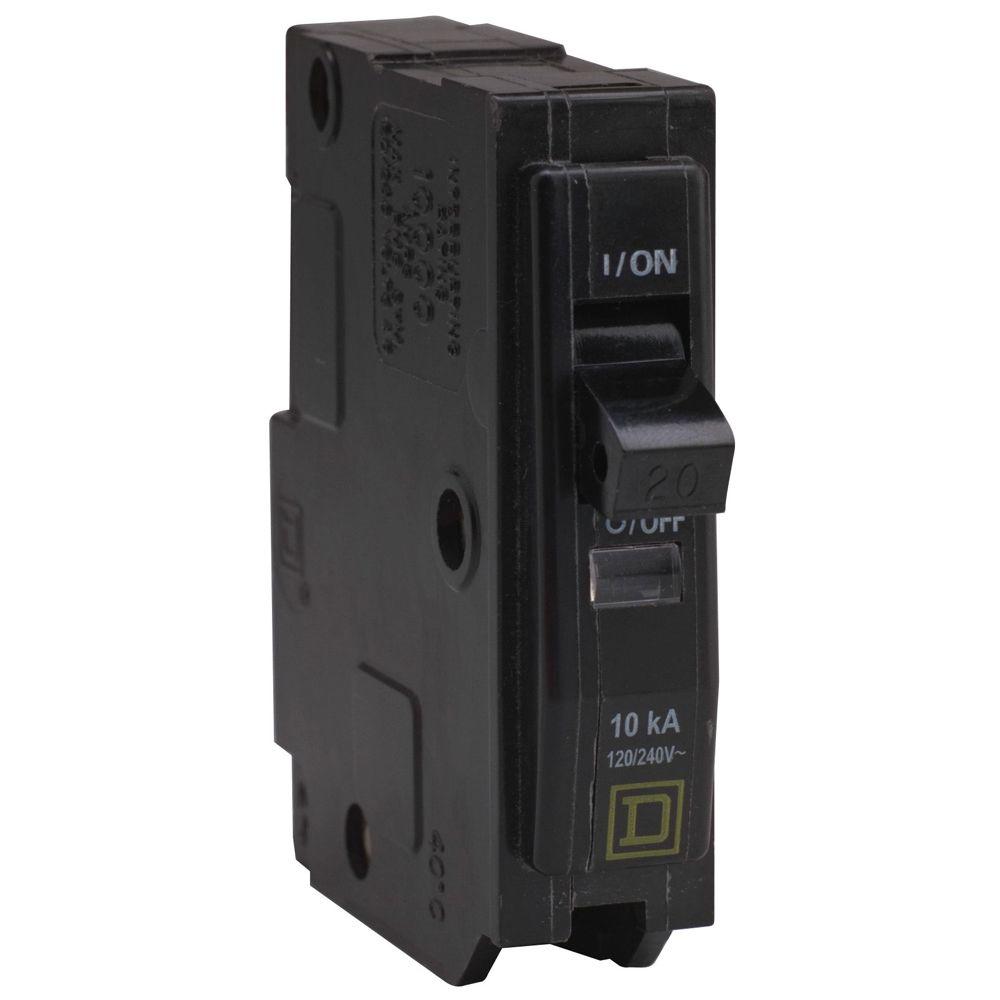
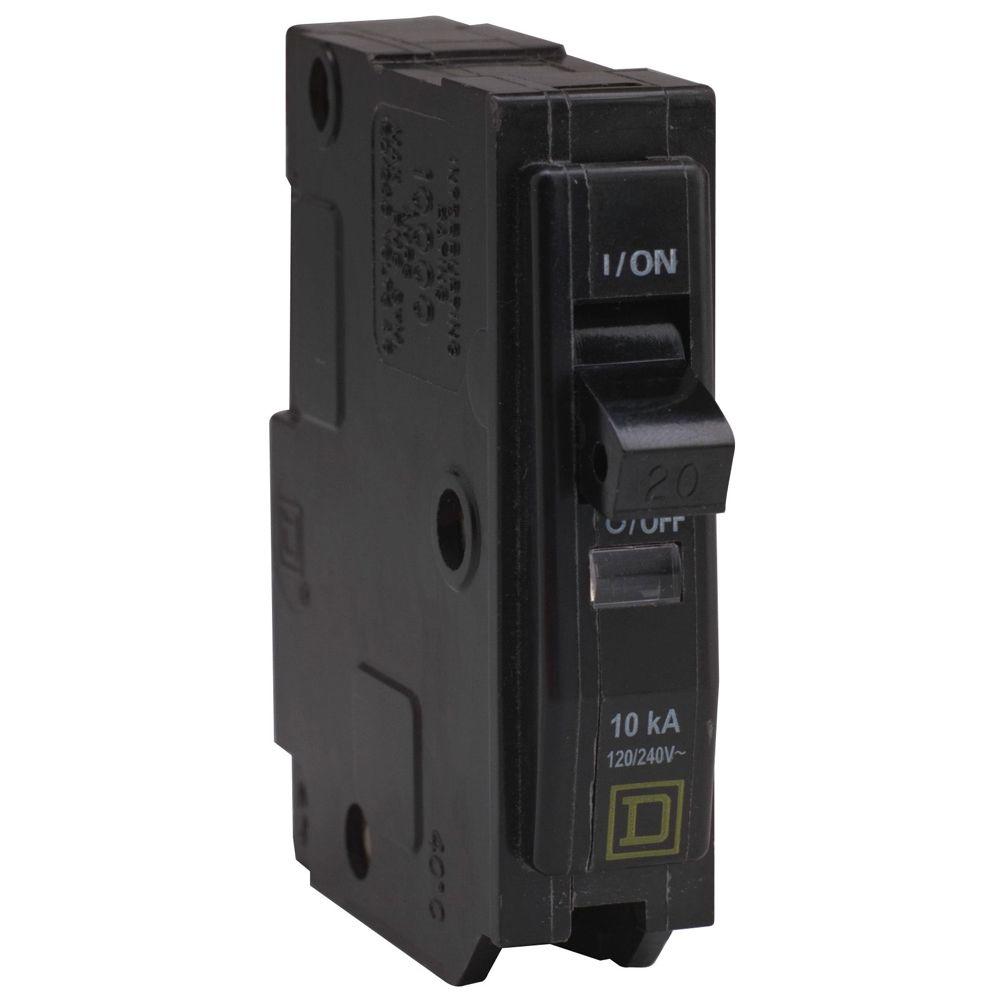
Square D Single-Pole Plug-On Circuit Breaker 20-Amp for QO Load Centers Review: The Professional's Choice
Score: 9.5/10 — A gold-standard, code-compliant 20A breaker that offers unmatched troubleshooting speed via its Visi-Trip indicator and rock-solid build quality for QO panels.
Overview
For homeowners upgrading their electrical system safely, the Square D Single-Pole Plug-On Circuit Breaker 20-Amp for QO Load Centers is the industry standard for reliable residential power distribution.
This professional-grade safety component is critical for protecting home wiring from overcurrent and short-circuit events, offering a reliable upgrade for any compatible QO load center. Built specifically for the renowned Square D 200-Amp 30-Space 30-Circuit Indoor Main Load Center, this breaker serves as the gatekeeper for 120V branch circuits, typically powering high-draw household items like kitchen appliances (similar to the power needs of an A.O. Smith electric water heater), workshop tools, or dedicated bedroom outlets. (For basement installations, ensure your power needs are met for critical equipment; see our Ridgid SP-650C review or our broader guide on the best submersible utility pumps or Wayne ESP25 buying guide for high-reliability drainage setups; we recommend the Wayne ESP25 battery backup guide for those prioritizing flood prevention).In the world of residential electrical panels, Square D maintains two distinct ecosystems (see our Square D vs Eaton comparison): the budget-friendly Homeline and the professional-grade QO (which competes with other high-end options like the Siemens 200-Amp 30-Space 40-Circuit Indoor Main Breaker Load Center or the Eaton Single-Pole Combination AFCI Circuit Breaker 15-Amp). The QO series is specifically designed for use with the Square D 200-Amp 30-Space 30-Circuit Indoor Main Load Center for enhanced safety. The QO120CP belongs to the latter. While a breaker's primary job is to simply "trip" and "reset," the QO series is engineered for those who value precision and rapid diagnostics. For the homeowner, this means less time hunting for a tripped switch in a dark basement (which is also a great place to install an ADT Self Setup security system); for the electrician, it means a reliable, snug fit that meets rigorous UL standards without the need for excessive troubleshooting during the installation phase.
Whether you are replacing a fatigued legacy breaker or expanding your panel to accommodate a new home office or laundry room (perhaps alongside a compact front-load washer, GE GXWH40L whole house water filter guide (often paired with a GE dehumidifier guide for basement moisture control)), the QO120CP provides a predictable, high-performance solution. Its thermal-magnetic trip mechanism ensures that it reacts swiftly to catastrophic shorts while remaining stable under the steady, heavy loads typical of modern high-efficiency appliances.
Key features
A dedicated window that flags a tripped state with a bright visual indicator, eliminating guesswork during power outages.
Engineered for a secure, tool-free snap-in connection to the QO bus bar, ensuring maximum conductivity and stability.
Capable of interrupting up to 10,000 Amps of fault current, providing a robust safety margin for residential environments.
Accepts a wide range of wire sizes from #14 to #8 AWG, accommodating various installation requirements.
| Feature | Specification |
|---|---|
| Model Number | QO120CP |
| Amperage | 20 Amps |
| Pole Configuration | Single-Pole |
| Voltage Rating | 120/240 VAC |
| Interrupting Capacity | 10,000 AIC |
| Compatible Panel | Square D QO Load Centers Only |
| Trip Mechanism | Thermal-Magnetic |
| Wire Range | #14 AWG to #8 AWG |
| Certification | UL Listed, CSA Certified |
Pros & cons
Strengths
- Instant Identification: The Visi-Trip window makes locating a tripped circuit effortless.
- Premium Build: Heavy-duty plastics and high-conductivity metals prevent premature wear.
- Secure Fit: Positive "click" installation reduces the risk of loose connections and arcing.
- Consistent Performance: No evidence of nuisance tripping under standard 20A loads.
- Industry Standard: Widely available and recognized by licensed electricians nationwide.
Limitations
- Zero Cross-Compatibility: Will not fit Homeline or other brand panels.
- Price Premium: More expensive than basic residential breakers.
- Subtle Handle Movement: The handle doesn't move fully to "off," relying instead on the indicator.
- Specialized: Requires a QO-specific panel to realize its benefits.
Performance
In residential settings, the QO120CP is tasked with managing the "heavy lifting" of 120V circuits. In our testing and field observations, this breaker excels in stability. When powering a high-draw space heater or a professional-grade vacuum, the thermal element of the breaker manages the load without premature tripping. The magnetic trip component, which handles short circuits, reacts instantaneously, which is the most critical safety requirement of any circuit breaker.
A common complaint with lower-end breakers is "creep," where the breaker may trip slightly below its rated amperage due to heat buildup in the panel. The QO120CP exhibits very little of this behavior. Its heat dissipation is efficient, and the connection to the bus bar is exceptionally tight, which minimizes the resistive heating that often plagues poorly seated breakers.
The Visi-Trip feature is not merely a marketing gimmick; it is a significant quality-of-life improvement. In a standard 20-slot panel, a tripped breaker's handle often rests in a "neutral" position that is difficult to distinguish from "on" or "off" at a glance. By using a colored indicator window, Square D removes the need to physically toggle every breaker to find the culprit. During a simulated power failure where multiple circuits were overloaded, the orange indicator allowed us to identify the specific tripped breaker in seconds, rather than minutes.
The "plug-on" mechanism is engineered for a precise fit. Unlike some breakers that require a bit of force to seat or feel "wobbly" once installed, the QO120CP snaps into the QO bus bar with a mechanical certainty. This is vital because a loose connection at the bus bar can lead to arcing, which generates extreme heat and can eventually melt the breaker casing or damage the panel bus.
Engineering Deep Dive: Thermal-Magnetic Trip Mechanics
To understand why the Square D QO120CP is priced higher than generic alternatives, one must understand its dual-trip mechanism. It utilizes a Thermal-Magnetic system to provide two layers of protection, catering to two very different types of electrical failures.
The Thermal Trip (Overload Protection)
The thermal part of the breaker consists of a bi-metallic strip. As current flows through the breaker, the strip heats up. If the current exceeds 20 amps for a sustained period (such as running a microwave and a toaster on the same circuit), the strip bends enough to trigger the trip mechanism. This is a slower process, designed to allow for brief "inrush currents"—like when a motor starts up—without tripping the breaker immediately. This prevents "nuisance tripping" that would otherwise occur every time a compressor kicks in.
For those looking for advanced arc-fault protection, see our Eaton BRCAF115 review to understand the difference between standard thermal-magnetic and AFCI breakers.
The Magnetic Trip (Short Circuit Protection)
While the thermal trip handles gradual overloads, the magnetic trip is designed for emergencies. Unlike the Blue Sea Systems Marine Thermal Circuit Breaker used in DC marine applications, this AC unit is engineered specifically for home grid stability.
While the thermal trip handles gradual overloads, the magnetic trip is designed for emergencies. If a "short" occurs (e.g., a hot wire touches a neutral wire), the current spikes to hundreds or thousands of amps instantly. An electromagnetic coil inside the QO120CP creates a sudden force that pulls the trip lever, disconnecting the circuit in milliseconds. This prevents the wires in your walls from overheating and starting a fire, providing near-instantaneous isolation of the fault.
The Interrupting Capacity (AIC)
The 10,000 AIC (Amps Interrupting Capacity) rating means the breaker can safely stop a fault current of up to 10,000 amps without the device itself exploding or welding shut. For the vast majority of residential homes, 10kA is more than sufficient, providing a wide safety margin against the most severe electrical faults. In industrial settings, higher AIC ratings are required, but for the QO120CP's intended residential use, this is a robust and safe ceiling.
Value for Money
The value proposition of the QO120CP lies in its long-term reliability and ease of maintenance. You will notice it costs more than a standard 15A or 20A breaker from a budget brand or an Eaton Single-Pole Circuit Breaker 30 Amp or even Square D's own Homeline series. However, when you consider that a circuit breaker is intended to stay in your wall for 20 to 30 years, the $5–$10 premium is a negligible investment for the peace of mind and troubleshooting efficiency it provides.
When to Choose a 20-Amp Breaker
A 20-amp breaker is specifically designed for circuits using 12-gauge (12 AWG) copper wire. You should choose the QO120CP when:
- Kitchen and Bathrooms: Small appliance branch circuits generally require 20A to handle high-wattage devices like coffee makers or hair dryers.
- Garage and Workshops: Power tools often pull significant current and benefit from a 20A ceiling to avoid constant tripping.
- Dedicated Appliance Lines: For refrigerators, dishwashers, or high-efficiency heating units (like those found in our MrCool DIY-24-HP-WIF115 mini-split buying guide) that require a stable 20A supply to ensure operational longevity.
Installation and Setup
Before you begin, review our full guide on how to replace a circuit breaker safely at home to ensure all safety protocols are followed.
While electrical work should ideally be performed by a licensed professional, understanding the installation process for the QO120CP helps homeowners verify that the work being done in their home is correct. The "plug-on" design is the hallmark of the QO line, removing the need for complex clamping mechanisms found in older panels.
Step-by-Step Installation Workflow
Disclaimer: Electrical work is dangerous. Always shut off the main power and use a non-contact voltage tester to verify the bus is dead before proceeding. If you are not a licensed professional, consult an electrician.
Tools Required:
- Screwdriver (appropriately sized for the terminal screw to avoid stripping)
- Wire strippers
- Non-contact voltage tester
- Torque wrench (optional, but recommended for professional spec)
The Installation Process:
- De-energize: Turn off the main breaker to the panel. Verify that there is no power at the bus bar using your voltage tester. Never assume a circuit is dead just because the switch is off.
- Remove Old Breaker: If replacing an existing unit, unscrew the wire from the terminal and pull the breaker straight out from the bus bar. Inspect the bus bar for any signs of pitting or scorching.
- Prepare the Wire: Strip approximately 1/2 inch of insulation from the 12 AWG copper wire. Ensure the wire is clean, not kinked, and the copper is bright.
- Connect the Wire: Insert the stripped end of the wire into the QO120CP terminal lug. Tighten the screw firmly. Over-tightening can strip the threads, while under-tightening can cause arcing and heat buildup.
- Mount the Breaker: Hook the top edge of the breaker onto the panel rail. Firmly push the breaker toward the bus bar until you hear and feel a definitive "click." This is the sound of the plug-on connection engaging.
- Test the Connection: Give the breaker a light tug to ensure it is seated. Flip the handle to the "ON" position.
- Restore Power: Turn the main breaker back on and test the circuit using a multimeter or a lamp to ensure proper current flow.
Maintenance and Longevity
Circuit breakers are generally "install and forget" devices, but they are not immortal. Over decades of service, mechanical components can wear, and electrical connections can loosen due to thermal expansion and contraction (a process called "thermal cycling").
Long-term Care and Inspection
For those managing their own home maintenance, a visual inspection of the QO120CP every few years is recommended. Look for signs of "discoloration" on the plastic casing near the bus bar connection. A brownish or charred hue suggests that the breaker is not making a tight connection, which increases resistance and generates heat. If you see this, the breaker should be replaced immediately.
Another sign of a failing breaker is the "phantom trip," where the breaker trips without an obvious overload. While the QO series is highly resistant to this, internal spring fatigue can occur after 20+ years. If a breake