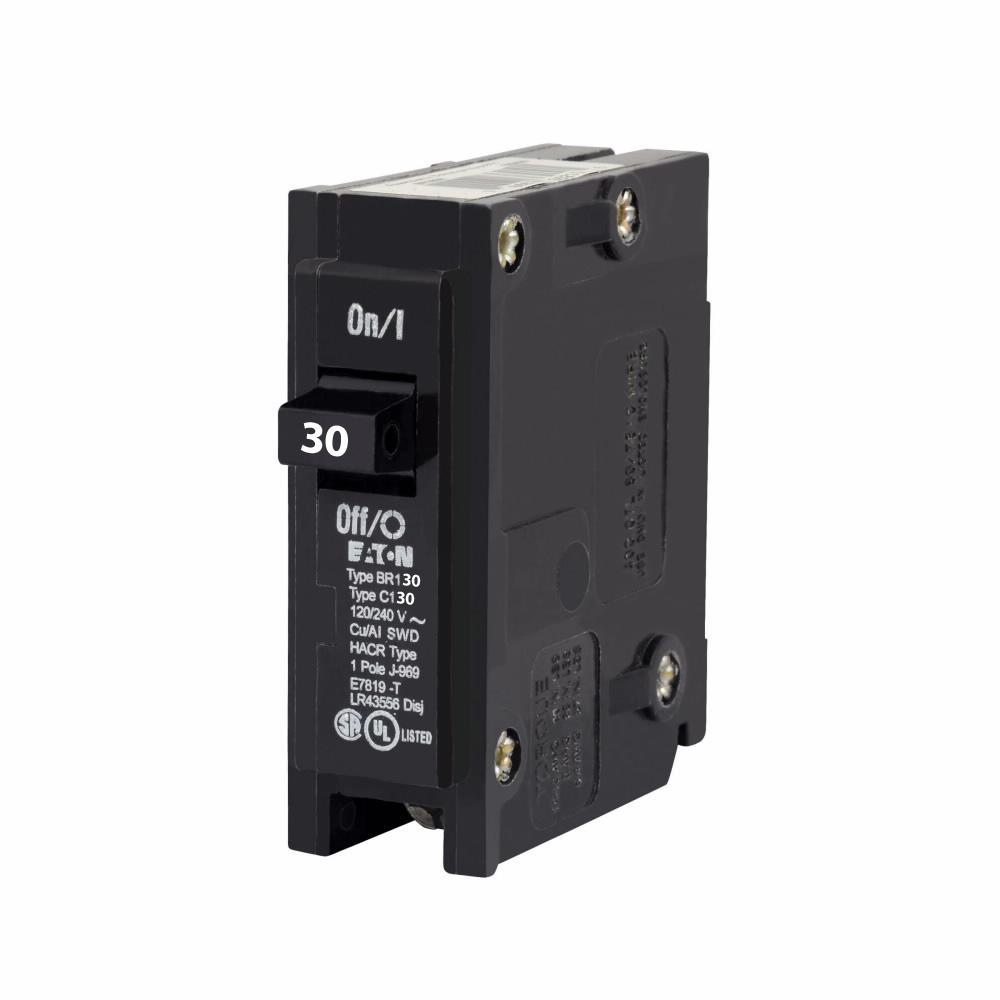
Whether you are upgrading a home workshop or installing a high-draw appliance, the Eaton Single-Pole Circuit Breaker 30 Amp (model BR130) is a critical safety component for residential electrical panels. This comprehensive installation guide provides the essential step-by-step instructions, compatibility checks, and safety specifications you need to ensure a secure electrical setup. This professional-grade breaker is engineered specifically for the Eaton 200-Amp 30-Space 40-Circuit Indoor Main Breaker Load Center.
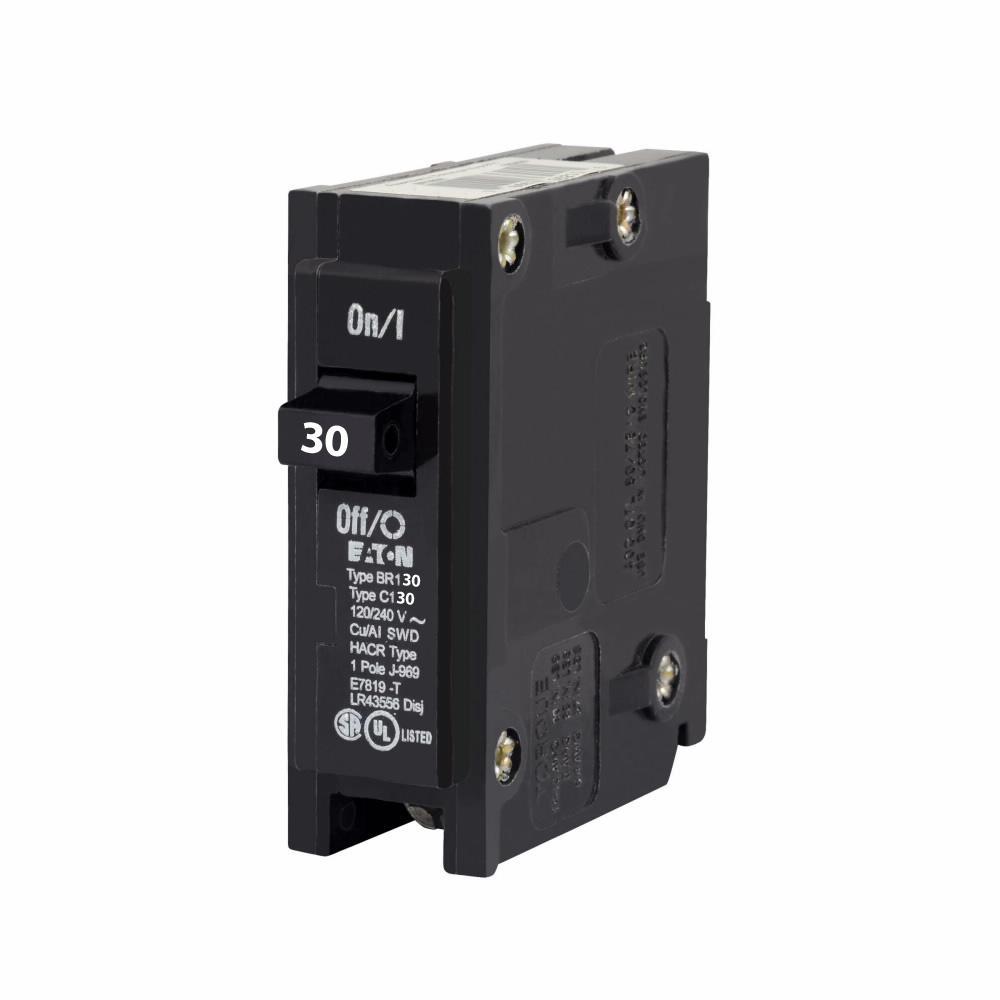
Essential for protecting high-draw 120V circuits, the BR130 balances rigorous safety certifications with a simple snap-in installation to prevent electrical fires and equipment damage in residential workshops and home power systems.
Ensure your panel is compatible; check the Eaton 200-Amp 30-Space 40-Circuit Indoor Main Breaker Load Center for specifications.
Top Pick: Eaton Single-Pole Circuit Breaker 30 Amp (BR130)
Score: 9.8/10 — The gold standard for Eaton BR panels, offering unmatched reliability and wide availability for 30A single-pole applications.
Eaton Single-Pole Circuit Breaker 30 Amp (BR130)
Planning a DIY install? Read our guide on how to replace a circuit breaker safely at home before beginning.
The Eaton Single-Pole Circuit Breaker 30 Amp is a professional-grade thermal-magnetic breaker engineered to interrupt electrical flow when current exceeds 30 amps.
In the hierarchy of residential electrical components, the "Type BR" designation refers to the physical footprint and mounting mechanism, ensuring it seats securely into the bus bars of compatible Eaton and Cutler-Hammer panels. This specific model handles 120V AC loads and is built to withstand the rigors of daily cycling in a home environment.
For many homeowners, the BR130 is the go-to solution for dedicated circuits that require more "headroom" than a standard 15A or 20A breaker can provide. While 30A single-pole circuits are less common in standard living rooms, they are frequently found in garage workshops, RV power hookups, and specific high-output appliance feeds (for marine-specific DC needs, check out the Blue Sea Systems Marine Thermal Circuit Breaker for DC Applications or read our Blue Sea Systems 5193 review). The breaker's internal mechanism uses a combination of a bimetallic strip (for long-term overloads) and an electromagnetic coil (for instantaneous short-circuit protection), providing a dual layer of safety.
Installation is designed for efficiency. The "plug-on" or "snap-in" design eliminates the need for complex mounting hardware; once the breaker is aligned with the panel rail, a firm push locks it into the energized bus. However, because it is rated for 30 amps, the physical connection at the lug is critical. The BR130 features a robust screw terminal designed to accept #10 AWG wire, which is the standard minimum requirement for this amperage to prevent the wire itself from overheating before the breaker trips.
| Specification | Detail |
|---|---|
| Model Number | BR130 |
| Amperage | 30 Amps |
| Poles | Single-Pole (1P) |
| Voltage Rating | 120/240V AC |
| Interrupting Capacity | 10,000 AIC |
| Mounting Type | Snap-in / Plug-on |
| Wire Range | #14–#8 AWG (Cu/Al) |
| Certifications | UL Listed, HACR Rated |
Strengths
- Universal compatibility with Eaton 200-Amp 30-Space 40-Circuit Indoor Main Breaker Load Center (and other BR/CH series panels) (ideal for supporting high-draw systems like those found in our MrCool mini-split buying guide).
- High interrupting capacity (10k AIC) for residential safety.
- HACR rated, making it suitable for heating and air conditioning equipment.
- Simple, tool-less mounting into the panel bus.
Limitations
- Strictly limited to Eaton/Cutler-Hammer compatible panels.
- Lacks integrated AFCI/GFCI protection required by some modern codes. For areas requiring arc-fault protection, the Eaton Single-Pole Combination AFCI Circuit Breaker 15-Amp is the recommended alternative (see our Eaton BRCAF115 review for more details).
- Not a standalone solution for 240V appliances (requires two-pole variant).
Deep Dive: How the BR130 Works
To understand the value of the Eaton BR130, one must understand the physics of thermal-magnetic tripping. A circuit breaker is not just a switch; it is a safety valve. If you plug too many devices into a 30A circuit, the total current draw increases. The "thermal" part of the BR130 consists of a bimetallic strip that bends as it heats up. When the current exceeds 30A for a sustained period, the strip bends enough to trip the internal latch, cutting power to the circuit.
Conversely, a "short circuit" (where a hot wire touches a neutral wire) causes a massive, instantaneous spike in current. The thermal strip is too slow to react to this. This is where the "magnetic" component takes over. An electromagnetic coil creates a force that instantly pulls the trip lever, disconnecting the circuit in milliseconds to prevent the wires from melting or starting a fire. This dual-action system ensures that whether the fault is a slow overheat or a sudden catastrophic short, the circuit is severed before structural damage occurs.
Pro Tip: The 10,000 AIC (Ampere Interrupting Capacity) rating means the BR130 can safely interrupt a fault current of up to 10,000 amps without the breaker itself exploding or failing catastrophically.
The Importance of HACR Ratings
The BR130 is HACR (Heating, Air Conditioning, and Refrigeration) rated. This is a critical distinction. Compressors in refrigerators and AC units have "inrush current"—a massive spike of power needed just to start the motor. A non-HACR breaker might perceive this start-up spike as a short circuit and trip immediately. The BR130 is engineered to ignore these brief, normal spikes while still protecting against genuine overloads—a critical feature when powering high-capacity equipment like the Ridgid SP-650C sump pump (detailed in our Sump Pump buying guide), especially when paired with a Wayne ESP25 battery backup system); for a wider range of options, check our guide to the best submersible utility pumps or our Sump Pump buying guide for high-draw options.
When selecting a breaker for a garage fridge or a small window AC unit, HACR rating is non-negotiable. Without it, you will experience "nuisance tripping," where the breaker flips off every time the compressor kicks in, even though the steady-state current is well within the 30A limit. Eaton ensures the BR130 meets these stringent standards to support the most common high-draw residential appliances.
Comprehensive Buyer's Guide: Selecting the Right Breaker
Choosing a circuit breaker seems simple, but selecting the wrong model can lead to equipment failure or safety hazards. If you're undecided between brands, our Square D vs Eaton comparison guide can help you determine which is best for your home. Here is the detailed framework for ensuring the BR130 is your correct choice.
1. Identifying Your Panel Type
The most common mistake in electrical shopping is buying a breaker that looks correct but isn't compatible with the bus bar. The Eaton BR130 is a "Type BR" breaker. This means it is designed for panels branded as the Eaton 200-Amp 30-Space 40-Circuit Indoor Main Breaker Load Center (BR series) or the older Cutler-Hammer panels. While some CH panels can accept BR breakers, the reverse is not always true. If your panel is a Square D Homeline 200-Amp 60-Space 60-Circuit Indoor Main Load Center, Square D Single-Pole Plug-On Circuit Breaker 20-Amp for QO Load Centers, Siemens, or GE, the BR130 will not physically lock into the bus, and attempting to force it is dangerous.
If you are upgrading your entire system, the Eaton 200-Amp 30-Space 40-Circuit Indoor Main Breaker Load Center is the ideal compatible pairing for BR-series breakers.
While updating your panel, it is also a great time to consider integrated home safety; check out our ADT Self Setup guide or the Ring Alarm Pro buying guide for comprehensive security. Now, check the label on the inside of your panel door. If it explicitly states "BR" or "Cutler-Hammer," this unit is the correct fit. If the panel mentions "CH," you should verify compatibility, as CH panels typically use a different plug-on design. Never use an adapter or "shim" to make a breaker fit; the electrical contact must be flush and tight to avoid arcing, which can lead to panel fires.
2. Ampacity vs. Wire Gauge
A breaker's primary job is to protect the wire, not the appliance. If you have 12-gauge wire (rated for 20A) and you install a BR130 (30A), the wire will overheat and possibly catch fire before the breaker ever trips. To use a BR130, you MUST ensure your wiring is at least #10 AWG copper. If you are upgrading an old circuit, you cannot simply swap the breaker; you must pull new, heavier-gauge wire from the panel to the outlet.
The relationship between the breaker and the wire is a safety chain. The breaker is the weakest link by design. If the wire is the weakest link, the system fails. Always consult a licensed electrician to verify the gauge of your existing wires before upgrading a 20A circuit to a 30A circuit. In most residential settings, 30A circuits are dedicated lines, meaning they run from the panel to a single high-power outlet without any intermediate junctions.
3. Single-Pole vs. Two-Pole Requirements
The BR130 is a single-pole breaker, meaning it connects to one 120V bus bar. It is used for 120V circuits. If you are powering a heavy-duty 240V appliance (like a central AC unit or a large A.O. Smith EES-40 water heater), you need 240V. While some people attempt to use two BR130s with a handle tie, the National Electrical Code (NEC) generally requires a dedicated two-pole breaker for 240V loads—often required for equipment like Bosch mini-split heat pump systems—which often require dedicated high-amperage circuitry—to ensure that both "legs" of the power are disconnected simultaneously during a fault.
Safety Alert: Never "oversize" a breaker to stop it from tripping. If a 20A breaker is tripping, the problem is either a faulty appliance or an overloaded circuit. Installing a 30A breaker in that scenario removes the safety margin and puts your home at risk of electrical fire.
Step-by-Step Installation and Setup
While professional installation is always recommended, understanding the process helps homeowners verify that the work performed is correct. The installation of an Eaton BR130 follows a specific sequence of safety and mechanical steps.
Preparation and Safety
Before opening the panel, ensure you have a non-contact voltage tester and a calibrated torque screwdriver. The first step is always to shut off the Main Breaker. Even with the main off, the "lugs" where the main service enters the panel remain live; never touch the top-most terminals of the panel. Ensure your workspace is dry and that you are wearing rubber-soled shoes to minimize the risk of grounding.
Mechanical Installation
- Bus Alignment: Remove the deadfront cover (the metal plate covering the breakers). Locate the empty slot where the new breaker will go. Ensure the bus bar is clean and free of debris or oxidation.
- The Snap-In: Hook the rear edge of the BR130 onto the panel rail first. Once the rail is engaged, press the front of the breaker firmly toward the bus bar until you hear and feel a distinct "click." The breaker should sit flush with the other units in the panel.
- Wiring: Strip approximately 1/2 inch of insulation from your #10 AWG wire. Insert the wire fully into the breaker's terminal lug, ensuring that no bare copper is exposed outside the lug and that no insulation is trapped inside the screw head.
- Torquing: This is the most overlooked step. Use a torque wrench to tighten the lug to the manufacturer's specification. A loose connection creates resistance, which creates heat, which can melt the breaker housing and lead to a "thermal runaway" event.
Testing and Verification
Once the deadfront is replaced and the main power is restored, flip the BR130 to the "ON" position. Use a multimeter at the destination outlet to verify the voltage is steady at approximately 120V. If the breaker trips immediately, do not force it back on. This indicates a dead short in the wiring that must be diagnosed with a continuity tester before attempting to restore power.
Maintenance, Lifespan, and Pitfalls
Circuit breakers are often "set and forget" devices, but they are mechanical switches that can wear out over decades. The Eaton BR130 is built for longevity, but it requires occasional attention to ensure it will actually trip when needed.
The "Exercise" Routine
Over years of inactivity, the internal spring mechanisms and contact points of a breaker can develop a layer of oxidation or become "stuck." Electrical inspectors recommend "exercising" your breakers once a year. This involves flipping the BR130 to the OFF position and then back to ON. This clears oxidation and ensures the mechanical trip lever is moving freely. If a breaker feels "mushy" or does not snap firmly into place, it may be nearing the end of its service life.
Signs of Failure
Unlike a lightbulb, a breaker doesn't always signal its failure with a visible flash. Instead, look for these subtle warnings:
- Audible Buzzing: A faint humming or buzzing sound coming from the breaker when it is energized can indicate poor contact with the bus bar.
- Heat Radiation: If the plastic casing of the BR130 feels hot to the touch while under load, you likely have a loose connection or an internal failure.
- Discoloration: Any browning or singeing on the plastic housing is a sign of overheating and requires immediate replacement.
- Refusal to Reset: If the breaker trips and won't stay in the "ON" position (even with no load), the internal mechanism has failed. <