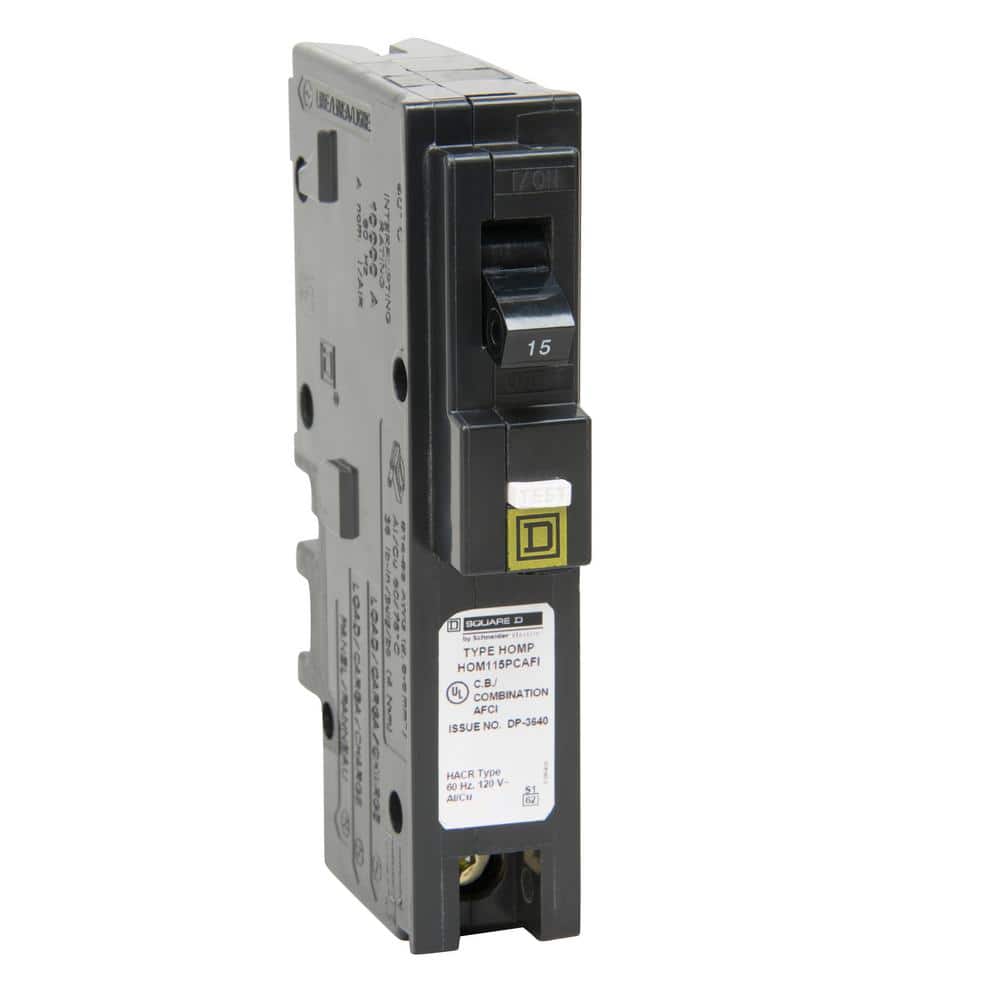
If you are upgrading your electrical panel to meet current NEC codes, installing a 15-amp AFCI breaker is critical for safety and code compliance. Much like how a reliable Wayne ESP25 battery backup sump pump protects your basement from flooding, Arc-fault circuit interrupter (AFCI) protection prevents electrical fires by detecting dangerous arcing—a standard requirement for most modern bedroom and living-area circuits. When choosing the Square D Homeline Single-Pole Plug-On Neutral AFCI Circuit Breaker 15-Amp, it is clear that choosing a high-quality safety device is essential for meeting modern electrical safety standards and ensuring long-term code compliance.The Square D Homeline Single-Pole Plug-On Neutral AFCI Circuit Breaker 15-Amp (HOM115PCAFI) is built specifically for compatible Homeline load centers and is designed to simplify AFCI upgrades through its streamlined plug-on neutral installation.
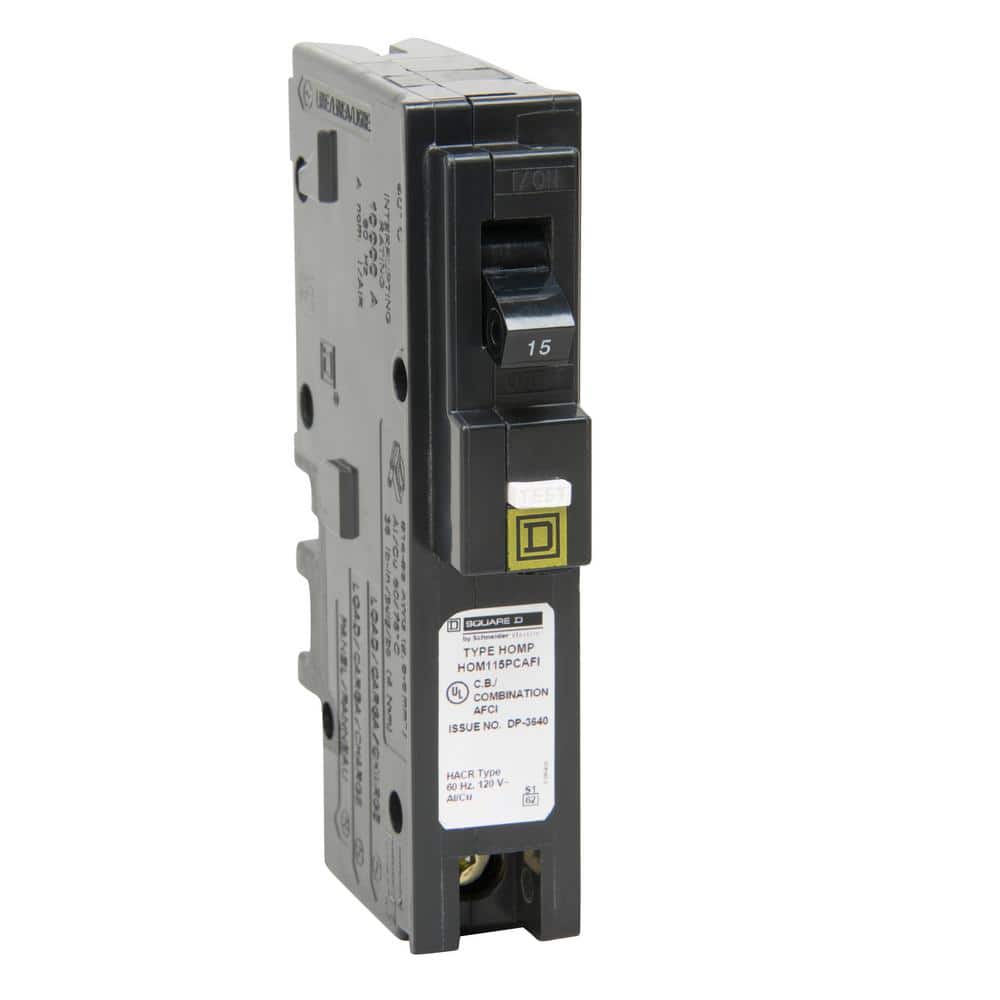
Best Overall: Square D Homeline Single-Pole Plug-On Neutral AFCI Circuit Breaker 15-Amp
A strong choice for homeowners and electricians who need clean, code-focused 15-amp AFCI protection in a compatible Square D Homeline plug-on neutral panel. (Score: 9.3/10)
Square D Homeline Single-Pole Plug-On Neutral AFCI Circuit Breaker 15-Amp
The Square D Homeline Single-Pole Plug-On Neutral AFCI Circuit Breaker 15-Amp is engineered for branch circuits that require arc-fault protection.
This is most commonly required by modern electrical codes for bedrooms, hallways, family rooms, and living-area circuits. Its primary function is to detect dangerous arcing conditions—where electricity "jumps" between conductors—that standard thermal-magnetic breakers may not identify, significantly reducing the risk of electrical fires.
The defining feature of this breaker is its plug-on neutral design. In traditional AFCI installations, a "pigtail" white wire must be connected to the neutral bar, often leading to a crowded and cluttered electrical panel. The HOM115PCAFI eliminates this requirement by connecting directly to the neutral bar in compatible Square D Homeline plug-on neutral load centers. This results in a faster installation process and a much cleaner panel interior, which is highly valued by professional electricians during new construction or extensive remodels.
As a 15-amp, single-pole breaker, this device is intended for 120-volt circuits that are correctly wired and sized for 15-amp protection. It is critical to note that this is not a universal AFCI breaker; it is specifically designed for the Homeline ecosystem. Before purchase, users must verify that their load center is not only a Homeline panel but specifically a plug-on neutral compatible version. Attempting to install this in a non-plug-on neutral panel will not provide the intended connectivity without modifications that may void warranties or violate codes.
This model is ideal for buyers who already have the compatible infrastructure and want to maximize the efficiency of their electrical system. Whether you are upgrading older wiring to meet current safety standards or completing a new build using a Square D Homeline 200-Amp 60-Space 60-Circuit Indoor Main Load Center. If you're replacing existing hardware, see our guide on how to replace a circuit breaker safely at home how to replace a circuit breaker safely at home to ensure you follow proper lockout/tagout procedures. Ultimately, the HOM115PCAFI provides a reliable, code-compliant solution that prioritizes both safety and installation aesthetics.
Pros
- Provides essential AFCI protection for high-risk living areas
- Plug-on neutral design removes the need for cumbersome pigtail wires
- Reduces panel clutter and simplifies the installation process
- Seamless integration with Square D Homeline ecosystems
- Perfectly sized for standard 15-amp bedroom and living room circuits
Cons
- Strictly compatible only with specific Homeline plug-on neutral panels
- Not suitable for 20-amp circuits or heavy-duty appliance loads
- Requires a compatible panel for the "plug-on" benefit to work
- Should only be installed by qualified individuals due to high voltage risks
| Specification | Details |
|---|---|
| Model Number | HOM115PCAFI |
| Brand / Series | Square D Homeline |
| Breaker Type | Single-pole AFCI circuit breaker |
| Amperage | 15 Amps |
| Voltage Class | 120V Branch Circuits |
| Neutral Connection | Plug-on Neutral (No pigtail) |
| Compatible Panel | Square D Homeline Plug-on Neutral Load Centers |
| Primary Use | Arc-fault protection for residential living areas |
Deep Dive: How AFCI Protection Works
To understand why the HOM115PCAFI is necessary, one must first understand the difference between a standard circuit breaker and an Arc-Fault Circuit Interrupter (AFCI)—which we explore in depth in our AFCI vs Standard Circuit Breakers guide. A standard breaker is primarily designed to protect against overloads (too many appliances on one circuit) and short circuits (hot wire touching a neutral or ground). However, standard breakers often fail to detect "arc faults."
An arc fault occurs when the insulation of a wire is damaged (see our Eaton BRCAF115 review for a deeper look at competing options, or our broader Square D vs Eaton comparison) —perhaps by a nail driven into a wall, a rodent chewing through a cable, or a worn-out plug—causing electricity to "arc" across the gap. This arc creates intense heat, which can ignite surrounding building materials long before a standard breaker ever detects a current surge high enough to trip. The Square D Homeline Single-Pole Plug-On Neutral AFCI Circuit Breaker 15-Amp uses advanced electronics to monitor the waveform of the current. It can distinguish between a "normal" arc (like the one that happens when you flip a switch) and a "dangerous" arc, tripping the circuit instantly to prevent a fire.
Analyzing the Waveform: The Intelligence of AFCI
Unlike a thermal breaker that relies on a bimetallic strip heating up or a magnetic trip for massive surges, the HOM115PCAFI contains a microprocessor. This processor analyzes the current signature hundreds of times per second. A typical light switch creates a brief, predictable arc; the AFCI is programmed to ignore this. However, a "parallel arc"—which happens when two wires with damaged insulation touch and separate rapidly—creates a chaotic, high-frequency signature. When the microprocessor detects this specific pattern, it triggers the trip mechanism in milliseconds.
This level of sophistication is why AFCI breakers are more expensive than standard breakers. You aren't just paying for a switch and a piece of metal; you are paying for a safety computer integrated into your electrical panel. For the HOM115PCAFI, this means that even a tiny spark caused by a frayed lamp cord behind a dresser is caught before it can start a structure fire.
Plug-On Neutral vs. Pigtail Designs
The "Plug-On Neutral" (PON) technology found in the HOM115PCAFI represents a significant evolution in panel design (if you're weighing brands, check out our Square D vs Eaton comparison). If you are managing specialized DC power systems, you might look at other options, but for residential AC, these brand comparisons are the best place to start. In older AFCI models, the breaker required a connection to both the hot bus bar and the neutral bar. Since the breaker only "plugs" into the hot bar, manufacturers included a white "pigtail" wire that the electrician had to manually land on the neutral bar.
While functional, pigtails create several problems. First, they create massive congestion. In a panel with 20+ AFCI breakers, the neutral bar becomes incredibly crowded, making it difficult to manage wires and potentially leading to loose connections. Second, they increase installation time. Every pigtail requires stripping, inserting, and tightening, adding minutes to every single circuit installed. Third, they introduce more failure points; every manual connection is a potential point of failure if not tightened correctly.
The HOM115PCAFI solves this by utilizing a specialized neutral clip on the back of the breaker. When pushed into a compatible Homeline PON panel, the breaker connects to the neutral bar automatically. This removes the need for the pigtail entirely, leaving the panel clean and reducing the labor cost for the installation.
Comparing the Installation Experience
For a professional electrician, the difference between a standard AFCI and a PON AFCI is substantial. In a traditional panel, the "neutral nest" (the cluster of white wires at the neutral bar) can become so dense that it actually obstructs the closing of the panel door or makes it impossible to add new circuits. By integrating the neutral connection into the bus bar itself, the HOM115PCAFI transforms the electrical panel from a chaotic web of wires into an organized, linear system.
For the homeowner, the benefit is primarily safety and long-term reliability. A plug-on connection is a factory-engineered contact point, which is generally more consistent than a manually tightened screw terminal on a crowded bar where wires may be strained or pinched.
Comprehensive Installation Guide and Best Practices
Installing an AFCI breaker like the HOM115PCAFI is a precise task that must be handled with caution. While the "plug-on" aspect simplifies the connection, the overall process remains high-risk. We strongly recommend reviewing our guide on how to replace a circuit breaker safely at home before beginning, and understanding the broader differences between AFCI and standard breakers. This section outlines the rigorous steps required for a professional installation.
Step 1: Panel Verification and Compatibility Check
Before removing any old breakers, confirm that your panel is a Square D Homeline Plug-on Neutral load center. Not all Homeline panels are created equal. If your panel requires pigtails for other AFCI breakers, this specific model (HOM115PCAFI) will not work without a panel upgrade or a different breaker model. Check the panel label or the interior chassis for "Plug-on Neutral" markers. A non-PON panel lacks the specific neutral bar spacing and contact points required for the breaker's rear clip to engage.
Step 2: Power Down and Absolute Safety
Electrical safety is paramount. Always turn off the main breaker before opening the panel. However, remember that even with the main breaker off, the lugs coming from the meter remain live. Use a properly rated, insulated multimeter to verify that the circuit you are working on is dead. Ensure you are wearing appropriate PPE, including insulated gloves, and ensure your work area is dry. While updating your electrical system, ensure all surrounding areas are clear and dry to maintain a safe working environment.
Step 3: Mounting the Breaker
Clear the slot of any existing debris. Snap the HOM115PCAFI into the designated slot. Ensure it is seated firmly; you should feel a definitive "click" as it engages with the hot bus bar and the neutral clip connects to the neutral bar. Because there is no pigtail, you do not have to worry about routing a wire to the neutral bar—the breaker handles this connection internally via the PON clip.
Step 4: Connection, Torque, and Testing
Connect the hot wire from the branch circuit to the breaker terminal. It is highly recommended to use a torque wrench to tighten the screw to the manufacturer's specified torque; under-tightening can lead to arcing at the terminal, while over-tightening can damage the wire or the screw. Once the main power is restored, use the "Test" button on the face of the breaker. This simulates an arc fault and ensures the internal electronics are functioning correctly. If it doesn't trip, the installation is faulty or the breaker is defective.
Maintenance and Troubleshooting "Nuisance Tripping"
One of the most common complaints with AFCI breakers is "nuisance tripping"—where the breaker trips even though there isn't a dangerous fire hazard. Because the HOM115PCAFI is highly sensitive to waveform irregularities, some devices can trigger a false positive.
Common Causes of Nuisance Tripping
Understanding what triggers these trips is the first step to solving the problem. Common culprits include:
- Old Vacuum Cleaners: Brushes in old motors can create tiny sparks that the AFCI interprets as a dangerous arc.
- Low-Quality Power Strips: Cheap surge protectors or extension cords with degraded insulation can leak current in a way that mimics an arc.
- Variable Speed Drives: Some high-end fans or dimmers create electrical noise on the line.
- Loose Neutral Connections: If a neutral wire is loose at a junction box or outlet, it can cause intermittent arcing that trips the breaker.
If you experience frequent tripping, the best approach is a process of elimination. Unplug all devices on the circuit and reset the breaker. Plug devices back in one by one until the breaker trips. This identifies the specific appliance causing the interference. If the breaker trips with nothing plugged in, you likely have a wiring fault (like a nail through a cable) that requires immediate professional attention.
Comparison: AFCI vs. GFCI vs. Standard Breakers
It is common for buyers to confuse AFCI (Arc-Fault) and GFCI (Ground-Fault) protection. While both are safety devices, they protect against entirely different hazards. The HOM115PCAFI is an AFCI, meaning it looks for sparking, not leaking.
| Feature | Standard Breaker | GFCI (Ground Fault) | AFCI (HOM115PCAFI) |
|---|---|---|---|
| Primary Protection | Overload / Short Circuit | Electric Shock / Electrocution | Electrical Fires / Arcing |
| Detection Method | Thermal/Magnetic Heat | Current Imbalance | Waveform Analysis |
| Required Area | General Purpose | Wet Areas (Kitchen/Bath) | Living Areas (Bed/Den) |
| Risk Mitigated | Wire melting from load | Current passing through person | Sparks igniting walls/insulation |
In many modern homes, you may see "Dual-Function" breakers that provide both AFCI and GFCI protection. If you are comparing different brands, you might find our