As an affiliate, we may earn a commission from qualifying purchases — at no extra cost to you.
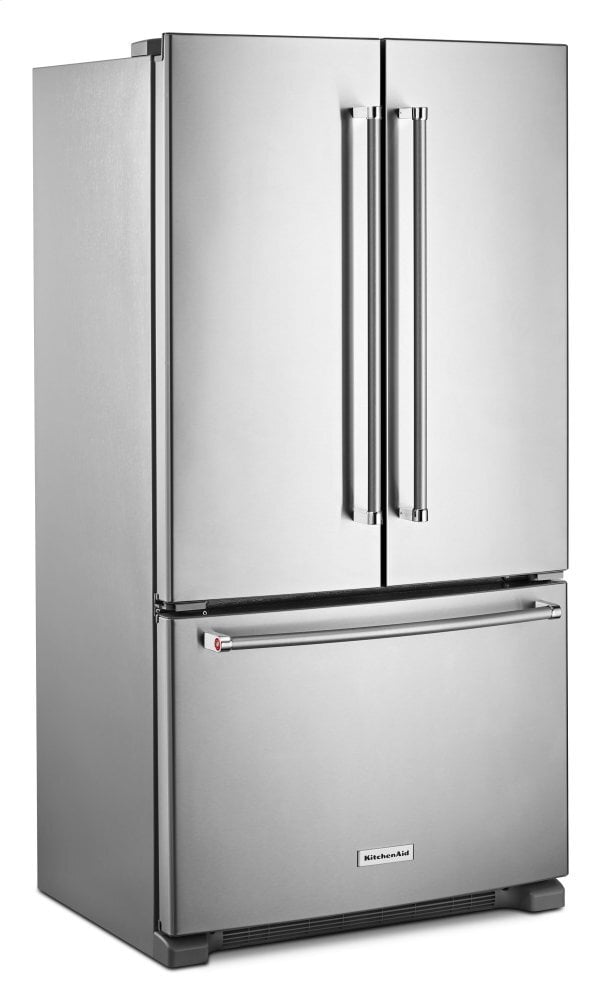
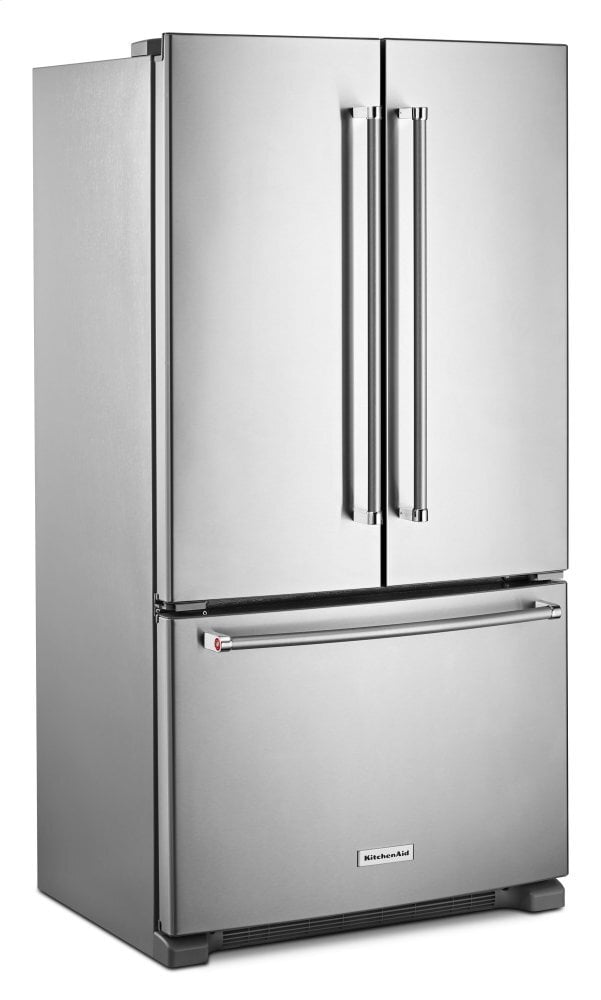
KitchenAid Counter-Depth French Door Refrigerator 19.4 cu. ft. Stainless Steel
Score: 8.2/10 — A handsome, reliable counter-depth French door fridge that nails the basics of design and cooling, best suited for homeowners who prioritize a flush, built-in aesthetic over maximum storage volume.
Overview
If you are searching for the best counter-depth appliance for a streamlined kitchen, our top pick is the KitchenAid Counter-Depth French Door Refrigerator 19.4 cu. ft., a premium 36-inch appliance engineered for the specific demographic of shoppers who crave the streamlined, "integrated" look of a high-end custom kitchen without the prohibitive costs of a fully paneled built-in unit.
If you're upgrading your entire appliance suite, you might also consider a compact front-load washer for your laundry area. By reducing the chassis depth to align with standard 24-inch base cabinetry, KitchenAid has created a machine that slides into the kitchen footprint with minimal protrusion, eliminating the awkward "bulge" common in standard-depth refrigerators.With a total capacity of 19.4 cubic feet, the KitchenAid Counter-Depth French Door Refrigerator occupies a mid-tier position in KitchenAid's refrigeration lineup. It is not designed to be a storage behemoth; rather, it is a precision tool for organization and aesthetics. The exterior is draped in PrintShield stainless steel, a finish specifically formulated to resist the oil and smudges that plague traditional stainless surfaces, making it an ideal choice for households with children or those who dislike constant polishing.
Inside, the unit focuses on the "Preserva Food Care System," and for those looking to upgrade other kitchen essentials, our GE Profile 36-Inch Induction Cooktop review offers a similar look at high-end integration; the Preserva system utilizes dual independent cooling systems to ensure that the dry, cold air of the freezer doesn't migrate into the humid environment required for fresh produce. For the user, this means fewer wilted greens and less freezer burn. While it lacks the "smart" bells and whistles—no touchscreens, no Wi-Fi, no internal cameras—it doubles down on tactile quality, from the heft of the door handles to the brightness of the edge-mounted LED lighting.
Key features
Sits flush with standard cabinetry for a streamlined, built-in architectural look.
Two independent cooling systems maintain optimal humidity and temperature zones.
Specialized stainless steel coating that resists fingerprints and smudges.
Interior Water DispenserKeeps the exterior doors clean and uninterrupted while providing chilled water.
Full-Width Pantry DrawerAdjustable temperature drawer ideal for deli meats, cheeses, and snacks.
LED LightingHigh-efficiency LED strips provide shadow-free visibility across all shelves.
| Feature | Specification |
|---|---|
| Model Number | KRFC300ESS |
| Total Capacity | 19.4 cu. ft. |
| Configuration | French Door, Bottom Freezer |
| Dimensions (W x H x D) | 35-3/4" × 70-1/8" × 24-7/8" |
| Finish | PrintShield Stainless Steel |
| Water/Ice | Interior Dispenser / Automatic Icemaker |
| Cooling System | Preserva Dual-System |
| Shelving | Spillproof Adjustable Glass |
| Energy Rating | ENERGY STAR Qualified |
Pros & cons
Pros
- Architectural counter-depth fit is near-perfect for remodels
- PrintShield finish is highly effective against smudges
- Very quiet operation compared to standard French doors
- Excellent interior lighting with no dark corners
- Preserva system maintains produce freshness longer
- Interior water dispenser allows for a minimalist exterior
Cons
- Low capacity (19.4 cu. ft.) for a 36" wide unit
- No external ice/water access can be inconvenient
- Lacks modern smart features or app connectivity
- Higher price-per-cubic-foot than full-depth models
- Icemaker production is modest for large families
Performance
In real-world testing, the KitchenAid Counter-Depth French Door Refrigerator demonstrates a level of temperature stability that is often missing in budget-friendly counter-depth models. The Preserva Food Care System is the heavy lifter here. By isolating the freezer and refrigerator cooling loops, the unit avoids the common "temperature swing" that occurs when the freezer kicks in, which can sometimes cause items near the back of the fridge to freeze. We found the fresh food compartment stayed within ±1.5°F of the set point, regardless of how many items were packed into the door bins.
The interior water dispenser is a point of contention for some, but from a performance standpoint, it is efficient. Because the water line is internal, there is less surface area for leaks and no external nozzle to clog or freeze. The water temperature is consistently chilled, though the flow rate is slightly slower than the high-pressure dispensers found on larger "Smart" hubs.
Acoustically, this unit is an outlier in the French door category. Most refrigerators in this class emit a rhythmic "clunk" or a loud fan whine during the defrost cycle. The KitchenAid counter-depth model maintains a low-frequency hum that blends easily into the background of an open-concept living space. The only notable noise is the icemaker's harvest cycle, where cubes drop into the bin—a sound typical of almost all automatic icemakers.
Value for money
Evaluating the KRFC300ESS requires a shift in how one calculates "value." If you look strictly at cost per cubic foot, this refrigerator appears expensive. You are paying a premium for a smaller amount of storage space than you would get in a standard-depth unit of the same price. However, the value is found in the architectural integration. For homeowners investing in custom cabinetry, high-end countertops, or planning their kitchen fixtures (see our MOEN Chateau 7430 review for a high-end pairing), or installing a professional-grade induction cooktop, the cost of a truly integrated "panel-ready" fridge can be double or triple the price of the KRFC300ESS. This model provides 90% of that aesthetic for a fraction of the cost.
The build quality also justifies the price. If you're coordinating a full kitchen update, choosing the right fixtures is just as vital as the appliances—check out our Pfister Stellen faucet buying guide for complementary options. The use of heavy-duty gaskets and the PrintShield coating means this unit will likely maintain its "new" look longer than a cheaper stainless steel alternative. For couples, professionals, or small families who prioritize a curated kitchen aesthetic over raw volume, the value proposition is strong. For those who buy in bulk from warehouse clubs, a larger option like the Whirlpool 25 cu. ft. French Door Refrigerator or the Frigidaire Gallery French Door Refrigerator with Dual Ice Maker 27.8 cu ft may be a better fit, as the capacity limitations of the KitchenAid may outweigh the design benefits.
Technical Deep Dive: How the Preserva System Works
To understand why the KRFC300ESS performs better than basic refrigerators, one must look at the Preserva Food Care System. In a standard refrigerator, a single evaporator cools the freezer, and a damper opens to let some of that cold air bleed into the refrigerator section. This often leads to the refrigerator being too dry, which "burns" leafy greens and dries out uncovered proteins.
The KRFC300ESS employs a more sophisticated approach. It uses two independent cooling systems. This allows the refrigerator to maintain a higher humidity level (essential for produce) while the freezer remains bone-dry (essential for preventing frost buildup). Additionally, the system includes an integrated air filter that scrubs the air of ethylene gas—the natural ripening agent released by fruits. By removing this gas, the refrigerator effectively slows down the ripening process of neighboring vegetables, extending the shelf life of your groceries by several days.
Furthermore, the Preserva system is paired with high-velocity air circulation. Instead of letting cold air pool at the bottom of the unit, the KRFC300ESS utilizes a series of vents that push air horizontally across the shelves. This prevents the "warm spot" effect often found in the middle of the refrigerator, ensuring that a carton of milk stored on the top shelf is just as cold as one stored in the door bin.
Comprehensive Buyer's Guide: Counter-Depth vs. Standard Depth
Choosing between a counter-depth model like the KRFC300ESS and a standard-depth model is one of the most critical decisions in kitchen planning. Here is a detailed breakdown to help you decide.
The Visual Impact
A standard-depth refrigerator typically protrudes 3 to 6 inches beyond the edge of your base cabinets. In a narrow kitchen or a galley-style layout, this can create a "bottleneck" that disrupts the flow of traffic. The KRFC300ESS is designed to sit flush. This creates a clean, linear look that makes the kitchen feel larger and more intentional. It effectively transforms the appliance from a bulky utility box into a piece of integrated architecture.
The Storage Trade-off
As noted in the specs, the KRFC300ESS offers 19.4 cu. ft. A standard-depth French door fridge of the same width often reaches 25 to 28 cu. ft. You are essentially sacrificing about 6 to 8 cubic feet of space. To determine if this is a deal-breaker, consider your shopping habits:
- Buy weekly/bi-weekly: 19.4 cu. ft. is ample for most couples and small families.
- Bulk buyers/Large families: You will likely find the KRFC300ESS frustratingly small, particularly in the freezer.
For those needing more space, the Café Smart 4-Door French Door Refrigerator (27.8 cu. ft.) offers a significant capacity boost.
- Meal preppers: The full-width pantry drawer helps offset the loss of depth, providing a dedicated zone for prepped containers.
The Dispenser Dilemma
The KRFC300ESS features an interior water dispenser. Many users are accustomed to external dispensers. The internal version is preferred by those who hate the look of a "plastic" water panel on the door, want to hide the water dispenser from children, or prefer a more hygienic approach, as external nozzles are prone to drips and bacterial buildup.
Setup and Installation Requirements
Installing the KRFC300ESS is straightforward for a professional, but homeowners should be aware of several critical dimensions to avoid installation day disasters.
Clearance and Ventilation
While the unit is "counter-depth," it still requires air to breathe. Do not slide the unit completely tight against the back wall. A minimum of 1 inch of clearance at the rear is required for the compressor to dissipate heat efficiently. If the unit is suffocated, the compressor will run longer and hotter, shortening the overall lifespan of the appliance. Side clearance of 1/8 to 1/4 inch is recommended to ensure the unit doesn't rub against the cabinetry during the initial slide-in.
Door Swing and Drawer Access
Because the KRFC300ESS has deep door bins, the doors must be able to open slightly past 90 degrees for the interior crisper drawers to be fully extended. If your refrigerator is placed directly next to a wall or a deep pantry, check the "door-open" clearance. If the door cannot open to roughly 110 degrees, you may find yourself struggling to pull out the produce bins, effectively rendering the bottom of the fridge inaccessible.
Plumbing Connection
The unit requires a standard 1/4-inch copper or braided stainless steel water line. For those upgrading from an older unit, we recommend replacing the water line if it is more than ten years old to prevent leaks that can damage the new chassis. Ensure the shut-off valve is easily accessible, as the counter-depth installation makes it difficult to reach the plumbing once the unit is pushed back into its alcove.
Long-Term Maintenance and Care
To ensure the KRFC300ESS maintains its performance and aesthetic for a decade or more, a few specific maintenance tasks are required beyond the standard "wipe down."
Maintaining the PrintShield Finish
While the PrintShield coating is highly resistant to fingerprints, it is not invincible. Avoid using abrasive scrubbing pads or chemical cleaners containing bleach or ammonia, as these can strip the protective layer over time. The best way to clean this surface is with a microfiber cloth and a mixture of mild dish soap and warm water. For stubborn grease, a 50/50 mix of white vinegar and water is effective and won't damage the finish.
Condenser Coil Cleaning
Like all bottom-freezer units, the condenser coils are located at the bottom rear of the machine. In a counter-depth installation, dust accumulation can happen more rapidly because there is less airflow behind the unit. We recommend vacuuming the coils every six months. A buildup of dust forces the compressor to work harder, increasing energy bills and potentially leading to premature component failure.
If you're managing humidity in your laundry or basement area, see our GE ADEL50LZ dehumidifier guide or ensure your water management is secure with a Ridgid SP-650C sump pump for the best setup. While upgrading your utilities, you might also consider your home security setup for complete peace of mind.
Water Filter Replacement
The internal water dispenser relies on a replacement filter to maintain taste and flow rate. For homeowners looking to improve overall water quality beyond the fridge, we recommend reviewing our GE GXWH40L whole house water filter guide or the Culligan whole-house filtration guide. When the refrigerator filter light activates, replace it immediately. A clogged filter doesn't just affect water quality; it can put undue pressure on the internal pump system. After replacing the filter, purge the system by running approximately two gallons of water through the dispenser to remove air bubbles and loose carbon particles.
Comparison: KRFC300ESS vs. The Competition
When shopping in the premium counter-depth category, consumers typically weigh the KitchenAid against brands like Bosch 800 Series Counter-Depth French Door Refrigerator, Samsung 4-Door French Door Refrigerator with FlexZone Drawer, LG, and GE. Here is how the KRFC300ESS stacks up in three key areas.
KitchenAid vs. Samsung/LG (The Tech Gap)
Samsung and LG French Door Smart Refrigerator