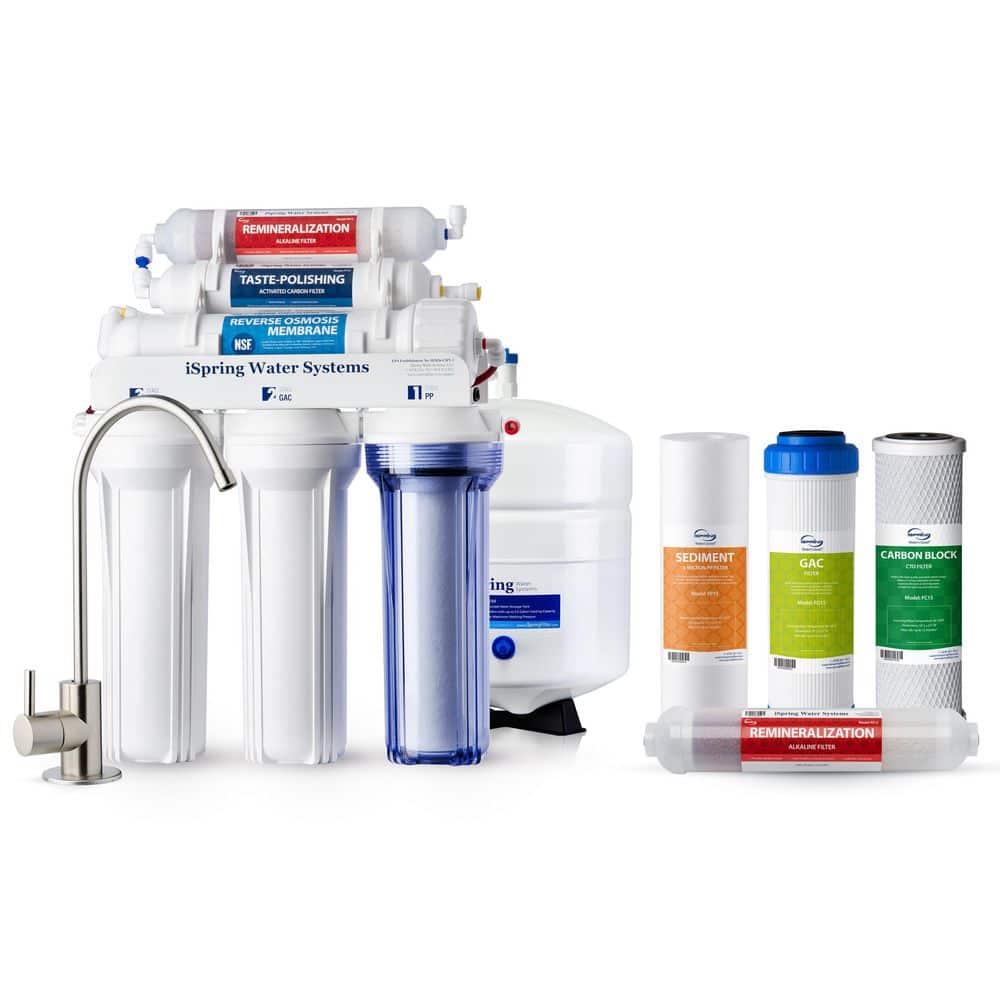
The iSpring RCC7AK is a high-performance, six-stage under-sink reverse osmosis system that produces up to 75 gallons of purified water per day. By combining aggressive contaminant removal—including lead, fluoride, and chloramine—with an alkaline remineralization stage, it solves the "flat taste" problem common to standard RO systems. It is a premier choice for homeowners seeking a balance of laboratory-grade purity and refreshing, mineral-rich drinking water.
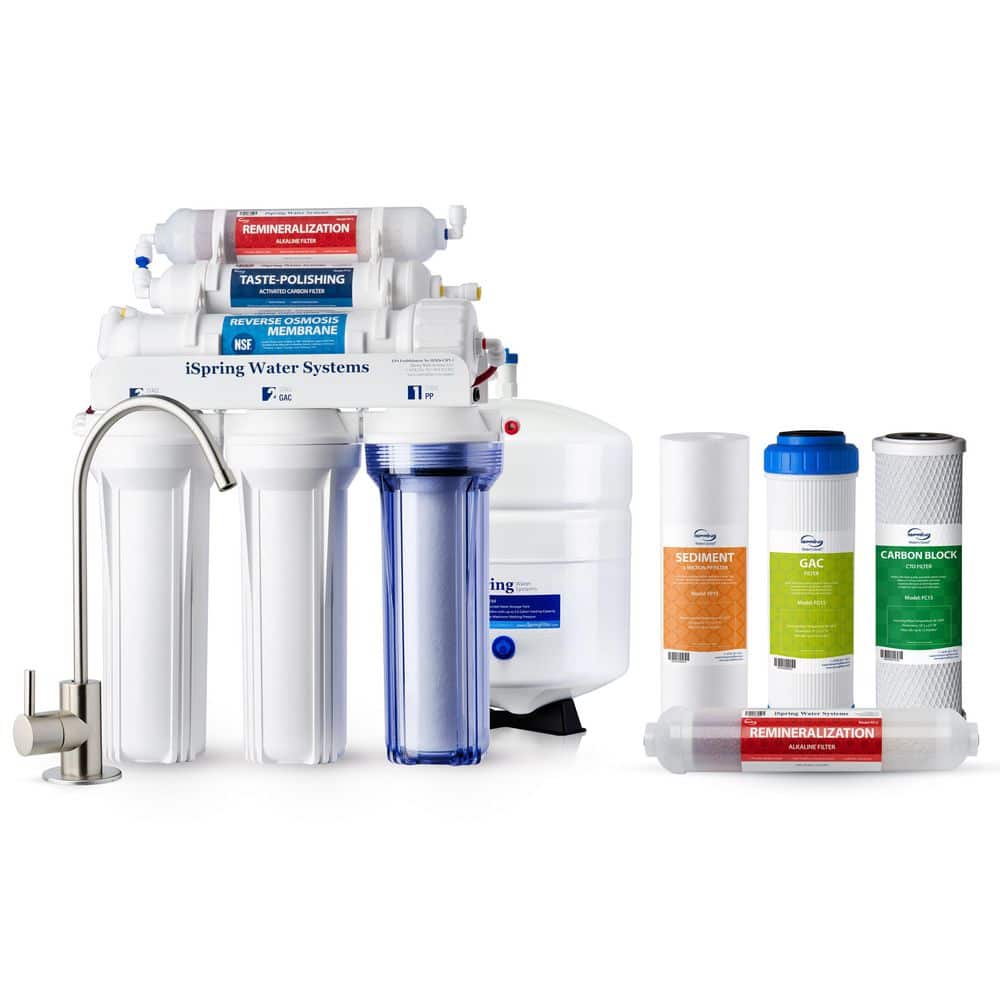
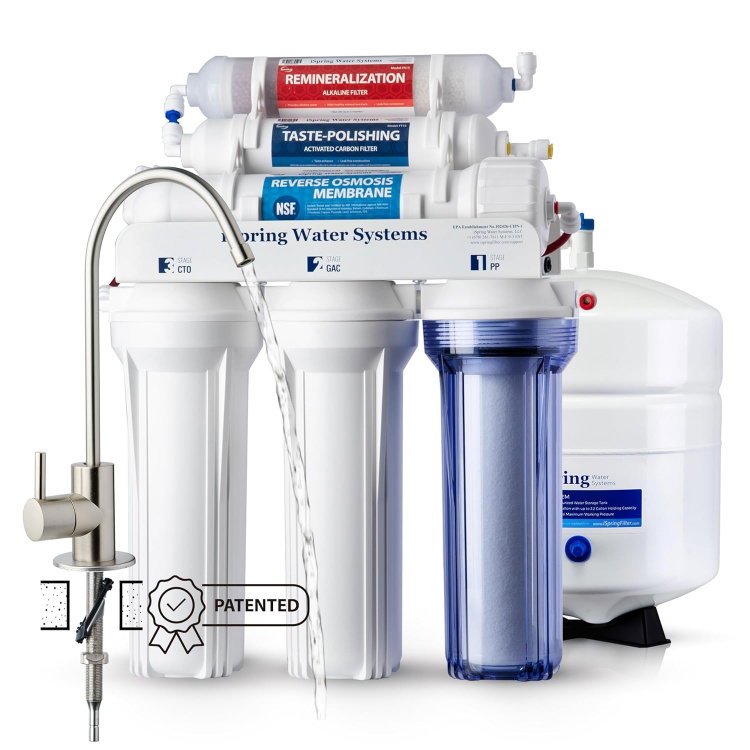
Top Pick: iSpring 6-Stage Under-Sink Reverse Osmosis System (RCC7AK)
Score: 9.1/10 — Best overall for homeowners who want comprehensive contaminant removal plus alkaline remineralization at a do-it-yourself price.
Tap water can carry everything from lead and fluoride to the faint chlorine taste that ruins a glass of cold water. While standard carbon filters help, they often miss the smallest dissolved solids that affect health and taste. A six-stage reverse osmosis system promises to strip those contaminants out, then add healthy minerals back in. The iSpring RCC7AK aims to do exactly that from a compact unit tucked under your kitchen sink.
iSpring 6-Stage Under-Sink Reverse Osmosis System with Alkaline Remineralization
The iSpring 6-Stage Under-Sink Reverse Osmosis System with Alkaline Remineralization is built around a classic reverse osmosis core, but adds a sixth stage that most budget RO units skip: alkaline remineralization.
Related parts & accessories
Across its six stages, the system targets a broad contaminant list. The process begins with sediment and carbon pre-filters that handle rust, chlorine, and larger particles, protecting the delicate RO membrane from clogging. The RO membrane itself then addresses dissolved contaminants like lead, fluoride, arsenic, and chloramine. A post-carbon polish removes any lingering tastes from the storage tank, and the alkaline stage finishes the job before the water reaches your dedicated faucet. Rated output is up to 75 gallons per day, providing more than enough capacity for drinking, cooking, and coffee for a typical household.
Installation is designed for the under-sink environment, utilizing a separate faucet mounted at the countertop so your main kitchen tap remains untouched for dishwashing and cleaning. iSpring designs the RCC7AK for DIY installation, mirroring the complexity of installing a MOEN Chateau 7430 Kitchen Faucet (which requires similar under-sink routing). Most handy homeowners can complete the setup in a single afternoon using the included fittings and detailed instructions. Because RO filtration is a slow process, the system includes a pressurized storage tank that holds purified water, ensuring you get a steady, high-pressure flow instantly rather than waiting for the membrane to process water in real time.
This system is best suited for homeowners on municipal or well water who want thorough filtration and care about both safety and taste. It is particularly effective in regions with high fluoride levels or aging infrastructure where lead leaching is a concern. However, prospective buyers should note that the system requires a fair amount of real estate beneath the sink to house the filter housings and the storage tank. If you have extremely limited under-sink space or are renting a property where you cannot drill a new hole for a faucet, you may need to consider alternative options like the Waterdrop Tankless Under-Sink Reverse Osmosis System (see our whole-house filtration guides for broader options).
| Specification | Detail |
|---|---|
| Model | RCC7AK |
| Category | Water Treatment Systems |
| Stages | 6 (incl. alkaline remineralization) |
| Daily output | Up to 75 gallons per day |
| Installation | Under-sink with dedicated faucet |
| Key contaminants removed | Lead, fluoride, chloramine, arsenic, chlorine |
Pros
- Six stages including alkaline remineralization for superior taste and pH balance
- Removes a massive range of contaminants including lead, fluoride, and chloramine
- High 75 GPD output supports large families and heavy cooking use
- DIY-friendly installation kit and dedicated faucet included
Cons
- Requires significant under-sink clearance and a dedicated faucet hole
- Ongoing maintenance requires periodic filter replacements (annually for most)
- RO process inherently produces wastewater (brine) during filtration
Understanding the 6-Stage Process: How it Works
To understand why the RCC7AK is effective, it's important to break down what happens at each stage of the filtration journey. Reverse osmosis is not a single filter, but a series of barriers designed to tackle contaminants of different sizes and chemical compositions. This multi-layered approach ensures that the most expensive component—the RO membrane—is protected from premature failure.
Stage 1: Sediment Filtration
The first line of defense is a polypropylene sediment filter. This catches "physical" debris—sand, rust, scale, and silt. By removing these larger particles first, the system prevents the subsequent carbon filters and the RO membrane from becoming clogged with grit, extending the overall life of the system. Without this stage, the finer pores of the membrane would be quickly blinded by sediment, leading to a drastic drop in water pressure and production rate.
Stage 2 & 3: Dual Carbon Block Filtration
These stages utilize activated carbon to adsorb chemical contaminants. Specifically, they target chlorine and chloramines, which are used by cities to disinfect water but leave a harsh chemical taste and smell. Because the RO membrane can be damaged by chlorine (which can eat through the microscopic polymer layers), these carbon stages act as "sacrificial" layers to protect the core of the system. The dual-stage approach ensures that even in areas with high chemical concentrations, the water is stripped of volatiles before it hits the membrane.
Stage 4: The Reverse Osmosis Membrane
This is the heart of the RCC7AK. Using high pressure, water is forced through a semi-permeable membrane with microscopic pores. This process rejects the vast majority of dissolved solids, including heavy metals like lead, fluoride, and arsenic. Unlike carbon filters, which "trap" particles, the RO membrane physically blocks almost everything except the water molecules themselves. The "rejected" water is flushed away as brine, while the pure permeate enters the storage tank.
Stage 5: Post-Carbon Polishing
Water sitting in the storage tank can occasionally develop a slight taste or a "stale" quality over time. The post-carbon filter acts as a final polish, ensuring the water is crisp and clear immediately before it exits the faucet. This stage focuses on aesthetic qualities—taste, odor, and clarity—rather than the heavy-duty contaminant removal handled by the membrane.
Stage 6: Alkaline Remineralization
This is the "secret sauce" of the RCC7AK. Pure RO water is often slightly acidic and devoid of minerals. This final stage adds back calcium, magnesium, and potassium. This not only balances the pH level to make the water more alkaline but also restores the natural taste profile that people expect from high-quality spring water. By adjusting the pH, the water feels "smoother" on the palate and avoids the leaching effect that extremely pure, acidic water can sometimes have on the body's own mineral stores.
Installation and Setup Guide
Installing the iSpring RCC7AK is a straightforward process for anyone comfortable with basic plumbing. The kit comes with everything needed, including the faucet, tubing, and the pressurized tank. However, because this involves modifying your kitchen plumbing—much like updating your sump pump backup system—a methodical approach, a methodical approach is necessary to avoid leaks.
Step-by-Step Installation Overview
The process begins with the "drill and mount" phase. You will need to drill a hole in your countertop or sink wing to install the dedicated RO faucet (consider upgrading your main tap to a classic pull-down faucet or a more budget-friendly Pfister Stellen model for better functionality). If you have a soap dispenser hole that is no longer in use, this is a perfect spot. Once the faucet is secured, the focus shifts to the plumbing under the sink.
You'll connect the system to your cold-water line using a T-adapter, which allows the RO system to draw water without interrupting the flow to your main kitchen tap. It is critical to use the cold-water line; hot water will damage the RO membrane and the carbon filters. After the water source is connected, the filter housings are mounted to the side of the cabinet. It is crucial to ensure the housings are secure to prevent vibration and potential leaks.
The tubing is then connected in a specific sequence: from the source to the pre-filters, through the RO membrane, into the storage tank, and finally through the post-filters to the faucet. The system uses "quick-connect" fittings, which eliminate the need for complex soldering or specialized plumbing tools.
Common Installation Pitfalls
Improper Tube Seating: The most common cause of leaks in RO systems is a tube that isn't pushed fully into the "quick-connect" fitting. Always push the tube firmly until it bottoms out. If you see a drip, pull the tube out, trim it squarely with a sharp blade, and re-insert it.
Air Locks: After installation, you may hear sputtering at the faucet. This is normal; it is simply air being pushed out of the system. Run the water for several minutes to prime the lines. Do not panic if the first few glasses of water look cloudy—this is just trapped air bubbles.
Tank Pressure Issues: If the water flow at the faucet is very slow despite the tank being full, the air pressure in the storage tank may need adjustment. Use a bicycle pump or air compressor to check the pre-charge pressure (typically 7-10 PSI when empty) to ensure optimal flow.
Maintenance and Long-Term Care
An RO system is only as good as its filters. Because the RCC7AK removes such a high volume of contaminants, the filter media eventually becomes saturated. Ignoring the maintenance schedule will not only degrade water quality but can actually damage the expensive RO membrane by allowing sediment and chlorine to pass through.
Sediment & Carbon Pre-filters
Frequency: Every 6–12 months. These filters take the brunt of the work. If your input water is particularly turbid or has high iron content, you may need to replace the iSpring replacement sediment filters every 6 months to protect the membrane from fouling.
RO Membrane
Frequency: Every 24–36 months. The membrane lasts much longer than the pre-filters. Replace it with a iSpring 75 GPD RO membrane replacement when you notice a significant drop in water production or an increase in TDS (Total Dissolved Solids) readings using a handheld meter.
Alkaline & Post-Carbon Filters
Frequency: Every 12 months. To maintain the pH balance and the crisp taste of the water, these final stages should be swapped out annually. If you notice the water tasting "flat" again, it's time to replace the remineralizer.
Sanitization
Frequency: Once per year. It is recommended to sanitize the filter housings and the storage tank with a food-grade sanitizer to prevent biofilm buildup inside the system.
For the easiest maintenance experience, iSpring offers replacement kits like the iSpring F19K75 2-Year Replacement Set, which bundle the necessary cartridges. We recommend marking your calendar or using a reminder app, as it is easy to forget about the filters tucked away under the sink. To avoid air pockets during filter changes, always run the system for 10 minutes after replacing cartridges to purge the air from the housings.
Buying Guide: Is an Alkaline RO System Right for You?
When shopping for water filtration, you'll encounter three main types of systems: standard carbon filters, standard RO systems, and alkaline RO systems. Understanding the difference helps determine if the RCC7AK is the right investment for your home.
Standard Carbon vs. Reverse Osmosis
Carbon filters (like the Brita Standard 10-Cup Pitcher or fridge filters) are great for removing chlorine and improving taste. However, they cannot remove dissolved solids like fluoride, arsenic, or lead. They work through adsorption, which is a surface-level process. If your primary goal is "better taste," the GE High Flow Whole House Water Filtration System or a Culligan Whole House Heavy-Duty Sediment Water Filter System is enough. If your goal is "pure water" and the removal of toxins and minerals, you need the RO membrane found in the RCC7AK. The membrane acts as a physical wall, whereas carbon acts as a sponge.
Standard RO vs. Alkaline RO
Standard RO systems are incredibly effective, but they produce water that is essentially "too pure." This water can be slightly acidic (low pH) and tastes "flat" to some users because it lacks the minerals our tongues associate with "fresh" water. Furthermore, because it strips out minerals, some people prefer to supplement their diet with minerals elsewhere. An alkaline system like the RCC7AK solves this by adding those minerals back in at the final stage, creating a product that feels more like natural spring water.
The Trade-off: Wastewater (Brine)
One point of consideration for all RO systems is the "brine" or wastewater. Because the membrane works by pushing water through a fine mesh, some water is used to flush the contaminants away into the drain. While modern systems like the RCC7AK are more efficient than older models, they still produce wastewater. For those in extreme drought areas or regions with strict water restrictions, this is a factor to weigh. However, the trade-off is the highest level of purity currently available for residential use.
Who Should Buy the RCC7AK?
- Families with Children: The removal of lead and fluoride is critical for developing children.
- Health Enthusiasts: Those who want the benefits of alkaline water without buying expensive bottled versions.
- Homeowners in "Hard Water" Areas: RO systems excel at removing calcium and magnesium scale, though the RCC7AK adds back a controlled, healthy amount.
- DIYers: People who want a professional-grade system but prefer to save on installation costs by doing it themselves.
| Feature | Standard Pitcher | Standard RO | iSpring RCC7AK |
|---|---|---|---|
| Lead Removal | Partial |