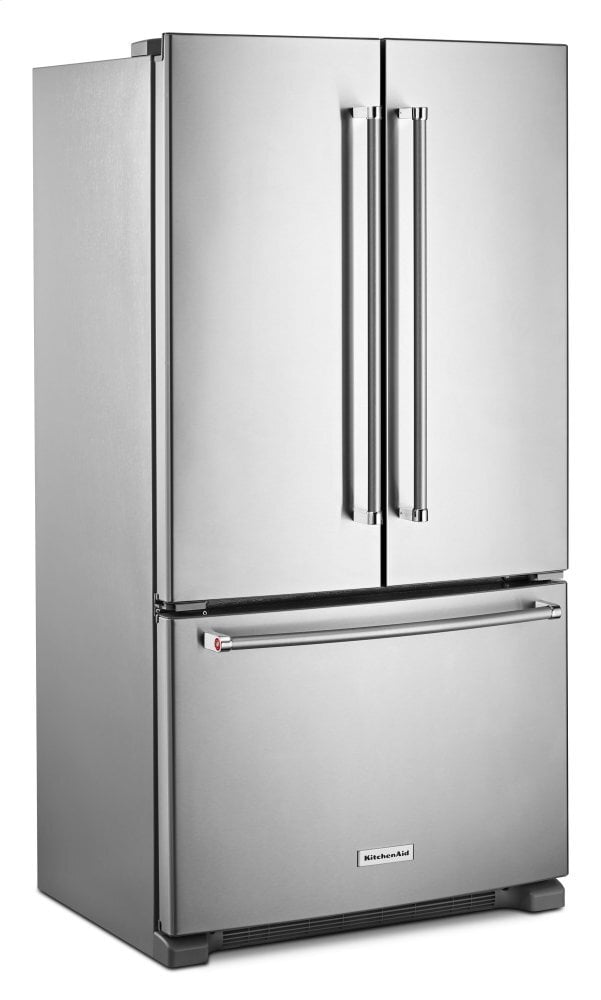
The KitchenAid Counter-Depth French Door Refrigerator (KRFC300ESS) is a premium 19.4 cu. ft. appliance designed to provide a seamless, professional built-in look without the expensive cabinetry modifications required for fully integrated models. Combining the Preserva Food Care System with a fingerprint-resistant PrintShield finish, it prioritizes kitchen aesthetics and food longevity over raw cubic footage. It is an ideal choice for design-conscious homeowners and small-to-mid-sized households who value a flush fit with cabinetry and high-end interior organization.
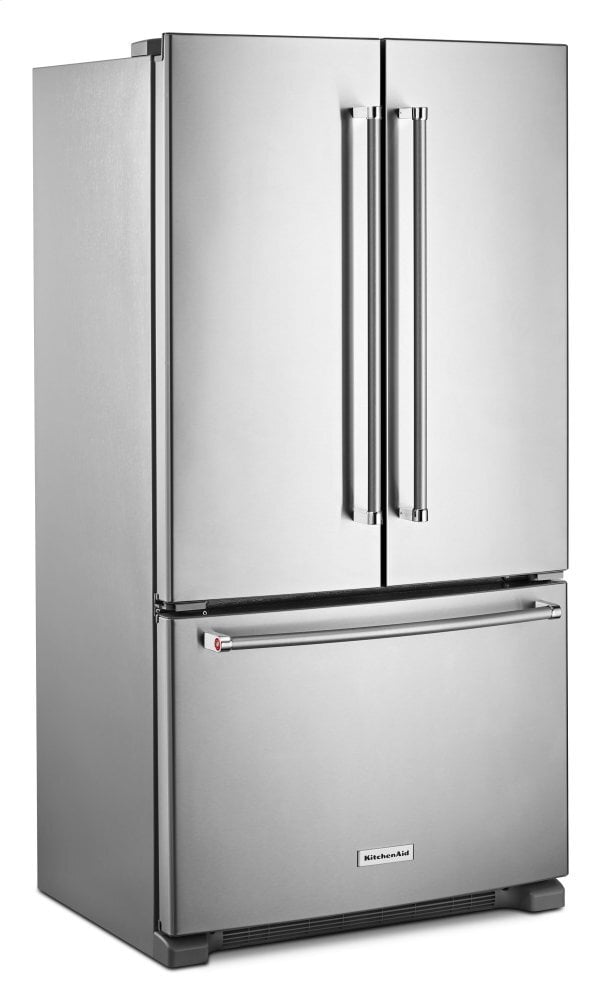
Best Design-Forward Counter-Depth Fridge
Score: 9.2/10 — The KitchenAid KRFC300ESS delivers an exceptional balance of professional styling, dual-evaporator cooling performance, and spatial efficiency for modern kitchens. If you are upgrading your entire cooking suite, consider pairing it with a professional surface like the GE Profile 36-Inch Induction Cooktop.
KitchenAid Counter-Depth French Door Refrigerator 19.4 cu. ft. Stainless Steel (KRFC300ESS)
The KitchenAid Counter-Depth French Door Refrigerator 19.4 cu. ft. Stainless Steel is engineered for the homeowner who views the refrigerator not just as an appliance, but as a piece of kitchen architecture. By utilizing a counter-depth chassis, this model eliminates the common problem of a protruding refrigerator that disrupts the flow of a kitchen's "work triangle." The 19.4 cubic foot capacity is strategically allocated to provide the most essential storage zones while maintaining a profile that sits flush with standard 24-inch deep cabinetry.
At the heart of this unit is the Preserva Food Care System. Unlike budget refrigerators that use a single evaporator to cool both the fridge and freezer, the KRFC300ESS employs two independent cooling systems. This technical distinction is critical for food preservation; by isolating the dry, cold air of the freezer from the humid air required by the refrigerator, the unit prevents produce from wilting prematurely and stops pungent freezer odors from migrating into fresh deli items. This is further augmented by the FreshFlow air filter and ethylene-absorbing produce preservers, making it a powerhouse for those who shop for fresh organic produce weekly.
Storage flexibility is where the KRFC300ESS truly shines. The SatinGlide crispers operate with a weighted smoothness that minimizes jarring, and the full-width pantry drawer allows for the storage of oversized platters or bulk items that typically don't fit on standard shelving.
The interior water dispenser is a deliberate design choice—by moving the spout inside the door, KitchenAid has maintained a clean, uninterrupted stainless steel facade on the exterior. For those renovating their entire kitchen airflow, checking out a Panasonic WhisperGreen Select review can help ensure proper ventilation in adjacent utility areas.
If you are designing your kitchen layout for maximum efficiency, you might also find our MOEN Chateau 7430 faucet buying guide helpful for matching your plumbing fixtures to a professional aesthetic.
For those concerned with the "wear and tear" look of stainless steel, the PrintShield finish is a significant upgrade over standard brushed steel. It utilizes a specialized coating that repels oil and fingerprints, ensuring the appliance maintains its showroom luster even in high-traffic households with children. While it lacks the "smart" connectivity of Wi-Fi-enabled models (such as those detailed in other smart-home appliance guides), the KRFC300ESS focuses on mechanical reliability and thermal stability, offering a timeless utility that avoids the planned obsolescence of early-generation smart appliances.
Pros
- True counter-depth profile integrates seamlessly with cabinetry
- Dual evaporator system significantly extends produce freshness
- PrintShield finish effectively eliminates fingerprint smudges
- High-quality SatinGlide drawers and sturdy shelving
- Sleek exterior aesthetic due to interior water dispenser
- ENERGY STAR certified for reduced operational costs
Cons
- Lower total capacity compared to standard-depth models
- Lack of exterior water/ice access may be inconvenient for some
- No smart features or remote temperature monitoring
- Internal dispenser height limits very tall pitchers
- Ice production speed is standard, not high-volume
Technical Specifications
| Feature | Specification |
|---|---|
| Model Number | KRFC300ESS |
| Total Capacity | 19.4 cu. ft. |
| Refrigerator Capacity | 13.7 cu. ft. |
| Freezer Capacity | 5.7 cu. ft. |
| Configuration | French Door, Bottom Freezer |
| Dimensions (WxHxD) | 35 3/4" x 70 1/8" x 24" (Cabinet Depth) |
| Finish | PrintShield Stainless Steel |
| Water Dispenser | Interior (In-Door) |
| Cooling System | Dual Evaporators (Preserva System) |
| Energy Rating | ENERGY STAR Certified |
Understanding Counter-Depth Technology
When shopping for a refrigerator, the choice between "Standard Depth" and "Counter-Depth" is one of the most significant decisions affecting your kitchen's ergonomics. A standard-depth refrigerator typically extends 30 to 36 inches from the wall, meaning it protrudes significantly past your 24-inch deep counters. While this maximizes interior volume, it can create "bottlenecks" in narrow kitchens, making it difficult for two people to pass each other or for a cook to move between the stove and the fridge.
The KitchenAid KRFC300ESS is a Counter-Depth model. This means the main cabinet body is designed to align with the edge of your countertops. To achieve this, the manufacturer reduces the depth of the interior cavity. This is why the KRFC300ESS offers 19.4 cu. ft. instead of the 25-28 cu. ft. typically found in standard-depth French door units, such as the GE Profile Large Capacity French Door Refrigerator with Door-in-Door. For most households of 2 to 4 people, this is a negligible loss in exchange for a professional, built-in look that increases the perceived space of the room.
The Science of the Preserva Food Care System
Many consumers overlook the importance of evaporators. In a traditional single-evaporator system, a single cooling coil chills the air, which is then blown into both the freezer and the fridge. The problem is that freezers require extremely dry, sub-zero air, while refrigerators need higher humidity to keep vegetables from wilting. When one system does both, the refrigerator air often becomes too dry, leading to "freezer burn" in the fridge section.
The KRFC300ESS solves this with Dual Evaporators. By having a dedicated cooling loop for each section, the refrigerator can maintain a humidity-rich environment—perfect for the SatinGlide crispers—while the freezer stays bone-dry to prevent frost buildup on frozen meats. This separation also eliminates "flavor bleed," where the smell of frozen fish or onions in the freezer might otherwise seep into the fresh milk or butter in the main cabin.
Furthermore, the ExtendFresh Temperature Management system uses a network of sensors to detect temperature fluctuations. If you load a large amount of room-temperature groceries into the fridge, the sensors trigger a rapid cooling cycle to bring the internal temperature back to the safety zone quickly, preventing the "warm-spot" effect that often leads to premature spoilage on the upper shelves.
Deep Dive: Interior Layout and Ergonomics
The utility of a refrigerator is measured by how often you have to move three items to get to the one item in the back. The KRFC300ESS addresses this through several high-efficiency design choices:
The Refrigerator Compartment
SatinGlide Crispers: These are not merely plastic bins. They are engineered with high-quality glides that ensure the drawer doesn't "stick" or jump the track when loaded with heavy root vegetables. This encourages better organization because the drawers are actually pleasant to use.
Adjustable Spill-Proof Shelving: The glass shelves feature raised perimeter edges. If a jar of jam breaks or milk spills, the liquid is contained on the shelf rather than cascading down onto your produce or the bottom of the fridge.
The Interior Water Station: By placing the water dispenser inside the left door, KitchenAid optimizes the exterior for a "minimalist" look. While this requires opening the door to get water, it removes the common failure point of exterior dispenser leaks and prevents the "ice-clogging" issues common in through-the-door ice makers.
The Freezer Compartment
The bottom-freezer design is widely considered ergonomically superior to side-by-side models because the most-accessed items (the fresh food) are at eye level. The KRFC300ESS freezer features a two-tier system: a shallow top basket for "grab-and-go" frozen appetizers or ice packs, and a deep lower bin for bulk frozen goods. The full-extension drawer ensures that you can see everything from the front to the back without having to dig through a "frozen abyss."
Installation and Setup Guide
Installing a high-end appliance like the KRFC300ESS requires more than just plugging it into a wall. To ensure longevity and energy efficiency, follow these professional installation guidelines:
1. Spatial Clearances
Airflow is the lifeblood of a refrigerator. If the unit cannot "breathe," the compressor will overwork, leading to premature failure. KitchenAid recommends a minimum of 1 inch of clearance at the rear and 1/8 inch on the sides. If you are installing this in a tight cabinetry alcove, ensure the top is not completely sealed, as heat rises and needs an escape route.
2. Leveling the Unit
An unlevel refrigerator can lead to several problems: the French doors may not align perfectly, and the automatic ice maker may fail to dump cubes properly. Use a bubble level on the top of the unit and adjust the leveling legs (found at the bottom front) until the fridge is perfectly flat or tilted slightly backward (about 1/4 inch) to help the doors close automatically.
3. Water Line Connection
The KRFC300ESS requires a dedicated water line for the interior dispenser and the freezer ice maker. If you are updating your entire kitchen plumbing, consider a high-quality fixture like the MOEN Chateau 7430 kitchen faucet (see our detailed buying guide). While plastic PEX tubing is common, professional installers recommend a 1/4-inch copper line for maximum durability. Ensure you install a shut-off valve close to the unit so you can isolate the water supply during filter changes or repairs.
Long-Term Maintenance and Care
To keep your KRFC300ESS running at peak efficiency for a decade or more, a proactive maintenance schedule is essential. Many homeowners ignore the "mechanical" side of the fridge until it stops cooling; avoid this by following these steps:
The Filtration Cycle
The EveryDrop filtration system is highly effective but can become a bottleneck if clogged. For a broader approach to water quality, our GE GXWH40L whole house water filter guide provides a comprehensive look at home-wide filtration systems. For those looking for more comprehensive protection, (alongside options like the Culligan WH-HD200-C filtration system) offers a great alternative to point-of-use filters. Replace the water filter every six months. If you notice a drop in water pressure from the interior dispenser, change the filter immediately. Using an expired filter can lead to a buildup of sediment that may eventually damage the internal solenoid valve of the water dispenser.
Condenser Coil Cleaning
Because the KRFC300ESS is designed to fit flush against cabinets, the rear condenser coils are more prone to accumulating dust and pet hair than freestanding units. Every six months, use a vacuum with a brush attachment or a specialized condenser coil brush to clear the rear grill. Dust acts as an insulator, trapping heat and forcing the compressor to run longer cycles, which significantly shortens the lifespan of the appliance and increases your monthly electricity bill.
Door Gasket Integrity
The magnetic seals (gaskets) are what keep the cold air in and the warm air out. Over time, food particles or sticky spills can accumulate on the folds of the gasket, creating micro-gaps. Wipe the gaskets down with a mild soap and water solution once a month. If you notice the gasket is becoming brittle or warped, avoid using harsh chemicals; a warm, damp cloth can often reshape the rubber and restore the vacuum seal.
Buying Guide: Is a Counter-Depth Fridge Right For You?
Deciding between a standard-depth and counter-depth refrigerator involves a trade-off between volumetric capacity and kitchen aesthetics. To help you decide if the KRFC300ESS is the right choice, consider the following criteria:
When to Choose Counter-Depth (The KRFC300ESS Path)
- Small or Galley Kitchens: If your kitchen is narrow, a standard fridge can block the path of travel. A counter-depth model opens up the floor plan.
- Modern Aesthetic Goals: If you are renovating for a "custom" or "designer" look, the flush profile mimics the look of high-end integrated refrigeration.
- Moderate Household Size: If you typically shop for groceries once a week for 2-4 people, 19.4 cu. ft. is usually sufficient.
- Quality over Quantity: If you prioritize advanced food preservation (like the Preserva system) over the ability to store bulk-sized Costco hauls.
Looking for more capacity? Check out the Bosch 800 Series 36-Inch Counter-Depth French Door Refrigerator for another high-performance alternative.
When to Stick With Standard Depth
- Large Families: Households with 5+ members typically require 25+ cu. ft., like the Frigidaire Gallery French Door Refrigerator with Dual Ice Maker, to avoid overcrowding shelves.
- Bulk Buyers: If you purchase large quantities of frozen goods or bulk items, the smaller freezer cavity of a counter-depth model may be frustrating.
- Open-Concept Kitchens: In very large kitchens with massive islands, a protruding refrigerator is less of a nuisance and allows for significantly more storage, such as the LG French Door Smart Ref