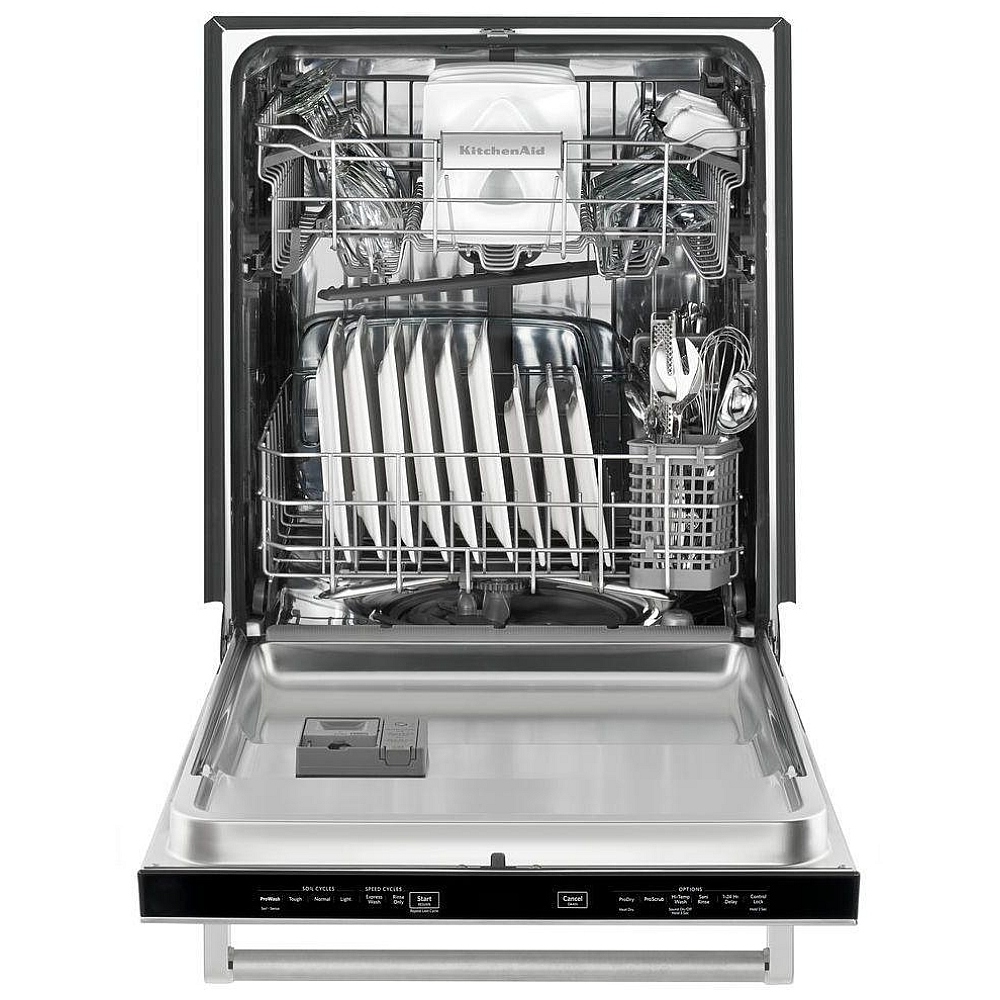
If you're shopping for a high-performance dishwasher, our KitchenAid Built-In Dishwasher with Third Rack and Quiet 39 dBA Operation review and buying guide analyzes whether this model's high-capacity loading and whisper-quiet operation make it the best choice for your kitchen. This model is widely considered one of the best 24-inch built-in dishwashers for those seeking a professional-grade balance of high-capacity loading and sensor-driven cleaning. Featuring a 39 dBA noise rating and the versatile FreeFlex Third Rack, it is designed for homeowners who prioritize a seamless kitchen aesthetic and powerful, automated soil removal without the complexity of high-end luxury interfaces.
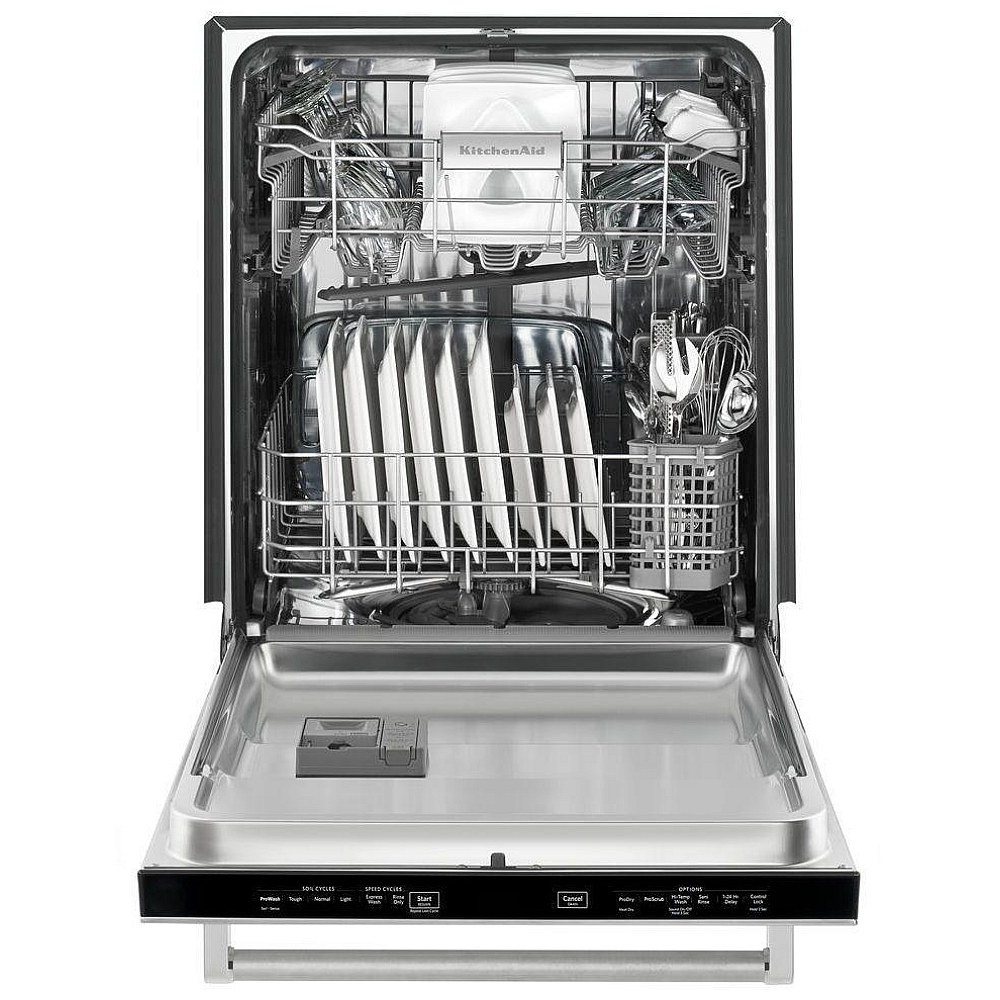
Top Pick: KitchenAid Built-In Dishwasher with Third Rack and Quiet 39 dBA Operation
A powerhouse of cleaning efficiency featuring a game-changing third rack and near-silent operation—the ideal choice for design-conscious households seeking premium performance.
KitchenAid Built-In Dishwasher with Third Rack and Quiet 39 dBA Operation
The KitchenAid Built-In Dishwasher with Third Rack and Quiet 39 dBA Operation is engineered to bridge the gap between standard consumer appliances and professional kitchen equipment.
At its core, this machine is about removing the guesswork from dishwashing. By utilizing a stainless steel interior and a high-efficiency motor, it achieves a 39 dBA noise level, meaning it can run in the background of an open-concept home without disrupting conversation or television viewing. The fingerprint-resistant stainless steel exterior ensures that the appliance remains a focal point of the kitchen's design rather than a canvas for smudges. (For those planning a full kitchen modernization, we recommend pairing this with a GE Profile Induction Cooktop, and if you're updating laundry, our LG WM1455HWA Compact Washer Review is a great resource for those updating their laundry room to a cohesive, high-performance suite.) (If you're updating other fixtures, see our MOEN Chateau 7430 kitchen faucet guide or the Pfister Stellen LG529-STGS Faucet Guide to complete your professional kitchen aesthetic.)
The standout feature of the KitchenAid Built-In Dishwasher with Third Rack and Quiet 39 dBA Operation is the FreeFlex Third Rack. While many dishwashers offer a "third rack," they are often mere trays for silverware. KitchenAid has reimagined this space, creating a deep, full-width rack capable of holding 6-inch glasses, bowls, and oversized utensils. This fundamentally changes how you load the machine, freeing up significant space in the middle and bottom racks for larger pots and platters. When combined with the ProWash™ cycle, which uses sensors to detect soil levels and automatically adjust water temperature and cycle length, the KitchenAid Built-In Dishwasher provides a "set it and forget it" experience that is rare in mid-to-premium appliances.
For those concerned with hygiene, the Sani-Rinse option is a critical addition. By heating the final rinse to a specific threshold, it meets NSF Standard 184, ensuring that bacteria are eliminated from baby bottles and healthcare-sensitive items. The internal construction relies heavily on stainless steel, which is not only more durable than plastic but also allows for higher heat retention, which aids in the condensation drying process. While plastics always pose a challenge for drying, the inclusion of a dedicated drying boost helps mitigate the issue common in European-style condensation dryers.
Pros
- Ultra-quiet 39 dBA operation is ideal for open-floor plans
- FreeFlex Third Rack offers genuine versatility for glasses and bowls
- ProWash™ sensors eliminate the need to manually choose cycles
- Stainless steel tub increases durability and hygiene
- Sani-Rinse option meets professional sanitization standards
- Fingerprint-resistant finish maintains a clean professional look
Cons
- Plastic items may require a drying boost for complete dryness
- Hidden controls require opening the door to check remaining time
- Larger footprint may be tight in very compact cabinetry
- Lack of smart Wi-Fi integration for remote monitoring
Understanding the Technology: How the KDTM354ESS Works
To understand why the KitchenAid Built-In Dishwasher performs differently than a budget machine, one must look at the synergy between its sensor array and its hydraulic system. The ProWash™ technology isn't just a timer; it's an active monitoring system. During the wash, turbidity sensors measure the "cloudiness" of the water. If the sensors detect high levels of particulate matter, the machine automatically extends the wash time or increases the water temperature. This prevents the common problem of "over-washing" lightly soiled loads (saving energy) while ensuring that heavily soiled loads don't come out with residue.
The hydraulic system is designed for maximum coverage. (If you are planning a full sink area refresh, see our Kohler Artifacts K-72759-VS Review or the Complete Kohler Artifacts Buying Guide for high-end pairing options.)
Many dishwashers suffer from "blind spots"—corners of the rack where water doesn't hit. The KitchenAid Built-In Dishwasher utilizes a high-pressure spray arm system that works in tandem with the three-tier rack layout. The water jets are angled specifically to penetrate the gaps in the FreeFlex Third Rack, ensuring that the items stored at the very top receive the same scrubbing power as the plates on the bottom.Regarding noise, the 39 dBA rating is achieved (similar to the acoustic engineering found in the Panasonic WhisperGreen Select ventilation guide). through a combination of acoustic insulation and motor dampening. The tub is wrapped in heavy-duty sound-absorbing materials, and the pump is mounted on vibration-dampening brackets. This prevents the mechanical hum from resonating through the kitchen cabinetry, which is how most "noise" actually travels in a home environment. This level of acoustic engineering is critical for modern "Great Room" floor plans where the dishwasher is effectively in the middle of the living space.
Furthermore, the thermal dynamics of the stainless steel tub play a massive role in cleaning efficiency. Unlike plastic tubs, which act as insulators, stainless steel retains and radiates heat. This ensures that the water temperature remains consistent throughout the cycle, preventing the "cold spot" phenomenon that often leads to lipstick or grease residue on glassware. The heat retention also facilitates the natural evaporation process during the drying phase, reducing the amount of electrical energy required to get dishes ready for the cupboard.
Comprehensive Buyer's Guide: Dishwasher Selection
When shopping for a built-in dishwasher like the KitchenAid Built-In Dishwasher with Third Rack, buyers often overlook three critical factors: drying method, rack flexibility, and the "noise floor." Understanding these technical trade-offs is the difference between a machine that simply cleans and one that elevates the kitchen experience.
Drying Methods: Condensation vs. Heated Dry
Most modern premium dishwashers, including the KDTM354ESS, use a condensation drying system. For those considering alternatives with similar tech, the Bosch 300 Series Built-In Dishwasher with CrystalDry and Third Rack or the Bosch 500 Series Built-In Dishwasher with Third Rack and AutoAir Drying are both top-tier options. This works by heating the stainless steel tub; as the water drains, the moisture on the dishes evaporates and condenses on the cooler stainless steel walls, where it runs down into the drain. This is significantly more energy-efficient than a traditional heating element and prevents the "melting" risk associated with high-heat elements in proximity to plastics.
However, plastics do not retain heat well, which is why you might see droplets on Tupperware. If you use a lot of plastics, look for machines with a "ProDry" or "Heat Dry" boost to finish the job. The KDTM354ESS handles this by optimizing the final rinse temperature and providing a boost option that helps move water off the surfaces more effectively.
The Importance of the Third Rack
The industry has shifted toward three-rack systems, but not all third racks are equal. Some are "silverware-only" trays that simply move the cutlery out of the way. The FreeFlex system found in the KDTM354ESS is a "utility rack," meaning it has the depth to hold actual dishes. For a family of four, this can increase the effective capacity by 20-30% by allowing you to move small bowls and espresso cups off the main racks, which in turn allows the bottom rack to be dedicated to larger pots, baking sheets, and serving platters.
If you want a similar third-rack experience, consider the Whirlpool Built-In Dishwasher with Third Rack and Stainless Tub, the Maytag Built-In Dishwasher with Dual Power Filtration and Stainless Steel Interior, or the Samsung StormWash Built-In Dishwasher with Third Rack. For a budget-friendly alternative, the Frigidaire Built-In Dishwasher with Stainless Steel Tub and OrbitClean Wash Arm is a strong contender.
Measuring the Noise Floor
Understanding decibels (dBA) is essential for buyers. 44-50 dBA is audible and sounds like a loud humming conversation. 38-42 dBA is quiet enough that you can barely hear it unless you are standing right next to it. At 39 dBA, the KDTM354ESS falls into the "whisper quiet" category. For those seeking the absolute pinnacle of silence, the LG QuadWash Front Control Built-In Dishwasher with TrueSteam and EasyRack Plus and Miele Fully Integrated Quiet Dishwasher with AutoDos and PowerDisk are luxury benchmarks, making the KitchenAid a perfect balance of performance and value. For those seeking a more budget-friendly stainless steel option, the GE Top Control Dishwasher with Stainless Steel Interior is a reliable alternative for homes where the kitchen is adjacent to the living room.
Related parts & accessories
Installation and Setup Requirements
Installing the KDTM354ESS requires a standard 24-inch wide cabinet opening. (If you are updating your entire sink area, our MOEN Chateau 7430 kitchen faucet guide provides excellent pairing options for high-end dishwashers; for more budget-conscious updates, check out our Pfister Stellen review.) However, precision is key to achieving the "built-in" look. Because this model features hidden top-panel controls, the gap between the countertop and the top of the dishwasher must be minimal to ensure the buttons are accessible but the unit remains flush.
| Specification | Requirement/Value |
|---|---|
| Electrical | 120V, 60Hz, 15-Amp dedicated circuit. Hardwire or plug-in options available. |
| Plumbing | Standard 3/8" compression water line; 1.5" drain hose connection. |
| Dimensions | Height: 33.75" (Adjustable) | Width: 23.875" | Depth: 24.5" |
| Leveling | Adjustable front legs and rear roller for uneven flooring. |
Long-Term Maintenance and Care
To keep the KDTM354ESS performing at its peak for a decade or more, a proactive maintenance schedule is required. The stainless steel tub is highly resistant to corrosion, but the mechanical components require attention to prevent efficiency drops.
Filter Cleaning
Unlike older machines, the KDTM354ESS features a removable filter. Food particles that escape the macerator can clog this filter, reducing water pressure and leaving residue on dishes. We recommend removing the cylindrical filter once a month and rinsing it under warm water with a soft brush. If the filter is clogged, the ProWash™ sensors may incorrectly read the water as "dirty" even after the cycle has progressed, leading to unnecessarily long wash times.
Managing Hard Water
If you live in a region with hard water, calcium buildup can clog the spray arms. Periodically running a dedicated dishwasher cleaner or a cup of white vinegar through an empty hot cycle helps dissolve these minerals and keeps the ProWash™ sensors accurate. For a more permanent solution to mineral buildup, consider installing a GE GXWH40L Whole House Water Filter to protect your appliances from hard water mineral buildup (and for maintaining overall home humidity, our GE ADEL50LZ Dehumidifier Buying Guide is useful). Mineral buildup on the sensors can cause them to "drift," meaning they may not accurately detect soil levels, resulting in suboptimal cleaning results.
Seal Care
The door gasket is the primary barrier against leaks. Every few months, wipe the rubber seal with a damp cloth to remove detergent residue or food buildup, which can cause the rubber to degrade or create small gaps that allow water to seep onto your flooring. (For those protecting their lower levels from water damage, see our Wayne ESP25 Battery Backup Sump Pump review or our Ridgid SP-650C buying guide.) Check the bottom of the door for any debris that might prevent a perfect seal, as even a tiny gap can let out heat and moisture, reducing drying efficiency.
The Comparison Table
| Feature | KitchenAid KDTM354ESS | Standard Mid-Range Model | Budget Basic Model |
|---|---|---|---|
| Noise Level | 39 dBA | 44-50 dBA | 52+ dBA |
| Third Rack | FreeFlex (Deep) | Shallow Tray | None |