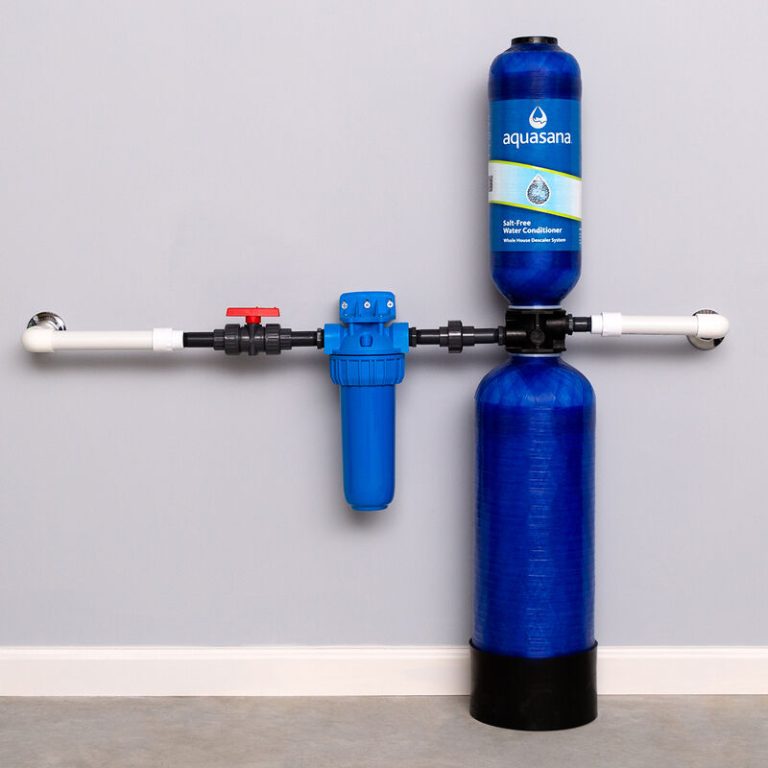
Hard water leaves crusty buildup on faucets, dulls your dishes, and quietly shortens the life of every appliance it touches. The Aquasana SimplySoft Salt-Free Whole-House Water Conditioner promises to tackle scale without salt, chemicals, or a single drain connection. In this comprehensive guide, we break down the Template Assisted Crystallization (TAC) technology, the installation process, and whether this salt-free conditioner is the right investment for your specific home plumbing needs.
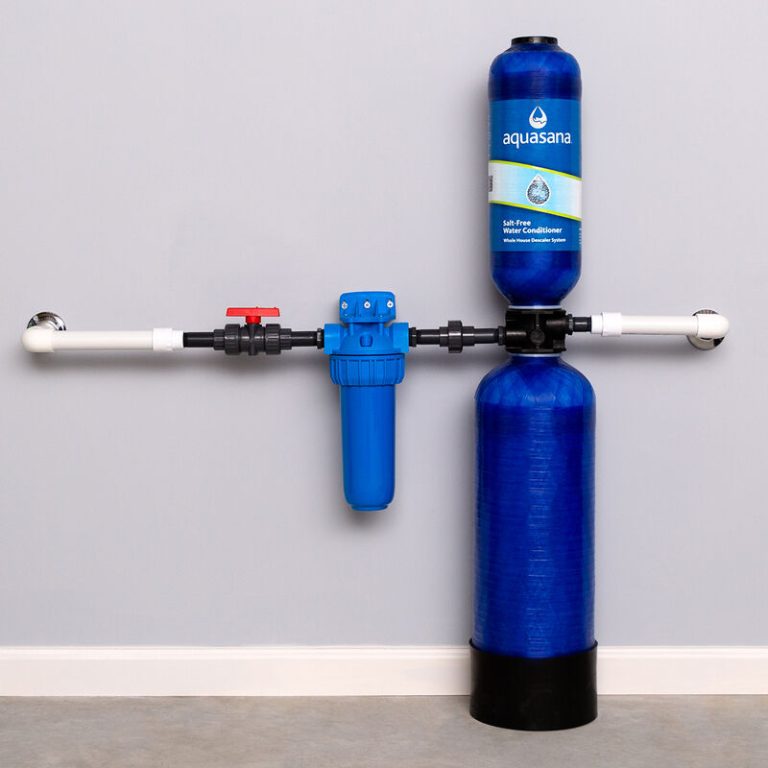
Looking for a low-maintenance solution? Check the Aquasana SimplySoft pricing here.
Top Pick: Aquasana SimplySoft Salt-Free Whole-House Water Conditioner
Score: 8.6/10 — The best low-maintenance, eco-friendly option for scale control without salt, though it won't replicate the slippery feel of a Whirlpool 40,000 Grain Water Softener.
Aquasana SimplySoft Salt-Free Whole-House Water Conditioner
The Aquasana SimplySoft Salt-Free Whole-House Water Conditioner takes a fundamentally different approach to hard water than the salt-based systems most people picture.
Instead of swapping calcium and magnesium for sodium through ion exchange, it uses Template Assisted Crystallization (TAC) to transform those scale-causing minerals into stable, microscopic crystals that stay suspended in the water rather than clinging to surfaces. This means the minerals are still present in your water, but they are chemically "neutralized" so they cannot bond to your pipes or heating elements.Because it conditions rather than removes minerals, there is no brine tank to refill, no heavy salt bags to haul, and no wastewater dumped down a drain. The system requires no electricity and no backwashing cycle, which makes it genuinely low-maintenance—the conditioning media typically runs for years before replacement. For households on a septic system, those with sodium-restricted diets, or anyone uncomfortable with the environmental impact of brine discharge, this is a meaningful advantage.
This unit is best suited to homeowners whose primary concern is protecting plumbing, A.O. Smith water heaters, and fixtures from scale buildup, and who value an eco-friendly footprint over the classic "slippery" soft-water feel. It is a strong fit where local regulations restrict salt-based discharge or where the installation of a floor drain is impractical. However, if you specifically want softened water for laundry (to make clothes feel softer) or an absolutely spot-free glass finish, understand that a conditioner will not deliver the same chemical result as a traditional ion-exchange softener.
To maximize home water quality, many users pair the SimplySoft with a GE whole-house water filter to address chlorine and sediment, as the SimplySoft is designed specifically for scale control rather than contaminant removal. Adding a point-of-use Express Water Under-Sink Reverse Osmosis System with Alkaline Remineralization and UV Sterilization at the kitchen sink is also a common strategy for those who want purified drinking water alongside conditioned plumbing.
Pros
- No salt, chemicals, or sodium added to your drinking water
- No drain connection, electricity, or backwashing needed
- Extremely low maintenance with no recurring salt refills
- Eco-friendly alternative to traditional ion-exchange softeners
- Protects pipes and appliances from calcium scale buildup
Cons
- Conditions rather than removes hardness; no "slippery" feel
- Will not produce the same spot-free dishes as a salt-based system
- Does not filter chlorine, sediment, or lead on its own
- Performance may vary in extreme high-hardness environments
| Specification | Detail |
|---|---|
| Model Number | EQ-SS20 |
| Type | Salt-free whole-house water conditioner |
| Technology | Template Assisted Crystallization (TAC) |
| Salt Required | None |
| Electricity Required | None |
| Drain Connection | Not required |
| Backwashing | None |
| Category | Water Softeners & Filters |
Understanding Template Assisted Crystallization (TAC)
To understand why the Aquasana SimplySoft (EQ-SS20) is different from a standard softener, you have to understand the chemistry of hard water. Hard water contains high concentrations of calcium and magnesium ions. When these ions are heated or exposed to air, they bond together to form calcium carbonate—the white, crusty "scale" you see on kitchen and bath faucets and inside water heaters. This scale acts as an insulator, forcing your water heater to work harder and eventually reducing the flow of water through your pipes.
A traditional softener, such as the Fleck Digital Metered Ion-Exchange Water Softener 48000 Grain, uses ion exchange: it attracts the calcium/magnesium ions and replaces them with sodium ions. This removes the minerals entirely, but it adds salt to your water and requires a brine tank to "recharge" the resin beads. This process wastes gallons of water during the backwash cycle and sends a concentrated salt brine into the sewage system or septic tank, which can damage soil structure and contaminate local groundwater.
The SimplySoft uses TAC technology. Instead of removing the minerals, it provides a "template" (a microscopic surface) where the calcium and magnesium ions can crystallize into a stable, non-sticky form. Because these crystals are tiny and stable, they simply flow through your pipes and out of your faucets without sticking to the walls of your plumbing. Essentially, it changes the physical structure of the mineral so it behaves like a liquid rather than a glue.
This distinction is critical for users who are concerned about the health implications of sodium. In traditional softening, the sodium levels in drinking water increase. For individuals on a low-sodium diet or those with hypertension, this can be a medical concern. The SimplySoft maintains the original mineral balance of the water, ensuring that you don't introduce excess salt into your body while still protecting your home's infrastructure. Furthermore, because it doesn't remove minerals, it doesn't strip your skin of its natural oils as aggressively as ion-exchange systems do.
Installation and Setup Guide
One of the primary selling points of the EQ-SS20 is the ease of installation. Because it does not require electricity or a drain, the installation is purely mechanical. It is a "set it and forget it" inline device that is plumbed directly into your main water line after the meter but before the water branches off to your fixtures. This simplicity makes it an attractive option for DIY homeowners and professionals alike.
Installation Requirements
To successfully install the Aquasana SimplySoft, you will need the following resources. If you are updating your fixtures during this process, check out our Delta Essa faucet guide for modern bathroom upgrades.
- Plumbing Access: You will need a section of your main water line accessible for cutting and fitting. This is usually located in the basement, crawlspace, or garage.
- Tools: Standard pipe cutters, wrenches, and depending on your pipe material (copper, PEX, or PVC), the appropriate connectors and sealant. (See our SharkBite coupling guide for easier pipe connections).
- Bypass Valve: We strongly recommend installing a three-valve bypass. This allows you to divert water around the conditioner if you ever need to perform maintenance or replace the media without shutting off water to the entire house.
Unlike traditional softeners, there is no need to worry about the proximity to a floor drain (a common concern if you're also managing a wet basement with submersible utility pumps) or the installation of a power outlet in the garage or basement. This significantly reduces the cost of professional installation, as a licensed plumber can typically install the unit in under an hour without needing an electrician to run new wiring. The lack of an electrical component also means there is no risk of electronic failure due to power surges or basement dampness.
When positioning the unit, ensure it is installed in a location that allows for easy access to the canister. While the unit requires very little maintenance, the media will eventually need replacement, and having a clear workspace around the unit will make this future task much simpler. Avoid installing it too close to a heat source, such as a furnace, to maintain the integrity of the housing plastics. If you are installing this in a region where pipes are prone to freezing, ensure the unit is properly insulated or located in a conditioned space to prevent the housing from cracking during winter months.
Long-Term Maintenance and Lifecycle
The maintenance profile of the Aquasana SimplySoft is virtually nonexistent compared to salt-based systems. There are no salt bags to buy, no brine tanks to clean, and no digital timers to program. However, the system is not "infinite." The TAC media inside the canister has a finite capacity for template-assisted crystallization.
Over several years, the media will eventually become saturated or lose its effectiveness as it collects debris or simply reaches the end of its chemical lifecycle. When this happens, you will notice scale beginning to return to your fixtures. You might see white spots reappearing on your chrome faucets or notice that your water heater is beginning to make "knocking" sounds again due to sediment buildup. At this point, the media needs to be replaced.
Because the unit is designed for easy access, replacing the media is a straightforward process that doesn't require replacing the entire housing. You simply open the canister, remove the exhausted media, and drop in a fresh charge of TAC material. This process is significantly faster and cleaner than the deep-cleaning cycles required for ion-exchange resin beads. It is important to use only genuine Aquasana replacement media to ensure the TAC technology continues to function as specified.
Deep Dive: Salt-Free vs. Salt-Based Systems
Choosing between a conditioner and a softener is often a choice between infrastructure protection and sensory experience. To help you decide, we have analyzed the core differences across several key performance indicators. Many consumers mistakenly believe these two systems do the same thing, but the chemistry is entirely different.
1. Water Chemistry and Health
Traditional softeners replace "hard" ions (Calcium, Magnesium) with "soft" ions (Sodium). This creates water that is chemically "soft," but it increases the salinity. For those using the water for cooking or drinking, this adds a hidden source of salt to the diet. The SimplySoft leaves the minerals intact, ensuring you get the natural magnesium and calcium that are beneficial for heart and bone health, while simply preventing those minerals from sticking to your pipes. This makes it the superior choice for those monitoring their sodium intake or providing water for infants.
2. Environmental Impact
Salt-based systems are notorious for their environmental footprint. Every time a softener "regenerates," it flushes a highly concentrated brine solution into the drain. In many municipalities, this contributes to the salinity of local waterways, which can be toxic to aquatic life. In rural areas with septic systems, this brine can saturate the soil, killing the bacteria necessary for waste decomposition and potentially leading to costly septic field failure. The Aquasana SimplySoft produces zero waste discharge, making it a truly "green" technology.
3. Sensory Experience (The "Feel" of the Water)
This is where the biggest difference lies. Salt-based softeners remove minerals, creating a "slippery" or "silky" feeling on the skin and hair. This is because the water no longer interacts with the natural oils on your skin in the same way. For many, this is a luxury; for others, it feels unnaturally slimy. The SimplySoft does not provide this slippery feel because the minerals are still there—they are just crystallized. You will still feel the natural texture of your water, but you will notice that soap lathers more easily and your skin doesn't feel as "tight" after a shower compared to untreated hard water.
4. Impact on Appliances and Plumbing
Both systems protect your appliances, but they do it differently. A traditional softener prevents scale by removing the cause of the scale. The SimplySoft prevents scale by changing the form of the mineral. In a water heater, for example, the SimplySoft prevents the calcium from forming a hard "crust" on the heating element. Instead, the minerals remain as a fine powder that can be easily flushed out during a standard tank drain. For the average homeowner, the protective result is nearly identical: longer-lived water heaters, cleaner pipes, and less frequent replacement of showerheads.
Common Pitfalls and Misconceptions
When purchasing a salt-free conditioner like the EQ-SS20, it is important to manage expectations. There are several common misconceptions that can lead to dissatisfaction if not addressed upfront.
The "Spotting" Myth: Some users expect a salt-free system to eliminate all white spots on glassware. While it significantly reduces the *bonding* of scale to the glass, the minerals are still in the water. When a drop of water evaporates from a glass, the minerals it contained will remain. Because they are crystallized, these spots are much easier to wipe away than the "baked-on" scale of hard water, but they are not entirely gone. If absolute spot-free glassware is your goal, a point-of-use Reverse Osmosis system is the only solution.
The Immediate Result Fallacy: Many people install the SimplySoft and expect their pipes to be "cleaned" instantly. The EQ-SS20 prevents new scale from forming and stops existing scale from growing. However, it will not magically dissolve ten years of calcium buildup already inside your pipes. Over time, as you use the conditioned water, some of the old scale may naturally flake away, but the system is designed for prevention, not chemical descaling of old plumbing.
Effectiveness in Extreme Hardness: While the TAC technology is powerful, there is a threshold. In areas with "extreme" hardness (e.g., over 20-30 grains per gallon), a salt-free conditioner may not provide the same level of noticeable improvement as a traditional ion-exchange system. If your water is exceptionally hard, it is worth consulting a professional to determine if a hybrid approach or a traditional softener is more appropriate for your specific water chemistry.
Buyer's Guide: How to Choose the Right System
If you are deciding between the Aquasana SimplySoft and other water treatment options, consider the following four criteria to guide your decision.
1. Maintenance Appetite
Ask yourself: "Do I want to be hauling 40lb bags of salt every month?" If the answer is no, salt-free is your only path. Traditional softeners require constant monitoring, whereas other salt-free options like the Pelican Whole House Salt-Free Water Softener offer similar low-maintenance profiles without the need to monitor salt levels and brine tank cleanliness. The SimplySoft is a "passive" system; once it is installed, your only interaction with it is replacing the media every few years. For th