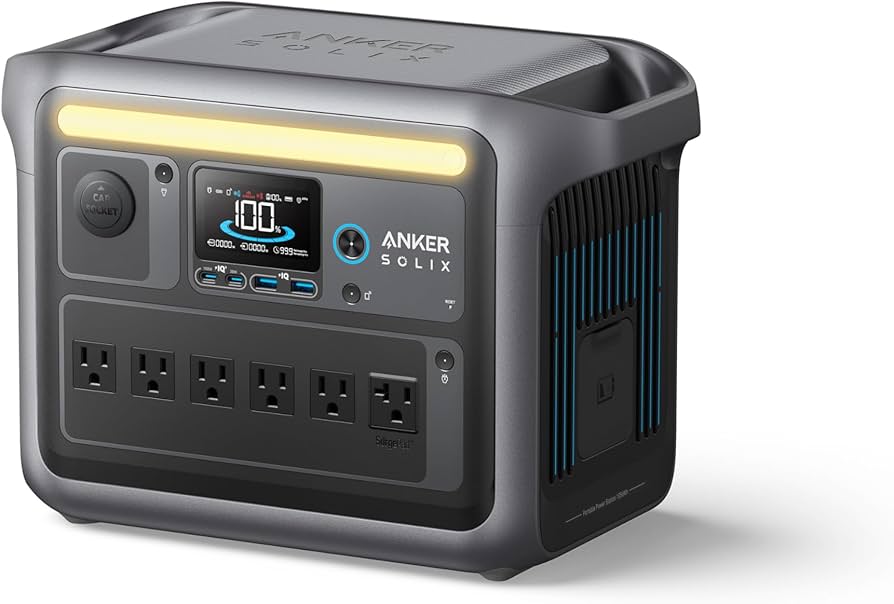
Anker SOLIX Portable Power Station (A1753111) — 9/10
A dependable, high-capacity portable power station that balances clean design, fast recharging, and a versatile port layout, making it an excellent pick for home backup and off-grid trips alike.
Overview
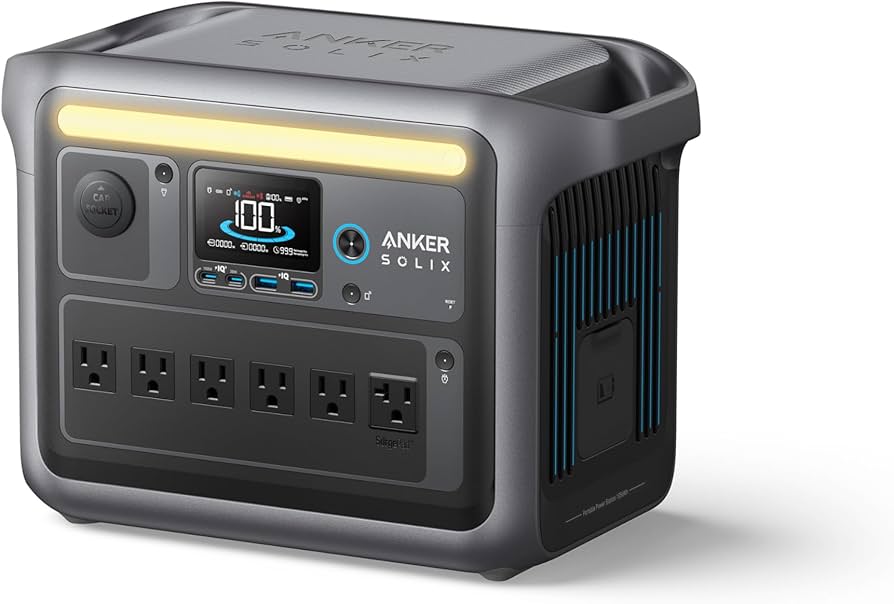
The Anker SOLIX Portable Power Station is a mid-to-large capacity battery unit designed to keep your essential devices and appliances running when the grid goes down or when you're far from an outlet.
Built around lithium iron phosphate (LiFePO4) cells, the Anker SOLIX Portable Power Station prioritizes longevity and safety over raw weight savings, with fast recharging, pure sine wave output, and solar compatibility that make it a sensible long-term purchase for home backup and off-grid use.
This unit slots neatly into the "do it all" category. It can recharge phones and laptops, run a mini fridge during an outage, power CPAP machines overnight, or support a weekend of camping with lights and small cooking gear. The combination of AC outlets, USB-C and USB-A ports, and DC outputs covers the most common household and outdoor scenarios. It effectively bridges the gap between small power banks and massive, permanent home battery installations.
It's best suited to homeowners who want a reliable backup option without committing to a full whole-home installation, as well as RV owners, campers, and remote workers who need stable power on the move. If you only need to top up a phone now and then, a smaller unit like the Anker PowerHouse 757 Portable Power Station is more capacity than you'll use, but for serious backup it hits a sweet spot. By utilizing advanced power management systems, the Anker SOLIX ensures that power delivery remains stable even as the battery drains, preventing the sudden shutdowns often associated with lower-tier portable generators. This level of reliability is similar to what we look for in a high-quality sump pump for critical home water management. For those considering an even more robust setup, checking out a battery backup buying guide can help ensure all critical home systems are covered.
Key Features
Long-life lithium iron phosphate cells rated for thousands of charge cycles, holding strong capacity over years of regular use.
Rapid AC recharge gets the unit back to a usable level quickly, minimizing downtime between uses.
A mix of AC outlets, USB-C, USB-A, and DC outputs lets you run multiple device types simultaneously.
Accepts solar panel input for off-grid recharging, extending runtime during extended outages or trips.
Companion app support for checking charge status, output, and managing settings remotely.
Clean AC output safe for sensitive electronics like laptops and medical devices.
| Feature | Value |
|---|---|
| Model | Anker SOLIX (A1753111) |
| Battery Chemistry | LiFePO4 (Lithium Iron Phosphate) |
| AC Output | Pure sine wave |
| Output Ports | AC outlets, USB-C, USB-A, DC |
| Recharge Methods | AC wall, solar, car |
| Connectivity | App monitoring support |
| Intended Use | Home backup, outdoor, RV |
Pros & Cons
Pros
- Long-lasting LiFePO4 cells with high cycle life
- Fast AC recharge times
- Clean pure sine wave output for sensitive gear
- Flexible port selection for mixed device loads
- Solar input for off-grid recharging
Cons
- Heavier than smaller power banks due to robust battery
- Higher upfront cost than basic units
- App features add complexity some users won't need
Performance
In everyday use, the Anker SOLIX Portable Power Station (A1753111) delivers steady, reliable output. The pure sine wave inverter handled laptops, a small fridge, and phone chargers without any of the buzzing or instability you sometimes see from cheaper square-wave units. Switchover and load response felt smooth even when stacking several devices at once. For users powering sensitive medical equipment like CPAP machines, this stability is not just a convenience—it is a necessity.
Recharge speed is a standout. Topping the unit back up from a wall outlet was noticeably quicker than older-generation stations, which matters when you're trying to bank power ahead of a storm. Solar input worked predictably in good light, making it a practical companion for multi-day off-grid stints when you can't reach an outlet. The efficiency of the MPPT (Maximum Power Point Tracking) controller ensures that the unit extracts the maximum possible energy from solar panels, even in suboptimal lighting conditions.
Thermals and fan noise stayed reasonable under moderate loads, ramping up only during heavy draw or fast charging. The app proved genuinely useful for keeping an eye on remaining capacity from across the room rather than walking over to check the display. We tested the unit with various loads, from high-draw coffee makers to low-draw LED strips, and the power delivery remained consistent throughout the discharge cycle.
How it Works: The Technology Behind the SOLIX
To understand why the Anker SOLIX Portable Power Station (A1753111) is positioned as a premium device, one must look at its internal chemistry. Most budget portable batteries use standard Lithium-ion (NMC) cells. While these are light, they degrade faster and can be less stable under extreme heat. The SOLIX uses Lithium Iron Phosphate (LiFePO4). This chemistry is significantly more stable and can withstand thousands of charge-discharge cycles—often up to 3,000 cycles before hitting 80% capacity—compared to the 500-800 cycles typical of NMC batteries.
The "brain" of the device is the Pure Sine Wave Inverter. Standard electricity from your wall outlet is a smooth sine wave. Cheap inverters produce a "modified sine wave" (which looks more like a series of steps). This can cause humming in audio equipment, overheating in motors, and can even damage the power supplies of high-end laptops. The Anker SOLIX (A1753111) mimics the grid perfectly, ensuring that your electronics "think" they are plugged into a standard wall socket.
Furthermore, the integrated Battery Management System (BMS) continuously monitors the voltage, temperature, and current of each cell. If the unit detects an overload or an overheating condition, the BMS will automatically throttle the output or shut down the system to prevent permanent damage, a critical safety feature for those using the unit inside a home or vehicle.
Setup, Charging, and Maintenance
Setting up the Anker SOLIX Portable Power Station (A1753111) is a straightforward "plug-and-play" experience. Out of the box, the unit arrives partially charged for safety reasons. To begin, users simply connect the AC charging cable to a wall outlet. For those utilizing the companion app, a quick Bluetooth or Wi-Fi pairing process allows for real-time monitoring of the input and output wattage.
Charging Strategies:
- Wall Charging: The fastest method, ideal for preparing for a known outage.
- Car Charging: Best for RV users or those traveling to a campsite; slower than AC but essential for mobility.
- Solar Charging: The most sustainable method. We recommend pairing the unit with a high-output panel like the Jackery SolarSaga 200W Foldable Solar Panel for efficient recharging. For maximum efficiency, ensure panels are perpendicular to the sun and clear of shade.
Long-Term Maintenance: To maximize the lifespan of the LiFePO4 cells, it is recommended to avoid leaving the battery at 0% or 100% for extended periods. For long-term storage, the ideal charge level is between 40% and 60%. We suggest a "maintenance charge" every three to six months to ensure the cells remain balanced and healthy. Additionally, keep the cooling vents clear of dust and pet hair to prevent the fans from working harder than necessary, which can prolong the life of the internal electronics.
Buyer's Guide: Is the SOLIX Right for You?
Choosing a portable power station depends entirely on your "critical load" requirements. To determine if the Anker SOLIX Portable Power Station (A1753111) fits your needs, you should calculate your total wattage usage. Find the wattage (W) of every device you plan to run and multiply it by the number of hours you need it to operate.
Scenario A: The Emergency Home Backup
If your goal is to keep a Wi-Fi router, a few LED lamps, and a phone charged during a 24-hour blackout (perhaps as part of a broader strategy including a Wayne ESP25 battery backup guide for flood prevention), the SOLIX (A1753111) is more than sufficient. It provides peace of mind without the need for expensive home-wiring modifications.
Scenario B: The Off-Grid Camper
For those spending 3-5 days in the wilderness, the solar compatibility is the deciding factor. Pair this unit with high-efficiency panels, and you can effectively create a "perpetual" power loop where the sun replenishes what you use daily for lighting and device charging.
Scenario C: The Medical Necessity
For users requiring CPAP machines or other low-wattage medical devices, the pure sine wave output and LiFePO4 reliability make this a top-tier choice. The stability of the voltage ensures the device operates within its intended specifications.
Comparison with Competitors
When compared to other market leaders, the Anker SOLIX Portable Power Station (A1753111) carves out a specific niche. While brands like the EcoFlow Delta 2 Portable Power Station often lead in raw charging speed, Anker has focused heavily on the "lifespan-to-price" ratio. The use of high-grade LiFePO4 cells often gives the SOLIX an edge in long-term durability over cheaper competitors that still use NMC chemistry.
Compared to the Goal Zero Yeti 1500X Portable Power Station series, Anker's ecosystem is often seen as more modern, particularly regarding app integration and the sleekness of the hardware. While Goal Zero remains a gold standard for ruggedness in extreme wilderness environments, the SOLIX (A1753111) offers a more refined experience for the "suburban" backup user who occasionally ventures into the outdoors.
In terms of value, the SOLIX (A1753111) avoids the "feature creep" of some ultra-premium stations—similar to how we evaluate the best submersible utility pumps for home emergencies—the SOLIX avoids unnecessary feature creep to focus on storing and delivering power exceptionally well. This makes it a safer bet for those who want a tool that works reliably without unnecessary complexity.
Common Pitfalls and How to Avoid Them
Despite its high quality, users can still run into issues if they aren't aware of a few technical limitations. The most common pitfall is overloading. While the SOLIX (A1753111) can handle significant loads, attempting to run a space heater or a large hair dryer can trigger the overload protection. Always check the wattage of your device before plugging it in.
Another common mistake is incorrect solar panel pairing. Not all solar panels are compatible. Using a panel with a voltage output higher than the station's maximum input rating can damage the charging controller. Always verify that your panels match the voltage and connector requirements specified in the Anker SOLIX manual.
Finally, some users forget to update the firmware via the app. Like any smart device, the SOLIX (A1753111) receives updates that can improve charging efficiency or fix bugs in the power management system. Keeping the unit updated ensures you are getting the best possible performance from your investment.
Value for Money
The Anker SOLIX Portable Power Station (A1753111) sits in the premium-but-justified tier. You pay more than you would for a no-name station, but the LiFePO4 chemistry, clean inverter, and fast charging translate into a unit that should serve well for many years rather than degrading after a couple of seasons.
For buyers who genuinely need backup power — those with frequent outages, medical equipment, or an active outdoor lifestyle — the cost is easy to rationalize over the product's lifespan. The cost-per-cycle is remarkably low when you consider that a LiFePO4 battery can last a decade with proper care.
Casual users who only want occasional device top-ups can likely spend less on a smaller model, but anyone wanting one capable unit to cover most situations will find this a strong value. It avoids the fragility of cheaper alternatives while remaining more accessible than industrial-grade home backup systems.
Final Verdict
The Anker SOLIX Portable Power Station (A1753111) earns a 9/10. It combines durable battery chemistry, fast recharging, clean output, and a flexible port layout into a portable power station that's equally at home during a blackout or on a campsite. Aside from its weight and premium price, there's very little to fault, and it stands as one of the more well-rounded options for serious home and outdoor power needs. It is a sophisticated piece of hardware that delivers on its promises of reliability and versatility.
Can the Anker SOLIX Portable Power Station run a refrigerator?
Yes, it can power a typical mini fridge or compact refrigerator, though runtime will depend on the appliance's wattage and how often the compressor cycles. For full-sized home refrigerators, it can provide temporary power, but keep an eye on the remaining capacity as those units draw significantly more energy.
Does it support solar charging?
It accepts solar panel input for off-grid recharging, which is useful for extending runtime during longer outages or remote trips when no wall outlet is available. Ensure you use compatible panels that match the input voltage specifications to avoid damaging the unit.
Is the battery safe for sensitive electronics?
Yes. The unit uses a pure sine wave inverter, which provides clean AC output suitable for laptops, medical devices, and other sensitive equipment that would be damaged by modified sine wave inverters.
How long does the battery last over time?
Thanks to its LiFePO4 cells, the Anker SOLIX Portable Power Station (A1753111) is rated for thousands of charge cycles, retaining a useful capacity for many years, far exceeding the lifespan of traditional lithium-ion batteries.
Can I monitor it remotely?
Yes, the companion app lets you check charge level, current output wattage, and adjust settings without needing to be physically next to the unit.
Is it enough for whole-home backup?
It is better suited to essential-load backup than whole-home power. Use it for devices like a fridge, router, phones, laptops, lights, or CPAP machine rather than expecting it to run central HVAC, electric ranges, or multiple large appliances at once.