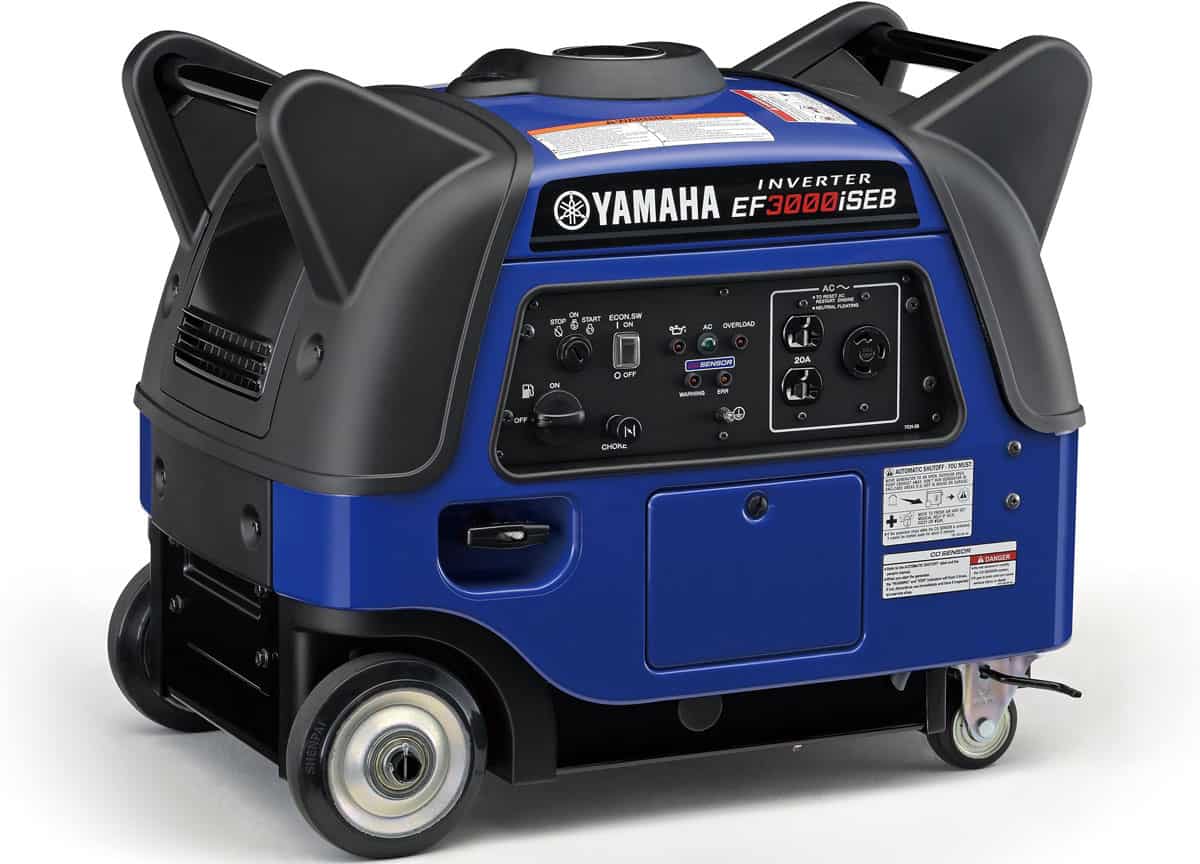
Yamaha Enclosed Inverter Generator (EF2200iS)
Score: 9/10 — A quiet, fuel-efficient inverter generator that delivers clean, electronics-safe power in a compact enclosed shell, making it an excellent pick for home backup, camping, and outdoor entertaining.
Overview
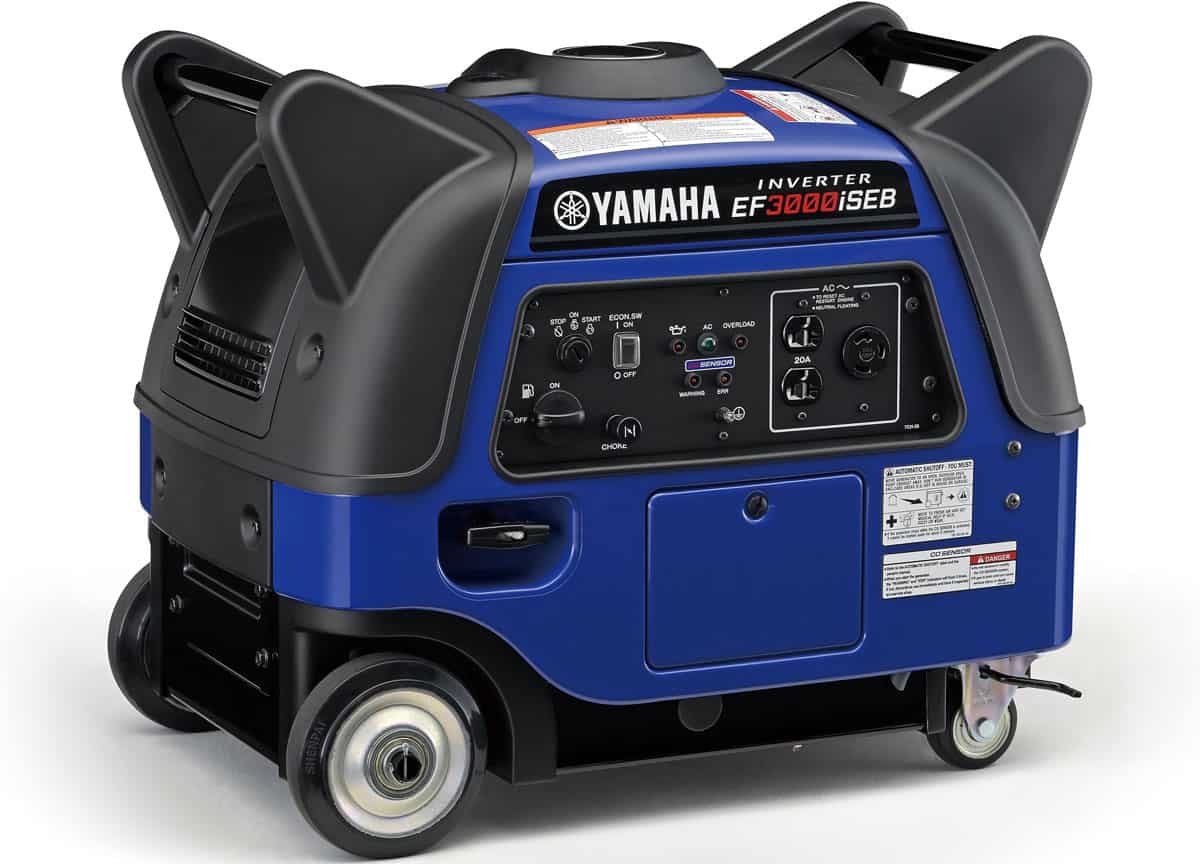
In this Yamaha EF2200iS inverter generator review, we’re looking at the Yamaha Enclosed Inverter Generator as a portable backup power solution built around inverter technology that produces a stable, consistent sine wave. That clean output is the headline feature, because it allows the EF2200iS to safely run sensitive electronics like laptops, televisions, and other voltage-sensitive gear without the spikes and dips that cheaper open-frame generators can introduce.
Its enclosed design is the second defining trait. By wrapping the engine in a noise-reducing shell, Yamaha keeps operating volume far lower than comparable open-frame models. That makes the EF2200iS genuinely usable in residential neighborhoods, on campsites, and around tailgates where a roaring generator would be unwelcome.
This generator is aimed at homeowners who want a reliable backup during outages—perhaps paired with a Wayne ESP25 battery backup sump pump to protect the basement—and at outdoor enthusiasts who need portable, dependable power. If you value quiet operation, fuel efficiency, and clean power over raw maximum wattage, the EF2200iS sits squarely in your sweet spot. Shoppers cross-shopping this class often compare it with high-end competitors like the Honda Super Quiet 2200-Watt Portable Inverter Generator, looking for a balance of reliability and acoustic comfort.
Key Features
Produces a consistent sine wave that protects laptops, TVs, and other sensitive electronics from voltage fluctuations.
Noise-reducing enclosure significantly lowers operating volume compared to open-frame designs for residential and campsite use.
Economical fuel consumption extends run time and reduces the need for frequent refueling during long outages.
A small footprint makes it easy to store, transport, and position close to where power is needed.
Stable voltage delivery keeps connected devices safe and running smoothly.
Simple, intuitive operation suits both first-time owners and experienced users.
| Feature | Value |
|---|---|
| Model | EF2200iS |
| Category | Generators & Backup Power |
| Power Type | Inverter (stable sine wave output) |
| Design | Enclosed, noise-reducing shell |
| Best For | Home backup, outdoor entertaining, sensitive electronics |
| Fuel Efficiency | Economical, extended run time |
| Controls | Simple, straightforward operation |
| Portability | Compact footprint |
Pros & Cons
Pros
- Clean sine wave output is safe for sensitive electronics
- Enclosed shell keeps noise impressively low
- Fuel-efficient operation for longer run times
- Compact and easy to transport
- Simple controls suit any experience level
Cons
- Output is geared to moderate loads, not heavy whole-home demand
- Premium Yamaha pricing over budget open-frame units
- Single-fuel gasoline operation
Performance
In real-world use, the Yamaha Enclosed Inverter Generator lives up to Yamaha's reputation for quiet, refined operation. The enclosed shell noticeably tames engine noise, so you can hold a conversation nearby without raising your voice — a meaningful difference at a campsite or on a patio during a gathering.
The clean inverter power is reassuring when running electronics. Laptops, televisions, and other sensitive devices run without flicker or audible interference, and there's none of the anxiety you might feel plugging delicate gear into a rougher open-frame generator. For powering essentials during an outage — lights, a fridge, fans, and entertainment — it handles moderate loads confidently.
Fuel efficiency is another strong point. The economical consumption stretches run time between refuels, which is exactly what you want when riding out a longer outage or spending an extended weekend off-grid. The unit starts reliably, and the transition from low-load economy mode to high-load output is seamless and nearly instantaneous.
Deep Dive: How Inverter Technology Works
To understand why the Yamaha Enclosed Inverter Generator (EF2200iS) is superior for electronics, it is important to understand the difference between traditional generators and inverter generators. A traditional generator produces "dirty" power. This means the voltage and frequency fluctuate constantly, creating a "jagged" electrical wave. While a toaster or a simple lightbulb doesn't mind this, a laptop power brick or a smartphone charger can be damaged or fail to operate correctly due to these fluctuations.
The EF2200iS uses a three-step process to clean this power. First, the engine generates raw AC power. Second, that AC power is converted into DC (Direct Current). Finally, an inverter converts that DC power back into a perfectly clean, stable AC sine wave. This "double conversion" removes the noise and spikes, ensuring that the power coming out of the outlets is as clean as the power coming from your wall at home.
Additionally, the EF2200iS features an "economy" mode. Unlike traditional generators that must run at a constant high RPM to maintain 60Hz frequency, an inverter generator can throttle the engine speed down when the power demand is low. This is why the EF2200iS is significantly quieter and uses less fuel when you are only charging a few phones versus running a full-sized refrigerator. The synchronization between the engine speed and the electrical load is managed by a sophisticated control module that ensures stability regardless of the throttle position.
Setup and Initial Operation
Setting up the Yamaha Enclosed Inverter Generator (EF2200iS) is designed to be a "plug-and-play" experience. Out of the box, the unit is relatively compact, though users should ensure they check the oil level before the first start, as many units are shipped with a minimal amount of oil for transport.
Step-by-Step Startup:
- Fueling: Fill the tank with fresh, unleaded gasoline. Avoid using E85 or high-ethanol blends which can degrade the fuel system over time. Using a high-quality fuel stabilizer from the first fill is highly recommended.
- Oil Check: Verify the oil level via the dipstick. Overfilling can cause smoke and oil leaking into the air filter, while underfilling can lead to rapid engine seizure and permanent damage.
- Starting: Turn the fuel valve to the 'On' position, set the choke to 'Closed', and pull the recoil starter. Once the engine fires, move the choke to 'Open' to allow it to stabilize. If the engine is warm, you may only need a partial choke.
- Load Connection: Once the unit has warmed up for a minute, plug in your devices. Start with your largest load first to allow the inverter to stabilize the voltage before adding smaller, more sensitive devices.
Maintenance Guide for Long-Term Reliability
To ensure the Yamaha Enclosed Inverter Generator (EF2200iS) lasts for a decade rather than a few seasons, a strict maintenance schedule is required. Because this unit is enclosed, heat dissipation is managed by the shell, making oil quality critical for cooling the internal engine components.
Oil Changes and Lubrication
The first "break-in" oil change is the most important, typically occurring after the first 20 hours of use. During this period, the engine's internal components "seat" themselves, and microscopic metal shavings can enter the oil. After that, oil should be changed every 50 to 100 hours of operation, or once a year, whichever comes first. Using a high-quality synthetic oil can help extend the life of the engine and improve cold-weather starting by reducing viscosity at low temperatures.
Air Filter Care
The enclosed design protects the air filter from some debris, but dust still accumulates. Check the air filter every 50 hours. If it is clogged, the engine will struggle to breathe, leading to increased fuel consumption, lower power output, and potential engine overheating. Replace the foam filter as soon as it appears saturated with oil or dust. Clean the filter using the manufacturer-recommended solvent or a mild detergent, ensuring it is completely dry before reinstalling.
Fuel System Preservation
One of the most common failures in portable generators is a clogged carburetor caused by "stale" fuel. Gasoline begins to degrade after 30 days, forming a gummy residue (varnish) that blocks the tiny jets in the carburetor. We strongly recommend using a fuel stabilizer in every tank and draining the carburetor bowl if the unit will sit unused for more than a month. If you store the unit for winter, consider a complete fuel drain to prevent ethanol-related corrosion.
Comparative Analysis: EF2200iS vs. The Competition
When shopping for a 2000-watt class generator, most buyers find themselves choosing between the Yamaha EF2200iS, the Honda Super Quiet 2200-Watt Portable Inverter Generator, and budget alternatives from brands like Generac Open Frame Inverter Generator 3500 Watt Portable or Predator.
Yamaha vs. Honda
The battle between Yamaha and Honda is essentially a tie in terms of reliability. Both use world-class engineering and have the best service networks in the industry. However, the Yamaha EF2200iS is often praised for its specific noise profile—some users find the "hum" of the Yamaha less intrusive than the "drone" of the Honda. Pricing is usually similar, though availability can vary by region. In terms of sheer build quality, both are built to last, but Yamaha's enclosed shell design is often cited as being slightly more robust in terms of impact resistance.
Yamaha vs. Budget Open-Frame
A budget open-frame generator may cost half as much as the EF2200iS. However, the trade-off is immense. An open-frame unit is significantly louder (often reaching levels that require ear protection), produces "dirty" power that can fry a laptop motherboard, and consumes significantly more fuel. If you are only powering a construction floodlight, a budget unit is fine. If you are powering a home office during a blackout, the EF2200iS is a necessity. The cost difference is an investment in the safety of your expensive electronics and the sanity of your neighbors.
Potential Pitfalls and Buyer Warnings
While the Yamaha Enclosed Inverter Generator (EF2200iS) is a top-tier product, it is not a universal solution. There are a few scenarios where this generator will fail to meet your needs:
- Fuel Type Limitation: This is a gasoline-only unit. If you prefer Propane (LPG) for easier storage or dual-fuel flexibility, you will need to look at brands like DuroMax Dual Fuel Portable Generator or Westinghouse Super Quiet Portable Inverter Generator 4500 Watt RV Ready.
- Indoor Use Danger: Never be tempted to run this in a garage with the door open. Carbon monoxide can pool in corners and kill in minutes. This unit must be 20 feet away from any residential structure.
- Overload Protection: While the unit has safety circuitry, repeatedly overloading the generator can put stress on the inverter board. If the unit shuts down due to overload, unplug some devices before restarting.
Value for Money
The Yamaha Enclosed Inverter Generator carries a premium over bargain open-frame generators, but the value proposition is clear once you account for the clean power, quiet enclosure, and Yamaha's reputation for durability. For buyers who plan to run electronics, the inverter output alone justifies the step up from cheaper alternatives.
This is the right generator for homeowners who want dependable backup without disturbing the neighborhood, and for campers and tailgaters who prioritize quiet, portable power.
If you'd rather skip fuel entirely, a battery option like the Bluetti Portable Power Station (AC200MAX) is worth comparing for indoor-safe backup.
If your needs revolve around heavy continuous loads or whole-home coverage, you may want a larger unit such as the Westinghouse Super Quiet Portable Inverter Generator 4500 Watt RV Ready or a DuroMax Dual Fuel Portable Generator 13000W Electric Start — but for clean, efficient, moderate-load power, the EF2200iS delivers excellent long-term value.Final Verdict
The Yamaha Enclosed Inverter Generator earns a strong 9/10. It combines clean, electronics-safe power, genuinely quiet operation, and fuel-efficient performance in a compact, easy-to-use package. For home backup, outdoor entertaining, and sensitive devices, it's a confident recommendation for anyone who values quality and peace of mind over the lowest possible price point.
Can I run a portable AC unit with the EF2200iS?
It depends on the AC unit's wattage. Small, energy-efficient window units may run, but larger portable ACs often exceed the 2200W surge limit. Always check the "Starting Watts" on the AC label before attempting to power it.
How loud is "quiet" in real terms?
While decibel levels vary by load, the EF2200iS is designed to be significantly quieter than traditional generators. In economy mode, it sounds more like a distant humming appliance than a piece of heavy machinery, making it acceptable for most campgrounds.
Does it require a specific type of gasoline?
It uses standard unleaded gasoline. However, we strongly recommend using ethanol-free gas (pure gas) if available, as ethanol can attract moisture and cause corrosion in the carburetor during periods of inactivity.
Is the EF2200iS waterproof?
The enclosed shell provides some protection against light drizzle, but it is not waterproof. Never operate the generator in heavy rain or standing water, as this can lead to electrical shorts or engine failure.
How long does a full tank usually last?
Run time depends entirely on the load. Under a light load in economy mode, it can run for many hours. Under a full 2000W load, the run time will be significantly shorter. Check the manual for specific fuel consumption charts based on wattage.