When comparing tank, tankless, and mini-tank water heaters, the right choice depends on your home's layout, family size, and budget. Selecting the best water heating system is one of the most impactful upgrades for home energy efficiency. Whether you are looking to slash monthly utility bills, ensure a continuous supply of on-demand hot water for a large family, or save valuable square footage in a tight utility closet, your choice significantly impacts both your home's comfort and long-term operating costs. The three main types on the market today are traditional tank water heaters (which often share space with other critical systems like high-performance sump pumps) (such as the high-efficiency A.O. Smith EES-40), tankless (on-demand) water heaters, and mini-tank water heaters. Each solves a different problem, suits a different household, and comes with its own set of trade-offs. This guide breaks down exactly how they compare so you can make a confident, well-informed purchase.
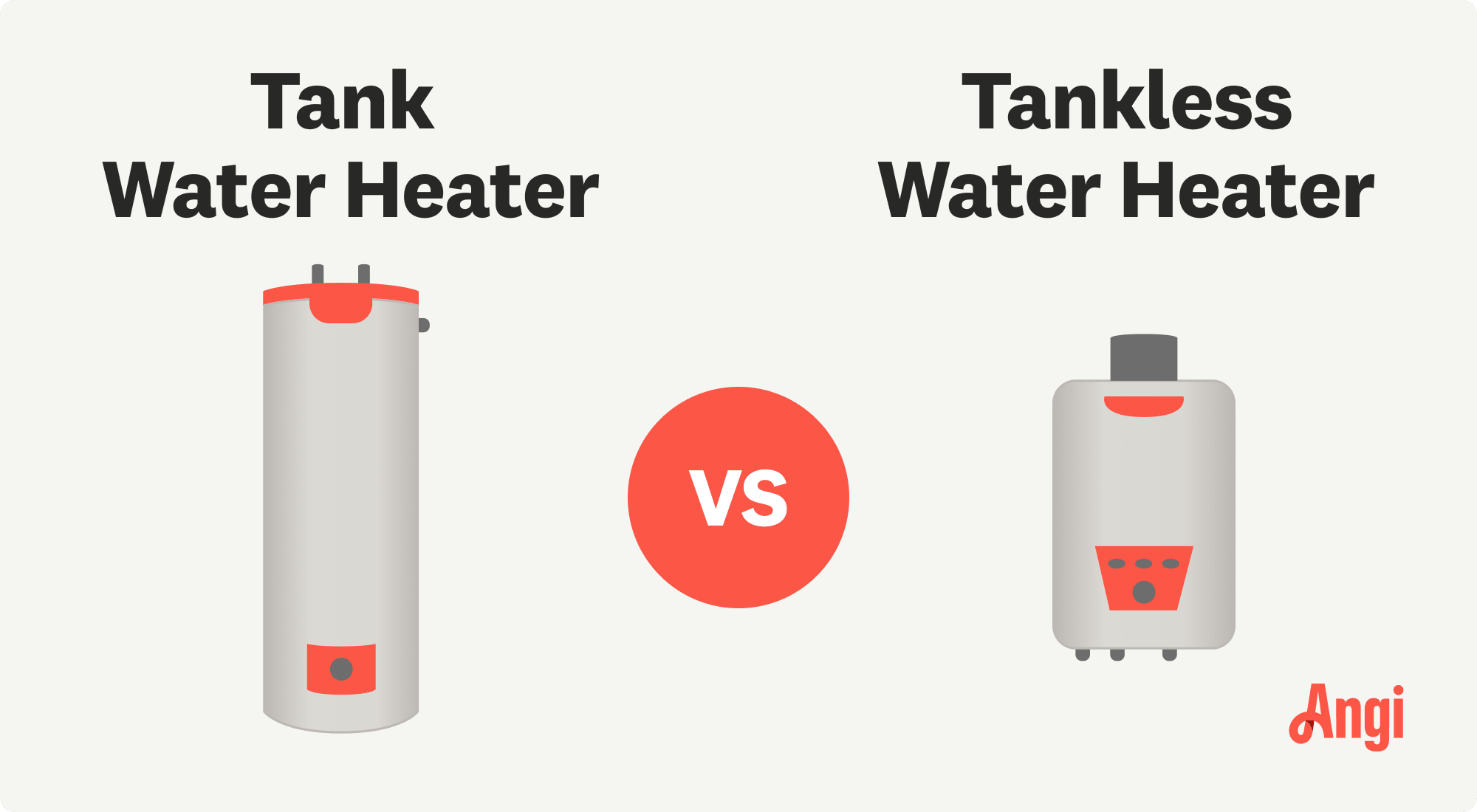
Quick Picks: TL;DR
- Best for most households — Tank Water Heater: Lowest upfront cost, simple installation, and reliable hot water for families of 2–5 people (detailed in our A.O. Smith EES-40 review).
- Best for long-term savings — Tankless Water Heater: Higher efficiency, endless hot water on demand, and a longer lifespan make it worth the investment for the right home.
- Best for targeted use — Mini-Tank Water Heater: Ideal under a sink or as a point-of-use supplement, eliminating long waits for hot water in distant fixtures.
1. Tank Water Heaters
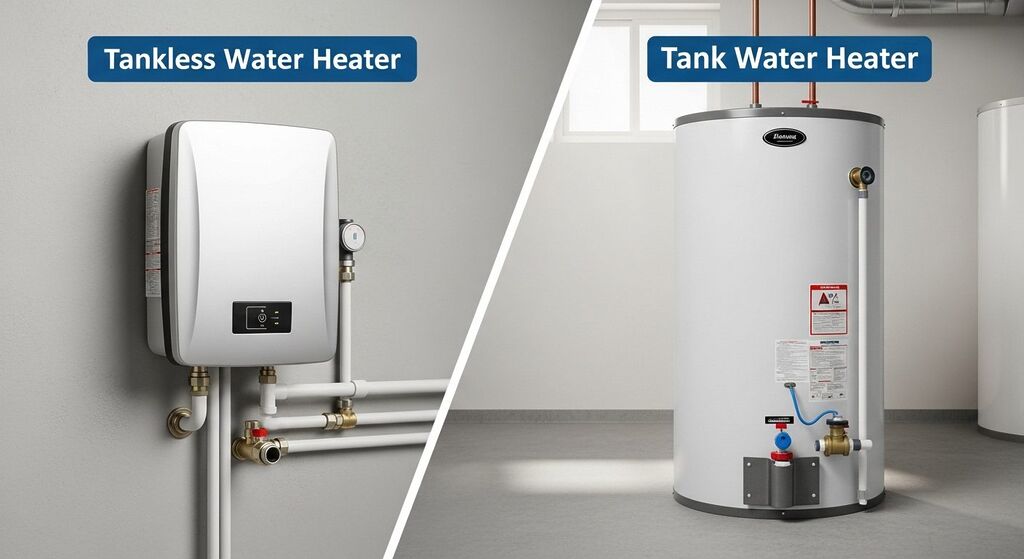
The traditional storage tank water heater is the most common type found in American homes, and for good reason. It stores anywhere from 20 to 80 gallons of pre-heated water in an insulated tank, ready to deliver whenever you open a hot tap. Electric and gas models are both widely available, with gas generally heating water faster and costing less to operate in most regions.
Tank heaters are straightforward to install and maintain—often utilizing simple components like SharkBite 1/2-inch couplings for quick connections (see our SharkBite 1/2-inch coupling guide for installation tips)—and virtually every plumber knows how to work on them—often alongside other basement maintenance—such as managing water with a Ridgid SP-650C sump pump—utilizing specialized valves like the Watts LFA-3/4 for improved flow control. For those considering a specific high-efficiency model, our A.O. Smith EES-40 review provides a deep dive into its energy efficiency, performance, and reliability. When a unit fails, replacement is often quick — sometimes same-day. The main downside is standby heat loss: the unit constantly burns energy to keep stored water hot, even when no one is home. Modern units have improved insulation significantly, but standby loss remains a structural inefficiency compared to tankless alternatives. For more on managing home utility efficiency and basement health, see our guides on managing basement humidity with a GE dehumidifier or utilizing submersible utility pumps for rapid water removal.
Who it's for: Families of 2–5 people who want reliable, affordable hot water.
Our top recommendation for energy-efficient tank heating is the A.O. Smith EES-40.
This is an ideal choice for homeowners who want hot water without a large upfront investment, and homeowners who aren't ready to upgrade their gas line or electrical panel (similar to those evaluating sump pump upgrades for wet basements or exploring battery backup sump pump options for storm protection or a heavy-duty submersible pump for storm protection).
Pros
- Lowest upfront purchase and installation cost
- Compatible with existing gas or electric setups in most homes
- Simple to service — parts and technicians widely available
- Handles simultaneous demand well with a correctly sized tank
- Shorter installation time compared to tankless
Cons
- Standby heat loss increases energy bills year-round
- Hot water runs out if demand exceeds tank capacity
- Requires significant floor or utility space in the basement or garage
- Shorter average lifespan (8–12 years vs. 20+ for tankless)
- Slower recovery time on electric models
2. Tankless Water Heaters
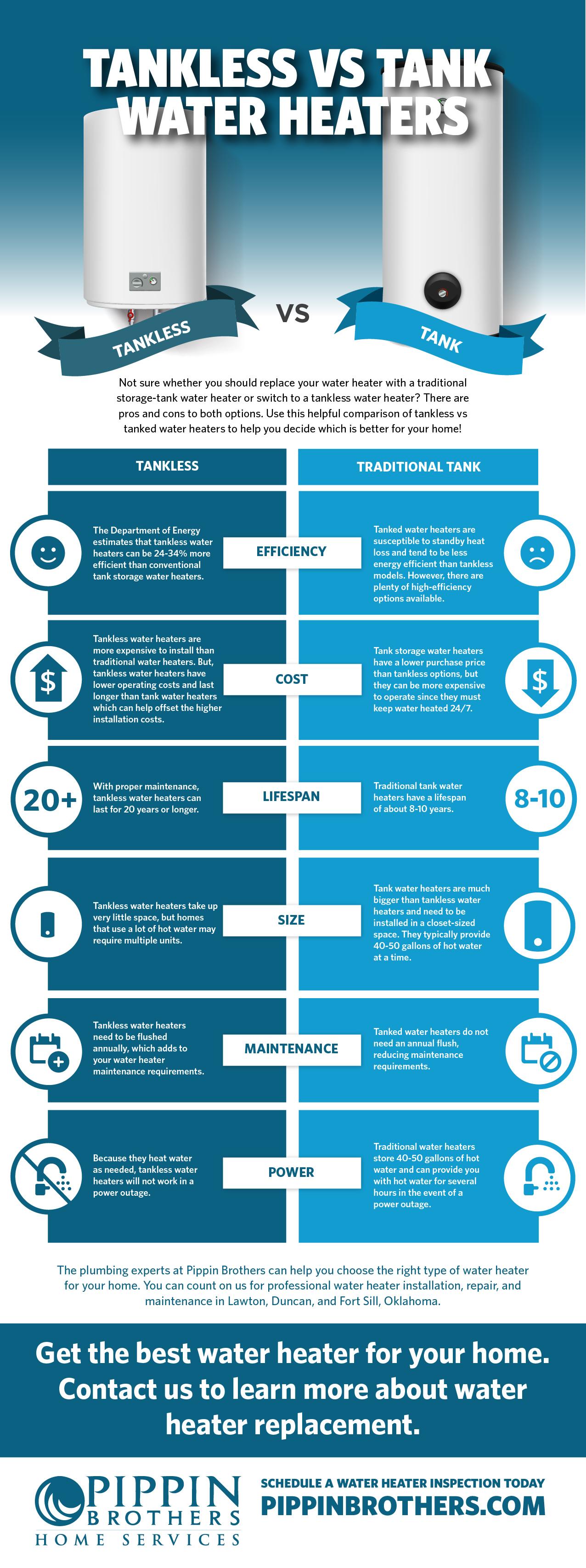
Tankless (or on-demand) water heaters heat water directly as it flows through the unit — there's no storage tank, no standing water, and no standby heat loss. When you turn on the hot tap, a flow sensor activates a high-powered burner or electric heating element that rapidly brings the water up to your set temperature. The result is a theoretically endless supply of hot water, limited only by the unit's flow rate (measured in gallons per minute, or GPM).
Gas-powered whole-home tankless heaters typically deliver 8–12 GPM, which is enough for most households running two or three fixtures simultaneously. Electric models are more compact and easier to install but generally have lower flow rates, making them better suited to smaller homes or as zone heaters. There are two major caveats to consider: installation costs are substantially higher — often $1,000–$3,000 or more depending on whether your gas line or electrical panel needs upgrading — and units require periodic descaling, especially in hard-water areas, to maintain efficiency. To protect your system from mineral buildup and improve overall water quality—similar to how a GE whole-house water filter system protects your pipes—consider a GE GXWH40L whole-house water filter system or explore our Culligan whole-house filtration guide for high-capacity options to ensure your plumbing remains scale-free. Proper filtration is essential for extending the life of any high-efficiency water heater. High-quality filtration reduces the frequency of descaling and protects the heat exchanger from mineral buildup.
Who it's for: Homeowners planning to stay in their house long-term—perhaps those also upgrading their home infrastructure with a comprehensive home security system who want to maximize energy efficiency—perhaps alongside a MrCool DIY mini-split system—and eliminate the risk of running out of hot water. Also excellent for homes with natural gas already plumbed to the utility area.
Pros
- No standby heat loss — only heats water when needed
- Virtually unlimited hot water for the right-sized unit
- Compact, wall-mounted design saves floor space
- Lifespan of 20+ years with proper maintenance
- Can qualify for federal and utility energy efficiency rebates
Cons
- High upfront cost — unit plus installation can exceed $3,000
- May require gas line or electrical panel upgrade
- Cold-water "sandwich" effect can occur with intermittent use — a brief burst of cold water between two hot draws caused by the slight lag in heating activation
- Flow rate drops when multiple fixtures run simultaneously
- More complex to service than tank models
3. Mini-Tank Water Heaters
Mini-tank water heaters are compact, point-of-use storage units—often paired with a Delta Essa bathroom faucet, a Pfister Stellen budget faucet, or a high-quality MOEN Chateau 7430 kitchen faucet—typically holding 2.5 to 20 gallons — designed to be installed directly under a sink, in a closet, or near a bathroom fixture. They solve a specific and frustrating problem: long waits for hot water to travel from a central heater to a distant fixture. By keeping a small reserve of hot water right at the point of use, they dramatically cut wait times and reduce water waste from running the tap.
Most mini-tanks run on standard 120V household current, meaning no special wiring is required. They're also inexpensive — often under $300 — making them an easy add-on upgrade. However, they are not a replacement for a whole-home heating solution. Their small capacity means they deplete quickly under sustained demand, and recovery time on a 2.5-gallon unit can be 15–30 minutes. They're best understood as a supplement to your primary water heater, not a standalone solution.
Who it's for: Homeowners who have a remote bathroom, a home office kitchenette, or a garage sink far from the main water heater. Also a great option for renters who can't replace the building's central system.
Pros
- Very affordable — typically under $200–$300
- Plugs into standard 120V outlet; no special wiring needed
- Eliminates long waits at remote fixtures
- Compact enough to fit under most sinks
- Reduces water waste from running the tap while waiting
Cons
- Not a whole-home solution — limited capacity
- Suffers from standby heat loss like full-size tanks
- Slow recovery time on smaller units (under 5 gallons)
- Only heats water for one or two nearby fixtures
- Still requires a primary water heater for whole-home coverage
This article contains affiliate links. If you purchase through our links, we may earn a commission at no extra cost to you. See our full disclosure policy for details.
Our Overall Pick: Tankless for Long-Term Value
For most homeowners who plan to stay in their home for 7 or more years and have the budget for installation, a whole-home gas tankless water heater delivers the best combination of energy savings, endless hot water, and longevity. Pair it with a mini-tank under your most distant sink for the ultimate setup.
If upfront cost is your primary concern, we highly recommend the A.O. Smith EES-40 high-efficiency water heater as the best tank-style option.
| Feature | Tank | Tankless | Mini-Tank |
|---|---|---|---|
| Typical Upfront Cost | $300–$1,500 | $800–$1,800 (unit only) | $100–$300 |
| Typical Installation Cost | $150–$450 | $500–$2,000+ | DIY-friendly / $50–$150 |
| Energy Efficiency | Moderate (EF 0.55–0.70) | High (EF 0.82–0.96) | Low–Moderate |
| Hot Water Supply | Limited by tank size | Continuous (rate-limited) | Very limited (2.5–20 gal) |
| Average Lifespan | 8–12 years | 20+ years | 7–10 years |
| Standby Heat Loss | Yes | No | Yes |
| Space Required | Large (floor space) | Small (wall-mounted) | Minimal (under sink) |
| Fuel / Power Options | Gas, Electric, Propane | Gas, Electric, Propane | Electric (120V) |
| Whole-Home Solution? | Yes | Yes | No — point-of-use only |
| Maintenance Complexity | Low | Medium (annual descaling) | Low |
| Best For | Budget buyers, families | Long-term owners, efficiency | Remote fixtures, supplements |
Frequently Asked Questions
How much can I actually save by switching from a tank to a tankless water heater?
According to the U.S. Department of Energy, tankless water heaters are 24–34% more energy efficient than storage tank heaters for homes that use 41 gallons or less of hot water daily. For homes that use around 86 gallons per day, the efficiency advantage narrows to about 8–14%. At current average energy prices, most households switching from a gas tank to a gas tankless unit can expect to save $100–$200 per year on energy bills, meaning the premium installation cost pays back over 5–10 years depending on your usage and local utility rates.
What size tank water heater does my household need?
A common rule of thumb: a 30–40 gallon tank for 1–2 people, 40–50 gallons for 3–4 people, and 50–80 gallons for 5 or more people. The more accurate metric is "first-hour rating" (FHR), which tells you how many gallons the heater can deliver in the first hour of use starting with a full tank — this number is listed on every unit's EnergyGuide label. Add up your household's peak-hour hot water demand (showers, dishwasher, laundry) and match it to an FHR that meets or slightly exceeds that figure.
Can a tankless water heater run out of hot water?
Technically no — but there's a practical limit. Tankless heaters are rated by flow rate in gallons per minute (GPM). If simultaneous demand exceeds the unit's GPM rating, the water temperature will drop or flow will be restricted. For example, if your unit handles 8 GPM but you're running two showers (roughly 2 GPM each), a dishwasher (1.5 GPM), and a