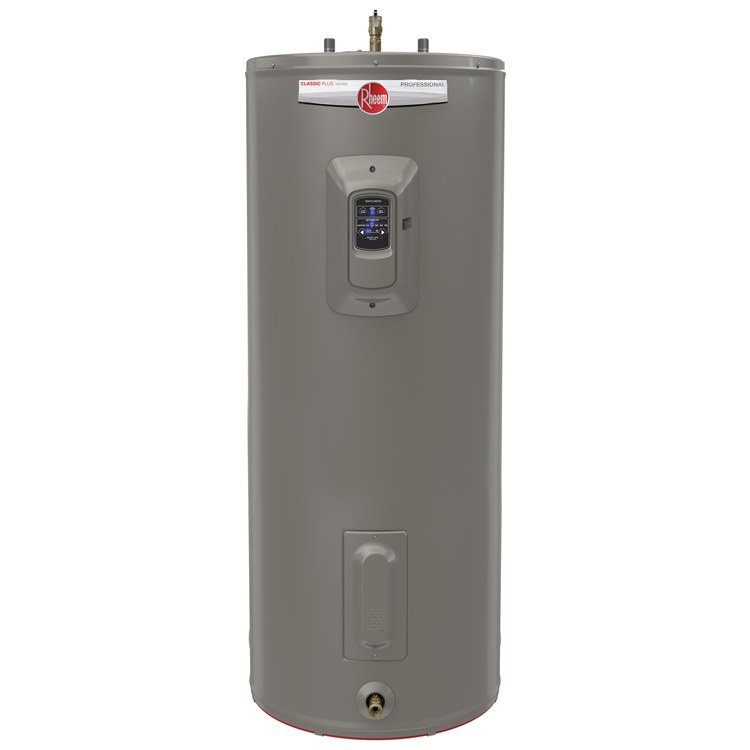
Rheem Professional Classic Plus Electric Water Heater (PROE50-T2-RH95) — 7.8/10
If you are wondering if the Rheem Professional Classic Plus Electric Water Heater (PROE50-T2-RH95) is worth the investment, the short answer is yes for those prioritizing longevity. It is a dependable, professional-grade 50-gallon electric storage tank. Designed for reliability in medium-to-large households, it delivers consistent hot water with a high 0.95 Energy Factor. For those comparing different tank sizes, it is a top choice for those prioritizing durability over smart-home features.
Overview
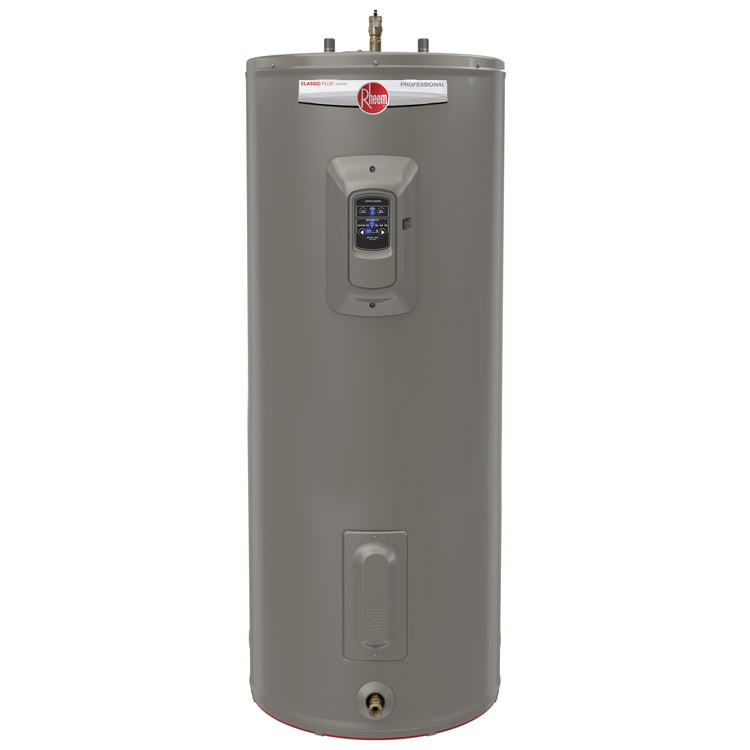
The Rheem Professional Classic Plus Electric Water Heater (PROE50 T2 RH95) sits inside Rheem's Professional Classic Plus line, a tier designed for plumbing contractors and professional installers who need a reliable workhorse they can drop into a standard residential replacement job without drama. The "50" in the model name tells you most of what you need to know upfront: this is a 50-gallon, 240-volt electric storage tank heater built for homes where a 40-gallon unit just isn't cutting it anymore.
Its target buyer is the homeowner with two or more bathrooms, a household of three to five people, and a preference for proven resistive-element heating over the complexity of a heat-pump hybrid. If you've been running out of hot water during back-to-back showers or running a dishwasher alongside the laundry, a 50-gallon tank at this price point is often the most cost-effective fix. While this model is excellent, some property managers also consider the Bradford White AeroTherm 50-Gallon Hybrid Heat Pump Water Heater as a more efficient alternative, but the PROE50 T2 RH95 is widely regarded as a sensible choice for landlords and property managers who value low maintenance and easy serviceability over cutting-edge features.
That said, the RH95 designation corresponds to a rated 0.95 Energy Factor (EF) — decent for a traditional resistance tank, though it still lags behind heat-pump competitors. As with any water heater, confirm the EF on the unit's yellow EnergyGuide label at purchase, since specifications can occasionally vary by production run or regional variant. If your electricity rates are high and you're doing a ground-up installation where a heat-pump model is practical, it's worth doing the math first. For a straight swap in a tight utility closet, though, the PROE50 T2 RH95 remains one of the more straightforward choices on the market.
If you prioritize energy savings and smart controls, we recommend the Rheem Performance Platinum 50-Gallon Smart Hybrid Electric Water Heater for significant monthly bill reductions.
How It Works: The Engineering Behind the Tank
To understand why the Rheem Professional Classic Plus Electric Water Heater is favored by professionals, one must look at the physics of resistive electric heating. Unlike gas heaters that use a burner or hybrid heaters that move heat from the air, this unit uses two high-wattage immersion elements that act like giant toaster filaments submerged in water. When the thermostat detects a drop in temperature, it triggers these elements to heat the water directly through conduction.
The dual-element design is critical for efficiency and recovery. The upper element is typically the primary heater, responsible for bringing the top portion of the tank up to temperature quickly so you can have a hot shower almost immediately after the unit is powered on. The lower element then kicks in to heat the rest of the 50-gallon volume. By separating these zones, Rheem ensures that the "first hour rating" remains high, as the top of the tank stays hot even as cold water enters the bottom.
Looking for a more energy-efficient alternative? Check out the Rheem Performance Platinum Smart Hybrid for advanced heating technology.
The "Professional" designation in the product name refers to the enhanced build materials. The inner tank is lined with a specialized glass coating that prevents the steel from coming into direct contact with water, which would lead to rapid oxidation. However, no lining is perfect. This is where the magnesium anode rod comes into play. Through a process called cathodic protection, the magnesium rod is more "attractive" to corrosive elements than the steel tank. The rod slowly dissolves over several years, sacrificing itself to keep the tank walls intact.
This is the single most important maintenance point for any owner of the PROE50 T2 RH95.
Related parts & accessories
Beyond the heating elements, the thermal stratification process is key. Hot water naturally rises. By strategically placing the thermostats and elements, Rheem ensures that the hottest water is always available at the outlet pipe at the top of the tank. The high-density polyurethane foam insulation serves as a thermal barrier, preventing the heat from radiating out into the surrounding air, which reduces the number of times the elements must cycle on to maintain the temperature.
Key Features
Upper and lower stainless-steel elements work in tandem at a recovery rate of roughly 21 gallons per hour. After a typical partial draw, usable hot water is restored in around 60–70 minutes.
This unit carries a 0.95 EF rating — above the federal minimum for standard electric tanks — helping to trim monthly operating costs versus older or budget models.
A full-port brass drain valve makes annual flushing and sediment removal significantly easier than the cheap plastic valves found on many competing models.
A factory-installed magnesium anode rod actively sacrifices itself to corrosion instead of the tank lining, adding years of service life when replaced on schedule.
Thick polyurethane foam wrap minimizes standby heat loss, keeping stored water hot between draw cycles without constantly firing the elements.
Independent upper and lower thermostat dials let installers and homeowners fine-tune temperature at both ends of the tank for specific comfort or safety requirements.
| Feature | Value |
|---|---|
| Tank Capacity | 50 gallons |
| Energy Factor (EF) | 0.95 |
| Voltage | 240V / 60 Hz |
| Wattage (each element) | 4,500W |
| Recovery Rate (90 °F rise) | ~21 gallons/hour |
| First Hour Rating | ~63 gallons |
| Tank Height | ~62 in (157 cm) |
| Tank Diameter | ~22 in (56 cm) |
| Weight (empty) | ~140 lbs (63.5 kg) |
| Inlet / Outlet | 3/4-inch NPT |
| Anode Rod Material | Magnesium |
| Drain Valve | Full-port brass |
| Warranty (tank) | 10 years |
| Warranty (parts / labor) | 1 year |
| Certifications | UL Listed, CSA Certified |
Pros & Cons
Pros
- Strong 10-year tank warranty for the price bracket
- Dual 4,500W elements deliver a competitive recovery rate
- Brass drain valve simplifies maintenance and extends lifespan
- Thick foam insulation reduces standby heat loss noticeably
- 0.95 EF exceeds federal minimums without the cost of a hybrid
- Widely available replacement parts through plumbing supply chains
- Compatible with standard 30-amp double-pole circuit breaker
Cons
- No Wi-Fi, app control, or smart-home integration whatsoever
- Heavier than average — a two-person install is recommended
- Anode rod inspection requires shutting off power and water
- 0.95 EF still loses to heat-pump hybrids (EF 2.0+) on running costs
- First Hour Rating of ~63 gallons can feel tight for larger families
- No leak detection or automatic shutoff safety features built in
Performance
In day-to-day use, the PROE50 T2 RH95 behaves exactly as you'd expect from a well-engineered resistive tank: quietly and consistently. Once the tank reaches set temperature — which takes a little over an hour from cold start — the dual-element design maintains that heat effectively. Back-to-back showers in a three-person household rarely deplete the tank below a comfortable level, and recovery between morning and evening draw cycles is smooth.
The 0.95 Energy Factor translates to meaningfully lower standby losses compared with budget 0.90-EF tanks, and the polyurethane foam jacket is thick enough that the exterior of the unit stays only slightly warm to the touch — a good sign that heat is staying where it belongs. Element cycling frequency is reasonable, and the thermostats hold their set points without the wild swings that can plague cheaper components.
Where the PROE50 T2 RH95 falls short is in peak-demand scenarios involving five or more people. The ~63-gallon First Hour Rating is adequate but not generous, and if a household runs a dishwasher, washing machine, and two showers simultaneously, some queuing of hot water is noticeable. For those households, the recovery rate of roughly 21 gallons per hour is the binding constraint, not the tank size. Noise is essentially a non-issue — the only audible sound is the faint hiss of the heating element, and even that disappears behind a closed utility-closet door.
Installation and Setup Guide
Installing the Rheem PROE50 T2 RH95 is a straightforward process for a licensed plumber, but homeowners attempting a DIY swap should exercise extreme caution. Because this is a 240V appliance, electrical errors can be fatal or cause structural fire. The unit weighs approximately 140 lbs empty, which is manageable but cumbersome in tight spaces.
The Physical Placement: The unit must be placed on a level, non-combustible surface. If your water heater is located in a basement near your drainage system, ensure your Ridgid SP-650C sump pump is equally well-maintained (refer to our Basement Watchdog BW1033 guide for choosing a reliable sump pump), and consider a Wayne ESP25 battery backup sump pump for added flood protection to prevent basement flooding.
Many installers recommend a plastic drip pan beneath the tank to protect flooring in case of a slow leak or catastrophic failure. Ensure there is at least 2-4 inches of clearance from the wall to allow for airflow and access to the electrical junction box.Plumbing Connections: If you are updating other fixtures during the remodel, see our Delta Essa buying guide for bathroom upgrades or explore our Pfister Stellen buying guide for budget-friendly options. The 3/4-inch NPT inlets and outlets are standard. It is highly recommended to install flexible connectors (stainless steel braided hoses) rather than rigid copper pipe—using quality fittings like those found in our SharkBite U008LFA coupling guide can simplify the process. Flexible connectors accommodate slight misalignments and reduce the amount of stress placed on the tank's nipples during the tightening process, which helps prevent leaks over time. A Temperature and Pressure (T&P) relief valve is included and must be piped to a safe discharge point (usually within 6 inches of the floor) to prevent scalding water from spraying the room during a pressure event.
Electrical Wiring: The PROE50 T2 RH95 requires a dedicated 30-amp double-pole circuit breaker (ensure you're using a compatible AFCI breaker if required by local code). Wiring must be run through a flexible conduit to the junction box on the side of the heater. Ensure the ground wire is securely bonded to the tank's grounding lug to prevent the chassis from becoming electrified in the event of an internal short.
Long-Term Maintenance and Pitfalls
One of the biggest mistakes homeowners make with the PROE50 T2 RH95 is "set it and forget it." While the unit is durable, a lack of maintenance will drastically shorten its lifespan. The primary enemy of any storage tank is sediment. To prevent buildup throughout your pipes, consider our GE GXWH40L whole house water filter buying guide or look into more comprehensive Culligan whole-house filtration options to protect your tank from sediment and improve overall water quality.
Sediment Buildup: Before your tank even collects minerals, consider a whole house water filter to protect your plumbing. Over time, minerals like calcium and magnesium precipitate out of the water and settle at the bottom of the tank. This creates a layer of "sludge" that the lower heating element must heat through. This not only reduces efficiency but causes the element to overheat and eventually burn out. The full-port brass drain valve is a key feature here; by attaching a hose once a year and flushing the tank, you can remove the majority of this sediment.
The Anode Rod Trap: Many users ignore the anode rod until the tank starts leaking.
Regular maintenance with a high-quality tune-up kit can prevent premature failure.
Related parts & accessories
By then, it's too late. The magnesium rod is designed to be replaced every 3 to 5 years depending on water hardness. If you live in an area with "hard" water, the rod will disappear faster. Replacing a $40 anode rod is a cheap insurance policy against replacing a $600 tank.
Common Pitfalls:
- Over-tightening fittings: Using too much torque on the NPT connections can crack the tank collar. Use Teflon tape and a moderate hand with a wrench.
- Ignoring the T&P Valve: If the T&P valve is dripping, it may be a sign of excessive pressure or a faulty valve. Never plug or cap this valve, as it is the only thing preventing the tank from becoming