Choosing the best electric water heater for home use can cut your energy bills dramatically. When paired with a whole-house water filtration system, units like the highly efficient Rheem ProTerra Hybrid provide both longevity and maximum utility savings. Whether you need a heat pump hybrid for maximum efficiency or a tankless model for endless hot water, the right choice depends on your home's layout and budget. In this buying guide, we compare the top-rated heat pump hybrids, whole-home tankless, standard tank, and smart Wi-Fi models to help you find the most energy-efficient electric water heater for your household size, climate, and budget.
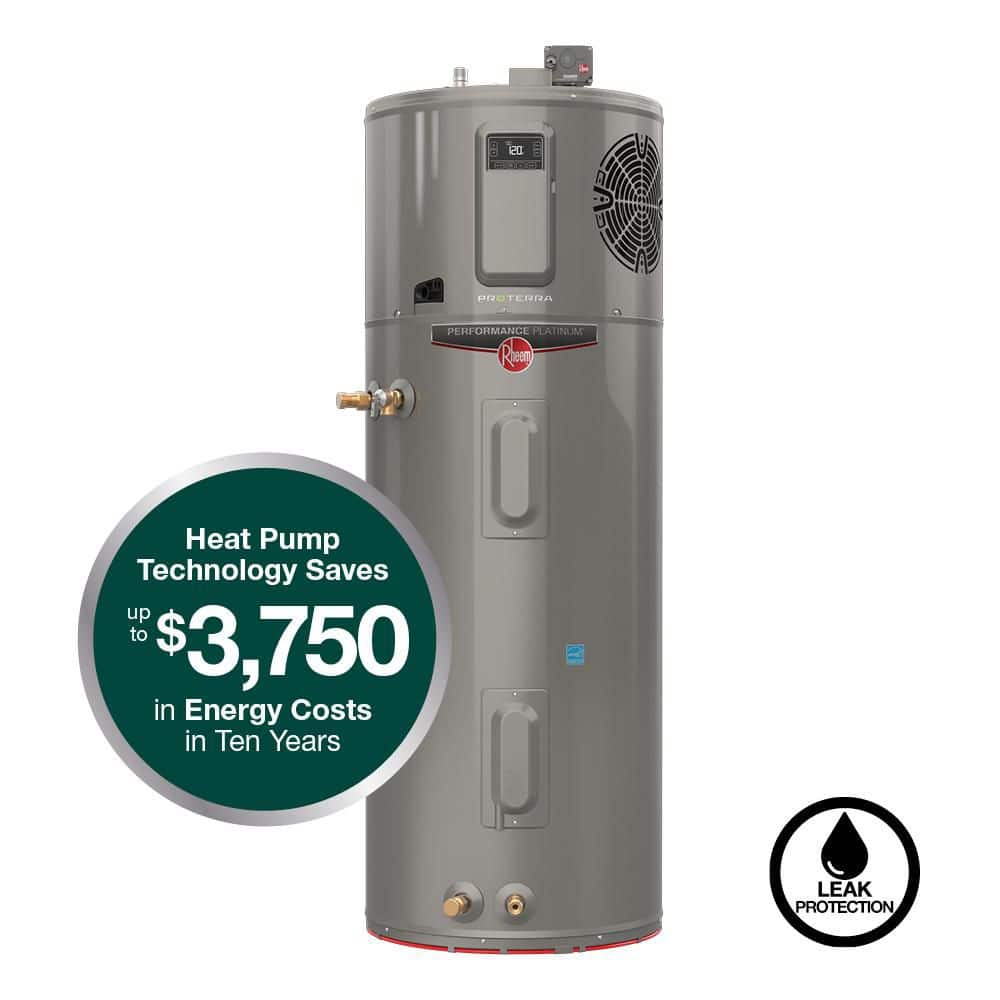
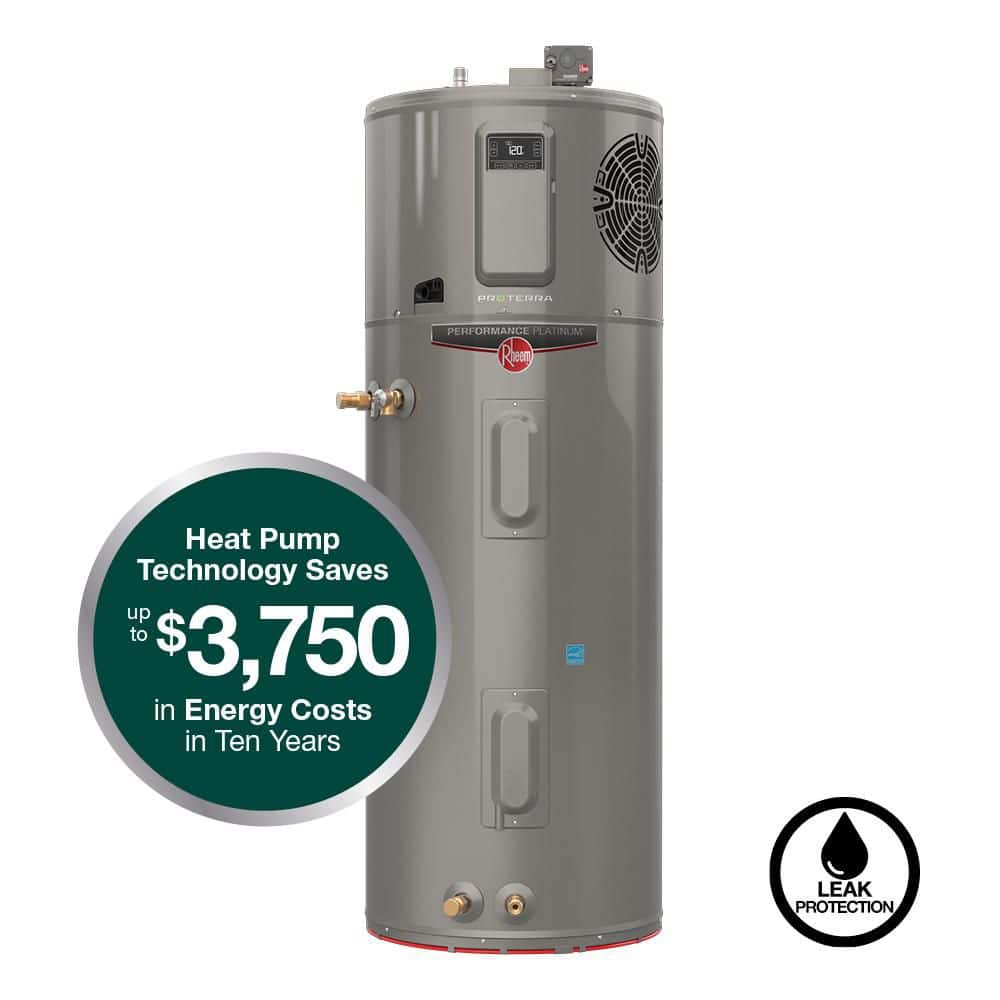
See current price and details for Rheem ProTerra 50-Gallon Hybrid Electric Water Heater.
TL;DR — Quick Picks
- Best Overall: Rheem ProTerra Hybrid — most efficient, best long-term value
- Best Tankless: Stiebel Eltron 36kW — endless hot water, space-saving design
- Best Budget Tank: A.O. Smith 40-Gal — read our detailed review, reliable, low upfront cost
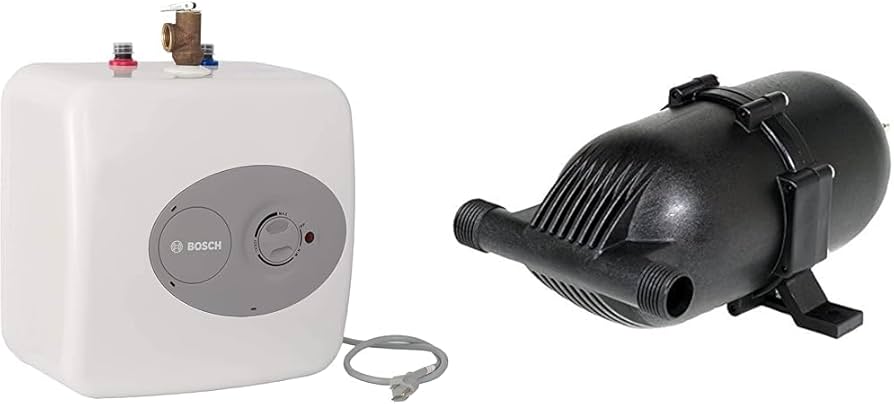
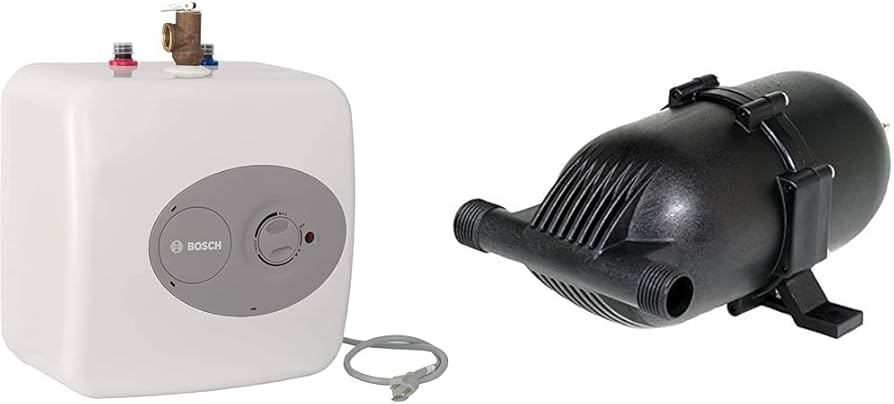
- Best Compact: Bosch Tronic 3000T — ideal for sinks, small apartments
- Best Smart: Rheem ProTerra Smart — app control, demand-response savings
🏆 Best Overall — Heat Pump Hybrid Electric Water Heater (50-Gal)
The heat pump hybrid is our top pick for most homeowners: it uses up to 70% less electricity than a conventional tank, qualifies for federal energy tax credits (similar to those for heat pumps) (similar to high-efficiency HVAC upgrades), and delivers ample hot water for families of four or more. The higher upfront cost pays back in roughly two to three years through utility savings.
Shop heat pump hybrid water heaters at your preferred retailer — look for ENERGY STAR certification (like the Bradford White AeroTherm 50-Gallon Hybrid) and a UEF of 3.5 or higher to qualify for federal tax credits.1. Heat Pump Hybrid Water Heater (50-Gallon)
Heat pump hybrid water heaters work by pulling warmth from the surrounding air and transferring it to the water — much like a refrigerator in reverse (similar to how a mini-split heat pump manages indoor temperature). Because they move heat rather than generate it, they achieve an Energy Factor (UEF) of 3.5 or higher, meaning they produce three-and-a-half units of heat energy for every one unit of electrical energy consumed. For a typical household, that translates to roughly $300–$500 in annual savings compared to a standard resistance tank.

The Rheem ProTerra 50-Gallon Hybrid Electric Water Heater makes this the sweet spot for households of three to five people.
Related parts & accessories
Most models include multiple operating modes — Heat Pump Only, Hybrid (automatic), High Demand, and Electric Resistance Only — giving you granular control depending on season, occupancy, or budget priority. The heat pump mode is quietest and most efficient; the high-demand mode brings in the electric resistance elements during periods of unusually high use.
Installation does require a dedicated 240V/30A circuit and a space of at least 1,000 cubic feet of ambient air volume so the unit has enough heat to extract. Garages, basements, and utility rooms with good air circulation are ideal. If you're optimizing your basement utility space (see our guide to the best submersible utility pumps), you may also want to ensure your sump pump system is up to date, perhaps by adding a battery backup for storm protection and consider using a high-capacity dehumidifier like the GE ADEL50LZ to prevent moisture buildup near your heater (explore our GE ADEL50LZ dehumidifier guide for damp rooms). The unit also dehumidifies and cools the surrounding space slightly — a genuine bonus in humid climates, though potentially a drawback in cold climates where it may work against your heating system. A Vacation or Away mode prevents standby heat loss when you travel.
Qualifying models are eligible for a 30% federal tax credit (up to $2,000) under the Inflation Reduction Act through 2032, and many utility companies offer additional rebates of $200–$800. Factor those incentives in when comparing sticker prices, and the hybrid almost always wins on total cost of ownership. First-hour recovery ratings typically land around 63–67 gallons, comfortably covering back-to-back morning showers.
Capacity
50 gallons
UEF Rating
3.5 – 4.0+
Voltage Required
240V / 30A
First-Hour Rating
63 – 70 gallons
Est. Annual Energy Cost
~$140 – $160
Warranty (typical)
10-year tank, 2-year parts
Pros
- Lowest long-term operating cost of any electric water heater type
- Eligible for significant federal tax credits and utility rebates
- Multiple operating modes for flexibility
- Mild dehumidification benefit in humid climates
- 10-year tank warranty on most models
- Smart-capable versions available with app monitoring
Cons
- Higher upfront purchase price ($900–$1,500)
- Requires large ambient air space (≥1,000 sq ft recommended)
- Slightly louder operation than standard tanks (~50 dB)
- May cool surrounding space in winter — less ideal in cold garages
- Taller unit height can complicate some retrofit installations
2. Whole-Home Tankless Electric Water Heater
Tankless electric water heaters, sometimes called on-demand or instantaneous heaters, heat water directly as it flows through the unit — meaning there is no storage tank and no standby heat loss. A whole-home unit sized appropriately for your climate and household can supply a continuous stream of hot water for as long as needed, making it the obvious choice if you have teenagers with marathon shower habits or regularly run multiple hot-water fixtures simultaneously.
Sizing is the most critical factor. Electric tankless units are rated in kilowatts (typically 18 kW to 36 kW for whole-home use), and the required size depends on your incoming groundwater temperature and the number of simultaneous outlets. In warm-climate states like Florida, a well-sized 18 kW unit may suffice; in northern states where groundwater can dip below 40°F in winter, you may need 27 kW or more to hit 110°F output at adequate flow. Under-sizing is the leading cause of customer dissatisfaction with tankless electric — always consult the manufacturer's flow-temperature charts.
The electrical infrastructure requirements are significant. Most whole-home tankless units require two or three 240V/40A–60A double-pole breakers (ensure you use a quality certified breaker for safety) and substantial gauge wiring. If your panel is already near capacity, an upgrade may be necessary. That said, the unit itself mounts on the wall in a space roughly the size of a carry-on suitcase, freeing up valuable floor space in a utility room, closet, or crawlspace — a legitimate lifestyle benefit in smaller homes and condominiums.
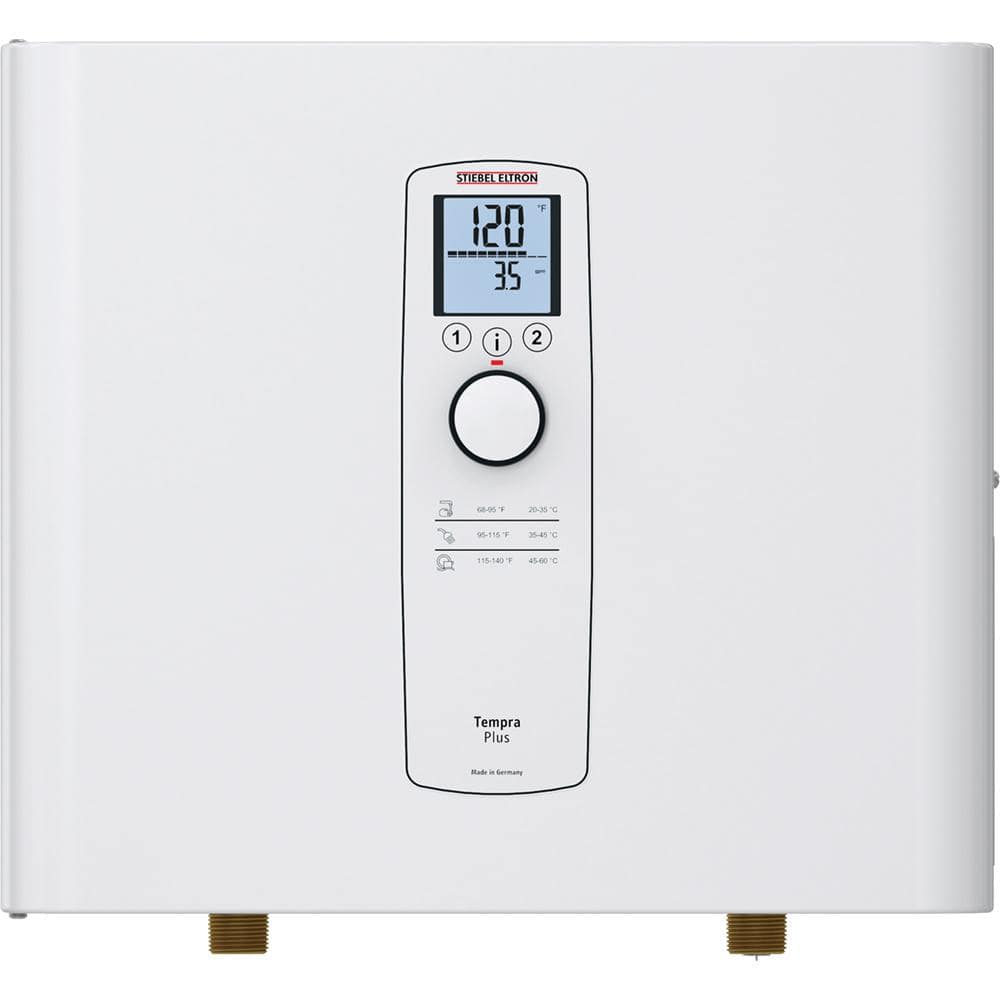
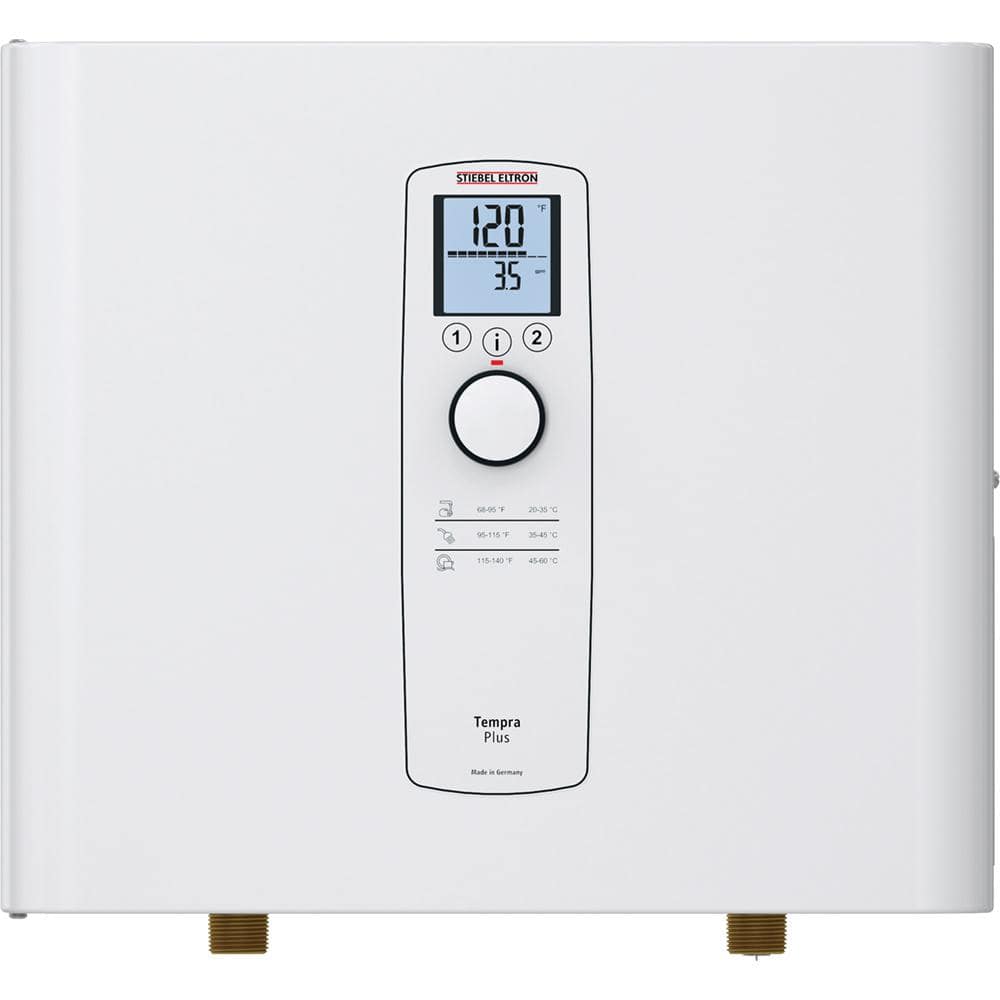
Energy savings compared to a conventional tank are modest in most households — roughly 8–14% — because a traditional tank's standby losses are not as severe as often advertised. For those prioritizing performance, the Stiebel Eltron Whole-House Electric Tankless Water Heater 36kW is a market leader.
The real value of whole-home tankless lies in unlimited hot water, compact installation footprint, and longevity. If you are upgrading your plumbing, consider pairing your new heater with a whole-house filtration system (such as the Culligan WH-HD200-C or GE GXWH40L whole-house filter) to protect your heating elements from sediment. Filtration is highly recommended for tankless systems to ensure longevity; using a high-performance water hammer arrestor or filter can further protect your plumbing infrastructure. Tankless units typically last 20+ years versus 10–15 for tanks. Look for self-modulating units that adjust wattage in real time to match actual demand — they reduce energy waste at low flow rates and prevent scalding spikes.
Power Range
18 kW – 36 kW
Flow Rate (max)
3.5 – 7.5 GPM
Voltage Required
240V / 40–60A (per element)
UEF Rating
0.96 – 0.99
Est. Annual Energy Cost
~$400 – $600
Warranty (typical)
15-year heating element, 5-year parts
Pros
- Truly unlimited hot water — no running out mid-shower
- Wall-mounted, compact footprint saves floor space
- Lifespan of 20+ years with proper maintenance
- No standby heat loss
- Self-modulating models prevent energy waste at low flow
Cons
- High electrical infrastructure requirements — may need panel upgrade
- Performance drops in very cold climates without careful sizing
- Energy savings vs. a modern tank are smaller than often advertised
- Higher installation cost when electrical work is factored in
- No hot water if power goes out (same as all electric types)
3. Standard 40-Gallon Electric Tank Water Heater
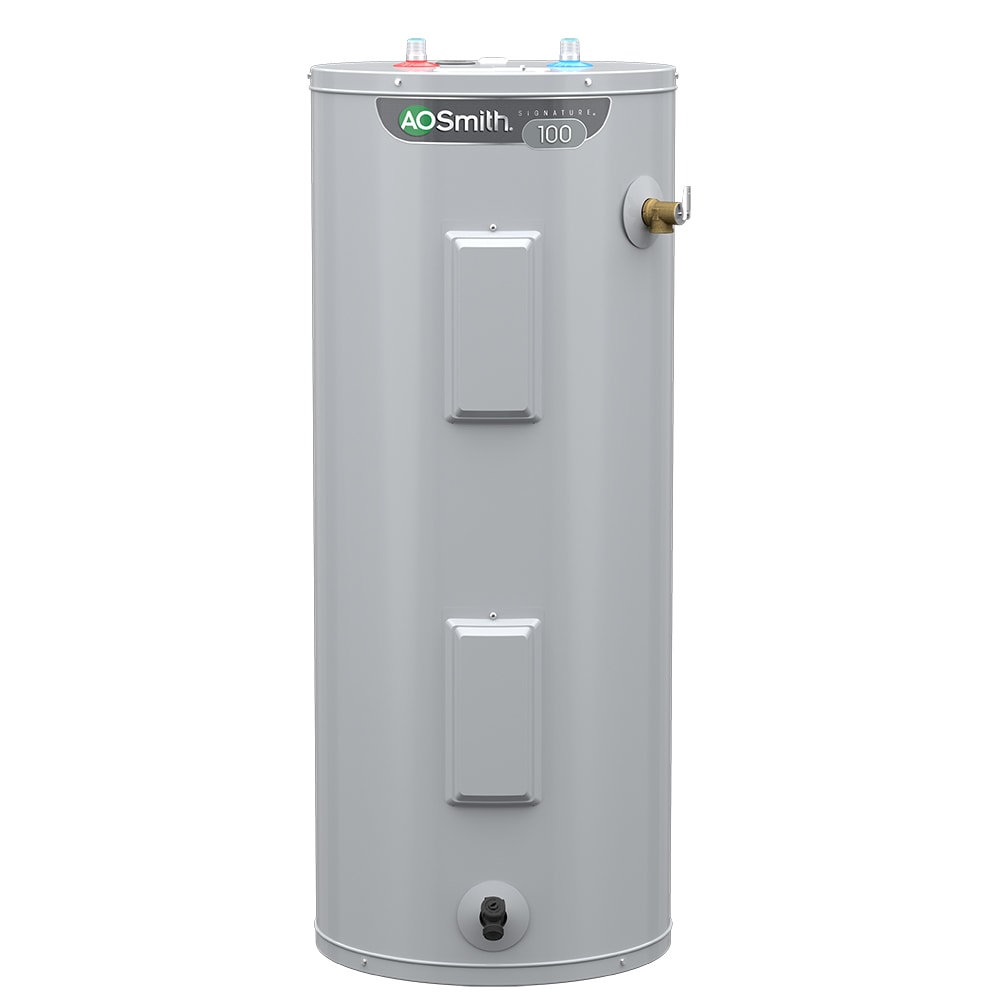
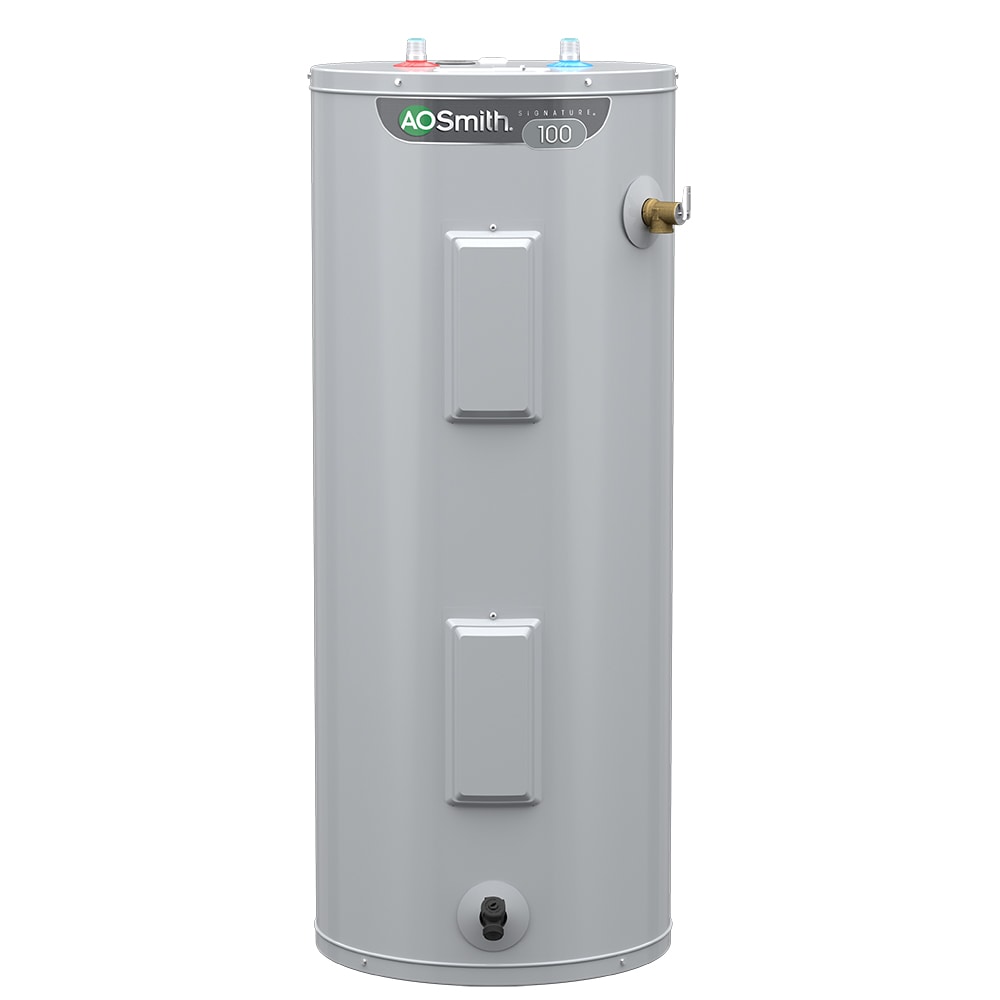
The conventional electric resistance tank, such as the A.O. Smith 40-Gallon Tall Electric Water Heater (see our detailed review), or other A.O. Smith electric tanks (see our detailed A.O. Smith EES-40 review), is the most common water heater type in American homes, and for good reason: it is simple, reliable, widely available, and inexpensive to purchase and install. For those seeking commercial-grade reliability, the Rheem Professional Classic Plus Electric Water Heater offers a robust alternative to residential tanks. Two resistance heating elements (upper and lower) heat water to a set thermostat temperature — typically 120°F by default — and maintain it continuously. A 40-gallon tank is the traditional choice for households of two to four people, with a first-hour delivery rating of roughly 55–65 gallons on most models.
Installation is straightforward for any licensed plumber or electrician and requires only a standard 240V/30A circuit — the same wiring that powers most existing tank installations. Replacement of an aging tank with a same-size standard electric unit is often a same-day job, making it the fastest and least disruptive option when a heater fails unexpectedly. The wide availability of replacement parts and the simplicity of the design mean service calls are infrequent and inexpensive.
The primary drawback is operating cost. A standard electric tank runs at a UEF of around 0.92–0.95, which is respectable for resistance heating but far behind a