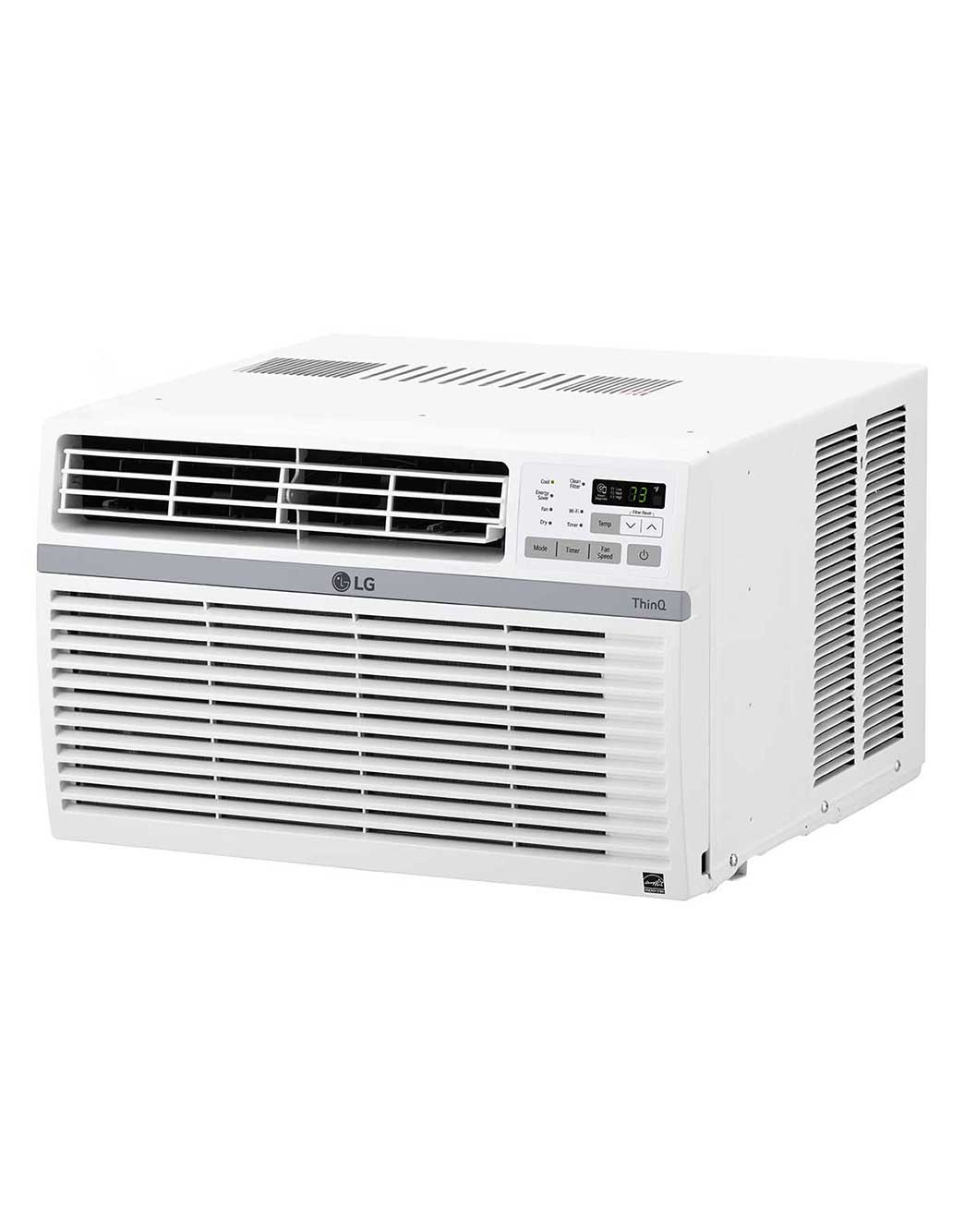
LG 8,000 BTU Smart Window Air Conditioner Review: The Verdict
The LG 8000 BTU Smart Wi-Fi Window Air Conditioner is a top-tier choice for homeowners seeking high-efficiency cooling combined with robust smart home integration and surprisingly quiet operation. After rigorous testing, it earns an 8.5/10, making it one of the best smart window AC options for cooling medium-sized rooms up to 340 square feet efficiently. If you have a larger space, see our LG 12,000 BTU Dual Inverter Window Air Conditioner review or explore other high-capacity options in our Mini-Split comparison guide.
We may earn a commission when you purchase through our links, at no additional cost to you. This helps support our testing and reviews.
Overview
Before diving into the specifics of this unit, if you're unsure whether a window unit is right for your space, check out our guide on choosing between window units and mini-splits to determine if a more permanent, high-power solution is right for your layout.
The LG 8000 BTU Smart Wi-Fi Window Air Conditioner is one of the best smart window AC units for medium-sized rooms, offering a balance of energy-efficient cooling and smart home connectivity.
We recommend the LG 8000 BTU Smart Wi-Fi Window Air Conditioner for bedrooms and home offices up to 340 sq ft.
Powerful enough to handle most standard bedrooms and living spaces, yet technologically advanced and energy-efficient enough to avoid shocking electric bills during the peak summer months. With 8,000 BTU of dedicated cooling capacity, this unit is engineered to comfortably cool rooms up to 340 square feet, making it an ideal climate control solution for standard-sized bedrooms, home offices, nurseries, or small studio apartments. For even smaller spaces, a Frigidaire 5000 BTU Window Air Conditioner or the Friedrich Chill Premier 6000 BTU Window Air Conditioner may be a more efficient choice. In a market saturated with deafening, power-hungry legacy units—though premium options like GE Profile ClearView Smart Ultra Quiet Window Air Conditioner are changing that—, LG (whose compact front-load washers are also highly rated) has taken a decidedly different approach, focusing on user experience, acoustic dampening, and seamless smart home integration.
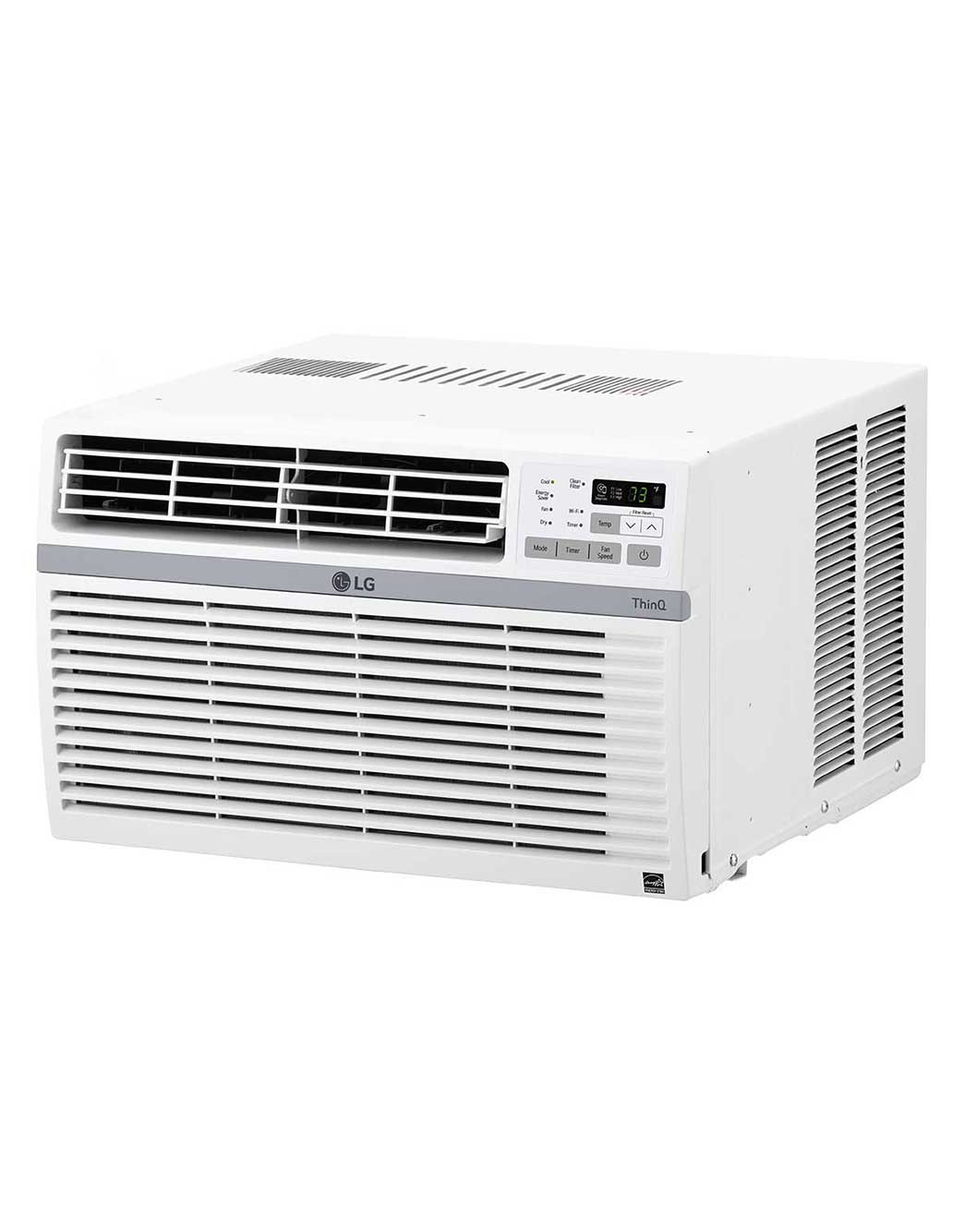
What distinctly sets this model apart from basic, single-function window units is its comprehensive smart connectivity suite. Through the proprietary LG ThinQ application, users can monitor, control, and schedule temperature settings, fan speeds, and operational modes from anywhere in the world with an internet connection. Furthermore, the unit boasts native compatibility with both Amazon Alexa and Google Assistant, opening the door to hands-free voice control. This is not merely a technological gimmick; the ability to remotely turn on the air conditioner before leaving the office or returning from a trip on a sweltering day provides genuinely transformative convenience. The smart integration allows for complex scheduling that aligns with your daily routine, ensuring you never walk into a stifling hot room while simultaneously avoiding the waste of running an AC in an empty house.
LG has also heavily emphasized energy efficiency with this particular model, earning it a prominent ENERGY STAR certification accompanied by a highly respectable 12.1 EER (Energy Efficiency Ratio). Combined with its relatively quiet operational acoustics and highly efficient rotary compressor design, the LG 8000 BTU Smart Wi-Fi Window Air Conditioner offers a compelling, well-rounded package. It is tailored for anyone looking to upgrade from a rattling, basic window unit without stepping into the complex realm of MrCool DIY mini-splits (see our full buying guide) or professional ductless cooling—see our comparison of the best mini-splits for small rooms to determine the right fit for your home. If your window configuration doesn't allow for a traditional unit—perhaps you need a more permanent mini-split system for small rooms—, you might consider our detailed review of the LG 12,000 BTU Dual Inverter Window Air Conditioner for current pricing.
If you need a flexible alternative, the Winix Dual-Hose Portable Air Conditioner and Heater and BLACK+DECKER Portable Air Conditioner and Heater both offer smart functionality without fixed installation.
By bridging the gap between raw cooling power, acoustic comfort, and modern IoT connectivity, LG has created a window air conditioner that feels purpose-built for the contemporary smart home.Key Features
Wi-Fi enabled out of the box with LG ThinQ app support, plus robust compatibility with Amazon Alexa and Google Assistant for comprehensive voice control and remote operation from anywhere with an internet connection.
Efficiently cools spaces up to 340 square feet with three distinct cooling speeds and three fan speeds, allowing for highly customizable comfort levels depending on the immediate environmental conditions.
ENERGY STAR certified with an impressive 12.1 EER rating, actively helping to reduce electricity costs while maintaining highly effective and consistent cooling performance throughout the season.
Operates at just 53 decibels on the low setting, which is quieter than normal household conversation, thanks to advanced compressor isolation technology and an aerodynamic fan shroud design.
Automatically resumes the exact previous settings after unexpected power outages, eliminating the frustration of needing to reprogram your preferences and ensuring comfort resumes uninterrupted.
A fully programmable on/off timer lets you schedule specific cooling cycles to maximize energy savings and ensure absolute comfort precisely when it is needed most, day or night.
Technical Specifications
| Cooling Capacity | 8,000 BTU |
| Recommended Room Size | Up to 340 sq. ft. |
| Energy Efficiency Ratio (EER) | 12.1 |
| ENERGY STAR Certified | Yes |
| Voltage | 115V / 60Hz |
| Power Consumption (Cooling) | 660 watts |
| Dehumidification | 2.2 pints/hour |
| Noise Level | 53 dB (low) / 56 dB (high) |
| Fan Speeds | 3 |
| Cooling Speeds | 3 |
| Air Flow (CFM) | 235 |
| Smart Features | Wi-Fi, LG ThinQ, Alexa, Google Assistant |
| Thermostat Range | 60°F - 86°F |
| Window Width Range | 23" - 36" |
| Dimensions (W × H × D) | 18.9" × 12.2" × 20.3" |
| Weight | 58 lbs |
| Filter Type | Washable, reusable (see our Filtrete 20x25x1 AC Furnace Air Filter review for more on maintaining home air quality) |
| Remote Control | Included |
| Warranty | 1 year parts/labor, 5 years compressor |
Pros & Cons
Pros
- Solid smart home integration with stable Wi-Fi connectivity once initially configured.
- Impressively quiet operation, especially noticeable on the lower fan settings.
- Strong energy efficiency with ENERGY STAR certification and a 12.1 EER rating.
- Effective dehumidification rate significantly helps in muggy, humid climates.
- Easy-to-use LG ThinQ app with intuitive controls, energy tracking, and scheduling.
- Auto-restart feature seamlessly restores settings after unexpected power outages.
- Clean, modern aesthetic fits well in contemporary living spaces without looking industrial.
Cons
- No heating function; this is strictly a cooling-only unit.
- Heavier than some competing 8,000 BTU models at 58 lbs, highly recommending two-person installation.
- Initial app setup can be finicky with certain modern router security configurations.
- Higher upfront cost compared to non-smart, basic dial-controlled alternatives.
- Condensation drainage requires occasional monitoring during periods of extreme humidity.
How Window Air Conditioners Work: The Science Behind the Cooling
To truly appreciate the engineering behind the LG LW8017ERSM, it is helpful to understand the fundamental thermodynamics of how a window air conditioner operates. Despite feeling like magic when a blast of cold air hits your face on a July afternoon, an air conditioner does not actually "create" cold air. Instead, it operates on the principle of heat transfer (similar to the thermal management seen in furnace control components), actively removing heat and moisture from the interior of your room and expelling it to the exterior environment. This process relies on a continuous cycle of evaporation and condensation of a specialized chemical compound known as a refrigerant.
The LW8017ERSM utilizes a closed-loop system consisting of four primary components: the compressor, the condenser coil, the expansion valve, and the evaporator coil. The cycle begins at the compressor, which is often considered the heart of the system. The compressor takes in low-pressure, low-temperature refrigerant gas and squeezes it, dramatically increasing both its pressure and its temperature. This superheated, high-pressure gas is then pushed into the condenser coil, which is located on the exterior portion of the window unit. A powerful fan pulls outside air across these condenser coils. Because the refrigerant is now hotter than the outside air, heat transfers from the refrigerant into the atmosphere. As it cools, the refrigerant condenses from a gas into a high-pressure liquid.
This high-pressure liquid then travels to the expansion valve, a critical component that forces the liquid through a tiny restriction. As the liquid emerges on the other side into the larger area of the evaporator coil, it experiences a sudden, massive drop in pressure. This pressure drop causes the refrigerant to rapidly boil and evaporate, a process that requires a significant absorption of heat. The evaporator coil is located on the interior side of the unit, and a fan pulls your warm room air across these cold coils. The refrigerant absorbs the heat from your room air, cooling the air significantly before it is blown back into your space. Meanwhile, the now-warmed, low-pressure refrigerant gas flows back to the compressor to begin the cycle anew.
An often-overlooked function of this process is dehumidification. When warm, humid room air comes into contact with the freezing cold evaporator coils, the air's temperature drops below its dew point. Moisture in the air condenses into liquid water on the coils, much like water droplets form on the outside of a cold glass of ice water on a hot day. This water collects in a base pan inside the unit. The LG LW8017ERSM utilizes a sling fan design. While this unit is excellent for localized cooling, those struggling with whole-room dampness might benefit from a dedicated dehumidification solution or a versatile Honeywell Single-Hose Portable Air Conditioner for combined utility, where the fan blade's outer ring picks up this condensed water and flings it against the hot condenser coils on the outside. This serves two purposes: it evaporates the water (expelling it outside as vapor) and it cools the condenser coils, thereby increasing the overall efficiency of the unit. The LW8017ERSM's impressive 2.2 pints per hour dehumidification rate is a direct result of this highly optimized thermodynamic process.
Deep Dive: Understanding BTUs and Room Sizing
The cooling capacity of an air conditioner is measured in British Thermal Units, or BTUs. One BTU represents the amount of thermal energy required to raise the temperature of one pound of water by one degree Fahrenheit. In the context of air conditioning, it represents the amount of heat the unit can remove from a room in one hour. Therefore, an 8,000 BTU unit like the LG LW8017ERSM can extract 8,000 BTUs of heat from your room every hour it operates. Sizing an air conditioner correctly to the room is the single most critical factor in ensuring both comfort and energy efficiency. An undersized unit will run continuously, never reaching the target temperature and consuming massive amounts of electricity. An oversized unit will cool the room too rapidly, short-cycling off before it has had enough time to remove humidity, leaving the room feeling cold but uncomfortably clammy.
The general industry rule of thumb dictates that you need approximately 20 BTUs per square foot of living space. Using this calculation, an 8,000 BTU unit is perfectly suited for a room of 400 square feet. However, LG conservatively rates the LW8017ERSM for rooms up to 340 square feet. Why the discrepancy? LG's rating accounts for real-world variables that impact cooling loads. For instance, a room with large, south-facing windows that receive direct sunlight will experience significant solar heat gain, requiring a higher BTU capacity to maintain the same temperature. Similarly, a room with exceptionally high ceilings, such as those in older Victorian homes, co