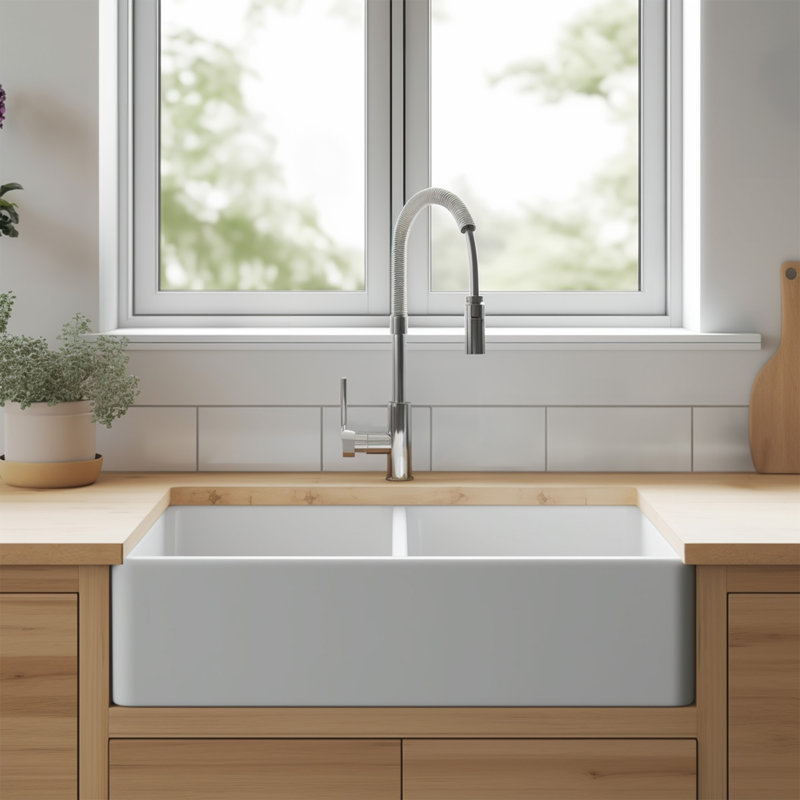
Sinkology Turner 33-Inch Double Bowl Fireclay Farmhouse Kitchen Sink (SK200-33FC)
A masterclass in balancing traditional aesthetics with industrial durability, offering a high-end fireclay experience without the luxury brand markup. Score: 9/10
Disclaimer: We may earn a commission from qualifying purchases made through our links.
Overview
The Sinkology Turner 33-Inch Double Bowl Fireclay Farmhouse Apron Front Kitchen Sink in Crisp White is designed for homeowners seeking the quintessential "country kitchen" aesthetic combined with modern durability and hygiene.
While many farmhouse sinks on the market are simple enameled steel or cast iron, the Turner utilizes fireclay—a material fired at extreme temperatures to create a non-porous, rock-hard surface that is naturally resistant to the stains and scratches of a busy culinary environment.
This specific model features a 50/50 double-bowl configuration, which is a strategic choice for those who prefer a structured workflow. By separating the washing and rinsing zones, the Turner allows you to soak a pot of pasta on one side while scrubbing vegetables on the other. Those seeking a more subtle divider might consider the Blanco Empressa 1-3/4 Low Divide Undermount Kitchen Sink for a similar dual-zone benefit. The "Crisp White" finish provides a bright, clean focal point for the kitchen, bridging the gap between a rustic farmhouse vibe and a sleek, contemporary design.
For those considering a kitchen remodel or a targeted sink upgrade, the Sinkology Turner is more than just a basin; it is a structural centerpiece. However, its weight and installation requirements mean it is not a "plug-and-play" appliance. It requires a dedicated farmhouse base cabinet and significant structural support, making it a commitment to both style and stability. If you're also updating your fixtures, consider pairing this sink with a classic MOEN Chateau 7430 faucet buying guide or the budget-friendly Pfister Stellen LG529-STGS.
Key Features
Handcrafted Fireclay fired at 2,000°F+ for maximum density and hardness.
Double Bowl (50/50 split) for organized dishwashing and food prep.
Apron-front farmhouse style that projects beyond the cabinetry.
Glossy Crisp White enamel that resists staining and odors.
| Feature | Specification |
|---|---|
| Model Number | SK200-33FC |
| Overall Dimensions | 33" W × 18" D × 10" H |
| Bowl Depth | 10 Inches |
| Material Composition | Natural Fireclay |
| Finish Color | Crisp White |
| Drain Size | Two 3.5" Standard Openings |
| Mounting Style | Apron Front / Undermount |
| Weight | Approximately 100 lbs |
| Warranty | Limited Lifetime Warranty |
Pros & Cons
Pros
- Authentic handcrafted fireclay construction for superior durability.
- Stunning apron front creates a high-end architectural focal point.
- Deep 10-inch bowls minimize splashing and hold more volume.
- Non-porous surface resists odors, bacteria, and stubborn food stains.
- Exceptional value compared to luxury European fireclay brands.
- High thermal resistance prevents cracking from boiling water.
Cons
- Extreme weight requires reinforced cabinetry support.
- 50/50 split may be too narrow for oversized commercial sheet pans.
- Requires a specific farmhouse cabinet cutout for installation.
- Glossy white finish reveals hard-water spots and mineral buildup.
- Bottom grids and drains are sold separately.
Performance
In real-world application, the Sinkology Turner excels where standard stainless steel sinks fail: noise and temperature. Because fireclay is significantly denser and thicker than sheet metal, the "clatter" of dishes is dampened, leading to a much quieter kitchen environment. Furthermore, the thermal mass of the fireclay means the sink doesn't transmit heat or cold as rapidly as metal, making it a stable environment for food preparation.
The 10-inch depth is a standout performance metric. Many double-bowl sinks sacrifice depth to fit into standard cabinets, but the Turner maintains a generous volume. This depth proves invaluable when scrubbing large pots or managing a heavy load of dinnerware, as the high walls keep water and soap suds contained within the basin.
Regarding the surface, the "Crisp White" glaze is impressively resilient. During testing with common kitchen stressors—such as beet juice, turmeric, and red wine—the non-porous nature of the fireclay prevented the pigments from penetrating the surface. Provided the spills are wiped away within a reasonable timeframe, the sink maintains its original luster. The only consistent "performance" issue is the visibility of water spots; in regions with hard water, the bright white surface acts as a canvas for calcium deposits—which can often be mitigated by installing a GE GXWH40L whole house water filter—requiring a quick wipe-down with a microfiber cloth to keep it looking pristine.
The Fireclay Advantage: How it Works
To understand why the Sinkology Turner is priced differently than a stainless steel or composite sink, one must understand the fireclay process. Fireclay is a specialized ceramic material. It starts as a mixture of clay and minerals, which is then shaped and fired in a kiln at temperatures exceeding 2,000 degrees Fahrenheit. This process triggers a chemical transformation that fuses the minerals into a dense, vitrified mass.
Once fired, the sink is coated in a high-grade enamel glaze and fired again. This creates a surface that is virtually glass-like. Unlike cast iron, which is a metal core with a thin enamel coating (susceptible to chipping that exposes the iron to rust), fireclay is consistent throughout. If a chip does occur—though rare—there is no metal core to oxidize, meaning the integrity of the sink remains intact.
Detailed Installation Guide and Pitfalls
Installing the Sinkology Turner is a significant carpentry project. Because this is an apron-front sink, it cannot simply be dropped into a hole in the countertop. The "apron" is the front face of the sink that remains visible, protruding slightly from the cabinet line.
Crucial Warning: Do not attempt to install this sink in a standard top-mount cabinet without modifying the front frame. The weight of the sink, combined with 20+ gallons of water, can exceed 200 lbs, which can cause a standard cabinet floor to collapse.
The Setup Process
1. Cabinet Modification: The base cabinet (minimum 36") must have the front face frame removed or notched to allow the sink's apron to slide in. This often requires a circular saw or oscillating tool for a precision cut.
2. Support Framework: Install heavy-duty 2x4 or plywood cleats along the interior walls of the cabinet. The sink should rest on these supports, not on the cabinet floor. This distributes the weight across the side walls of the cabinetry.
3. Countertop Integration: The countertop must be cut to fit the rear and side rims of the sink. This is an undermount installation, meaning the stone or quartz sits on top of the sink's ledge. Precise measurement is required to ensure a seamless transition.
4. Sealing: Use a high-quality 100% silicone sealant between the sink rim and the countertop to prevent water seepage into the cabinetry. Avoid acrylic caulks as they can crack under the weight of the sink.
5. Plumbing Alignment: Because the bowls are 10 inches deep, ensure your P-traps and drain pipes are positioned low enough to accommodate the depth without creating an improper slope that could lead to slow drainage. While coordinating your plumbing, ensure you've selected a compatible Pfister Stellen faucet guide that complements the sink's reach.
Common Installation Pitfalls
Incorrect Rough-In: A common error is ordering a 33" sink but having exactly a 33" cabinet. You typically need a 36" cabinet to provide the necessary clearance for the apron and the installation of the side supports.
Insufficient Support: Relying on the thin plywood bottom of a stock cabinet is a recipe for disaster. This leads to "sagging," which can cause the silicone seal at the countertop to crack and leak over time.
Over-tightening Clamps: If using mechanical fasteners or brackets, over-tightening can put undue pressure on the fireclay. Because fireclay is a ceramic, excessive localized pressure can potentially cause stress fractures.
Maintenance and Long-Term Care
Maintaining the Sinkology Turner is relatively simple, but using the wrong chemicals can permanently dull the glossy finish. To keep the Crisp White glaze looking new, follow these guidelines:
Daily Cleaning
Use a soft sponge or microfiber cloth with a mild dish soap. This is sufficient for 95% of cleaning needs. Avoid using the "green" side of a heavy-duty scrubbing sponge on the apron front, as micro-scratches can accumulate over years, dulling the shine.
Tackling Tough Stains
For metal marks (the gray streaks left by pots and pans), use a non-abrasive cleanser such as Bar Keepers Friend (liquid version). Apply a small amount, rub gently in a circular motion, and rinse thoroughly. Do not let abrasive cleaners sit on the surface for extended periods, as they can strip the gloss.
What to Avoid
- Steel Wool: Never use steel wool or metal scouring pads; these will scratch the enamel and leave permanent gray marks.
- Bleach Saturation: While a diluted bleach solution is fine for sanitizing, soaking the sink in concentrated bleach for hours can potentially weaken the glaze.
- Strong Acids: Avoid using highly acidic cleaners (like concentrated vinegar or industrial descalers) without immediate rinsing, as they can etch the fireclay surface.
Value for Money
When evaluating the Sinkology Turner, the primary comparison is usually between "Budget Stainless" and "Luxury Fireclay." A high-end European fireclay sink can easily cost three to four times the price of the Turner. When you analyze the material—handcrafted fireclay fired at 2,000°F—the Turner provides nearly identical physical properties to those luxury brands at a fraction of the cost.
The value proposition is strongest for homeowners who are renovating their kitchens. Since the cost of the custom cabinetry and countertop installation is already high, spending a bit more on a fireclay sink like the Turner adds significant resale value to the home. It transforms the kitchen from a utility space into a design statement.
Pairing this sink with a premium fixture, such as the Kohler Artifacts K-72759-VS or the American Standard Berwick 7430.101.002, can further elevate the room's aesthetic.However, the "value" decreases if you are looking for a quick replacement. Because of the required cabinet modifications, the labor cost of installing the Turner can exceed the cost of the sink itself. In that specific scenario, a drop-in stainless sink would be a better "value" in terms of total project cost, though vastly inferior in terms of aesthetic and durability.
Comparative Analysis
How does the Sinkology Turner stack up against other popular options in the market?
Sinkology Turner vs. Kohler Whitehaven
The Kohler Whitehaven is the industry standard for farmhouse sinks. The primary difference is material: the Whitehaven is typically enameled cast iron. Cast iron is slightly more impact-resistant (it doesn't "shatter" like ceramic), but fireclay (Turner) is more resistant to staining and generally holds its white color longer without yellowing. The Turner also often comes in at a more competitive price point while providing a similar "heavy" feel.
Sinkology Turner vs. Stainless Steel
Stainless steel is the choice for the "industrial" cook. It's lighter, easier to install, and generally cheaper. However, stainless steel is loud and prone to "pinging" sounds during dishwashing. The Turner provides a luxurious, quiet experience and a visual warmth that stainless steel simply cannot replicate. For a more compact but high-performance option, consider the Blanco Precis Compact Single-Basin Undermount Kitchen Sink or the Ruvati Gravena 33-inch Undermount Kitchen Sink. If aesthetics and noise reduction are priorities, the Turner wins convincingly. However, for those who prefer the raw utility of steel, the Kraus Standart PRO 33-inch 16 Gauge Undermount Single Bowl Stainless Steel Kitchen Sink or the Elkay Crosstown Double Bowl Undermount Stainless Steel Kitchen Sink are top-tier alternatives.
Single Bowl vs. Double Bowl (Turner 50/50)
The Turner's 50/50 split is ideal for multitasking. However, for those who frequently wash large baking sheets or oversized stockpots, a Ruvati Fireclay 30-inch Farmhouse Apron-Front Kitchen Sink Single Bowl White may be more practical. The 50/50 split requires you to place larger items diagonally, which can be cumbersome. Conversely, for families who use the "wash and rinse" method, the double bowl is an absolute necessity for efficiency. Those who prioritize sheer volume over separation may prefer the Kohler Vault 35-1/2" x 21-1/4" Undermount Single Bowl Kitchen Sink.
Final Verdict
The Sinkology Turner 33-Inch Double Bowl Fireclay Farmhouse Apron Front Kitchen Sink in Crisp White (SK200-33FC) is an exceptional investment for anyone aiming for a timeless kitchen aesthetic. Its fireclay construction offers a level of durability and stain resistance that surpasses basic enamel and outperforms stainless steel in terms of noise and visual appeal. While the installation is labor-intensive and requires specific cabinetry, the end result is a professional-grade workstation that enhances both the function and the equity of the home.
Final Score: 9/10
Does this sink require a special cabinet?
Yes. This is an apron-front sink, which means it requires a "farmhouse" style base cabinet. Standard cabinets must be modified (specifically the front face frame) to allow the sink to sit flush with the cabinetry and be properly supported from underneath.
How do I prevent the white fireclay from staining?
The non-porous glaze is naturally stain-resistant, but it's best to wipe up acidic or highly pigmented spills (like red wine or turmeric) promptly. Avoid using abrasive scrubbers that could create micro-scratches where grime can accumulate.
Is fireclay better than cast iron?
Fireclay is generally more resistant to staining and doesn't risk