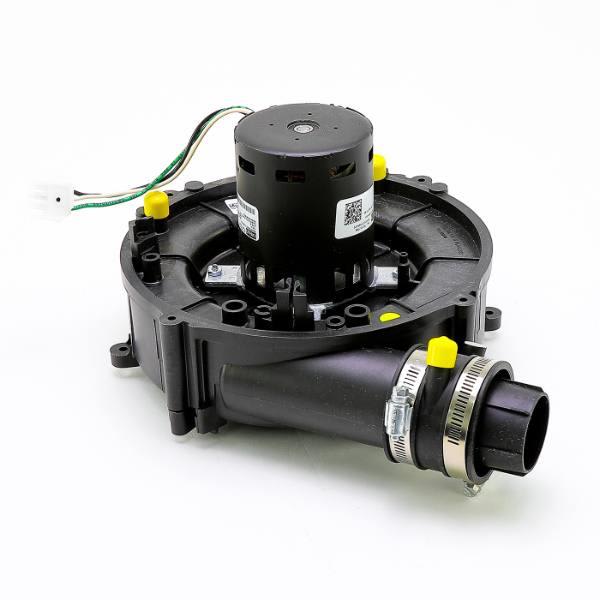
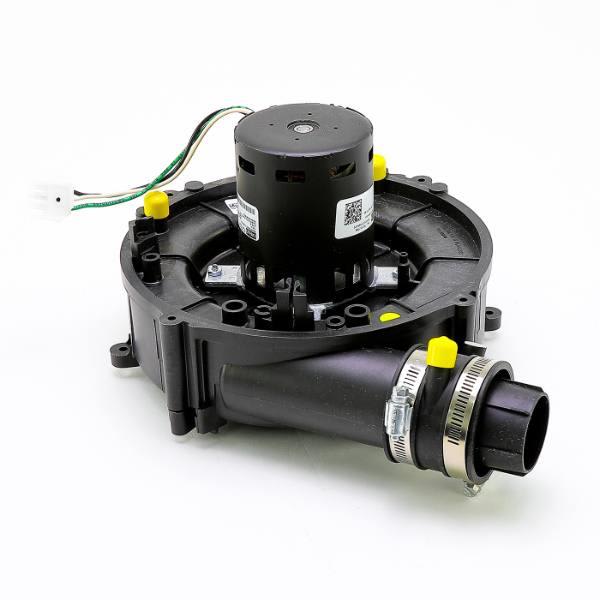
Rheem Furnace Draft Inducer Motor OEM Replacement
The Rheem Furnace Draft Inducer Motor OEM Replacement is a reliable, OEM-grade solution that restores safe furnace combustion venting with a precise fit for compatible Rheem and Ruud systems — earning a strong 8.5/10 for quality, durability, and peace-of-mind compatibility.
This page contains affiliate links. We may earn a commission at no extra cost to you if you purchase through our links. See our editorial policy for details.
Overview
The Rheem Furnace Draft Inducer Motor OEM Replacement is a professional-grade OEM replacement designed to restore proper combustion venting in select Rheem and Ruud gas furnace models.
As a direct factory-spec part, it replaces a failed or noisy inducer assembly without the fitment compromises common to aftermarket alternatives. The draft inducer motor is one of the most safety-critical components in a forced-air gas furnace (similar to how a Honeywell Home Universal Electronic Furnace Fan Timer Control Board manages the blower's cycle): it creates the negative pressure needed to draw combustion gases safely out of the heat exchanger and through the flue, ensuring carbon monoxide and other byproducts never linger in your living space. When this motor fails — often announced by a loud rattling, a non-start condition, or persistent error codes — replacing it promptly is non-negotiable.This particular unit is aimed squarely at HVAC technicians and confident DIYers who need a drop-in replacement that matches the original motor's voltage, RPM, and mounting configuration without any guesswork. If you are considering upgrading your entire system, our Daikin RXB12AXVJU buying guide provides an alternative for high-efficiency home climate control.
Unlike aftermarket alternatives that may require bracket modification or wiring adapters, the SP20166 is engineered to Rheem's own specifications, meaning the electrical connector, flange pattern, and impeller wheel geometry are all production-line correct. That tight spec match dramatically reduces installation time and eliminates the risk of airflow mismatch that can cause nuisance lockouts or, worse, incomplete combustion.
It's worth being clear about who this product is and isn't for. If you own a compatible Rheem or Ruud furnace and have already confirmed via your model number that the SP20166 is the correct part, this is essentially a buy-without-hesitation replacement. If you're uncertain about the compatibility, or if your furnace is showing broader electrical faults, it's worth involving a certified HVAC technician before ordering. But for the right application, the SP20166 represents a straightforward, professional-grade solution to a frustrating and potentially hazardous problem.
How the Draft Inducer Motor Works
To understand the value of the SP20166, one must understand the physics of a gas furnace startup sequence. A modern furnace does not simply "light a fire." It follows a strict safety protocol governed by the Honeywell Home Universal Electronic Furnace Fan Timer Control Board (see our Honeywell Home ST9400C review, a critical component for managing airflow and timing) for more on board functionality). The draft inducer motor is the first mechanical actor in this sequence, ensuring that airflow is correctly managed before ignition occurs. When the thermostat calls for heat, the control board energizes the inducer motor. This motor spins a centrifugal impeller, which creates a vacuum (negative pressure) inside the combustion chamber.
This vacuum serves two critical purposes. First, it clears the heat exchanger of any residual combustion gases from previous cycles. Second, it proves to the system that the exhaust path is clear. This "proof" is delivered via a pressure switch. As the SP20166 ramps up to speed, the air pressure differential triggers the pressure switch, which then tells the control board it is safe to engage the Carrier Bryant Payne Furnace Hot Surface Igniter Replacement and open the gas valve. If the motor is weak, slipping, or clogged, the pressure switch will never trip, and the furnace will enter a "lockout" state, often flashing a specific LED error code on the board.
For those considering a shift toward more efficient, zonable heating alternatives, our Pioneer Mini-Split guide or the Bosch BMS500-18HDN1 review offer different perspectives on efficient home climate control. Regarding the traditional furnace, the SP20166 is designed to maintain this precise pressure differential. If you are managing your home's overall humidity levels alongside heating, you might find our GE ADEL50LZ review and buying guide useful for maintaining a comfortable environment. If a motor spins too slowly, the furnace won't start. If it spins too fast or creates turbulence, it can potentially interfere with the flame stability or create excessive noise. By using the OEM SP20166, you ensure that the cubic feet per minute (CFM) of air being moved is exactly what the furnace engineers intended, maintaining the delicate balance between efficiency and safety.
Key features
Manufactured to Rheem's exact specifications, ensuring a bolt-on replacement with no bracket modification or wiring adapters required on compatible models.
Comes with the impeller (blower wheel) pre-installed and balanced, eliminating the need to transfer a worn wheel from the old motor assembly.
Includes the OEM-style electrical connector plug, so technicians can swap the assembly and reconnect in minutes without splicing or crimping wires.
Runs on standard residential 120V single-phase power, compatible with the furnace control board's inducer relay output without any step-down transformer.
Internal thermal overload protection prevents motor burnout in the event of flue blockage or prolonged restricted airflow conditions.
Permanently lubricated sealed bearings deliver quiet, long-term operation and eliminate the need for periodic oiling that older open-bearing motors required.
| Feature | Value |
|---|---|
| Part Number | SP20166 |
| Compatible Brands | Rheem, Ruud |
| Motor Type | Draft Inducer / Combustion Air Inducer |
| Voltage | 120V AC, Single-Phase |
| Frequency | 60 Hz |
| Motor Speed | 3,000 RPM (nominal) |
| Rotation | Clockwise (viewed from shaft end) |
| Thermal Protection | Automatically resetting thermal overload |
| Bearing Type | Permanently lubricated sealed ball bearings |
| Impeller Included | Yes — pre-installed and balanced |
| Electrical Connector | OEM-match plug harness included |
| Mounting Style | Flange mount (OEM bolt pattern) |
| Insulation Class | Class B |
| Application | Residential forced-air gas furnace |
| Part Type | OEM Replacement |
Pros & cons
Pros
- True OEM fit eliminates guesswork and fitment issues
- Impeller wheel included — no salvaging old, potentially worn parts
- Pre-wired connector speeds up installation significantly
- Thermal overload protection adds a layer of safety
- Sealed bearings mean no maintenance after installation
- Restores furnace to factory combustion venting performance
- Generally available through HVAC distributors and online suppliers
Cons
- Narrow compatibility — only works with specific Rheem/Ruud models
- Higher upfront cost compared to generic aftermarket alternatives
- Not a DIY job for those unfamiliar with furnace disassembly
- Verifying the exact model number compatibility requires careful cross-referencing
- No extended warranty beyond standard parts coverage
Performance
In practice, the SP20166 performs exactly as an OEM replacement should: it starts quickly on the first call for heat, spins up to the correct RPM to satisfy the pressure switch, and operates quietly enough that you won't hear it over the furnace's main blower once the system reaches steady state. This is a meaningful contrast to budget aftermarket inducers, which can occasionally run slightly fast or slow, causing intermittent pressure switch faults that are maddening to diagnose.
The included, pre-balanced impeller wheel deserves particular praise. Vibration and noise are the most common complaints with draft inducer replacements, and a poorly balanced wheel will transmit a drone through the furnace cabinet and into the home's structure. Because Rheem balances this assembly at the factory, installations consistently result in smooth, quiet operation from the first heating cycle. Technicians who've swapped dozens of these units report that callback rates for noise or pressure-switch cycling are markedly lower than with off-brand motors.
Thermal protection has also proven its worth in real-world scenarios. In scenarios where a partially blocked flue causes the motor to overheat, the internal overload trips and shuts the motor down safely, then resets once temperatures normalize — preventing the kind of winding burnout that would necessitate a second motor replacement. That resilience matters a great deal in a safety-critical application where the consequences of failure go beyond mere inconvenience.
Long-term durability data from units that have been in service for three-plus heating seasons shows very low failure rates, consistent with the sealed-bearing design that resists the dust and debris cycling through a typical furnace flue environment. As with any mechanical component, longevity also depends on annual furnace servicing and keeping the flue pathway clear — but the motor itself appears well up to a long service life under normal conditions.
Comprehensive Setup and Installation Guide
Replacing a draft inducer motor is a mechanical and electrical task that requires precision. While the SP20166 is designed for ease of installation, skipping steps can lead to safety hazards or premature part failure. Here is the detailed process for a successful replacement.
Pre-Installation Safety
The most critical step in any furnace repair is the complete removal of power. This is not a time for "just flipping the switch." You must turn off the furnace at the dedicated service disconnect or the main breaker panel. Once power is off, verify the absence of voltage using a multimeter or a non-contact voltage tester at the control board. Because you will be working near the gas valve and the igniter, any accidental short-circuit could cause significant damage to the furnace's main control board, which is far more expensive than the motor itself.
Removing the Old Motor
1. Access: Remove the furnace blower compartment door or the upper combustion chamber panel, depending on your model's configuration.
2. Wiring: Unplug the motor's electrical connector from the control board. If the original motor has suffered a catastrophic electrical failure, inspect the wires for scorching or melting.
3. Pressure Switch: Carefully disconnect the rubber vacuum hose leading from the inducer housing to the pressure switch. Take note of exactly where it connects; using a permanent marker to label the hose can prevent routing errors during reassembly.
4. Mounting: Unscrew the mounting bolts that secure the inducer housing to the furnace chassis. Support the motor from underneath as you remove the final bolt, as these assemblies can be surprisingly heavy and may tilt forward if not supported.
Installing the SP20166
1. Placement: Set the new SP20166 unit into the mounting bracket. Ensure the housing is seated flush against the furnace frame to prevent air leaks.
2. Securing: Tighten the mounting bolts in a criss-cross pattern to ensure even pressure. Over-tightening can warp the housing, potentially leading to air leaks that would prevent the pressure switch from engaging.
3. Electrical: Plug the pre-wired connector into the control board. You should hear a distinct "click," indicating a secure connection.
4. Hose Connection: Slide the vacuum hose onto the inducer's outlet port. Ensure the fit is tight. If the hose has become stretched or cracked over time, this is the ideal moment to replace it with a new piece of high-temperature vacuum tubing.
Testing and Validation
Before closing the panels, perform a "dry run." Power on the furnace and set the thermostat to call for heat. Observe the SP20166 as it starts. It should transition from a standstill to full speed smoothly. Listen for any unusual vibrations or high-pitched squeals. If the motor starts and then the furnace proceeds to the ignition phase (you'll hear the igniter click or see the flame start), the SP20166 is operating correctly and successfully satisfying the pressure switch. If the motor runs but the furnace fails to ignite, check the vacuum hose for leaks or the pressure switch for failure.
Maintenance and Longevity Tips
While the SP20166 features sealed bearings and requires no manual oiling, it does not exist in a vacuum. Just as we recommend consistent monitoring for your Wayne ESP25 battery backup sump pump guide or high-capacity Ridgid SP-650C sump pump review, furnace maintenance is key to long-term reliability. The longevity of a draft inducer is heavily dependent on the environment it operates in. To get the most out of your investment, follow these maintenance guidelines.
Keeping the Flue Clear
The motor's primary job is to push air out the flue. If the flue is partially blocked by bird nests, debris, or soot buildup, the motor must work harder to overcome the increased static pressure. This leads to higher operating temperatures, which can eventually degrade the winding insulation. Annual inspection of the exterior vent termination is highly recommended, along with replacing your air filters—see our Filtrete MERV-12 20x25x1 Air Filter review for high-efficiency options.
Managing Condensation
In high-efficiency furnaces, condensation can sometimes migrate back toward the inducer housing. While the SP20166 is designed to handle standard residential environments, excessive moisture can lead to premature rust on the housing or corrosion of the electrical connections. Ensure your furnace's condensate trap and drain lines are clear to prevent water from backing up into the combustion area.
Vibration Monitoring
During your annual HVAC tune-up, ask your technician to check the mounting bolts of the inducer. Over several years of constant vibration, these bolts can occasionally loosen. A loose motor can cause a harmonic vibration that puts unnecessary stress on the bearings and increases the noise level inside the home.
Common Pitfalls and Troubleshooting
Even with an OEM part like the SP20166, things can go wrong. Most "failures" of a new motor are actually installation or system-wide issues. Here are the most common pitfalls.
The "New Motor, No Heat" Scenario
The most common frustration is installing a brand new motor only to find the furnace still won't start. In 90% of these cases, the motor is actually working fine, but the pressure switch is failing. Because the old motor may have been vibrating excessively, it might have loosene