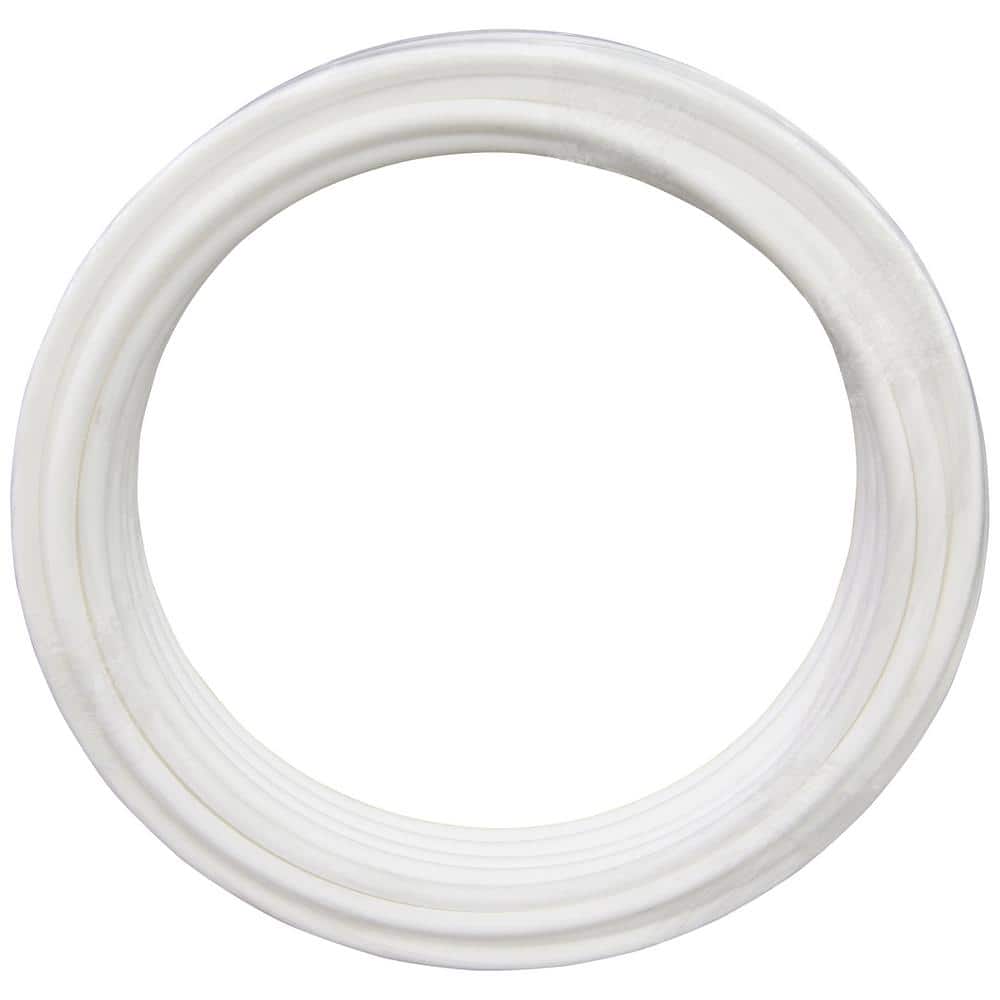
Whether you're replumbing a bathroom (perhaps updating to a modern bath faucet), tackling a whole-house remodel, or just replacing a leaky supply line, choosing the right flexible pipe material can save you hours of labor and years of headaches. PEX-B is one of the most popular choices among DIYers and plumbing pros alike — but understanding what makes it tick will help you buy smart and install with confidence.
TL;DR
PEX-B (cross-linked polyethylene, peroxide method) is a flexible, freeze-resistant, corrosion-proof pipe that works for hot and cold water supply, radiant heating, and more. It's the most affordable and widely available PEX type, installs quickly with basic tools, and lasts 25–50 years under normal conditions. Expansion-style fittings require a special tool, but crimp and clamp connections are DIY-friendly. If you want practical, long-lasting plumbing without unnecessary complexity, PEX-B deserves a close look.
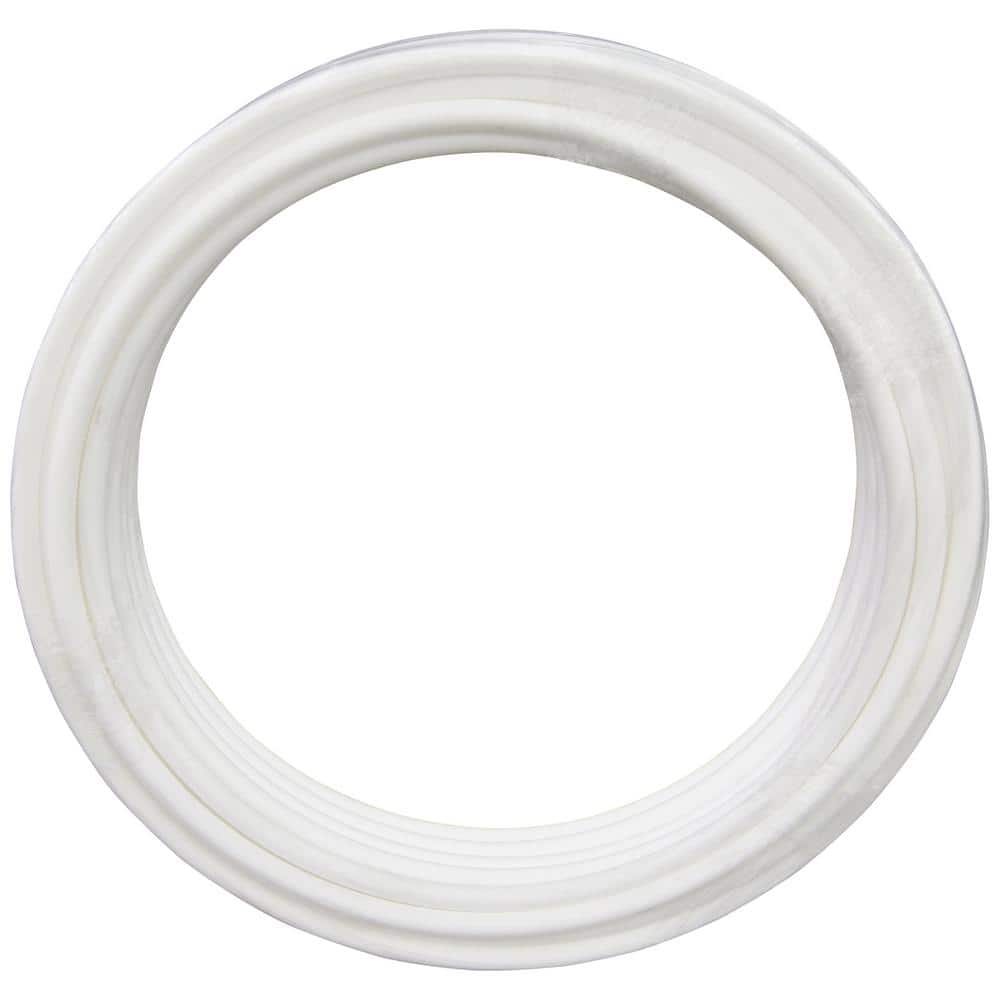
Our Top Pick: Apollo Half-Inch White PEX-B Flexible Water Pipe Tubing Coil
⭐ 4.7 / 5 — The most cost-effective, flexible, and freeze-resistant PEX-B option available. Ideal for residential water supply and radiant heating where budget, ease of installation, and long-term durability are priorities.
PEX-B Pipe
Our pick: Apollo Half-Inch White PEX-B Flexible Water Pipe Tubing Coil
Related parts & accessories
PEX-B, such as the Apollo Half-Inch White PEX-B Flexible Water Pipe Tubing Coil, is manufactured using the Silane (moisture-cure) cross-linking method, which produces a slightly stiffer but highly elastic pipe compared to its PEX-A counterpart.
The cross-linking density in PEX-B sits in the 65–70% range, giving it excellent memory — meaning it reliably returns to its original shape after bending or minor deformation. This makes it the ideal candidate for tight routing through wall cavities, around framing corners, and along floor joists where rigid copper or CPVC pipe would require many more fittings.
In terms of raw performance, PEX-B handles operating pressures up to 160 PSI at 73°F and up to 100 PSI at 180°F, making it perfectly suited for both cold water supply and hot water distribution in residential settings (often paired with high-efficiency units like the A.O. Smith EES-40). Its smooth interior bore resists the mineral scale buildup that eventually chokes older galvanized steel pipes, and the material itself is entirely immune to the corrosive pitting that plagues copper in acidic water conditions. Long-term flow rates stay consistent in a way that metal pipe simply cannot guarantee after a decade of use.
Freeze resistance is one of PEX-B's most praised real-world advantages. While no pipe is truly "freeze-proof," PEX-B can expand significantly before rupturing — unlike copper, which splits under freeze stress with expensive consequences. For homes in cold climates, cabins, vacation properties, or any plumbing run through an unconditioned space, this elasticity provides meaningful protection and peace of mind. It's also UV-sensitive, so it should not be installed in direct sunlight without protective conduit or insulation.
PEX-B is compatible with three primary connection methods: crimp rings (the most common), clamp (cinch) rings, and push-to-connect fittings. Expansion fittings — the method favored with PEX-A — technically work with PEX-B but require more force and a higher-quality Milwaukee M12 ProPEX Expansion Tool Kit since PEX-B lacks the same elastic memory as PEX-A. For most homeowners, a basic PEX crimp tool and a go/no-go gauge are all that's needed for leak-free connections. The pipe is also compatible with standard PEX brass and poly fittings across all major plumbing brands.
Material
High-density polyethylene (HDPE), Silane cross-linked (PEX-B method)
Common Sizes
3/8", 1/2", 3/4", 1", 1-1/4", 1-1/2", 2"
Max Working Pressure
160 PSI @ 73°F / 100 PSI @ 180°F
Max Operating Temperature
200°F (93°C) intermittent; 180°F continuous
Cross-link Density
65–70%
Connection Methods
Crimp, clamp/cinch, push-to-connect, expansion (limited)
Color Coding
Red (hot), Blue (cold), White/Gray (either)
Expected Lifespan
25–50+ years under normal operating conditions
Common Certifications
NSF/ANSI 61 (drinking water), NSF/ANSI 14, ASTM F876/F877, CSA B137.5
Typical Applications
Residential water supply, radiant floor heating, snow melt, well water systems
Pros
- Most affordable PEX type — lower per-foot cost than PEX-A or PEX-C
- Highly flexible — easier to route through tight spaces than rigid pipe
- Strong freeze resistance — expands rather than bursting in cold snaps
- Corrosion and scale resistant — no pitting, no mineral buildup
- Compatible with crimp and clamp fittings — no expensive specialty tools required
- Widely available at home improvement stores nationwide
- Approved for potable (drinking) water with NSF 61 certification
- Suitable for both hot and cold supply and radiant heating loops
- Long expected service life of 25–50+ years
- Lightweight — easy to transport and handle solo
Cons
- Cannot be used outdoors without UV protection — degrades in direct sunlight
- Not suitable for outdoor exposed applications without conduit
- Slightly stiffer than PEX-A — coil memory can make installation in very tight bends trickier
- Kinked sections cannot be repaired with a heat gun (unlike PEX-A)
- Not rated for direct burial without protective sleeving in all jurisdictions
- Not compatible with solvent-cement or threaded fittings without adapters
- Expansion fitting method requires more effort than with PEX-A
- Some municipalities still require inspection/approval for PEX in older code jurisdictions
PEX-B vs. PEX-A vs. PEX-C: How They Compare
| Feature | PEX-A | PEX-B | PEX-C |
|---|---|---|---|
| Manufacturing Method | Peroxide (Engel) | Silane (moisture cure) | Electron beam irradiation |
| Cross-link Density | 70–80% | 65–70% | 60–70% |
| Flexibility | Most flexible | Flexible | Stiffest |
| Kink Repair | Yes (heat gun) | No | No |
| Freeze Resistance | Excellent | Very Good | Good |
| Expansion Fittings | Best suited | Possible (limited) | Not recommended |
| Crimp/Clamp Fittings | Compatible | Best suited | Compatible |
| Price (per foot) | Highest | Lowest | Mid-range |
| Availability | Wide | Widest | Limited |
| Best For | Complex retrofits, tight spaces | New installs, budget projects, radiant | Industrial / commercial use |
What to Check Before You Buy PEX-B
1. Certifications and Compliance
Always verify that any PEX-B you purchase carries NSF/ANSI 61 certification for potable water contact, and ASTM-Standard Pipes and Fittings compliance for pipe dimensions and pressure ratings. These aren't optional — they're what your local building inspector and plumbing code will require. Reputable brands will print certification marks directly on the pipe exterior. If you can't find them, don't buy it.
2. Diameter and Flow Requirements
Sizing matters more than most first-time buyers realize. As a general rule: 1/2" PEX-B is standard for branch lines feeding individual fixtures (like a premium kitchen faucet or a modern bath faucet); 3/4" is appropriate for main runs and higher-demand fixtures like showers; 1" or larger serves whole-house manifold trunk lines. Under-sizing a run causes low pressure at the fixture; over-sizing wastes money and increases the risk of stagnant water in low-flow periods.
3. Connection Method Compatibility
Before purchasing pipe, decide on your fitting system. Crimp ring connections (ASTM F1807) are the most common and require a PEX crimp tool and a go/no-go gauge. Clamp (cinch) ring connections (ASTM F2098) use a single-action clamp tool and are popular for tight spaces. Push-to-connect fittings (such as SharkBite push-to-connect fittings) require no tools but cost more per fitting. Match your pipe and fittings to the same standard, and always use brass fittings for hot water applications — plastic poly fittings are fine for cold supply only.
4. Color Coding Convention
PEX-B is available in red, blue, and white/gray. While all colors are functionally identical and rated for hot or cold, following the red = hot / blue = cold convention makes your plumbing system far easier to troubleshoot and inspect down the road — especially important if you ever sell the home or call a plumber in an emergency. White or gray is typically used for radiant heating loops where distinction between hot and cold supply isn't relevant.
5. Coil vs. Straight Stick Lengths
PEX-B is sold in coils (typically 100 ft, 250 ft, 500 ft) and in straight sticks (usually 10 ft or 20 ft). Coils are economical for long runs and manifold-based systems. Straight sticks are easier to handle for short drops, fixture supply lines, and replacement work where you're working in a finished space and can't easily maneuver a coil. Buy coils for rough-in work; buy straight lengths for repairs and finish plumbing.
PEX-B Installation: Key Expectations
One of the biggest advantages of PEX-B over copper or CPVC is its forgiving installation workflow. You don't need a torch, soldering supplies, primer, cement, or threading equipment. A basic toolkit — PEX crimp tool, pipe cutter, go/no-go gauge, and a tape measure — handles the majority of installations. Push-to-connect fittings reduce the toolkit even further, though the per-fitting cost rises accordingly.
When upgrading home water management—perhaps while installing a Ridgid SP-650C or a Wayne ESP25 battery backup system or Basement Watchdog sump pump system or a GE whole house water filter—routing PEX-B through framing—perhaps as part of a whole house water filtration upgrade—is straightforward: drill holes at least 1/4" larger than the pipe diameter to allow for expansion movement, use plastic grommets or bushings where pipe passes through metal framing, and avoid sharp bends tighter than the pipe's minimum bend radius (typically 8x the pipe's outside diameter). When in doubt, use a plastic elbow fitting rather than forcing a bend — this protects both the pipe and the fitting integrity downstream.
Support intervals matter for long horizontal runs. The standard recommendation is to support PEX-B every 32–36 inches horizontally and every 4–6 feet vertically. Use purpose-made plastic PEX clamps or j-hooks — never metal conduit straps, which can abrade the pipe exterior over years of thermal movement. Leave a little slack between supports to accommodate the natural expansion and contraction of the pipe across temperature swings.
For radiant floor heating applications, PEX-B is typically embedded in or stapled above a concrete slab, gypcrete, or suspended between subfloor joists. Tubing spacing of 6–12 inches is standard depending on heat load requirements. Always pressure-test the system before pouring concrete or closing up walls — use water pressure (not air, which can be dangerous) at 100 PSI for a minimum of 30 minutes to confirm all connections are leak-free.
Warranty, Longevity, and Long-Term Costs
Quality PEX-B pipe from reputable manufacturers typically carries a 25-year warranty against manufacturing defects, and real-world service life commonly extends well beyond that under normal residential operating conditions. The material does not corrode, does not deposit scale on its inner walls, and does not react to chlorine or chloramine disinfectants used in municipal water treatment — all major failure modes for metal pipe are simply absent.
The long-term cost case for PEX-B is compelling. Per-foot material cost is lower than copper, CPVC, and PEX-A. Labor costs are lower because installation is faster and requires fewer fittings (long flexible runs replace many elbows and couplings). Maintenance costs are near zero over the system's life. And unlike copper, PEX-B has no meaningful scrap value — meaning it's not a target for theft on job sites or in vacant properties.
The one area where ongoing costs can creep up is fittings. High-quality Watts lead-free brass PEX fittings (such as those detailed in our Watts LFA-3/4 review) are the gold standard for longevity and are worth the price premium over plastic alternatives, especially for hot water lines and high-pressure applications. Factor fitting costs into your total project budget — a whole-house replication in 1/2" and 3/4"