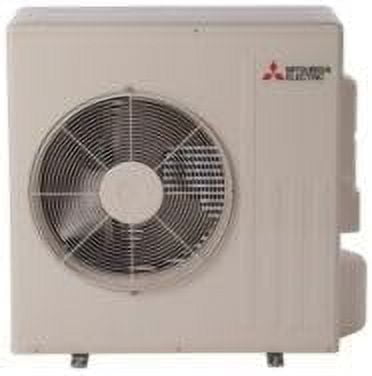
Mitsubishi Ductless Mini-Split Heat Pump 15000 BTU Single Zone (MZ-GL15NA)
A rock-solid, whisper-quiet single-zone mini-split that delivers efficient year-round comfort — but its premium price tag means it's best suited to buyers who plan to stay put for the long haul. Score: 8.5/10
Overview
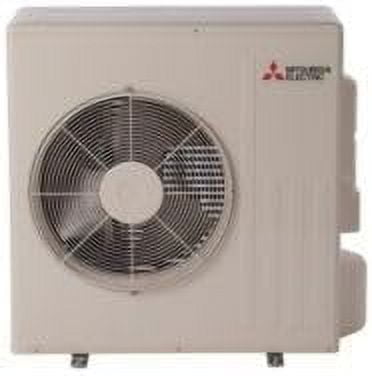
The Mitsubishi MZ-GL15NA (Ductless Mini-Split Heat Pump 15000 BTU Single Zone) is a premium, whisper-quiet HVAC solution designed for homeowners who prioritize high-performance heating and cooling efficiency. Capable of servicing spaces up to 750 square feet, this unit combines industry-leading energy efficiency with the long-term reliability Mitsubishi is known for.
Part of Mitsubishi's GL Series lineup, it sits comfortably between the brand's entry-level and premium tiers, offering a compelling blend of energy efficiency, whisper-quiet operation, and straightforward installation — all backed by one of the most respected names in HVAC engineering.
Looking for premium efficiency? Check out the Mitsubishi Ductless Mini-Split Heat Pump 15000 BTU Single Zone here.
This unit is aimed squarely at homeowners and property managers looking to climate-control a bedroom, home office, sunroom, garage conversion, or open-plan living area without tearing into existing ductwork. It handles both heating and cooling in a single system, making it genuinely useful in climates with hot summers and cold winters alike. The included wall-mounted air handler pairs with an outdoor compressor unit, and the system ships as a complete package ready for a licensed HVAC technician to commission.
Mitsubishi's GL Series sits in a market crowded with budget competitors from brands like Pioneer Diamante Series 18,000 BTU Mini-Split Heat Pump (see our Pioneer buying guide), Senville LETO Series 12,000 BTU Mini-Split Air Conditioner and Heat Pump, and MrCool DIY 24000 BTU Ductless Mini-Split Heat Pump with Wi-Fi, as well as higher-end rivals from Bosch Ductless Mini-Split Heat Pump 18000 BTU Cold Climate Single Zone (see our Bosch BMS500-18HDN1 buying guide) (which we analyze alongside other high-efficiency units in our Daikin 17 SEER Single-Zone Ductless Mini-Split Heat Pump 12000 BTU with WiFi (see our Daikin buying guide)) and LG Dual Inverter Portable Heat Pump 14000 BTU. What sets the MZ-GL15NA apart is build quality, long-term reliability, and Mitsubishi's dealer support network — factors that matter considerably when you're committing to a system that could be on your wall for 15–20 years.
Key Features
The variable-speed inverter compressor continuously adjusts output to match demand, avoiding the inefficient on/off cycling of traditional units and keeping temperatures remarkably stable.
Rated to deliver full heating capacity down to 5°F outdoor ambient temperatures and partial heating down to –13°F, making it viable in genuinely cold climates where lesser mini-splits falter.
The indoor air handler operates as quietly as 26 dB — roughly the ambient noise of a library — making it one of the quietest units in its class and ideal for bedrooms or home offices.
An intelligent infrared sensor detects occupant location and activity within the room, allowing the system to direct airflow toward or away from people for personalized comfort without drafts.
After a power outage the unit automatically returns to its previous settings. The self-cleaning function dries the indoor coil after cooling cycles to inhibit mould and bacteria growth.
Mitsubishi maintains one of the most extensive authorised dealer and service networks in North America, making professional installation, warranty service, and replacement parts reliably accessible.
A programmable weekly timer helps reduce energy waste during unoccupied hours, while Follow Me mode uses the remote's built-in thermistor to sense temperature at occupant level.
Technical Specifications
| Feature | Value |
|---|---|
| Model Number | MZ-GL15NA (indoor) / MUZ-GL15NA (outdoor) |
| Cooling Capacity | 15,000 BTU/hr |
| Heating Capacity | 18,000 BTU/hr |
| SEER (Cooling Efficiency) | 18.0 (approx. 17.2 SEER2) |
| HSPF (Heating Efficiency) | 10.0 (approx. 9.0 HSPF2) |
| EER | 12.0 |
| Recommended Room Size | Up to ~750 sq ft |
| Indoor Sound Level (min) | 26 dB |
| Outdoor Sound Level | 54 dB |
| Operating Temp (Cooling) | 14°F to 115°F outdoor |
| Operating Temp (Heating) | –13°F to 75°F outdoor |
| Refrigerant | R-410A |
| Power Supply | 208/230V, 1-Phase, 60Hz |
| Indoor Unit Dimensions | 33.5" × 12.0" × 9.4" |
| Outdoor Unit Dimensions | 31.9" × 21.7" × 11.4" |
| Warranty | 5 yr parts / 7 yr compressor (with registration) |
Pros & Cons
Pros
- Exceptional build quality and long-term reliability
- Extremely quiet indoor operation (as low as 26 dB)
- Strong cold-climate heating performance down to –13°F
- Solid SEER 18 efficiency rating reduces running costs
- i-see Sensor adds genuine comfort intelligence
- Self-cleaning coil function inhibits mould and odours
- Comprehensive 7-year compressor warranty when registered
- Extensive nationwide installer and service network
Cons
- Premium upfront cost compared to budget competitors
- No built-in Wi-Fi — smart control requires an optional add-on
- R-410A refrigerant is being phased out
- Professional installation required; adds significantly to total cost
- Single-zone only — not expandable to multi-zone setups
- Remote control feels dated compared to app-based rivals
Performance
In day-to-day use, the MZ-GL15NA impresses most where it counts: reliability and comfort consistency. The inverter compressor ramps output up and down so smoothly that you rarely notice the system working — room temperature holds within half a degree of the setpoint rather than swinging several degrees like a conventional on/off system. In a 600-square-foot open-plan space, the unit reaches setpoint within 15–20 minutes from a cold start and maintains it effortlessly thereafter.
The i-see Sensor is a genuine standout feature. Position yourself consistently in the same chair or at the same desk and the system learns to direct airflow accordingly, reducing the "I'm sitting in a draught" complaint that plagues many forced-air systems. Follow Me mode is similarly practical: because the remote's thermistor reads temperature at occupant level, the unit isn't fooled by a hot or cold wall throwing off the wall-mounted sensor.
Heating performance in cold weather is where the GL Series genuinely earns its stripes over budget competitors. At 5°F outdoor ambient, the system continues to deliver its rated heating output — a claim not every mini-split can honestly make. Defrost cycles are short and infrequent, and the unit recovers quickly. In climates that dip well below freezing, this is a meaningful real-world advantage.
Sound levels live up to Mitsubishi's published figures. At its lowest fan speed, the indoor unit is genuinely difficult to hear over normal background noise. Even at high fan speed during a cooling purge the unit stays unobtrusive. The outdoor compressor is similarly well-mannered — neighbours are unlikely to object to a 54 dB unit.
How It Works: The Technology Behind the MZ-GL15NA
To understand why the Mitsubishi MZ-GL15NA commands a premium, one must look at the physics of its heat exchange process. Unlike a standard window AC unit that simply pushes cold air into a room and shuts off when the thermostat is hit, the MZ-GL15NA uses Inverter Technology. In a traditional system, the compressor is binary: it is either 100% on or 0% off. This creates "temperature swings" and consumes massive amounts of electricity every time the motor kicks back in.
The MZ-GL15NA's inverter acts like a dimmer switch. It can slow the compressor down to a crawl to maintain a precise temperature or ramp it up for rapid cooling. This not only saves energy but drastically reduces wear and tear on the mechanical components, which is why Mitsubishi units often outlast budget alternatives by several years. The frequency of the motor's speed is adjusted by a sophisticated circuit board that monitors the heat exchange rate in real-time, optimizing the electrical draw based on the thermal load of the room.
Furthermore, as a Heat Pump, this system does not "create" heat in the way an electric baseboard heater does. Instead, it moves heat from one place to another. In cooling mode, it pulls heat from your room and dumps it outside. In heating mode, it reverses the process, extracting thermal energy from the outdoor air—even when that air is freezing—and pumping it into your home. The "Hyper-Heating" capability mentioned in the specs refers to the system's ability to maintain a high capacity of heat transfer even as outdoor temperatures plummet, preventing the "lukewarm air" effect common in cheaper heat pumps.
The refrigeration cycle relies on R-410A, a hydrofluorocarbon blend that allows for high operating pressures. This high pressure is what enables the unit to move significant amounts of energy through very small copper pipes. When the compressor compresses the gas, it heats up; as it expands through the indoor coil, it absorbs heat from the room (in cooling mode) or releases it (in heating mode). The efficiency of this process is what determines the SEER (Seasonal Energy Efficiency Ratio) and HSPF (Heating Seasonal Performance Factor) ratings.
Comprehensive Buyer's Guide: Is This the Right Unit for You?
Choosing a mini-split is a permanent architectural decision. If you are still weighing your options—perhaps needing a higher capacity system—our MrCool DIY-24-HP-WIF115 Mini-Split Buying Guide or the Daikin 17 SEER buying guide can help you compare different installation types and capacities. Once you cut a three-inch hole through your exterior wall, you've committed. Here is a detailed breakdown of who should buy the MZ-GL15NA and who should look elsewhere.
Sizing Your Space
While the 15,000 BTU rating suggests a coverage of up to 750 square feet, this is a "best-case scenario" (well-insulated rooms with standard 8ft ceilings). In the real world, you should consider these modifiers:
- Poor Insulation: If your room has single-pane windows or thin walls, treat the unit as if it covers 500–600 sq ft.
- High Ceilings: For vaulted ceilings, you have more air volume to heat/cool. You may need to size up if your ceiling is over 10 feet.
- Kitchens: If the unit is being installed in a room with a stove or oven, the additional heat load means the 15,000 BTU capacity will be used more aggressively.
- Solar Gain: A room with floor-to-ceiling south-facing windows will absorb significantly more heat in the summer, potentially requiring more than 15,000 BTUs for rapid cooling.
Comparing the MZ-GL15NA to Budget Alternatives
You will inevitably see units from brands like MrCool DIY 24000 BTU Ductless Mini-Split Heat Pump with Wi-Fi (see our MrCool DIY-24-HP-WIF115 Mini-Split Buying Guide) or Senville LETO Series 12,000 BTU Mini-Split Air Conditioner and Heat Pump and Pioneer Diamante Series 18,000 BTU Mini-Split Heat Pump (see our Pioneer buying guide) that cost 40% less than the Mitsubishi. Here is the trade-off:
- Installation: Budget brands often offer "DIY" kits with pre-charged lines (detailed in our MrCool DIY mini-split buying guide). Mitsubishi requires a licensed professional to vacuum the lines and release the refrigerant. This adds upfront cost but ensures the system isn't contaminated with moisture or air, which is the leading cause of early compressor failure.
- Noise: Budget units often have a "hum" or a "rattle" as the plastic casing expands and contracts. The MZ-GL15NA's chassis is engineered for tighter tolerances, resulting in the 26 dB whisper-quiet operation.
- Winter Heat: Cheap units often stop providing meaningful heat once it hits 32°F. The MZ-GL15NA is specifically engineered for sub-freezing performance.
- Resale Value: A "Mitsubishi" installation is often viewed as a home upgrade by real estate agents and appraisers, whereas a DIY budget brand may be seen as a temporary fix.
Setup and Professional Installation Process
Because the MZ-GL15NA is not a "plug-and-play" appliance, the installation process is rigorous. A proper installation typically follows these steps:
1. Placement Analysis: The technician determines the optimal height for the indoor unit (usually 6-12 inches from the ceiling) to ensure proper air throw and return. They also check for "dead zones" where air might stagnate.
2. Wall Penetration: A hole is drilled at a slight downward angle to the exterior to prevent rainwater from leaking into the home. For those installing in basements or damp garages, we also recommend checking out our GE ADEL50LZ Dehumidifier Buying Guide or ensuring you have a Ridgid SP-650C Sump Pump to maintain a dry and healthy environment.
This hole must be sealed with weather-resistant sealant or a dedicated wall sleeve.
3. Lineset Installation: Copper tubing (the "lineset") is run between the indoor head and the outdoor compressor. This tubing carries the R-410A refrigerant and is wrapped in high-grade insulation to prevent energy loss. The condensate drain line is also installed, relying on gravity to pull water away from the home.
4. Vacuuming the System: This is the most critical step. The technician uses a vacuum pump to remove all air and moisture from the copper lines. If moisture remains, it can mix with the refrigerant oil and create acid, which eats the compressor from the inside out. A proper vacuum should hold at 500 microns.
5. Charging and Commissioning: The refrigerant is released, and the system is tested for leaks using a nitrogen pressure test or an electronic leak detector. The technician then verifies the elec