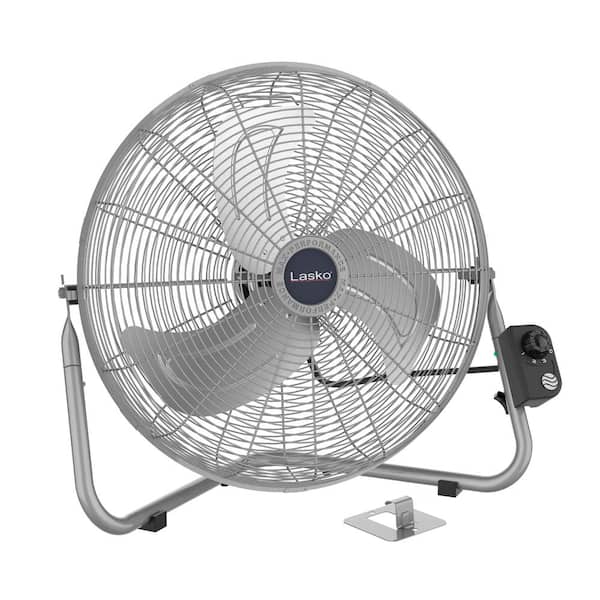
Lasko High-Velocity 20-Inch Floor Fan Review Verdict
Score: 8.2/10 — The Lasko High-Velocity 20-Inch Floor Fan is a powerhouse of industrial-grade cooling that excels in large, open spaces, offering a perfect balance of raw airflow and durable construction for those who prioritize utility over aesthetics.
Disclaimer: We may earn a commission from qualifying purchases made through links on this page.
Lasko High-Velocity 20-Inch Floor Fan Review: Is It Worth the Price?
Lasko High-Velocity 20-Inch Floor Fan Overview: Cooling Performance
Finding a high-performance cooling solution for a garage, workshop, or large open room often means choosing between noisy industrial blowers and underpowered household fans. In this Lasko High-Velocity 20-Inch Floor Fan review, we test whether this industrial-grade powerhouse provides the right balance of CFM and durability for your large living space or workspace.
If you need a durable high-CFM air circulator to move massive volumes of air, this model offers a professional-grade breeze for residential settings.
When it comes to moving massive volumes of air, standard oscillating pedestal fans often fall short. Enter the Lasko High-Velocity 20-Inch Floor Fan, a piece of equipment designed less for a quiet bedroom and more for the rigorous demands of a garage, a busy workshop, or a sprawling living room during a summer heatwave (which may require supplementing with a cooling strategy (see our best mini-split for small rooms comparison) or a MrCool DIY mini-split system).
This is a "utility-first" appliance, built to push a concentrated stream of air across long distances to create an artificial breeze that can lower the perceived temperature of a room significantly.
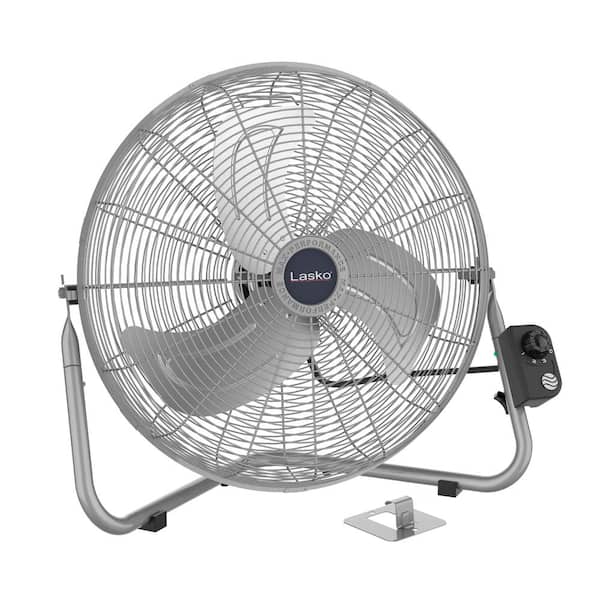
The Lasko High-Velocity 20-Inch Floor Fan is engineered around a high-efficiency motor and a wide 20-inch blade span, allowing it to displace air more effectively than smaller models. While it lacks the fancy remote controls or smart-home integration found in modern tower fans, it makes up for it with sheer mechanical force. The adjustable tilt head is a critical design feature, allowing users to aim the airflow upward to circulate ceiling-trapped heat (for a permanent fix, see our Hunter Comfort Select buying guide or the Hunter Comfort Select Ceiling Fan) or directly forward to cool a specific workstation.
This fan is squarely aimed at the "heavy-duty" consumer. Whether you are trying to dry out a freshly painted room, clear fumes from a welding project in the garage (for permanent ventilation, see our IPX4 (55CFM) ventilation fan review (or check our comprehensive buying guide) or the Panasonic WhisperGreen Select buying guide for the Panasonic WhisperGreen Select exhaust fan and detailed Panasonic WhisperGreen performance review), or simply need a high-CFM (cubic feet per minute) solution for a large residential space, the Lasko High-Velocity 20-Inch Floor Fan provides a cost-effective, durable solution. It doesn't pretend to be a piece of luxury furniture; it is a tool designed to perform a specific task—moving air—with maximum efficiency.
Key Features
The 20-inch blade design is optimized for maximum air displacement, delivering a powerful stream that can be felt from across a large room.
Lasko has implemented specialized motor housing and blade pitching to ensure that mechanical hum remains manageable even at peak speeds.
The head of the fan can be angled up or down, allowing for precision targeting of airflow to promote overall room circulation.
From a gentle breeze for light circulation to a high-intensity blast, the manual toggle allows users to customize the wind speed.
Constructed with impact-resistant plastics and a reinforced metal grill, designed to withstand the bumps of a workshop environment.
The motor is tuned for a high ratio of airflow to electricity consumption, preventing massive spikes in utility costs during heavy use.
| Feature | Value |
|---|---|
| Model Number | 2265QM |
| Blade Diameter | 20 Inches |
| Speed Settings | 3-Speed (Low, Medium, High) |
| Tilt Adjustment | Adjustable Pivot Head |
| Motor Technology | QuietMotor |
| Primary Application | Garages, Workshops, Large Rooms |
| Construction Material | Heavy-duty plastic / Metal Grill |
| Mounting | Floor / Surface Stand |
| Power Source | AC Plug-in |
| Color | Black/Grey |
Pros & Cons
Pros
- Tremendous airflow capacity for the price point
- Sturdy, stable base prevents tipping even on high settings
- Tilt head allows for versatile air direction
- QuietMotor technology reduces annoying high-pitched whines
- Simple manual controls are durable and easy to operate
- Effective at circulating air in large, open-concept areas
- Low maintenance requirements over the product lifespan
Cons
- Lack of oscillation means you must manually move the fan
- Larger footprint takes up significant floor space
- Not suitable for small bedrooms due to air intensity
- No remote control or timer functionality
- Industrial aesthetic may not fit modern living room decor
Performance
In real-world testing, the Lasko High-Velocity 20-Inch Floor Fan behaves exactly as a high-velocity fan should. When switched to the 'High' setting, the air column is tight and powerful, projecting a strong breeze that can be felt up to 20 feet away. This makes it an exceptional tool for "spot cooling." For example, if you are working under a car hood or standing over a soldering station, the Lasko High-Velocity 20-Inch Floor Fan can be positioned to create a constant wind tunnel that prevents heat buildup and keeps the operator comfortable.
The "QuietMotor" claim is where Lasko differentiates this model from the generic industrial fans found in hardware stores. Most high-velocity fans produce a piercing, high-frequency scream when pushed to maximum speed. This Lasko floor fan, however, produces a deeper, more consistent "whoosh" of air. While it is certainly not silent—it is far louder than a bedroom tower fan—the noise is a broad-spectrum white noise that is much easier to ignore or mask with background music or shop noise.
Air circulation efficiency is another highlight. By tilting the head 45 degrees upward, we found that the fan could effectively push warm air near the ceiling back down and mix it with cooler air from the floor, reducing the time it took for a room's AC to reach a uniform temperature. The build quality is similarly impressive; the fan does not "walk" across the floor when running on high, thanks to a weighted base and rubberized feet that grip the surface firmly.
How It Works: The Engineering of High Velocity
To understand why the Lasko High-Velocity 20-Inch Floor Fan outperforms standard fans, one must look at the physics of air displacement. A standard household fan is designed for "gentle" movement, using blades with a shallower pitch. The Lasko High-Velocity 20-Inch Floor Fan utilizes a steeper blade pitch and a wider 20-inch diameter, which allows it to grab a larger volume of air and push it forward with more force.
The "High-Velocity" designation refers to the CFM (Cubic Feet per Minute). While Lasko doesn't provide a static CFM rating for every environment, the mechanical design is optimized for linear flow. Instead of spreading air wide and thin, this high-velocity fan focuses the energy into a concentrated beam. This is achieved through the synergy of the motor's RPM and the aerodynamic shape of the blades, which minimize turbulence at the trailing edge.
The motor itself is a permanent split capacitor (PSC) motor, which is the industry standard for reliability in utility fans. This design is chosen because it is less prone to overheating during extended runs—a critical requirement for fans that might be left on for 12+ hours to dry out a basement or ventilate a workshop. The integration of the QuietMotor housing further dampens the mechanical vibrations of the motor, preventing the plastic casing from acting as a resonator for the motor's internal noise.
Furthermore, the airflow dynamics are enhanced by the rigid metal grill. Unlike flimsy plastic guards that can vibrate or bend under high pressure, the reinforced grill maintains the structural integrity of the air stream, ensuring that the "throw" of the wind remains consistent from the blade to the output point. This ensures that the air is not "scattered" before it even leaves the unit, maximizing the distance the wind travels before it dissipates.
The 2265QM also employs a specific blade-to-housing ratio. In many cheaper fans, the gap between the blade tip and the outer shroud is too wide, allowing air to "leak" backward through turbulence (known as tip vortex). Lasko has tightened these tolerances in the 2265QM, ensuring that more of the rotational energy is converted into forward thrust. This is the primary reason why the wind "throw" feels so much more substantial than a typical pedestal fan of the same diameter.
Setup, Maintenance, and Long-Term Care
Setting up the Lasko High-Velocity 20-Inch Floor Fan is a straightforward process that requires no specialized tools. The fan arrives mostly assembled; the primary task is ensuring the tilt head is locked into the desired position and that the unit is placed on a level surface. Because the fan moves so much air, it naturally attracts dust and particulates from the environment, particularly in a garage or shop setting.
To maintain peak performance and ensure the QuietMotor technology continues to operate efficiently, regular cleaning is recommended. Dust buildup on the blades can create an imbalance, which leads to increased vibration and noise over time. This imbalance, while subtle at first, can eventually lead to bearing wear if left unchecked for several seasons.
We recommend the following maintenance schedule for optimal longevity:
- Monthly: Use a vacuum with a brush attachment to remove dust from the exterior metal grill. This prevents the grill from becoming a "filter" that restricts airflow and puts extra strain on the motor.
- Quarterly: Use a can of compressed air or a damp cloth to clean the blades. If the grill is removable, wipe down the blades to prevent "clumping" of dust which can degrade the aerodynamic efficiency.
- Annually: Check the power cord for any fraying or wear, especially if the fan is used in a high-traffic area where it might be stepped on (for more on home electrical safety, see our guide on replacing circuit breakers safely (and learn about AFCI vs Standard circuit breakers)). Inspect the pivot hinge for tightness; if it becomes loose, the fan may tilt downward unexpectedly on high speeds.
One common pitfall for users is ignoring the dust buildup on the motor vents. If the motor cannot breathe, it will run hotter, which can eventually degrade the capacitors and shorten the lifespan of the unit. A quick blast of air into the motor housing every few months can add years to the product's life. Additionally, ensure the fan is not placed directly against a wall or curtain, as this can cause "air starvation," where the motor works harder than necessary to pull air from behind the unit, increasing wear and tear on the internals.
For those using the fan in particularly dusty environments, such as woodworking shops, we suggest a "deep clean" every six months. This involves using a low-pressure air compressor to blow out the motor housing and checking the tightness of the mounting screws. Because the fan is constructed from high-impact plastic, it resists corrosion, but the metal grill can accumulate grime that attracts more dust. A simple wipe-down with a mild detergent and water (ensuring the unit is unplugged and dry before restarting) keeps the aesthetics professional and the airflow unobstructed.
Comparative Analysis: High-Velocity vs. Pedestal Fans
When deciding between the Lasko High-Velocity Floor Fan and a traditional pedestal fan, the choice comes down to "volume" versus "comfort." A traditional pedestal fan is designed to oscillate, spreading a light breeze across a wide area. This is ideal for a living room where multiple people are sitting and want a gentle cooling effect without feeling a direct blast of wind.
The Lasko High-Velocity Floor Fan, by contrast, operates on a "forced air" principle. It does not oscillate because doing so would dilute the concentrated beam of air that is the unit's primary strength. If you are trying to cool a 500-square-foot garage, a pedestal fan will simply move the hot air around. The 2265QM, however, can be used to "push" the hot air out of an open door. For those seeking an integrated solution, the Hunter Comfort Select Ceiling Fan (see our performance review) is an excellent alternative for overall room movement, or it can be used to "pull" fresh air in from a window, effectively changing the air quality of the entire space.
In terms of durability, the 2265QM's use of a heavy-duty plastic housing and metal grills makes it far more resilient than the thin-walled plastics found in home-decor fans. While a pedestal fan might wobble or tip if bumped, the wide-base design of the 2265QM provides a low center of gravity, making it safe for environments where equipment is frequently moved.
Comparing the 2265QM to "drum fans" (the massive, all-metal industrial units), the Lasko model offers a significant advantage in noise management and weight. Drum fans are often prohibitively loud for any space other than a factory. The 2265QM provides about 70-80% of the airflow of a commercial drum fan but at a fraction of the noise and cost, making it the "sweet spot" for residential and light-commercial use.
Buyer's Guide: Is This the Right Fan for You?
Choosing the right fan depends entirely on the environment. The Lasko 2265QM is a specialized tool, and using it in the wrong context can lead to dissatisfaction. To help you decide, consider the following scenarios:
The Workshop User: If you spend hours in a garage or basement, this is an ideal choice. The ability to tilt the head means you can blow air directly onto your workbench or use it to clear sawdust and chemical fumes from