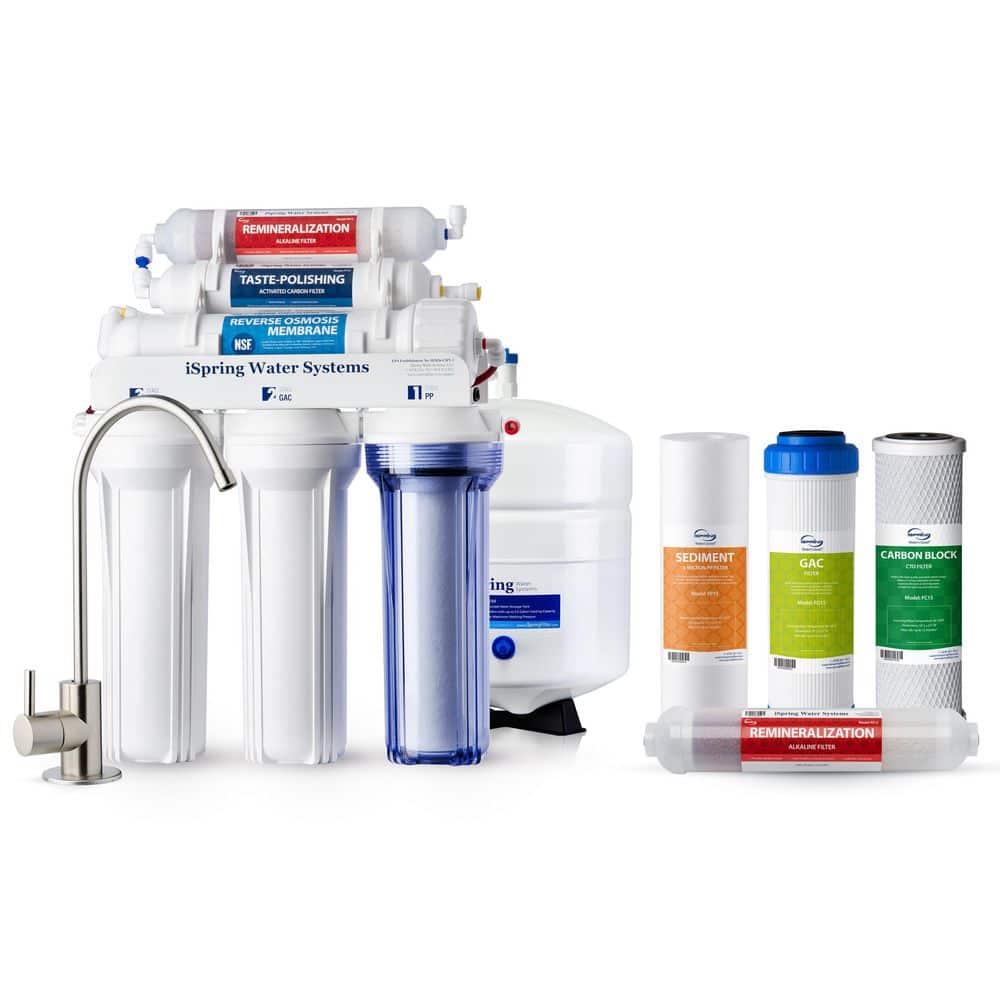
The iSpring 6-Stage Reverse Osmosis System is a professional-grade 6-stage reverse osmosis system that bridges the gap between clinical purity and natural taste. By combining high-pressure membrane filtration with an alkaline remineralization stage, it removes heavy metals and contaminants while adding back essential minerals. It is the ideal solution for homeowners seeking bottled-quality water without the plastic waste, provided they have the under-sink space for the storage tank.
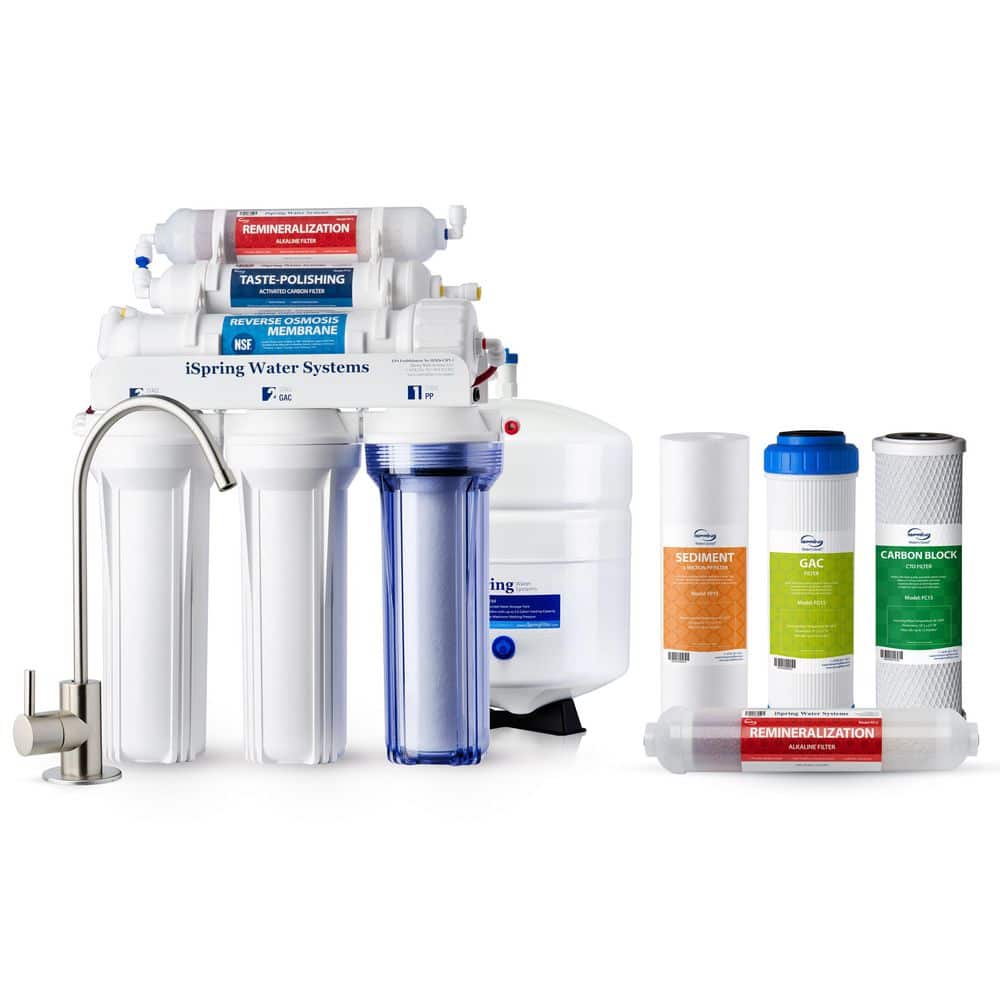
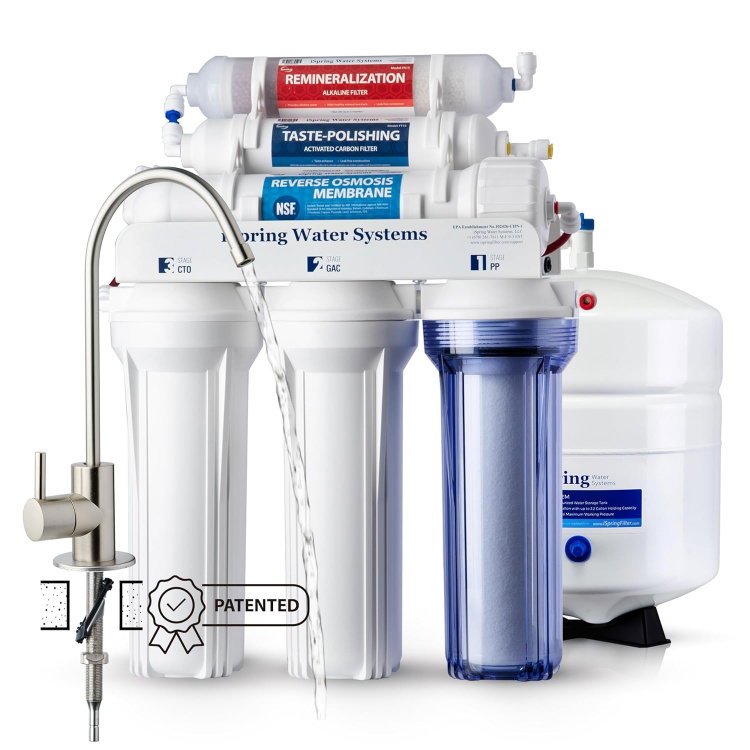
Top Pick: iSpring 6-Stage RO System with Alkaline Remineralization
Score: 9.2/10 — Best overall under-sink RO for most homes. Six-stage filtration with an alkaline remineralization stage delivers clean, great-tasting water at up to 75 gallons per day, all from a unit that tucks under a standard sink.
If your tap water tastes off or you're tired of hauling cases of bottled water from the store, an under-sink reverse osmosis system is one of the most effective upgrades you can make. The iSpring RCC7AK promises six stages of filtration plus a remineralization layer that restores healthy alkaline minerals. But is it worth the counter-space sacrifice and installation effort?
This guide breaks down exactly what the RCC7AK does, who it's a great fit for, and where it falls short, so you can decide before you buy. Understanding the mechanics of reverse osmosis and the importance of pH balance is key to understanding why this specific model stands out in a crowded market of water purifiers.
iSpring 6-Stage Under-Sink Reverse Osmosis Water Filter with Alkaline Remineralization
The iSpring 6-Stage Under-Sink Reverse Osmosis Water Filter with Alkaline Remineralization (model RCC7AK) is a comprehensive under-sink reverse osmosis (RO) system designed to transform municipal or well water into premium drinking water. Unlike basic filters that only trap large particles, this system employs a multi-stage process that targets contaminants at various molecular sizes. The journey begins with three pre-filtration stages: a polypropylene sediment filter to catch rust and sand, and two high-capacity carbon blocks that neutralize chlorine and volatile organic compounds (VOCs). These stages aren't just for cleaning the water; they act as a protective shield for the RO membrane, preventing it from clogging prematurely.
The heart of the system is the semi-permeable RO membrane. This technology forces water through microscopic pores, stripping out dissolved solids, heavy metals (like lead and arsenic), and fluorides. However, the "problem" with standard RO is that it is too efficient—it removes the beneficial minerals (calcium, magnesium, potassium) that give water its flavor and health benefits. This is where the RCC7AK differentiates itself. The sixth stage is a dedicated alkaline remineralization filter. By passing the purified water through this layer, the system reintroduces essential minerals, balancing the pH level to be slightly alkaline, which results in a smoother, more natural taste that mimics high-end spring water.
In terms of capacity, the system is engineered for the modern household, producing up to 75 gallons of filtered water per day. Because the RO process is slow, the system includes a pressurized storage tank. This tank acts as a reservoir, ensuring that when you turn on the dedicated faucet, you get a steady, strong stream of water immediately, rather than a slow drip. The unit is designed to fit within the footprint of most standard kitchen cabinets, though it does require a small amount of space for the tank and the filter housings.
This system is ideal for homeowners who prioritize water purity and health without the environmental impact of plastic bottles. It is particularly effective for those living in areas with high Total Dissolved Solids (TDS) or those who find the "flat" taste of traditional RO water unappealing. While it requires a DIY installation or a professional plumber, the long-term cost savings and health benefits make it a compelling investment for the kitchen.
Pros
- Six-stage filtration removes a wide range of contaminants
- Alkaline remineralization restores minerals and improves taste
- Up to 75 GPD output covers most households
- Fits under most standard sinks with included faucet and tank
- Significantly cheaper over time than buying bottled water
Cons
- Requires dedicated under-sink space for the tank and housings
- DIY installation takes time and requires basic plumbing skill
- RO systems produce wastewater as part of the filtration process
- Filters require scheduled replacements to maintain purity
| Spec | Detail |
|---|---|
| Model | RCC7AK |
| Filtration Stages | 6 (Sediment, Carbon x2, RO Membrane, Post-Carbon, Alkaline Remineralization) |
| Daily Output | Up to 75 Gallons Per Day (GPD) |
| Special Feature | Alkaline Remineralization Stage |
| Installation | Under-sink, fits most standard kitchen cabinets |
| Included Components | Dedicated faucet, storage tank, tubing, and filter set |
| Category | Water Softeners & Filters |
Deep Dive: How the 6-Stage Process Works
To appreciate the value of the iSpring RCC7AK, one must understand the specific role of each stage. Water filtration isn't a one-size-fits-all process; different contaminants require different mechanical or chemical approaches. The RCC7AK uses a "layered" defense strategy to ensure that the most expensive and delicate parts of the system are protected while providing the highest possible water quality.
Stage 1: The Sediment Filter
The first line of defense is the polypropylene sediment filter. Its primary job is to stop "large" particles—things like rust, sand, silt, and scale—from entering the system. While these particles aren't always harmful to drink, they are devastating to the RO membrane. If sediment reaches the membrane, it can create physical blockages (fouling), which reduces water flow and forces the system to waste more water. By removing these solids first, the RCC7AK extends the life of the more expensive components. This is particularly critical for homes with older piping where rust flakes are common.
Stage 2 & 3: Dual Carbon Block Filtration
The next two stages utilize activated carbon. Carbon filtration works through adsorption, where organic chemicals stick to the surface of the carbon pores. These stages are specifically targeted at chlorine and chloramines. Chlorine is added by cities to kill bacteria, but it tastes bad and, more importantly, it can chemically attack and degrade the RO membrane. By using two stages of carbon, iSpring ensures that the water is stripped of VOCs, pesticides, and herbicides before it ever touches the membrane. This redundancy ensures that even if one filter becomes saturated, the second provides a safety net, preserving the integrity of the core membrane.
Stage 4: The Reverse Osmosis Membrane
This is the core of the entire system. In a standard filter, water flows through a mesh. In reverse osmosis, water is pushed through a semi-permeable membrane using pressure. This membrane has pores so small (approximately 0.0001 microns) that only water molecules can pass through. Everything else—lead, arsenic, nitrates, fluoride, and dissolved salts—is blocked and flushed away as "brine" or wastewater. This is the most powerful stage of filtration available for home use, capable of removing up to 99% of total dissolved solids. Without this stage, the system would merely be a standard carbon filter.
Stage 5: Post-Carbon Polishing
Once the water leaves the RO membrane, it goes into the storage tank. After it sits in the tank, it passes through a final post-carbon filter. This stage acts as a "polishing" filter, removing any lingering tastes or odors that may have developed during storage, ensuring the water tastes fresh the moment it hits your glass. It acts as the final quality control check before the water enters your glass, essentially acting as a final "refresh" for the water.
Stage 6: Alkaline Remineralization
As mentioned, pure RO water is slightly acidic because it lacks the minerals that normally buffer pH. The RCC7AK solves this with the remineralization stage. This filter contains a blend of calcium and magnesium. As the water flows through, these minerals dissolve back into the water. This not only raises the pH to an alkaline level (which many find healthier and more refreshing) but also restores the "mouthfeel" of the water, removing the "empty" or "flat" taste associated with distilled or basic RO water. This turns "pure" water into "healthy" water, balancing chemistry with taste.
Comprehensive Buyer's Guide: Is an RO System Right for You?
Choosing a water filtration system is a balance between the quality of water you desire and the effort you are willing to put into maintenance and installation. An under-sink RO system like the RCC7AK is a significant commitment compared to a countertop filter or a simple pitcher. If you are considering this system, you should evaluate your specific household needs, your plumbing capacity, and your willingness to perform semi-annual maintenance. If you're doing a full kitchen overhaul, you might also consider upgrading your A.O. Smith EES-40 water heater to ensure efficiency throughout your kitchen.
Evaluating Your Water Needs
Not every home needs a 6-stage RO system. If you are on a well with high sulfur levels or a city system with extreme chlorine smells, a basic carbon filter might not be enough, and you may require a Culligan Whole House Heavy-Duty Sediment Water Filter System. For those dealing with scale buildup throughout the home, combining an RO system with an Aquasana SimplySoft Salt-Free Whole-House Water Conditioner can protect other appliances. If you're unsure which level of filtration you need, our GE GXWH40L Whole House Water Filter Buying Guide offers a great comparison of point-of-entry options.
If your main concern is "hardness" (white scale on faucets), you should know that while RO removes hardness from your drinking water, it does not soften the water for your shower or dishwasher. For a broader solution, you would need a solution like the GE GXWH40L Whole House Water Filter or a professional-grade softener. The RCC7AK is a point-of-use system, meaning it only treats the water that comes out of the dedicated RO faucet. It is a targeted solution for drinking and cooking, not a total home utility upgrade.The Trade-off: Wastewater vs. Purity
The biggest point of contention for RO buyers is "waste water." Because the membrane blocks contaminants, those contaminants must be washed away. For every gallon of pure water produced, some water is sent down the drain. While modern systems like the RCC7AK are more efficient than older models, it is a trade-off. You are trading a small amount of water volume for a massive increase in purity. For most users, the cost of the wasted water is negligible compared to the health benefits of removing lead and arsenic from their drinking supply. However, those in extreme drought areas may prefer a different technology, such as ultrafiltration, though purity levels will be lower.
Installation Considerations
Installing the RCC7AK requires a few specific things that you should audit before purchasing:
- Under-sink space: You need room for the filter canisters and the pressurized tank. Ensure you aren't blocking your garbage disposal or dishwasher lines. Measure your cabinet height to ensure the canisters can stand upright.
- Drilling: You will need to drill a hole in your sink or countertop for the dedicated RO faucet (similar to the process for a MOEN Chateau 7430 kitchen faucet, but on a smaller scale). Most sinks are stainless steel or granite, requiring a specific diamond or carbide drill bit. If you have a rental, you may want to check with your landlord first.
- Plumbing: You'll need to tap into your cold water line and create a connection to your drain pipe for the waste line. This usually involves using a T-adapter on the existing cold water valve.
If you are uncomfortable with these tasks, a professional plumber can typically handle the installation in under two hours, ensuring leak-free connections and a perfectly centered faucet.
Step-by-Step Installation and Setup Process
While we recommend professional installation for those not comfortable with plumbing, the iSpring RCC7AK is designed for the "advanced DIYer." To ensure a successful setup, follow this logical progression of installation steps.
1. Preparing the Workspace
Begin by clearing out your under-sink cabinet entirely. You will need a clear area to assemble the filter housings and space to maneuver your tools. Lay down a towel or plastic sheet to catch any drips from the existing plumbing. Check that you have all the components: the filter canisters, the RO membrane, the storage tank, the faucet, and the various lengths of tubing.
2. Installing the RO Faucet
The most visible part of the system is the faucet. If your sink doesn't have a pre-drilled hole, you'll need to create one. Mark the spot carefully—usually to the right or left of the main faucet. Drill the hole using the appropriate bit for your material. Insert the faucet and tighten the mounting nut from underneath. Ensure the faucet is stable and does not wobble, as this is where the most pressure is applied during daily use.
3. Connecting the Water Source
Locate your cold water supply line. Shut off the valve and disconnect the line leading to the sink. Install the T-adapter provided by iSpring, which allows the water to feed both your regular faucet and the RO system. Connect the tubing from the T-adapter to the first stage of the filter system. Ensure all connections are "bottomed out" in the push-fit connectors to prevent leaks.
4. Assembling the Filtration Stages
The RCC7AK comes with the filters, but they must be properly seated. Insert the sediment and carbon filters into their respective housings. Be careful not to over-tighten the sumps; usually, a hand-tighten followed by a quarter-turn with the provided wrench is sufficient. The RO membrane is typically pre-installed in its housing, but check for any shipping seals that need to be removed.
5. Setting Up the Tank and Drain
Connect the tubing from the RO membrane to the storage tank and then to the post-carbon and remineralization filters. The final step is the drain line. This is the "waste" line that carries rejected water back to the sewer. Connect this to your sink's drain pipe using the provided saddle valve or a drilled connection. Ensure the line is angled downward to allow water to flow freely by gravity.
6. The Initial Flush and Leak Test
Before you drink the water, you must flush the system. Slowly open the cold water valve and check every single connection for drips. If a leak occurs, push the tubing further into the connector or re-seat the filter housing. Once the system is leak-free, open the RO faucet. The water may initially look "milky"—this is just air trapped in the lines and the tank. Let the water run for several minutes. It is recommended to fill and drain the storage tank twice before the first use to ensure all carbon fines and manufacturing residues are removed.
Long-Term Maintenance and Filter Replacement Schedule
The performance of the iSpring RCC7AK depends entirely on the condition of its filters. Neglecting replacements can lead to "channeling" (where water bypasses the filter media) or membrane fouling, which can permanently damage the system and lower water quality.
The Maintenance Timeline
Because the filters handle different types of contaminants, they have different lifespans:
- Pre-Filters (Sediment & Carbon): Every 6 months. These catch the bulk of the debris and chlorine. If you have very "dirty" water, you may need to change these every 3-4 months to protect the membrane.
- RO Membrane: Every 2 to 5 years. This is the most expensive part of the system. Its life is extended by the pre-filters. If you notice a significant drop in water flow or an increase in TDS readings, it's time for a replacement.
- Post-Carbon and Remineralization Filters: Every 12 months. These ensure the water tastes fresh and maintains its alkaline pH.
How to Replace Filters
Replacing