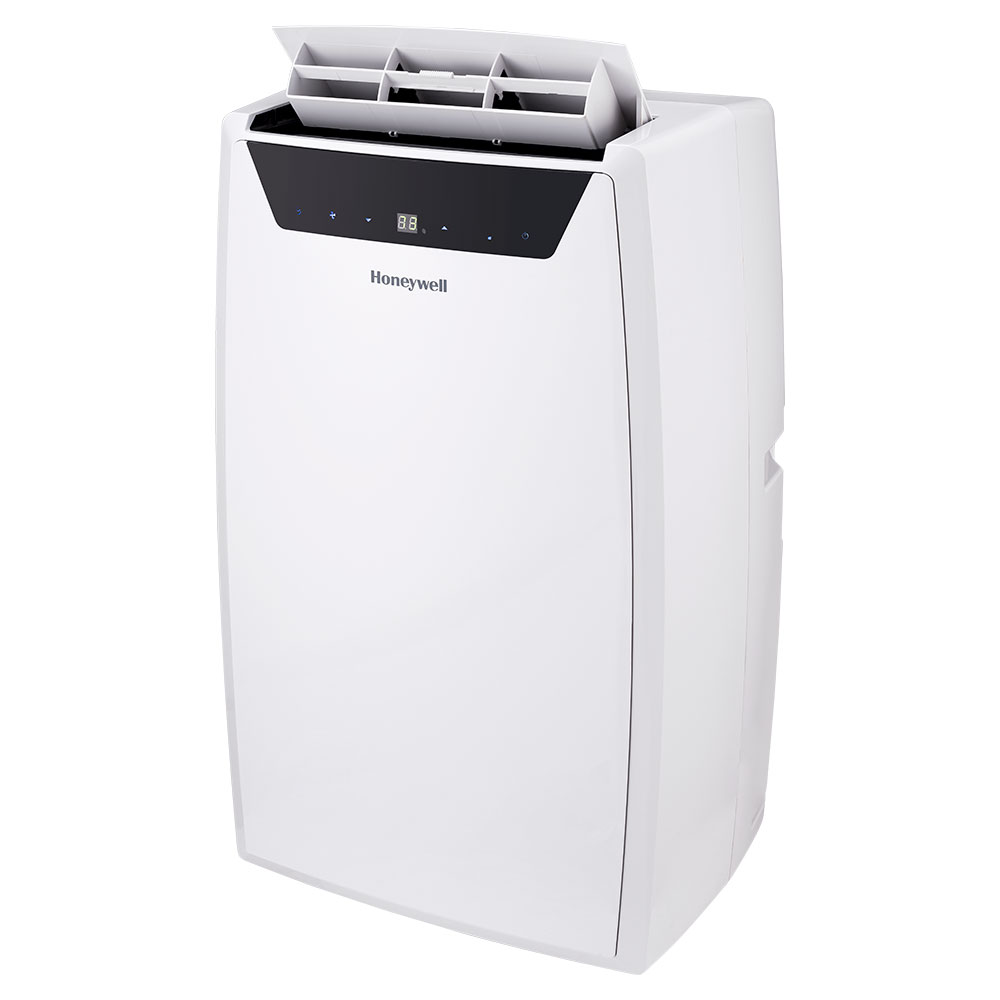
Honeywell Single-Hose Portable Air Conditioner 10000 BTU with Dehumidifier (MN1CFSWW8) — 7.8/10
The Honeywell Single-Hose Portable Air Conditioner 10000 BTU with Dehumidifier (MN1CFSWW8) is a high-performance, no-fuss portable AC unit designed for rapid cooling that provides reliable cooling for small-to-medium rooms without the need for permanent installation — making it a solid pick for renters, apartment dwellers, and anyone who needs flexible cooling on a reasonable budget.
Our reviews are independent. When you buy through links on this page we may earn a small commission at no extra cost to you.
Overview
Portable air conditioners occupy a useful niche between LG window air conditioners and central HVAC. If you are considering a more permanent solution, our MrCool DIY Mini-Split guide or Carrier mini-split guide are great resources. For those needing a quick setup, the Honeywell Single-Hose Portable Air Conditioner 10,000 BTU with Dehumidifier is a reliable starting point.
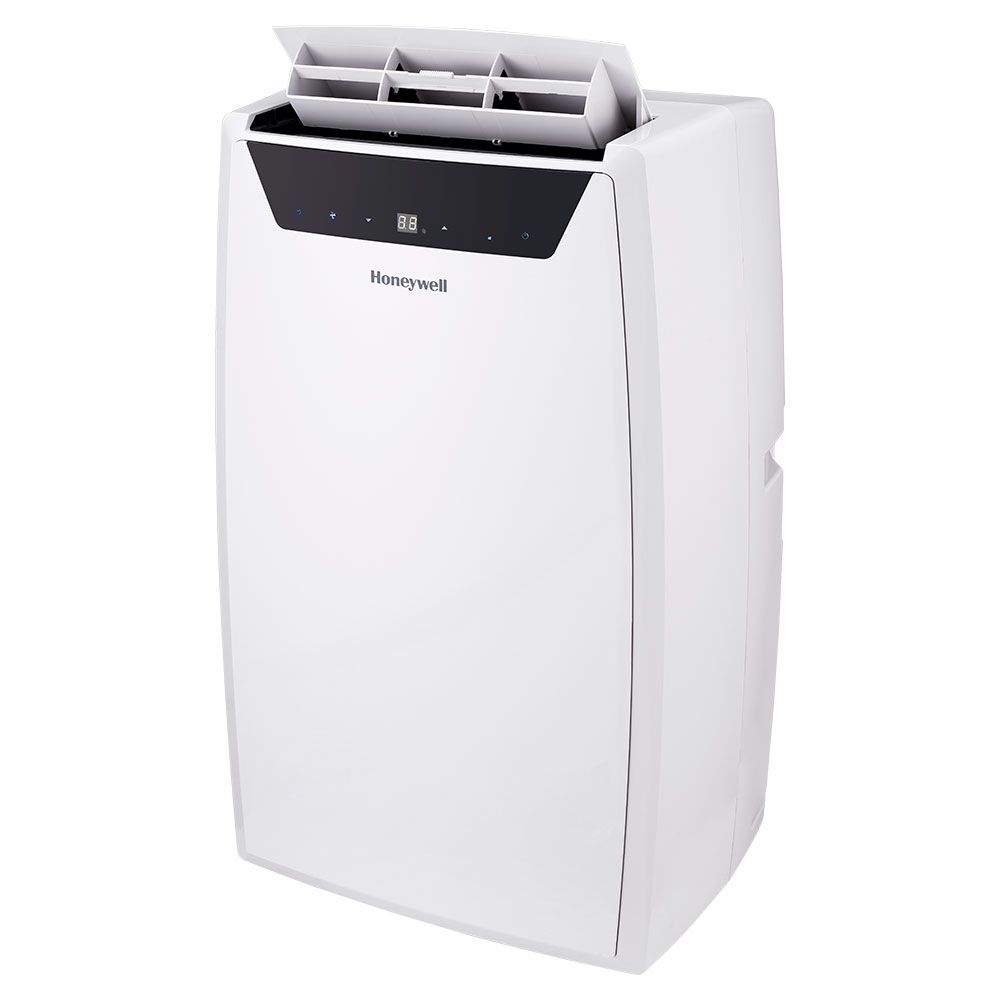
This model sits squarely in the middle of that market — a single-hose, 10,000 BTU machine finished in clean white that rolls from room to room on caster wheels and vents through a sliding window kit. It's part of Honeywell's MN-series lineup, which targets buyers who want straightforward, reliable cooling without the complexity of a dual-hose or multi-mode system.
If you need a flexible, mid-range cooling solution for a bedroom or office, the Honeywell Single-Hose Portable Air Conditioner 10000 BTU is a highly reliable choice.
At its core, the MN1CFSWW8 is aimed at spaces up to roughly 350–400 square feet — think a master bedroom, a home office, or a studio apartment. It ships with a window exhaust kit that fits most standard horizontal sliding windows, and setup typically takes under 30 minutes. Honeywell positions this unit as a cooling-only device, so if you also want a heater or dehumidifier-only mode, you'll need to look elsewhere in the brand's range.
For renters who can't install a window AC, remote workers heating up in a home office, or homeowners looking to supplement patchy central air, the MN1CFSWW8 presents a compelling case. The key questions are how well it actually cools, how loud it gets, and whether its single-hose design is a meaningful limitation — all of which we'll address below.
Key Features
Rated at 10,000 BTU (ASHRAE), the MN1CFSWW8 delivers meaningful cooling capacity for rooms up to around 350–400 sq ft, making it suitable for average-sized bedrooms and home offices.
Three fan speeds — Low, Medium, and High — give you control over airflow and noise, while an Auto mode adjusts speed to maintain your set temperature without manual intervention. If you're comparing fan-only performance, see our Hunter Comfort Select review.
A built-in dehumidifier mode removes moisture from the air — helping to reduce stickiness during humid summers. If you need a more powerful standalone solution, see our GE ADEL50LZ review or the buying guide for damp rooms.
A digital LED display and included remote control let you set temperatures precisely between 61°F and 89°F, ensuring you aren't guessing your current setting.
Schedule the unit to turn on before you arrive home or shut off overnight, keeping energy use in check without sacrificing your sleep quality.
Condensate water is mostly evaporated and expelled through the exhaust hose, reducing the frequency of manual tank drainage in typical conditions.
A reusable, washable pre-filter catches dust and larger particles, cutting down on running costs compared to units requiring expensive replacement filters.
Four smooth-rolling casters make it easy to move the unit between rooms, ensuring your investment isn't locked to a single location.
Full Specifications
| Feature | Value |
|---|---|
| Model | Honeywell MN1CFSWW8 |
| Cooling Capacity (ASHRAE) | 10,000 BTU |
| Cooling Capacity (SACC / DOE) | Approx. 5,500–6,000 BTU |
| Coverage Area | Up to ~350–400 sq ft |
| Hose Configuration | Single hose |
| Fan Speeds | 3 (Low / Medium / High) + Auto |
| Operating Modes | Cool, Fan, Dehumidify |
| Temperature Range | 61°F – 89°F (16°C – 32°C) |
| Dehumidification Rate | Up to 68 pt/day |
| Noise Level (Low / High) | Approx. 52 dB / 56 dB |
| Power Supply | 115V / 60 Hz |
| Amperage | 10.0 A |
| Power Consumption | ~1,100 W |
| EER Rating | ~9.5 |
| Timer | 24-hour programmable |
| Remote Control | Yes (included) |
| Display | Digital LED |
| Filter Type | Washable pre-filter |
| Auto-Evaporation | Yes |
| Unit Dimensions (H × W × D) | 27.2 × 13.7 × 12.0 in |
| Weight | ~52 lbs |
| Exhaust Hose Length | ~59 in (150 cm) |
| Window Kit Compatibility | Horizontal sliding windows (26–52 in wide) |
| Color | White |
| Warranty | 1-year limited |
Pros & Cons
Pros
- Quick, tool-free setup with included window kit
- Auto-evaporation dramatically reduces manual draining
- Three operating modes cover cooling, dehumidifying, and fan-only
- 24-hour timer helps manage electricity costs
- Remote control adds everyday convenience
- Caster wheels make room-to-room mobility easy
- Washable filter keeps long-term costs low
- Clean, neutral design suits most interiors
Cons
- Single-hose design is inherently less efficient than dual-hose
- Effective (SACC) BTU rating is notably lower than marketed 10,000 BTU
- No heating mode — cooling and dehumidifying only
- Exhaust hose limits placement to within ~5 ft of a window
- Fan noise is noticeable on High speed (~56 dB)
- Window kit doesn't cover all window types (e.g., casement)
- One-year warranty is shorter than some competitors
Performance
In day-to-day use, the MN1CFSWW8 punches roughly in line with expectations for a single-hose 10,000 BTU portable AC. In a well-insulated bedroom of around 300 square feet, the unit reliably brings temperatures down 8–12°F within 20–30 minutes on the High fan setting, then maintains the set point without cycling excessively. Push it into a larger, sun-drenched space and the limitations become more apparent — it will cool the room, but don't expect to hit a crisp 68°F on the hottest afternoons.
The BTU caveat: The "10,000 BTU" figure is an ASHRAE legacy rating. Under the newer DOE/SACC standard — which accounts for the warm air a single-hose unit draws back in from the rest of your home — the real-world equivalent is closer to 5,500–6,000 BTU. Keep that in mind when sizing it to your space.
Noise is manageable but present. On Low speed, a measured ~52 dB is comparable to a background conversation — easily tunable-out for sleep or work. High speed nudges closer to 56 dB, which some light sleepers will find disruptive. The Auto mode tends to settle on Medium in moderate heat, which is a comfortable middle ground for most households.
The auto-evaporation system genuinely impresses. In moderate humidity conditions (under 60% RH), continuous operation for several days produced almost no need to drain the internal reservoir. In a particularly muggy week testing during high humidity, a small amount of water did accumulate and needed draining — but nowhere near as frequently as older condensate-bucket designs. The dehumidify-only mode also works well as a standalone feature, reducing ambient moisture noticeably in a damp basement or ground-floor room. For homeowners struggling with persistent dampness, our Ridgid SP-650C review provides further solutions. For more dedicated moisture control, see our GE ADEL50LZ dehumidifier review and our GE ADEL50LZ dehumidifier buying guide for a deeper look at high-capacity drying.
The digital thermostat holds temperature accurately to within a degree or two in stable conditions. The remote control has a decent range — around 20 feet line-of-sight — and the button layout is logical enough that you won't need to consult the manual after the first evening. One minor gripe: the LED display is quite bright at night, which can be an issue for light sleepers who place the unit in the bedroom. A brightness control or sleep mode display would be a welcome addition.
To maximise efficiency with a single-hose unit, keep the room as sealed as possible — close doors to adjoining spaces and draw blinds or curtains on sun-facing windows. This simple step can shorten the time to reach your target temperature noticeably.
Detailed Deep Dive: How it Works
To understand the performance of the Honeywell MN1CFSWW8, it is helpful to understand the physics of single-hose portable air conditioners. Unlike a LG 12,000 BTU Window AC, where the compressor and condenser are outside the room, the MN1CFSWW8 houses all components internally. The unit pulls air from the room, cools it via a refrigerant cycle, and blows the chilled air back into the space. However, the heat extracted from the room must be expelled. The single hose carries this hot air outside through the window.
The "Single-Hose Problem" is a matter of air pressure. Because the unit is constantly pushing air out of the house through the exhaust hose, it creates a slight vacuum (negative pressure) inside the room. To compensate, warm air from other rooms or outside is sucked in through gaps in doors, windows, and electrical outlets. This is why the SACC (Seasonally Adjusted Cooling Capacity) rating is so much lower than the ASHRAE rating; the unit is effectively fighting against the warm air it is inviting into the room.
The Honeywell MN1CFSWW8 mitigates this by utilizing a high-efficiency compressor for its size and an optimized airflow path. The auto-evaporation system further optimizes the process. In standard AC units, humidity is stripped from the air and collected in a tank. When the tank is full, the unit shuts off. The MN1CFSWW8 uses a heat-exchange process to evaporate a portion of that collected water and blow it out the exhaust hose along with the hot air, significantly reducing the maintenance burden on the user.
Installation and Setup Guide
One of the strongest selling points of the MN1CFSWW8 is the ease of installation. For those who are not "handy" or are living in a rental where drilling into frames is forbidden, this unit is an ideal choice. Here is the step-by-step reality of the setup process:
1. Unboxing and Positioning: The unit arrives in a sturdy box with the window kit and remote packed separately. Because it has casters, you can roll it directly to the window of your choice. Ensure there is at least 12-20 inches of clearance around the unit to allow for proper intake and exhaust airflow.
2. The Window Kit: The included kit consists of a sliding plastic panel. For horizontal sliding windows, you simply slide the panel into the track, adjust the width to fit your window frame (up to 52 inches), and lock it in place. For vertical windows, the kit can often be rotated, though the fit may feel slightly less secure than a dedicated vertical kit.
3. Hose Connection: The exhaust hose is a "snap-and-twist" design. You attach one end to the back of the AC unit and the other to the window panel. It is crucial to ensure these connections are airtight; any leaks here will allow hot air to blow back into the room, drastically reducing efficiency.
4. First Run: It is highly recommended to let the unit sit upright for at least 2-4 hours after delivery before plugging it in. This ensures the refrigerant oil has settled in the compressor and prevents potential mechanical failure during the first startup.
Maintenance and Long-Term Care
To keep the Honeywell MN1CFSWW8 running at peak efficiency, regular maintenance is non-negotiable. Neglecting a portable AC can lead to poor cooling performance, unpleasant odors, and premature compressor failure.
Filter Cleaning: The washable pre-filter is the first line of defense. Every two weeks during peak summer use, slide the filter out from the rear of the unit. Use a vacuum cleaner to remove loose dust or rinse it gently under lukewarm water. Ensure the filter is completely dry before reinstalling it, as a damp filter can promote mold growth. For those looking to further improve indoor air quality, check out our Filtrete MERV-12 filter review.
Managing Condensate: While the auto-evaporation syste