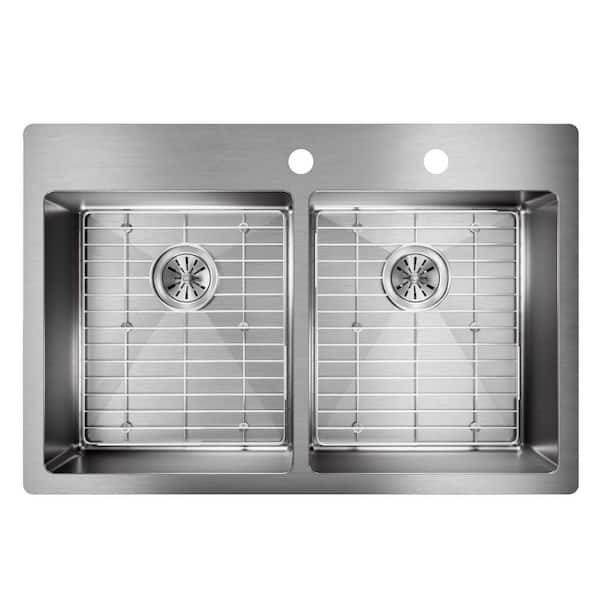
Our comprehensive review of the Elkay Crosstown Double Bowl Undermount Stainless Steel Kitchen Sink finds it to be a professional-grade 33-inch undermount solution crafted from heavy-duty 18-gauge T-304 steel, specifically engineered for homeowners seeking a balance of long-term durability and high-volume kitchen utility. Featuring a unique low-divide design, Sound Guard insulation, and a complete accessory bundle including bottom grids and drains, it offers a perfect balance of versatility and durability for busy modern kitchens. Ideal for those with a 36" base cabinet seeking a seamless, low-profile aesthetic.
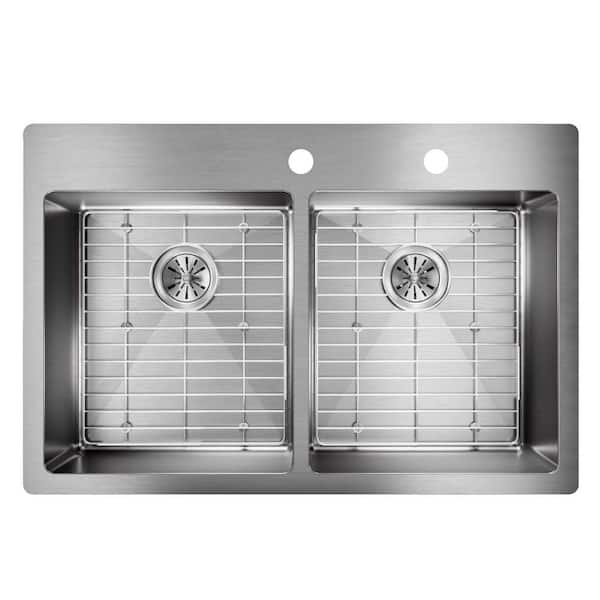
Top Pick: Best Versatile Double Bowl
The Elkay Crosstown Double Bowl Undermount Stainless Steel Kitchen Sink earns our top recommendation for homeowners who want the convenience of two basins without the restrictive high wall of traditional double sinks.
Elkay Crosstown Double Bowl Undermount Stainless Steel Kitchen Sink
The Elkay Crosstown Double Bowl Undermount Stainless Steel Kitchen Sink is engineered to bridge the gap between basic utility and luxury kitchen design.
Built from 18-gauge T-304 stainless steel, this sink provides a rigid, dent-resistant structure that handles the rigors of daily meal prep and heavy cookware. The "True Undermount" design ensures that the sink sits flush beneath your countertop, eliminating the unsightly rim where crumbs and grime typically collect, allowing you to wipe debris directly from the counter into the basin.What sets the Crosstown apart is its strategic low-divide configuration. Traditional double bowls often force users to choose between two small spaces; the ECTRUD33179DBG allows you to utilize both bowls as a single massive basin for oversized roasting pans or baking sheets, while still maintaining the ability to separate soapy water from rinsing produce. This flexibility is essential for those who cook frequently and need a workspace that adapts to the task at hand.
Beyond the physical layout, Elkay has focused heavily on the sensory experience. Pair this sink with a high-quality fixture to complete your workstation; if you are still shopping for taps, check out our MOEN Chateau 7430 buying guide. We recommend exploring our MOEN Chateau 7430 buying guide and performance review, or the Pfister Stellen LG529-STGS review if you are looking for high-value budget options, the Pfister Stellen LG529-STGS buying guide provides a great comparison of costs and performance. For those seeking a classic look, our Kohler Artifacts K-72759-VS guide is an excellent resource.
The inclusion of Sound Guard technology—a combination of heavy-duty undercoating and sound-deadening pads—neutralizes the "clatter" associated with stainless steel. Whether you are running a high-pressure faucet or loading a dishwasher, the acoustic profile is dampened, creating a quieter environment in open-concept living spaces.
Pros
- Low divide allows for oversized cookware handling
- Included bottom grids prevent basin scratches
- Sound Guard technology reduces noise pollution
- 18-gauge steel offers a great strength-to-cost ratio
- T-304 steel provides superior corrosion resistance
Cons
- Strict 36" minimum cabinet requirement
- Heavier installation requires robust support
- Satin finish can show water spots over time
- Undermount style requires stone/solid surface counters
The Science of Stainless Steel: How the Crosstown Works
To understand why the ECTRUD33179DBG is a preferred choice, one must look at the material science and acoustic engineering involved. T-304 stainless steel is the gold standard for kitchen environments because of its high chromium and nickel content. This specific alloy creates a passive layer of chromium oxide on the surface, which prevents oxygen from penetrating the metal and causing rust. In a sink that is constantly exposed to acidic lemon juice, salty pasta water, and harsh detergents, this chemical stability is paramount. For those upgrading the entire cooking zone, pairing a durable sink with a high-performance surface like the GE Profile PHP9036DJBB induction cooktop (an ideal pairing for modern efficiency) (which we've reviewed for its efficiency and precision) can create a truly professional kitchen environment.
The "18-gauge" designation refers to the thickness of the steel. In the world of gauges, a lower number indicates a thicker wall. While 20-gauge is common in budget sinks, 18-gauge provides a noticeable increase in rigidity. This prevents "oil canning"—the phenomenon where the bottom of a sink flexes or pops when hit with a heavy pot—and contributes to the overall lifespan of the product. The structural integrity of 18-gauge steel means the sink maintains its geometric shape even under the immense pressure of a full basin of water and heavy cast iron cookware.
Acoustically, the sink functions as a resonator. Without treatment, a stainless basin acts like a bell, amplifying the sound of falling water. Elkay’s Sound Guard system breaks this resonance through a multi-stage approach. First, the sprayed undercoating adds mass to the steel, which shifts the natural resonant frequency of the basin. Second, the high-density sound-deadening pads act as shock absorbers, trapping vibration energy before it can travel through the cabinet walls. This transforms a sharp, metallic "ping" into a soft, dull thud, which is particularly noticeable when using a high-horsepower garbage disposal in an open-concept home.
Furthermore, the polished satin finish is not merely an aesthetic choice but a functional one. By creating a consistent micro-texture on the surface, the satin finish helps disguise minor scratches and fingerprints that would be glaringly obvious on a mirrored or high-polish finish. This ensures that the sink looks "new" for a longer period, provided the user avoids harsh abrasives that can strip the finish.
Installation and Setup Guide: Ensuring a Perfect Fit
Installing the Elkay Crosstown ECTRUD33179DBG is a precision task that requires tight coordination between the cabinet installer and the countertop fabricator. Because it is an undermount sink, the sink is not supported by a rim resting on the counter; instead, it is suspended from the counter or supported by a reinforced cabinet base. This creates a seamless look but introduces several critical failure points if not executed correctly.
The "Reveal" Decision
Before the fabricator cuts your stone, you must decide on the "reveal" style. This determines how the edge of the countertop meets the sink rim and significantly impacts both the look and the ease of cleaning:
- Positive Reveal: A small sliver of the sink rim (usually 1/8" to 1/4") is visible. This is a classic look that clearly defines the sink area and allows for a slightly easier installation as the fabricator doesn't have to be as precise with the overhanging stone.
- Negative Reveal: The countertop extends slightly over the sink rim. This is the most hygienic option, as it allows you to swipe everything off the counter and into the sink without hitting a metal lip. However, it can occasionally leave a small "ledge" where water can pool if not perfectly angled.
- Zero Reveal: The countertop and sink rim are perfectly flush. This provides a high-end, architectural look but requires the most precision during installation. Any slight deviation in the cut will be immediately visible.
Mechanical Support Systems
Given the 9-inch depth and the weight of 18-gauge steel, the sink can become incredibly heavy once filled with water and dishes. Standard silicone adhesive is rarely enough to hold this weight over a decade of use. We recommend implementing one of the following support methods:
Heavy-duty undermount sink clips provide direct mechanical pressure against the countertop. Alternatively, for those using granite or quartz, a dedicated sink harness system (which supports the sink from the bottom using adjustable brackets) is the gold standard. These mechanical fasteners ensure the sink doesn't "drop" over time. For those managing broader plumbing upgrades, we've detailed a SharkBite U008LFA buying guide for ensuring leak-proof plumbing connections to ensure professional-grade connections. Neglecting mechanical support can cause the silicone seal to fail and lead to catastrophic cabinet leaks.
Maintenance and Long-Term Care: Preserving the Satin Finish
While stainless steel is marketed as low maintenance, the "polished satin" finish of the Crosstown requires specific care to maintain its luster and prevent pitting. The biggest enemy of stainless steel is not water, but chlorine and abrasive scrubbers. Understanding the chemistry of the surface is key to longevity.
The Role of Bottom Grids
The ECTRUD33179DBG comes with bottom grids for a reason. These grids create a critical air gap between your heavy pots and the sink floor. This prevents two primary issues: physical scratching of the satin finish from sliding cast iron, and "stagnant water spots." By lifting the cookware, air can circulate and water can drain more efficiently, preventing the mineral buildup that creates white rings on the basin floor. We recommend never placing heavy pots directly on the stainless steel surface.
Cleaning Protocol for Maximum Lifespan
To keep the sink in professional condition, follow this tiered cleaning schedule:
- Daily: Use a soft microfiber cloth and mild dish soap. Avoid using steel wool or "SOS" style pads, which can leave tiny iron particles on the surface that eventually rust, creating the illusion that the sink itself is rusting.
- Weekly: Use a dedicated stainless steel cleaner or a mixture of white vinegar and water. Always wipe with the grain of the satin finish to avoid creating circular swirl marks that catch the light.
- Deep Clean: For stubborn mineral deposits or "clouding," a baking soda paste can be applied and gently rubbed in with a soft sponge. Follow this with a thorough rinse and dry with a clean cloth to prevent new water spotting.
Detailed Product Comparison: How the Crosstown Stacks Up
When choosing between the Crosstown and other market leaders, the decision usually comes down to gauge thickness and bowl configuration. Not all "stainless" sinks are created equal; a budget sink may look identical in a catalog photo but behave very differently under the stress of daily use.
| Feature | Elkay Crosstown (ECTRUD33179DBG) | Budget-Series (20-Gauge) | Ultra-Premium (16-Gauge) |
|---|---|---|---|
| Wall Thickness | 18-Gauge (Balanced) | 20-Gauge (Thin) | 16-Gauge (Heavy) |
| Bowl Design | Low-Divide Double | High-Divide Double | Single Large Basin |
| Acoustics | Sound Guard Pads + Coat | Basic Pads only | Full Rubberized Coating |
| Accessories | Grids & Drains Included | Drains Only | Sold Separately |
| Durability | High | Moderate | Maximum |
If your priority is maximum rigidity, the Ruvati Gravena 33-inch Undermount 16 Gauge Stainless Steel Kitchen Sink offers a heavier-duty alternative.
As the table illustrates, the Elkay Crosstown sits in the "Sweet Spot" of the market. While a 16-gauge sink is technically more durable, it is often prohibitively expensive and significantly heavier, sometimes requiring reinforced cabinetry. Conversely, 20-gauge sinks are prone to "pinging" and denting over time. If you prefer a single basin with similar quality, the Kohler Vault Undermount Single Bowl Kitchen Sink is another excellent choice, while the Ruvati Fireclay 30-inch Farmhouse Apron-Front Kitchen Sink Single Bowl White offers a completely different aesthetic for apron-front installations. The 18-gauge construction of the ECTRUD33179DBG provides the structural rigidity needed for a lifetime of use without the extreme price premium of commercial-grade options like the Ruvati Gravena 33-inch Undermount Stainless Steel Sink.
Buying Guide: What to Consider Before Purchasing
Purchasing a sink is a 10-to-20 year commitment. Unlike a faucet, which can be swapped out in an hour, replacing an undermount sink often involves removing the countertop, which can cost thousands of dollars in labor and materials. Here is the comprehensive checklist for buyers to ensure the Crosstown is the right fit.
1. The Cabinet Dimension Trap
The most common error in sink purchasing is confusing the sink width with the cabinet width. If you find that a 36" cabinet is too large for your space, a more compact option like the Blanco Precis Compact Single-Basin Undermount Kitchen Sink may be a better fit. If a sink is 33" wide, it will not fit in a 33" cabinet because the sink walls have thickness and the mounting hardware needs space. Always ensure your cabinet is at least 3" wider than the sink's exterior dimensions if you want a standard, stress-free installation. For the ECTRUD33179DBG, a 36" cabinet is the non-negotiable minimum for a safe installation.
2. Depth vs. Ergonomics
The ECTRUD33179DBG features a 9-inch depth. While deeper is generally seen as "better" for holding large pots and reducing splashes, consider your height and physical comfort. A very deep sink requires you to lean further forward, which can cause lower back strain during long periods of dishwashing. For the average adult, 9 inches is widely considered the "ergonomic sweet spot," providing maximum capacity without sacrificing posture.
3. Basin Configuration: Single vs. Double vs. Low-Divide
Deciding on the number of bowls depends entirely on your kitchen workflow. If you prefer the timeless look of fireclay over stainless steel, the Sinkology Turner 33-Inch Double Bowl Fireclay Farmhouse Apron Front Kitchen Sink is a premium alternative. Otherwise, consider the following options:
- Single Basin: Best for those who wash huge stockpots, similar to the Kraus Standart PRO 33-inch 16 Gauge Undermount Single Bowl Stainless Steel Kitchen Sink, and don't mind a cluttered sink. However, you cannot soak dishes in one side while prepping food in the other.
- Standard Double: Best for "Wash and Rinse" workflows, like those offered by the Blanco Empressa 1-3/4 Low Divide Undermount Kitchen Sink. The high wall allows you to fill one side with soapy water, but it severely restricts your ab