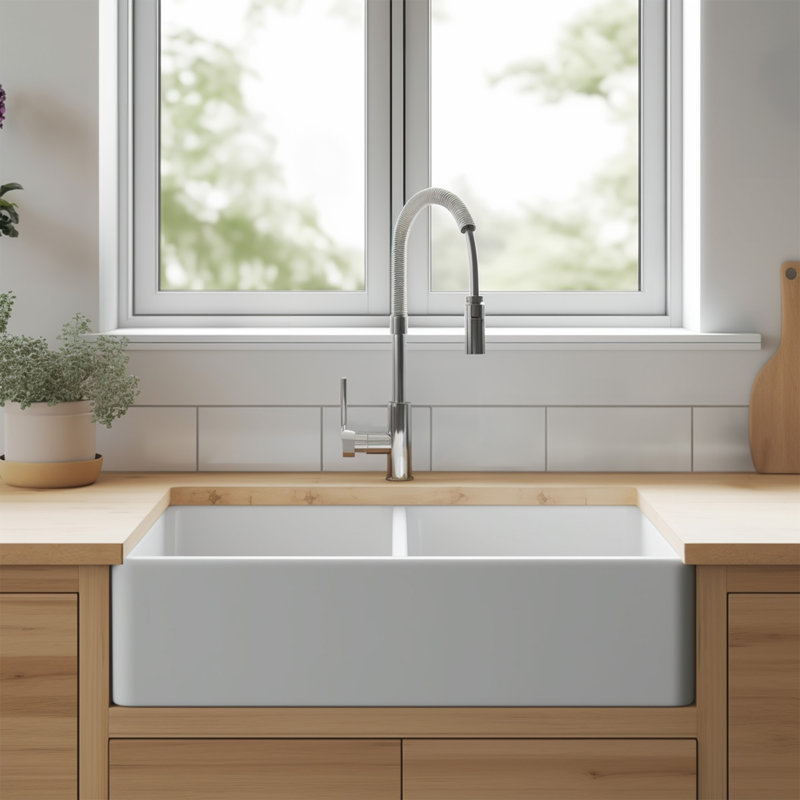
If you are planning a kitchen remodel, the Sinkology Turner 33-Inch Double Bowl Fireclay Farmhouse Sink in Crisp White is a premium centerpiece that blends traditional aesthetics with industrial-grade durability. This 50/50 split basin is an ideal solution for high-traffic kitchens, offering a dedicated space for soaking and rinsing while maintaining the timeless, high-end appeal of a classic apron-front farmhouse sink.
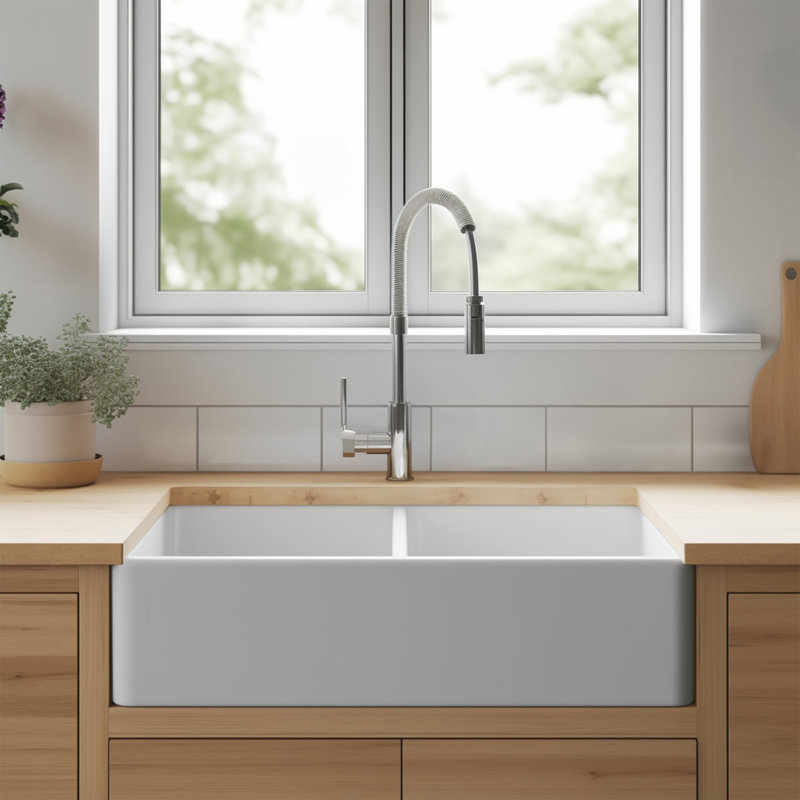
Top Pick: Sinkology Turner 33-Inch Double Bowl
Score: 9.4/10 — The gold standard for traditional fireclay sinks, balancing massive utility with an heirloom aesthetic.
Sinkology Turner 33-Inch Double Bowl Fireclay Farmhouse Sink
The Sinkology Turner brings classic apron-front charm to the heart of the kitchen, paired with the durability of solid fireclay construction. This sink is designed for those who view the kitchen as the center of the home, providing a substantial, high-capacity cleaning station that doubles as a design statement. Unlike standard undermount sinks, the Turner's exposed front allows it to serve as a focal point, bridging the gap between rustic country charm and modern luxury.
If you're upgrading your kitchen, the Sinkology Turner 33-Inch Double Bowl Fireclay Farmhouse Sink is a premier choice for combining traditional style with modern utility.
Crafted through a process of high-temperature kiln firing, the Turner utilizes fireclay—a material that fuses glaze and clay into a single, non-porous surface. This means the white finish isn't just a coating; it is an integral part of the sink's body. For the homeowner, this translates to a surface that is exceptionally resistant to the stains of turmeric, coffee, and wine, as well as a surface that won't rust or fade over decades of use. The 33-inch width is a versatile standard that fits into most medium-to-large kitchen layouts without overwhelming the space. To further enhance your kitchen setup, consider pairing a high-end sink with a GE GXWH40L whole house water filter to ensure your cleaning water is free of impurities for cleaner water throughout the home.
The 50/50 double-bowl configuration is the primary draw for multitasking chefs. While single-bowl sinks offer more room for oversized pots, the Turner's split design—similar to the Blanco Empressa Low Divide Undermount Kitchen Sink—allows for a dedicated "wash" and "rinse" cycle. It is particularly useful for those who prefer to soak heavy cookware in one side while continuing to prep vegetables or rinse glassware in the other. Because it is fireclay, the bowls are deep and rigid, preventing the "flexing" often found in cheaper stainless steel alternatives.
Pros
- Authentic farmhouse aesthetic with a substantial apron face
- Chip- and stain-resistant fireclay construction
- Versatile 50/50 double bowl layout
- Crisp white finish complements any cabinetry
- Lifetime warranty against manufacturing defects
Cons
- Extreme weight requires reinforced cabinetry
- Requires permanent cabinet modification
- Divider limits the use of extra-wide baking sheets
- Higher upfront cost than composite or steel
Technical Specifications
| Feature | Specification |
|---|---|
| Model Number | SK200-33FC |
| Material | Solid Fireclay |
| Finish | Crisp White Glossy |
| Overall Width | 33 inches |
| Bowl Configuration | Double Bowl (50/50 Split) |
| Mount Type | Apron Front / Farmhouse |
| Minimum Cabinet Size | 36-inch Base Cabinet |
| Drain Opening | 3.5 inch (Standard) |
| Approximate Weight | 115–130 lbs |
Understanding Fireclay Technology
To appreciate why the Sinkology Turner is positioned as a premium product, one must understand the chemistry of fireclay. Unlike cast iron sinks, which are made of metal and then sprayed with a layer of porcelain enamel, fireclay is a ceramic. It is composed of a refined clay that is fired in a kiln at temperatures exceeding 2,000 degrees Fahrenheit. During this process, the glaze actually fuses with the clay body.
This fusion creates a "monolithic" surface. In an enamel-coated sink, if a heavy pot hits the bottom, the enamel can chip, exposing the raw iron underneath, which then rusts. With the Turner, because the glaze and clay are one and the same, a chip (though rare) does not expose a different material that will oxidize. Furthermore, the high-heat process removes all porosity. This means the sink does not "absorb" liquids. When you spill red wine or beet juice on a fireclay sink, the liquid sits on the surface rather than soaking into the material, making it significantly easier to clean than natural stone or low-grade ceramics.
The thermal shock resistance of fireclay is also a key benefit. In a busy kitchen, it is common to pour boiling pasta water into a sink. While some lower-quality ceramics can crack under extreme temperature shifts, the kiln-fired nature of the Turner makes it remarkably stable, allowing it to handle the transition from ice-cold water to boiling heat without structural failure.
Furthermore, the density of fireclay provides a natural acoustic dampening effect. While stainless steel sinks can sound like a drum when water hits them at high pressure, fireclay absorbs a significant amount of that kinetic energy, resulting in a more muted, high-end sound profile during daily use. This contributes to a calmer kitchen environment, especially in open-concept homes where the kitchen flows directly into the living area.
Comprehensive Installation & Setup
Installing a farmhouse sink like the Sinkology Turner is not a "drop-in" procedure. It is a structural modification of your kitchen. Because the sink's apron sits proud of the cabinets, the front of your base cabinet must be physically altered. This process generally follows four critical phases:
Phase 1: Cabinet Modification
A standard 36-inch base cabinet is required. Before you begin modifying your cabinetry, you may want to review our guide on securing plumbing connections to ensure your layout is compatible.
The installer must remove the face frame of the cabinet to a height that matches the sink's apron. This involves careful measuring and cutting of the wood. If the cabinet is not perfectly square, the sink may not sit flush, creating gaps that look unprofessional and can collect debris. Because the Turner is a rigid ceramic object, it cannot be "forced" into place; the cabinet must be modified to fit the sink precisely.
Phase 2: Creating the Support System
You cannot simply "rest" a fireclay sink on the cabinet walls. When filled with water and dishes, the Turner can weigh upwards of 300 lbs. A reinforced ledger board or a custom-built wooden cradle must be constructed inside the cabinet. This support system transfers the weight of the sink directly to the floor of the cabinet, preventing the sink from sagging or cracking the countertop over time. Using heavy-duty 2x4s or structural plywood for the base is the industry standard for this type of installation.
Phase 3: Countertop Integration
The Turner can be installed in three distinct styles, depending on the desired aesthetic and functional outcome:
- Undermount: The most common choice. The countertop extends slightly over the inner rim of the sink, creating a seamless transition and allowing you to wipe water directly into the basin.
- Flush Mount: The countertop is cut so that the rim of the sink sits perfectly level with the surface. This provides a very modern, architectural look, though it requires extreme precision during the stone-cutting process.
- Positive Reveal: The rim of the sink slightly overlaps the countertop edge. This is a more traditional approach and is often used in heritage-style kitchens.
Phase 4: Plumbing Alignment
Because apron sinks typically sit lower than standard drop-in sinks, your existing P-trap and drain lines may be too high. You will likely need to lower the plumbing discharge pipe in the wall to ensure a proper gravity slope (for a guide on securing plumbing connections, see our SharkBite U008LFA coupling guide). Additionally, the Turner features 3.5-inch drains, which are compatible with standard garbage disposals. When pairing this sink with a new faucet—and considering the total cost of your remodel, you might want to check out our Pfister Stellen LG529-STGS review for budget-friendly options—consider a high-arc model—such as those detailed in our kitchen faucet buying guides—like the MOEN Chateau 7430 (see also the Chateau buying guide) for better reach in deep basins; for a wider variety of styles, see our Kohler Artifacts buying guide. Many users choose to install a disposal in one bowl and a standard strainer in the other, though dual-disposals are possible with a specialized tee-junction. Depending on your budget, you can find high-value options in our Pfister Stellen LG529-STGS review or check out the corresponding buying guide or opt for a premium match with the Kohler Artifacts K-72759-VS.
The Long-Term Maintenance Blueprint
While fireclay is incredibly durable, maintaining that "Crisp White" look requires a specific approach. Because the finish is a high-gloss glaze, it is prone to "micro-scratching" if abrasive materials are used. Over years of use, these micro-scratches can dull the shine and make the sink appear gray or matte.
Daily Cleaning Routine
For everyday grime, a soft sponge and mild dish soap are sufficient. Avoid using "scrubby" pads (like the green side of a sponge) on a daily basis, as these can eventually wear down the gloss. If the sink feels "filmy" due to hard water, a quick wipe with a mixture of white vinegar and water will dissolve calcium deposits without harming the finish. Be sure to rinse thoroughly with water after using vinegar to ensure no acid remains on the surface for extended periods.
Dealing with Tough Stains
Even though fireclay is non-porous, some pigments (like those in coffee or tea) can leave a surface residue if left for days. If you notice discoloration, use the following methods:
- The Baking Soda Method: Create a thick paste of baking soda and water. Apply it to the stain and let it sit for 15 minutes. Gently scrub with a soft cloth. This provides a mild abrasive action that won't scratch the glaze.
- Specialized Cleaners: Use a non-abrasive cream cleanser (such as Bar Keepers Friend Soft Cleanser). Avoid the powder version if it contains harsh grit; always opt for the "soft" or "liquid" variants.
- Avoid Bleach: While a diluted bleach solution is okay for occasional sanitization, concentrated bleach can actually dull the gloss of the glaze over time if used frequently.
Winter and Thermal Care
In extremely cold climates, if your kitchen is not heated during the winter, be cautious about pouring boiling water into a freezing cold sink. While fireclay is resistant to thermal shock, extreme 200-degree differentials can theoretically cause stress fractures in the ceramic body. Let the sink temper slightly with lukewarm water before dumping boiling pots of water into the basin.
Buyer's Guide: How to Choose the Right Farmhouse Sink
Choosing a sink is one of the most permanent decisions in a kitchen remodel. Unlike a faucet or a dishwasher, which can be replaced in an afternoon, a farmhouse sink is integrated into the cabinetry and countertops. Before committing to the Sinkology Turner, consider these three critical factors.
1. Bowl Configuration: Single vs. Double
The "Great Debate" of the kitchen is whether to go with one giant bowl or two medium bowls. The Sinkology Turner's 50/50 split is designed for efficiency. If you are a "soaker"—someone who fills the sink with soapy water and leaves dishes there—the double bowl is essential. For those prioritizing a single, massive basin, the Kohler Vault Single Bowl Kitchen Sink is a durable alternative. It allows you to keep the kitchen functional while a load of pots soaks.
However, if you frequently use oversized commercial baking sheets or giant roasting pans, you may find the divider frustrating. In those cases, a single-bowl version like the Kraus Standart PRO Single Bowl Stainless Steel Kitchen Sink or the Blanco Precis Compact Single-Basin Undermount Kitchen Sink would be a better fit. For most residential users, the 50/50 split provides the best balance of utility and convenience, allowing for simultaneous food prep and cleaning.
2. Material Comparison: Fireclay, Stainless, and Composite
Why choose fireclay over other options? Here is the breakdown of how the Sinkology Turner stacks up against the competition:
| Material | Aesthetics | Durability | Maintenance | Best For... |
|---|---|---|---|---|
| Fireclay | Classic/Luxury | High (Stain/Scratch) | Low (Non-porous) | Traditional Homes |
| Stainless Steel (e.g., Elkay Crosstown Double Bowl Undermount Sink or Ruvati Gravena Undermount Kitchen Sink) | Industrial/Modern | Highest (Impact) | Medium (Water Spots) | High-Utility/Budget |
| Composite | Contemporary | Medium (Matte) | Low | Modern Minimalism |
Fireclay is the gold standard for those seeking a "timeless" look. While stainless steel is virtually indestructible, it lacks the architectural presence of an apron front. Composite materials are great for noise reduction, but they often lack the brilliant "Crisp White" luminosity that only a kiln-fired glaze can provide.
3. Sizing and Cabinet Fit
A 33-inch sink is the industry standard for medium-to-large kitchens. However, you must ensure your base cabinet is at least 36 inches. This extra 3 inches of "wiggle room" is necessary for the sink's outer lip and the structural supports required to hold it. If you have a 33-inch cabinet, you will likely find that this specific model is too wide, and you should look for a 30-inch alternative, such as the Ruvati Fireclay Farmhouse Apron-Front Kitchen Sink.
Common Pitfalls in Farmhouse Sink Purchases
Many homeowners make a few common mistakes wh