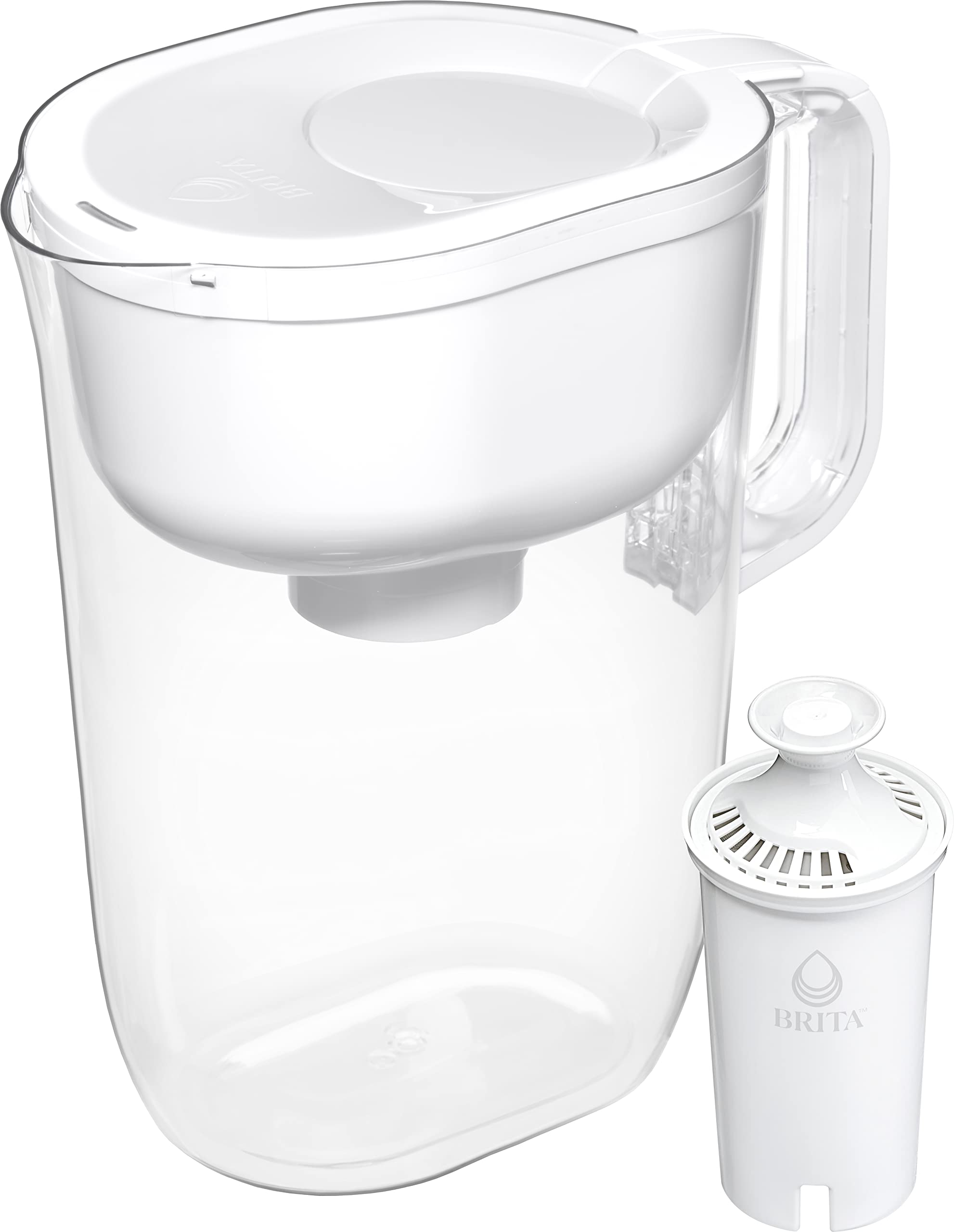
The Brita Standard 10-Cup Pitcher is a reliable, budget-friendly gravity filter that noticeably improves tap water taste with no installation required. It reduces chlorine taste and odor, copper, mercury, and cadmium, making it an ideal choice for renters, small households, and office spaces looking to eliminate single-use plastic bottles.
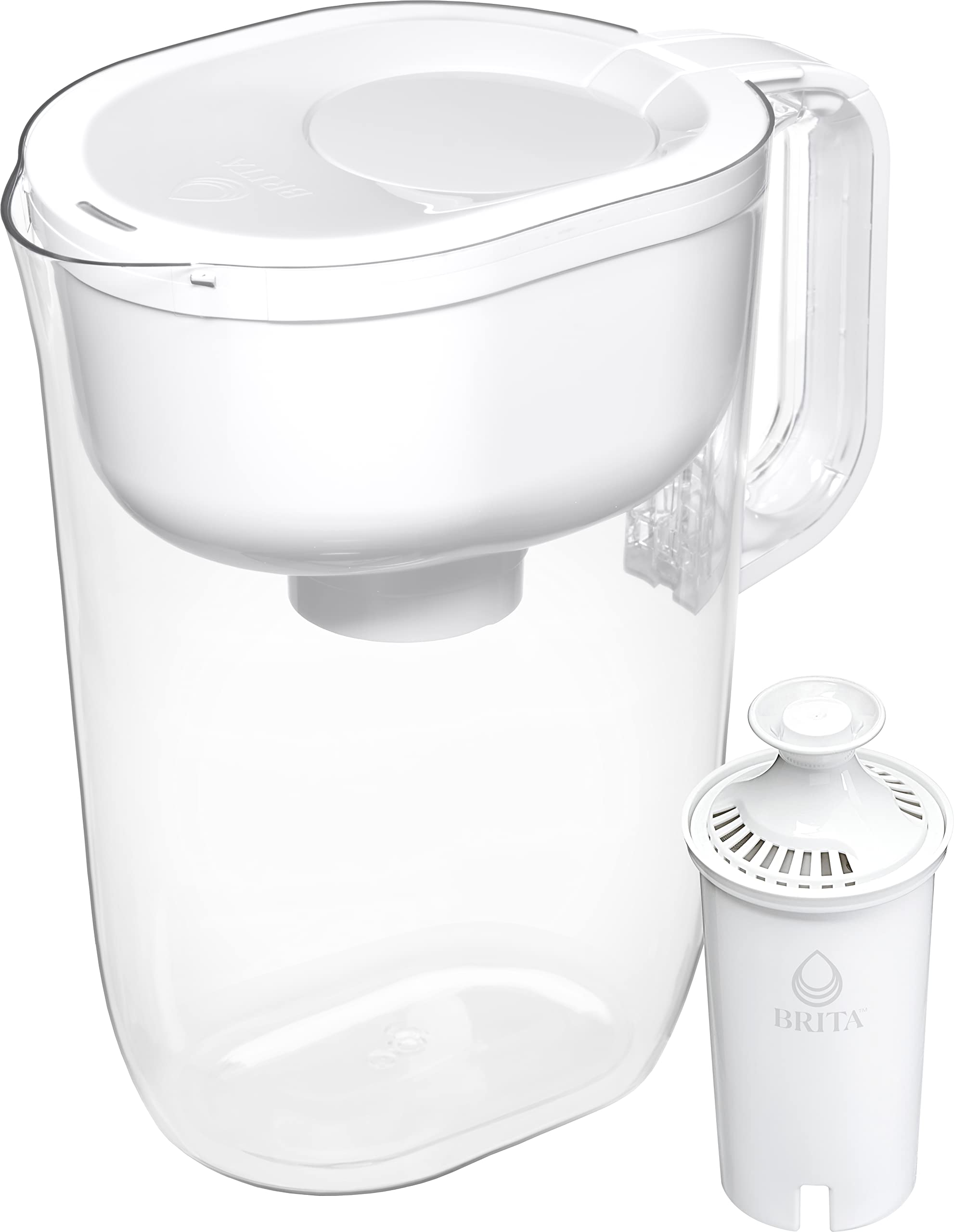
Top Pick: Brita Standard 10-Cup Pitcher
Score: 9/10 — An affordable, fridge-friendly filter pitcher that meaningfully improves the taste of tap water with minimal fuss. Best for renters, small households, and anyone replacing bottled water.
If you're tired of buying bottled water or noticing the faint chlorine tang of your tap, a filtering pitcher is the simplest possible upgrade available for the modern home. Depending on your goals, you might also explore a GE whole house water filtration system for total home protection. Water filtration doesn't always require expensive plumbing or contractor visits (similar to maintaining an A.O. Smith water heater) (though you might consider upgrading your kitchen faucet or adding a Waterdrop Tankless Under-Sink Reverse Osmosis System 800 GPD at the same time), and often, the most effective solution is a simple gravity-fed system that sits right in your refrigerator door. The Brita Standard 10-Cup Pitcher is one of the most recognizable 10-cup water filter pitchers in home water filtration, and for good reason: it balances capacity, cost, and contaminant reduction in a way that fits the lifestyle of millions.
In this comprehensive guide, we will break down the mechanics of how this system works, analyze the specific contaminants it targets, and explain who will benefit most from this particular model. Whether you are moving into your first apartment, setting up a home office, or simply looking for a low-maintenance way to ensure your drinking water tastes fresh and clean, the Brita Standard 10-Cup Pitcher provides a pragmatic solution without the steep learning curve of high-end reverse osmosis systems.
Brita Standard 10-Cup Pitcher with 1 Filter
The Brita Standard 10-Cup Pitcher serves as the essential entry point into Brita's extensive lineup. It is the model most consumers picture when they think of a "water filter pitcher." The design is intentionally minimalist: a clear, BPA-free plastic pitcher body, a top reservoir where you pour your unfiltered tap water, and a replaceable filter cartridge that performs the heavy lifting as gravity pulls the water through the filtration media.
From a functional standpoint, the included Standard filter is engineered to target the most common complaints associated with municipal water systems. It specifically reduces chlorine taste and odor, which are often the primary causes of "chemical-tasting" water. Furthermore, it addresses heavier metals such as copper, mercury, and cadmium. By removing these elements, the pitcher transforms standard tap water into a crisp, refreshing beverage that is palatable for everyone in the household.
It is important to manage expectations regarding what a gravity pitcher can achieve. The OB03 is a taste and odor specialist; it is not a water softener. If your primary struggle is mineral buildup (scale) on your faucets or "hard" water that prevents soap from lathering, a pitcher will not solve that issue. For those specific needs, an Aquasana Salt-Free Whole-Home Water Softener and Conditioner would be the appropriate category of appliance. Similarly, if your water source is a private well with high levels of arsenic or nitrates, you would need a more aggressive system, such as an Express Water 10-Stage Alkaline Reverse Osmosis System.
For the vast majority of urban and suburban dwellers, however, the Brita Standard 10-Cup Pitcher does exactly what is needed. The 10-cup capacity is a carefully chosen middle ground. It provides enough filtered water to keep a small household or a few individuals hydrated between refills without requiring a massive footprint. The slim profile is specifically designed to slide into the door bins of most standard refrigerators, keeping the water chilled and accessible without sacrificing valuable shelf space.
This pitcher is most effectively utilized by renters who cannot make permanent changes to their plumbing, students in dorm rooms, or professionals in office break rooms. The main ongoing commitment is the replacement of the filter roughly every two months or 40 gallons. This predictable, low-cost maintenance schedule makes it a sustainable alternative to the endless cycle of purchasing and recycling plastic water bottles.
Pros
- Affordable upfront cost and inexpensive replacement filters
- Slim design fits most standard refrigerator doors
- Significantly improves chlorine taste and odor
- Zero installation, tools, or plumbing knowledge required
- Dramatic reduction in single-use plastic bottle waste
Cons
- Filter requires replacement every ~2 months or 40 gallons
- Gravity filtration is significantly slower than faucet-mounted systems
- Does not remove all contaminants or soften hard water
- 10-cup capacity may be insufficient for large families (5+ people)
| Specification | Detail |
|---|---|
| Model Number | OB03 |
| Category | Water Treatment Systems |
| Total Capacity | 10 Cups |
| Filter Type | Brita Standard (1 filter included) |
| Filter Lifespan | ~2 months or 40 gallons |
| Contaminant Reduction | Chlorine taste & odor, copper, mercury, cadmium |
| Physical Design | Slim, fridge-door compatible |
Deep Dive: How Gravity Filtration Works
To understand why the Brita Standard 10-Cup Pitcher is effective, it is helpful to understand the science of gravity filtration. Unlike reverse osmosis, which uses a high-pressure pump to force water through a semi-permeable membrane, a pitcher relies entirely on the force of gravity. Water moves slowly through a bed of activated carbon and ion-exchange resin. This process is passive, meaning it requires no electricity, making it the most energy-efficient method of water purification available for home use.
The Role of Activated Carbon
The core of the Brita Standard filter is activated carbon. This material is "activated" by being exposed to a high-temperature process that creates millions of tiny pores. These pores act like a chemical sponge, trapping organic compounds—specifically chlorine—through a process called adsorption. When water passes through the carbon, the chlorine molecules stick to the surface of the carbon pores, effectively removing them from the water stream. This is why the OB03 is so effective at removing that distinct "swimming pool" smell and taste from tap water.
Activated carbon is also highly effective at removing volatile organic compounds (VOCs) and other sediments that can affect the clarity and taste of the water. The "Standard" filter used in the OB03 is optimized for this specific task, ensuring that the most common taste-altering chemicals are neutralized before the water ever reaches your glass.
Understanding Ion-Exchange Resin
To tackle heavy metals like copper, mercury, and cadmium, the filter incorporates ion-exchange resin. This material works differently than carbon. Instead of trapping molecules in pores, it swaps "bad" ions (the metals) for "good" ions (usually hydrogen or sodium) as the water passes through. As the water flows, the resin acts as a chemical magnet, pulling the heavy metal ions out of the water and bonding them to the resin beads.
While not as comprehensive as a full-scale desalination plant, this is sufficient for most municipal water supplies to bring heavy metal levels down to a safer, tastier baseline. It is important to note that ion-exchange resins have a finite capacity. Once all the "good" ions are swapped for "bad" ones, the resin is exhausted, which is why replacing the filter every 40 gallons is critical for maintaining water quality.
The Trade-off: Contact Time vs. Speed
Because the water moves slowly, the "contact time" between the water and the filter media is increased. This is the fundamental trade-off of the pitcher system: you get a high-quality result, but you have to wait for the water to drip down into the reservoir. In the world of filtration, "dwell time" is everything. The slower the water moves through the media, the more opportunity there is for contaminants to be adsorbed or exchanged.
If you find this process too slow for your lifestyle, you might consider a faucet-mounted filter, though those require installation and can sometimes restrict water flow. However, for those who can plan their water needs—filling the pitcher before bed or during a meal prep session—the gravity method provides a silent, non-intrusive way to keep clean water on hand.
The Complete User Guide: Setup and Maintenance
Setting up the Brita OB03 is a straightforward process, but doing it correctly ensures the longevity of your filter and the quality of your water. Many users simply pop the filter in and start drinking, but this can lead to a "dusty" taste and inefficient filtration. Follow these steps for the best results:
Step 1: Initial Preparation and Priming
Remove the filter from its packaging. You will notice the filter is a compact cylinder. Some users prefer to rinse the filter under cold running water for 15 seconds to remove any loose carbon particles. Following the rinse, soak the filter in a bowl of cold water for approximately 15 minutes. This "primes" the filter, removing air bubbles that could otherwise create "channels" in the carbon. When air bubbles are present, water can find a path of least resistance, effectively "leaking" around the filtration media and allowing unfiltered water to enter your pitcher.
Step 2: Installation and First Flush
Place the filter firmly into the reservoir. Ensure it is seated deeply and securely; a loose filter can lead to "bypass," where tap water flows around the filter rather than through it. Once the filter is locked in, fill the reservoir to the "Max" line with cold tap water. The first two batches of water should be discarded. These are used primarily to flush out any remaining manufacturing residues and the small amount of carbon dust that naturally remains after priming. Once the second batch has filtered through, the system is ready for consumption.
Step 3: Ongoing Maintenance and Hygiene
The most common failure point for pitcher users is neglecting the filter change. The OB03 filter is rated for 40 gallons. In a household of two people drinking four glasses of water a day, this typically lasts about two months. However, water quality varies by region. If you live in an area with particularly high sediment levels, you may find the filter slows down more quickly.
If you notice the water starting to taste like chlorine again, or if the flow rate becomes painfully slow, it is time for a replacement regardless of the date. To keep the system hygienic, wash the pitcher and lid with mild soap and warm water every few weeks. Avoid using abrasive scrubbers on the clear plastic, as this can create micro-scratches where bacteria can hide. Never put the filter itself in the dishwasher or microwave, as the high heat will destroy the ion-exchange resin and activate carbon structures.
Buying Guide: Is a Pitcher Right For You?
Choosing between a pitcher, a faucet filter, and a GE High Flow Whole House Water Filtration System (see our GE GXWH40L buying guide for more) depends on your living situation and your specific water quality goals. Not every home needs an expensive installation, and not every home can rely on a simple pitcher. Here is how to decide if the Brita Standard 10-Cup Pitcher fits your needs based on common living scenarios.
Scenario A: The Renter or Student
If you live in an apartment where you cannot drill into countertops or modify the plumbing, the Brita OB03 is the gold standard. It requires zero tools and can be packed up in seconds if you move. For those in a dorm room, it eliminates the need to carry heavy crates of bottled water from the store to the third floor. It is the most cost-effective way to avoid the "plastic bottle trap" and provides an immediate improvement in water quality without needing a landlord's permission for renovations.
Scenario B: The Small Office or Workspace
For an office of 2-5 people, a 10-cup pitcher provides a convenient, shared source of clean water. Since office break rooms often have limited counter space and shared refrigerators, the slim design allows the pitcher to sit in the fridge door without blocking other items. It is a professional and affordable upgrade to a shared workspace, ensuring that coffee and tea made in the office taste better by using filtered water instead of raw tap water.
Scenario C: The High-Contaminant Household
If your water report shows high levels of lead, arsenic, or nitrates, a standard gravity pitcher may not be enough. While the OB03 reduces several heavy metals, it is not designed for industrial-grade contaminant removal or the removal of dissolved solids (TDS). In these cases, you should look into an under-sink reverse osmosis system, such as the iSpring 6-Stage Under-Sink Reverse Osmosis System with Alkaline Remineralization.
Related parts & accessories
Scenario D: The Hard Water Struggle
If you notice white, crusty deposits (limescale) on your tea kettle, glassware, or showerhead, you have "hard water." This is caused by high concentrations of calcium and magnesium. A Brita pitcher improves the taste by removing chlorine, but it does not remove the minerals that cause scale. To solve this, you need a salt-free water conditioner—such as the Aquasana Salt-Free Whole-Home Water Softener and Conditioner or the high-capacity options detailed in our Culligan WH-HD200-C guide—or a traditional ion-exchange softener. Combining a whole-home conditioner for the pipes and a Brita pitcher for the final drinking glass is a popular "hybrid" strategy for homeowners who want both appliance protection and great-tasting water.
| Feature | Brita Standard 10-Cup (OB03) | Under-Sink Reverse Osmosis | Whole-Home Conditioner |
|---|---|---|---|
| Installation | None (Plug & Play) | Professional Plumbing | Professional Plumbing |
| Main Benefit | Taste & Odor Improvement | Purest Possible Water | Scale & Hardness Removal |
| Cost | Very Low | Moderate to High | High |
| Maintenance | Filter change every 2 months | Multi-stage filter cycles | Periodic media replenishment |
| Footprint | Refrigerator Door | Under Sink Cabinet | Garage or Utility Room |
Common Pitfalls and How to Avoid Them
Even a simple device like a water pitcher can be used inefficiently. To get the most out of your OB03, avoid these common mistakes that can compromise your water quality or shorten the life of your filter.
Overfilling the Reservoir
While it's tempting to fill the pitcher to the very brim to get a f