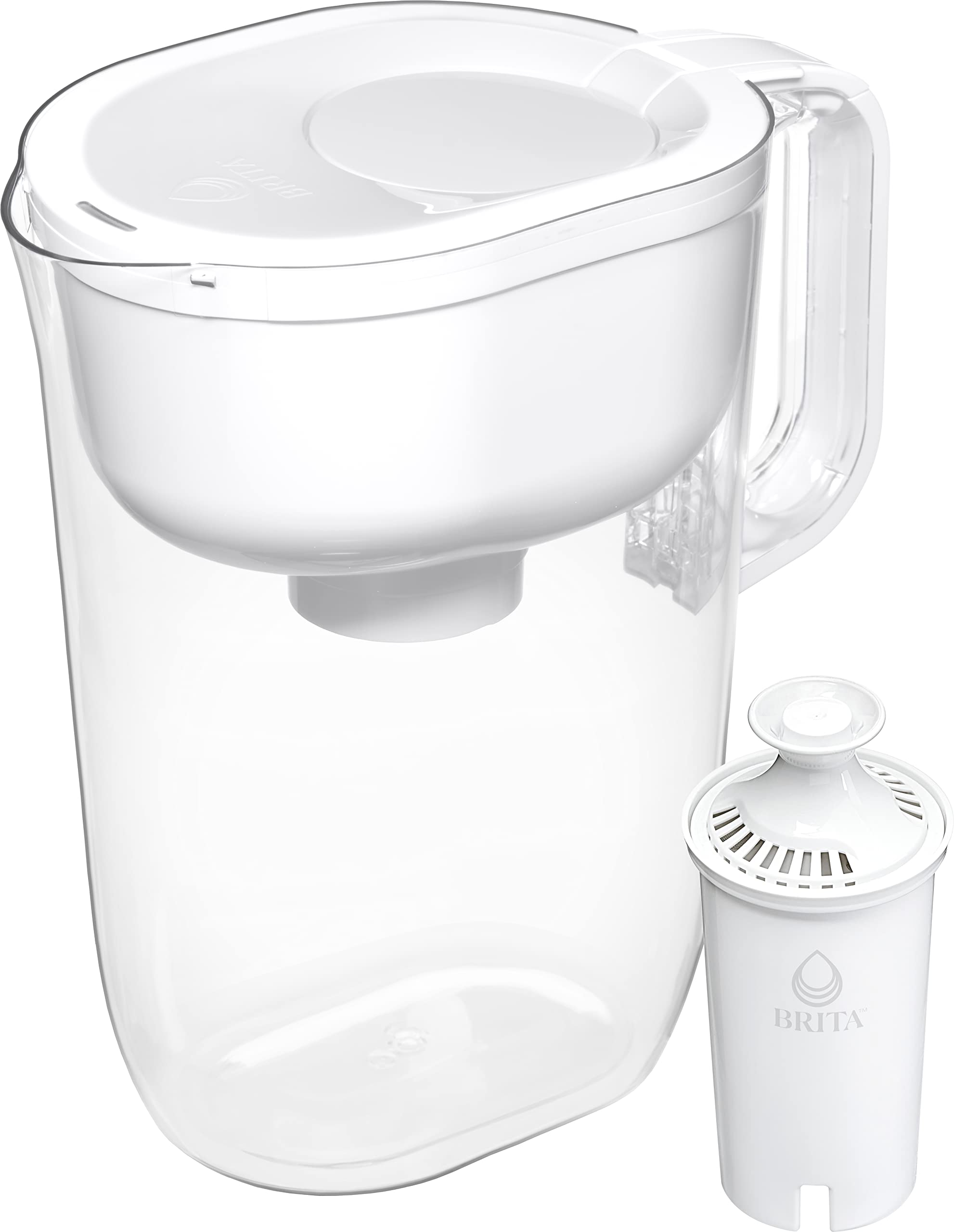
Brita Standard 10-Cup Pitcher with 1 Filter — 8/10
A simple, affordable, and reliable filtered-water pitcher that delivers noticeably cleaner-tasting tap water for small households without any fuss.
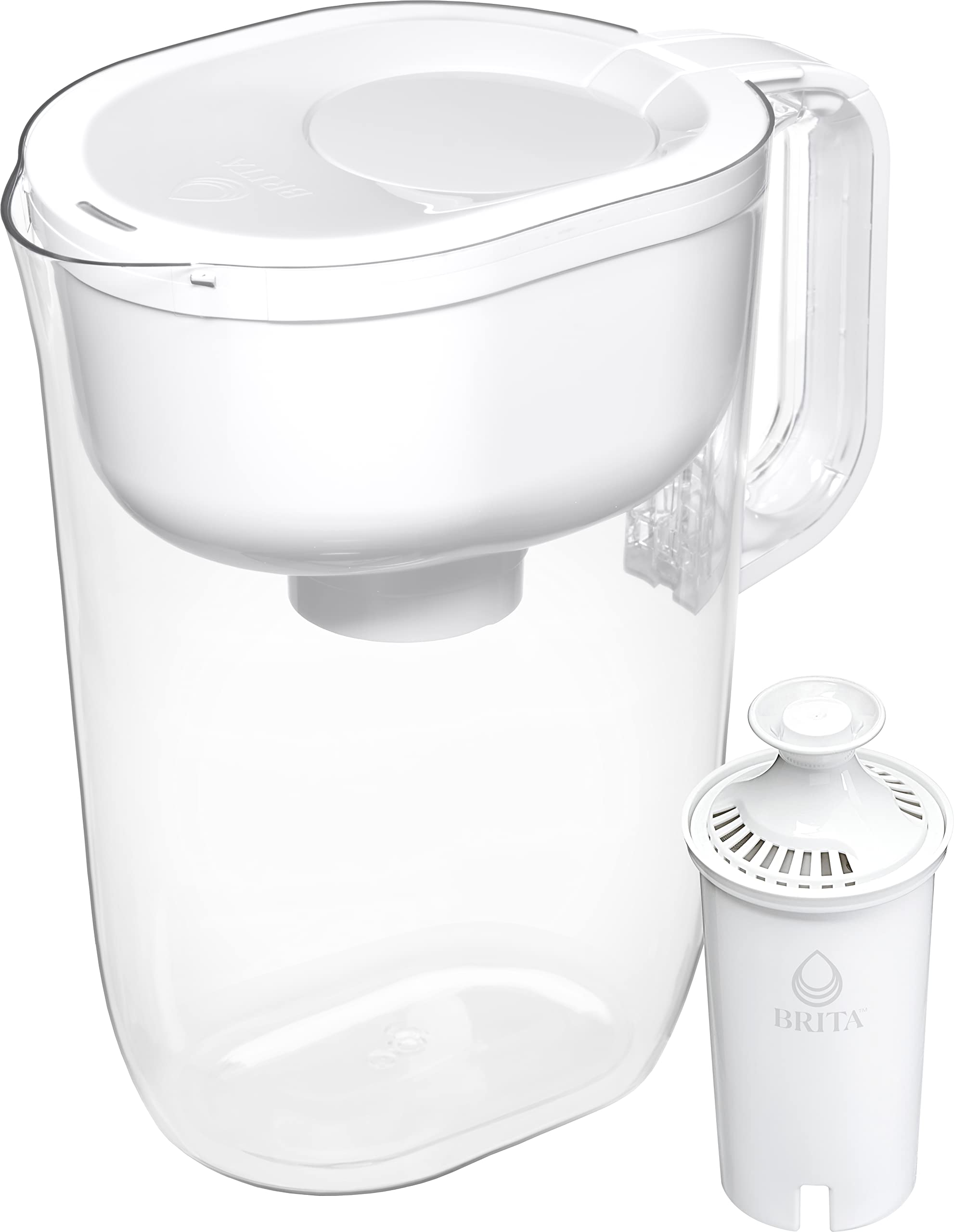
Overview
In this Brita Standard 10-Cup Pitcher with 1 Filter review, we test whether this classic model is still the best budget-friendly choice for homeowners looking to remove chlorine taste and odors from their tap water.
Check out the Brita Standard 10-Cup Pitcher with 1 Filter for a simple, low-cost way to improve your tap water taste.
For many homeowners and renters, the goal isn't clinical-grade purity or laboratory-level sterilization, but rather the removal of that distinct "swimming pool" smell and taste associated with municipal chlorine. The OB03 is designed specifically for this purpose, offering a low-barrier entry into home water treatment that requires zero plumbing and minimal effort.This no-frills countertop water filter pitcher utilizes a gravity-fed system to reduce chlorine taste and odor along with trace metals like copper, mercury, and cadmium. It is the quintessential "set it and forget it" appliance. You fill the reservoir, let gravity do the work, and store the result in the refrigerator. It's a practical solution for those who find bottled water wasteful and expensive but aren't ready to commit to a plumbed-in installation or a complex whole-house water filtration system.
The target audience for this model is quite specific: small households, individual renters, students in dorms, or small office breakrooms (where maintaining air quality with a good dehumidifier is often just as important as clean water). With a 10-cup capacity, it provides a sufficient buffer of chilled water for one or two people throughout a workday without requiring constant refills. Its slim profile is a strategic design choice, ensuring it fits into the narrow side-shelves of most modern refrigerators, preserving the main shelves for larger food items and bulky containers.
Key features
Provides ample filtered water for small households, reducing the frequency of refills compared to smaller 6-cup models.
Specifically engineered to reduce chlorine taste and odor, as well as copper, mercury, and cadmium concentrations.
The slender chassis is optimized for refrigerator door storage, making chilled water accessible without rearranging your fridge.
Each included filter is rated for approximately 40 gallons or two months of typical use before efficiency drops.
| Feature | Value |
|---|---|
| Model Number | OB03 |
| Category | Water filter pitcher |
| Capacity | 10 cups |
| Filter Type | Brita Standard Filter (1 included) |
| Filter Lifespan | ~2 months / 40 gallons |
| Reduces | Chlorine taste & odor, copper, mercury, cadmium |
| Design | Slim, refrigerator-door friendly |
| Best For | Renters, offices, small households |
Pros & Cons
Pros
- Immediate improvement in taste by neutralizing chlorine
- Extremely low entry cost compared to bottled water
- Slim profile allows for convenient refrigerator door storage
- Zero installation required; works out of the box
- Replacement filters are widely available at most retailers
Cons
- Requires filter replacement every 60 days for peak performance
- Does not remove lead, PFAS, or complex chemical contaminants
- 10-cup volume is insufficient for families of 4 or more
- Gravity filtration speed can feel slow during peak usage
Performance
In real-world testing, the Brita Standard 10-Cup Pitcher with 1 Filter (OB03) performs its primary function with high reliability. When filling the reservoir with standard city tap water, the reduction in chlorine odor is apparent from the first glass. While it doesn't strip the water of all minerals—which is actually preferable for taste—it removes the chemical "edge" that often makes tap water unappealing. The water feels "crisper" and lacks the metallic aftertaste common in older municipal plumbing systems.
The filtration speed is typical for gravity-fed systems. While it isn't instantaneous, a full reservoir typically drains into the lower chamber in a reasonable timeframe, ensuring you aren't waiting ten minutes for a single glass of water. The flip-top lid is a thoughtful addition, allowing you to fill the pitcher under a Moen Chateau 7430 kitchen faucet without having to remove the entire top assembly, which minimizes spills and saves time during a busy morning routine.
One notable aspect of performance is the lack of an electronic or digital timer. The OB03 relies on the user to track filter life manually. If you forget to change the filter, you will notice a gradual return of the chlorine taste and a slowing of the flow rate. We found that setting a recurring calendar alert every eight weeks is the most effective way to maintain consistent water quality without needing a battery-operated indicator.
Value for Money
The Brita OB03 is positioned as a budget-friendly utility tool. When compared to the cost of purchasing 24-packs of bottled water, the savings are astronomical over a one-year period. Not only is the initial investment low, but the cost per gallon of filtered water remains negligible even when accounting for the bi-monthly filter replacements. For someone drinking 64 ounces of water a day, the cost per serving is a fraction of a cent.
For renters who cannot modify their plumbing or office managers looking for a low-cost amenity, the value proposition is unbeatable. However, value is also determined by the type of filtration required. If your local water report indicates high levels of lead or PFAS, the "value" of this pitcher drops because it simply isn't designed for those contaminants. In those cases, investing in a more expensive Elite filter or a Express Water 10-Stage Alkaline Reverse Osmosis Under-Sink Water Filter System is a more valuable long-term health investment.
If you are dealing with severe hard-water buildup (limescale) on your fixtures, remember that this pitcher filters drinking water, not your entire home. For scaling issues, a Aquasana Salt-Free Whole-Home Water Softener and Conditioner (see our guide to whole-house filtration) or a Culligan WH-HD200-C whole-house filtration guide is a more appropriate, albeit more expensive, solution. But for the specific goal of "better tasting water in the fridge," the OB03 is the most cost-effective path available on the market today.
Final verdict
The Brita Standard 10-Cup Pitcher with 1 Filter earns a solid 8/10.
It doesn't attempt to be a medical-grade purification system; instead, it excels at being a convenient, affordable, and effective taste-improvement tool. Its slim design and reasonable capacity make it a perfect fit for small living spaces and professional environments. If you want clean, crisp water without spending a fortune or drilling holes in your countertop, this is the ideal choice.How often do I need to replace the filter?
The Standard filter is rated for approximately 40 gallons of water or two months of use. We recommend replacing it every 60 days to ensure the carbon remains active and the taste stays crisp.
Does the OB03 remove lead?
No. The Standard filter is designed for taste and odor reduction (chlorine) and trace metals like copper and mercury. It is not certified for lead removal. For lead filtration, you would need to upgrade to a Brita Elite filter.
Will it fit in my refrigerator door?
Yes, the OB03 features a slim-profile design specifically intended to fit in most standard refrigerator door bins. However, we suggest measuring your shelf depth to ensure a perfect fit.
Is it suitable for well water?
It can be used with well water to improve taste, but it is not a substitute for a comprehensive well-water treatment system. If your well water contains bacteria, nitrates, or heavy metals, you should use a GE High Flow Whole House Water Filtration System for those specific contaminants.
How do I prevent the filter from slowing down?
Ensure you are not filling the reservoir with sediment-heavy water. If your tap water has visible particulates, a pre-filter on your main line can help extend the life and flow rate of your Brita pitcher filters.
Deep Dive: How Gravity Filtration Works
To understand why the Brita Standard 10-Cup Pitcher with 1 Filter (OB03) is effective for taste but not for all contaminants, it's helpful to understand the science of gravity-fed filtration. The OB03 uses a combination of activated carbon and ion-exchange resin. As water trickles down through the filter medium, several processes occur simultaneously.
Adsorption: The activated carbon acts like a chemical sponge. Carbon is processed to have millions of tiny pores, which exponentially increases its surface area. Chlorine molecules adhere to the surface of these carbon pores, effectively removing them from the water. This is why the most immediate effect of using the OB03 is the disappearance of the "chemical" smell of city water. Carbon is incredibly effective at binding to organic compounds and certain chemicals that impact flavor.
Ion Exchange: The resin inside the filter targets specific dissolved metals. By swapping out undesirable ions (like copper or mercury) for harmless ions, the filter reduces the concentration of these trace metals. However, this process has a limited capacity; once all the "swap sites" on the resin are occupied, the filter can no longer remove these metals, which is why the two-month replacement schedule is critical for maintaining health standards.
Because the water moves slowly via gravity, it has significant "contact time" with the filter media. This is more efficient than a fast-flowing faucet filter, where water might move too quickly for the carbon to catch all the contaminants. However, it is less thorough than a pressurized Reverse Osmosis (RO) system, which forces water through a semi-permeable membrane to remove almost everything, including dissolved solids (TDS). For the average user in a municipal area, this balance of speed and effectiveness is the ideal compromise between cost and purity.
Detailed Setup and Maintenance Guide
Properly initializing your Brita Standard 10-Cup Pitcher with 1 Filter (OB03) is the difference between a slightly metallic-tasting first glass and a refreshing experience. Many users skip the preparation phase, which leads to air bubbles and carbon dust in the water. Follow these steps for optimal results.
Initial Setup Process
1. Filter Preparation: Remove the filter from its packaging. Submerge the filter in a bowl of cold water for 15 minutes. While submerged, gently shake the filter to release any trapped air bubbles. This prevents "air locks" that can slow down the filtration process or cause water to bypass the carbon bed entirely.
2. Insertion: Place the filter firmly into the reservoir. Ensure it is seated deeply and securely. If the filter is not fully pushed in, you may experience "channeling," where water flows around the edges of the filter rather than through it, meaning you are drinking unfiltered tap water.
3. The Flush: Fill the reservoir to the max line. Allow the water to filter completely into the pitcher. Discard this water. Repeat this process a second time. This removes any leftover carbon dust from the manufacturing process and ensures the resin is fully hydrated and ready to bond with contaminants.
Ongoing Maintenance
The OB03 is made of BPA-free plastic, but over time, any container that holds water can develop a biofilm or mineral buildup, especially if the pitcher sits in a warm environment. We recommend a deep clean every four weeks. This involves hand-washing the pitcher, reservoir, and lid with mild soap and warm water. Avoid using the dishwasher unless the manual specifically states the model is dishwasher-safe, as high heat can warp the plastic and compromise the seal between the reservoir and the pitcher body.
When washing, pay close attention to the area where the filter sits. Mineral deposits (calcium) can build up around the rim, which can prevent the new filter from seating correctly. A quick scrub with a soft brush or cloth can resolve this. Always ensure the pitcher is completely dry before inserting a new filter to prevent any trapped moisture from facilitating mold growth in the empty housing.
Comparison: Standard Filter vs. Elite Filter
One of the most common points of confusion for new owners of the Brita Standard 10-Cup Pitcher with 1 Filter (OB03) is whether they should stick with the "Standard" filter or upgrade to the "Elite" (formerly Longlast) version. While the pitcher body remains the same, the internal chemistry of the filters differs significantly.
| Feature | Standard Filter (Included) | Elite Filter (Upgrade) |
|---|---|---|
| Lifespan | ~2 Months / 40 Gallons | ~6 Months / 120 Gallons |
| Chlorine Reduction | High | High |
| Lead Removal | Not Certified | Certified |
| Cost per Unit | Lower | Higher |
| Best Use Case | General taste improvement | Heavier contaminant removal |
The Standard filter is ideal for those whose primary concern is the "city water taste." It is the most economical choice and performs admirably at removing chlorine and basic metals. However, if you live in an area with aging infrastructure (lead pipes) or high levels of chemical runoff, the Elite filter is a necessary upgrade. The Elite filter's increased surface area and denser carbon matrix allow it to trap a wider spectrum of pollutants, including lead, while lasting three times longer.
Common Pitfalls and Troubleshooting
Even a device as simple as the OB03 can experience performance drops if not managed correctly. Here are the most frequent issues users encounter and how to resolve them.
Problem: Water is filtering too slowly
Slow filtration is usually caused by one of three things: air bubbles, sediment, or an expired filter. If you just installed the filter, an "air lock" is likely the culprit; gently shake the pitcher to dislodge bubbles. If the pitcher has been in use for several weeks, the carbon pores may be clogged with sediment from your pipes. If you have "hard water" (high mineral content), this happens faster. Replacing the filter is the only solution once the carbon is saturated.
Problem: The water still tastes like chlorine
If you notice a return of the chlorine taste, your filter has reached its chemical capacity. Activated carbon works by adsorption; once every available pore on the carbon surface is filled with a chlorine molecule, the water simply passes through without being treated. This is called "breakthrough." Do not try to "reactivate" the filter by soaking it; once it's spent, it must be replaced.
Problem: Water is leaking from the reservoir
Check the seal between the reservoir and the pitcher. Over time, if the pitcher is dropped or stressed, the plastic can warp slightly. Ensure the reservoir is snapped firmly into place. Also, check the filter for a proper seal. If the filter is tilted or not pushed all the way down, water may leak through the gaps rather than flowing through the filter medium.
Buying Guide: Is a Pitcher Right For You?
Choosing the right water treatment system depends on your living situation, budget, and specific health goals. The Brita Standard 10-Cup Pitcher wit