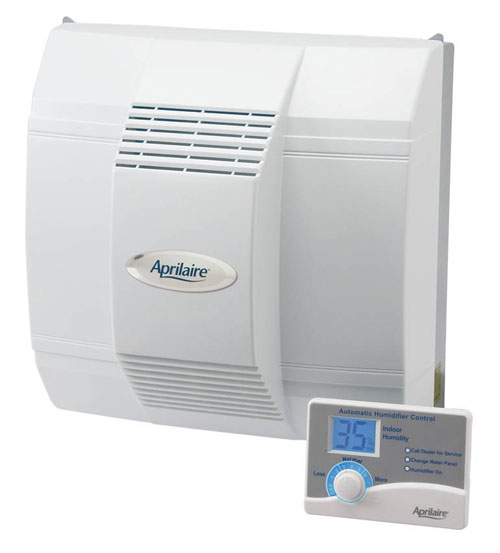
Dry winter air does more than crack your lips—it pulls moisture from hardwood floors, fuels static shocks, and leaves your whole house feeling colder than the thermostat suggests. A whole-home humidifier addresses the problem at its source by adding moisture directly to your HVAC airflow. In this guide, we take a close look at the Aprilaire Whole-Home Bypass Humidifier, a high-capacity solution for large homes, and who it's built for.
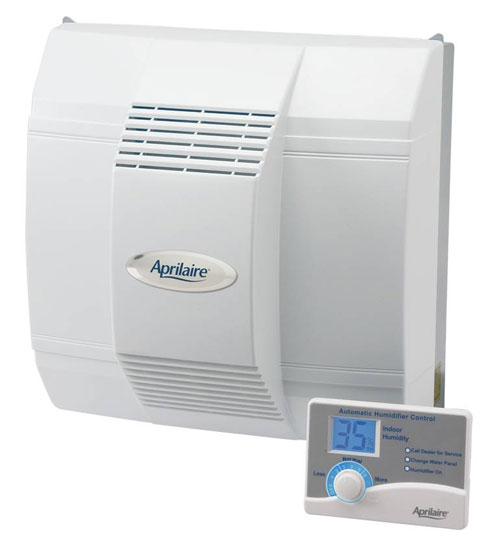
Looking for a full-house solution? The Aprilaire Whole-Home Bypass Humidifier delivers up to 0.75 gal/hr of moisture.
Top Pick: Aprilaire Whole-Home Bypass Humidifier (700)
Score: 9.2/10 — Best overall for larger homes. A powerful fan-powered humidifier with automatic digital control that keeps up to 4,200 sq ft comfortable without daily fiddling.
Aprilaire Whole-Home Bypass Humidifier (700)
The Aprilaire Whole-Home Bypass Humidifier (700) is an engineered solution for homeowners who have struggled with the limitations of portable humidifiers.
Related parts & accessories
While a countertop unit might make a single bedroom feel comfortable, it cannot combat the systemic dryness of a 3,000-square-foot home. The 700 integrates directly into your existing HVAC ductwork, utilizing the home's primary air distribution system to deliver a consistent stream of moisture to every room, from the basement to the second-floor attic. If you're upgrading your attic ventilation alongside your HVAC, check out our Panasonic WhisperGreen Select buying guide for optimal airflow management.
What distinguishes the 700 from standard bypass humidifiers is its active fan technology. Traditional bypass models rely entirely on the furnace's blower to push air through the humidifier. If your furnace isn't running, your humidity isn't being updated. The Aprilaire 700 features an integrated fan (similar in principle to a universal furnace fan timer) that pulls air across the water panel independently of the main HVAC blower. This ensures that moisture levels are maintained even during the "off" cycles of your heating system, preventing the drastic swings in humidity that often lead to condensation on windows or sudden dry spells.
The unit's output capacity is substantial, delivering up to 0.75 gallons of moisture per hour. This high volume is critical for homes in arid climates—such as the Midwest or Mountain West—where winter air can drop to single-digit humidity percentages. By saturating the air before it enters the living space, the 700 protects organic materials. Hardwood floors, mahogany furniture, and acoustic instruments are prone to shrinking and cracking when humidity drops below 30%; the 700 keeps these assets within the ideal 35-50% range.
Control is handled by a sophisticated automatic digital system. Rather than forcing the user to manually turn a dial every time the temperature drops outside, the digital control monitors both indoor humidity and outdoor temperature. This prevents "over-humidification," which can cause mold growth or peeling wallpaper. The system calculates the optimal amount of moisture needed based on the actual thermal conditions of the home, making it a "set-it-and-forget-it" appliance for the modern homeowner.
Pros
- High 0.75 gal/hr output handles large, dry homes
- Covers up to 4,200 sq ft from a single unit
- Automatic digital control adjusts output for you
- Fan-powered design works independently of furnace airflow
- Protects wood floors and reduces static electricity
Cons
- Requires professional HVAC installation
- Needs periodic water panel replacement
- Overkill for small apartments or single rooms (consider the Levoit Classic 300S Smart Ultrasonic Humidifier instead)
- Requires a forced-air heating system to function
Replacement Filters
| Specification | Detail |
|---|---|
| Model Number | 700 |
| Type | Fan-powered whole-home humidifier |
| Maximum Coverage | 4,200 sq ft |
| Moisture Output | Up to 0.75 gallons per hour |
| Control System | Automatic digital (Indoor/Outdoor sensing) |
| Installation Requirement | Forced-air HVAC; professional installation |
How Whole-Home Humidification Works
To understand the value of the Aprilaire 700, it is essential to understand the mechanics of "bypass" and "fan-powered" humidification. In a standard home, the furnace heats air and blows it through ducts. In winter, this air is incredibly dry. A whole-home humidifier is installed in the return or supply plenum of the HVAC system.
In a standard bypass system, a portion of the warm air from the supply duct is diverted (or "bypassed") back through the humidifier. This air passes through a wet evaporative pad, picking up moisture before it is recirculated into the home. However, this process is limited by how much air the furnace blower can move and can sometimes create a slight pressure drop in the system, potentially reducing heating efficiency.
The Aprilaire 700's fan-powered approach solves this inefficiency. By adding a dedicated fan, the unit creates its own airflow. It pulls air from the return duct, forces it through the water-saturated panel, and pushes the humidified air back into the supply stream. This allows for a much higher volume of air to be treated per hour, which is why the 700 can cover 4,200 square feet while smaller, passive units struggle at 2,000 square feet.
The evaporation process is naturally cooling, but since the humidifier is placed within the heating system, the warm air from the furnace provides the energy necessary for rapid evaporation. The result is a balanced, moist heat that feels warmer to the human skin than dry heat at the same temperature. This physiological effect is why many people find they can lower their thermostat by a degree or two when a humidifier is active, potentially saving on heating costs.
Furthermore, the fan-powered system mitigates the "cycling" problem. In passive systems, humidity only increases when the furnace is actively blowing. In a modern home with high-efficiency furnaces, the heat may only run for 10 minutes every hour. This creates a "sawtooth" humidity profile: high during the blow, then dropping rapidly. The Aprilaire 700 can continue to move air over the wetted medium even when the furnace is in its off-cycle, providing a more stable atmospheric equilibrium throughout the house.
Comprehensive Buyer's Guide: Whole-Home Humidity
Choosing a whole-home humidifier is not as simple as picking the biggest unit available. (If you are dealing with the opposite problem of excess moisture, see our GE ADEL50LZ dehumidifier guide). Over-humidifying a home can be just as damaging as under-humidifying—which is why some homeowners also rely on a GE ADEL50LZ dehumidifier guide to manage damp rooms—leading to window condensation, mold in corners, and structural dampness. Here is how to determine if the Aprilaire 700 is the right choice for your specific environment.
1. Assessing Square Footage and Climate
The Aprilaire 700 is designed for the "large home" category. If your home is under 1,500 square feet, a smaller bypass unit or a high-capacity portable option like the Dreo Smart Humidifier is likely sufficient. However, if you have a multi-story home or a sprawling ranch exceeding 2,500 square feet, the high output of the 700 becomes necessary. Climate also plays a role; if you live in a region where winter humidity frequently drops below 20%, you need a unit with a high gallon-per-hour (GPH) rating to maintain a steady 40% indoor level.
In extremely arid regions, like Arizona or Colorado, the air is so thirsty that it can "eat" moisture faster than a small humidifier can produce it. The 0.75 GPH rating of the 700 provides the necessary headroom to fight against extreme exterior dryness and high interior air-exchange rates (such as homes with frequent door openings or older, leakier envelopes).
2. HVAC Compatibility
Whole-home humidifiers require a forced-air system. If your home uses radiant floor heating, baseboard electric heat, or a boiler without a blower, this unit cannot be installed. You must have a central duct system that can transport the moisture from the basement or attic to the rest of the house. Additionally, the installer must ensure there is sufficient physical space in the plenum for the unit and the bypass ducting.
3. The Importance of Automatic Control
Manual humidifiers require you to check a hygrometer and turn a dial. This often leads to "cycling" where the home is too dry for three days, then too damp for two days. The Aprilaire 700's digital control utilizes an outdoor sensor. Why? Because warm air holds more moisture than cold air. A setting of 40% humidity at 70°F is very different from 40% at 50°F.
By sensing the outdoor temperature, the 700 adjusts the indoor target to prevent condensation on your windows while still keeping your skin and sinuses comfortable. Without this sensor, you risk hitting the "dew point" on your window glass. When warm, moist air hits a cold window pane, it liquefies. This water then runs down the frame, often leading to black mold growth on drywall and peeling paint—a costly mistake that the 700's digital brain is designed to avoid.
4. Maintenance Expectations
Unlike portable humidifiers that require daily filling and scrubbing to prevent slime, whole-home units are connected to your water line. The primary maintenance is the water panel (the evaporative pad). Over time, minerals from your water build up on this pad, creating a "crust" that blocks airflow and reduces efficiency.
Related parts & accessories
If you have very "hard" water (high mineral content), consider installing a scale inhibitor or a GE GXWH40L whole house water filter. This will extend the life of your Aprilaire water panels and prevent white mineral dust from blowing through your vents.
Installation and Long-Term Care
The Aprilaire 700 is not a DIY project for the average homeowner. Because it requires cutting into your HVAC plenum and tapping into a water line, professional installation by a licensed HVAC technician is required. Improper installation can lead to water leaks inside your furnace cabinet or improper airflow that puts stress on your blower motor.
The Installation Process
A professional installer will typically perform the following steps to ensure optimal performance:
- Mounting: The humidifier chassis is mounted to the side of the furnace or the return air duct, ensuring it is level to allow proper water drainage.
- Ducting: The installer creates the bypass ducting, which allows a calculated amount of air to move through the water panel without restricting the overall airflow of the furnace.
- Plumbing: A small diameter water line is run from the nearest cold-water pipe to the humidifier's solenoid valve. A drain line is also installed to safely remove excess water.
- Electrical and Controls: The automatic digital control (humidistat) is wired to the thermostat or a dedicated wall location, and the outdoor sensor is mounted on the exterior of the home, typically on the north side to avoid direct sunlight interference.
Seasonal Maintenance Schedule
To keep the Aprilaire 700 running at peak efficiency, follow this rigorous maintenance schedule:
October (Pre-Season): This is the most critical window. While you are checking your HVAC system and perhaps reviewing your Filtrete MERV-12 air filter, remember to replace the evaporative water panel.
Recommended Maintenance
January (Mid-Season): Check the digital control settings. If you notice condensation on windows despite the automatic sensor, lower the humidity target by 5%. This is common during extreme "polar vortex" events where window temperatures drop faster than the system can compensate.
April (Post-Season): Shut off the water supply to the humidifier. This prevents potential leaks or freezes during the summer months when the unit is dormant. If you live in a region with very high humidity in the summer, ensure the unit is completely off to avoid adding moisture to already damp air.
| Feature | Aprilaire 700 | Typical Portable Unit |
|---|---|---|
| Coverage | Whole House (up to 4,200 sq ft) | Single Room |
| Water Source | Direct Plumbing Line | Manual Tank Filling |
| Control | Automatic Digital / Outdoor Sensing | Manual / Basic Humidistat |
| Visibility | Hidden in HVAC System | Sits on Floor/Table |
| Installation | Professional HVAC Required |