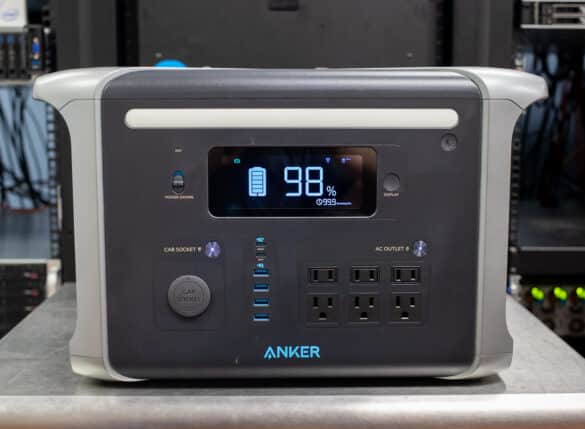
The portable power station market has exploded in recent years, but few units manage to balance raw capacity, build quality, and real-world usability as effectively as the Anker PowerHouse 757. Whether you're searching for the best portable power station for home backup, planning an off-grid camping trip, or running tools at a remote job site, this guide breaks down everything you need to know before you buy.
TL;DR — Quick Summary
The Anker PowerHouse 757 Portable Power Station is a high-capacity 1,229Wh LiFePO4 portable power station with a 1,500W AC output (2,400W surge), 10-year battery lifespan claim, and a rugged, no-nonsense design. It's best suited for homeowners who want a reliable emergency backup, van-lifers who need longevity from their investment, and outdoor enthusiasts running power-hungry appliances. It's heavy and pricey, but the LiFePO4 chemistry and sheer output make it hard to beat at this capacity tier. For a hands-on assessment, see our full assessment of its performance in this comprehensive buying guide.
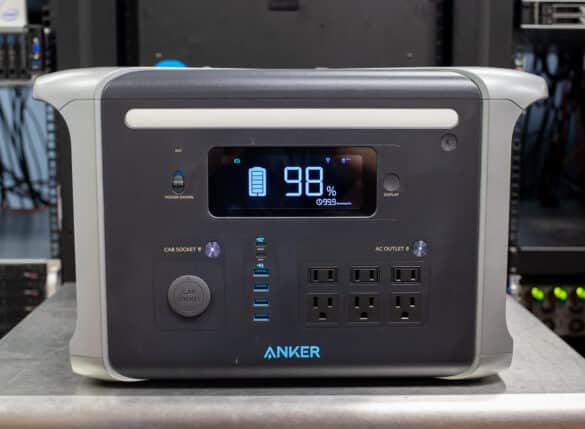
Our Top Pick: Anker PowerHouse 757
A powerhouse in every sense — the 757 delivers hospital-grade pure sine wave AC power, a 10-year lifespan backed by LiFePO4 cells, and enough capacity to run a full-size refrigerator for up to 10 hours. It earns our top recommendation in the 1,000–1,500Wh category.
Anker PowerHouse 757: Full Overview
The Anker PowerHouse 757 sits in a sweet spot in the Anker SOLIX Portable Power Station series lineup — above the entry-level 521 and 535, but below the massive 767 and 1500. With 1,229Wh of usable capacity and a continuous AC output of 1,500W, it can handle most household appliances, power tools, and medical devices that demand clean, stable electricity. The unit uses lithium iron phosphate (LiFePO4) chemistry rather than the more common NMC lithium-ion cells, which translates to significantly better thermal stability, a longer cycle life, and a safer overall chemistry.
Anker rates the 757 for 3,000+ charge cycles before the battery degrades to 80% of its original capacity. In practical terms, if you charge and discharge the unit once a day, that's over eight years of daily use. Anker goes further and backs that with a five-year warranty, which is nearly unheard of in a category where most competitors offer one to two years.
For families building a long-term emergency preparedness plan, this longevity argument alone is compelling. This often pairs well with home water security, such as using a whole house water filter to ensure clean water during grid failures. If your plan includes basement protection, see our Wayne ESP25 battery backup buying guide or our Ridgid SP-650C sump pump buying guide. For fast water removal during a flood, check out our guide on the best submersible utility pumps for draining water fast.In terms of physical design, the 757 has a boxy, industrial silhouette with a robust top-mounted carry handle and side vents for its active cooling fan. The LCD display is bright and informative, showing input wattage, output wattage, estimated remaining runtime or charge time, and battery percentage at a glance. The unit weighs approximately 44.1 lbs (20 kg), which puts it firmly in the "you'll want two people" category for extended carrying, but it's manageable for moving room to room or loading into an SUV.
Connectivity is one of the 757's strongest suits. You get four AC outlets, two USB-A ports, two USB-C ports (one rated at 100W), one car outlet (12V/10A), and an Anderson port for solar or DC input. Recharging is equally versatile: wall charging tops the unit out in about 1.5 hours using Anker's proprietary HyperFlash technology (with the included 1,000W AC adapter), solar input can accept up to 400W, and car charging is also supported. You can even combine AC and solar simultaneously to accelerate recharging — a feature not all competitors offer at this price tier.
Capacity
1,229Wh
AC Output
1,500W continuous / 2,400W surge
Battery Chemistry
LiFePO4 (Lithium Iron Phosphate)
Cycle Life
3,000+ cycles to 80% capacity
AC Charging Speed
~1.5 hours (HyperFlash, 1,000W)
Solar Input
Up to 400W
AC Outlets
4 × standard AC (120V)
USB-C (Max)
100W (PD)
Weight
44.1 lbs / 20 kg
Dimensions
17.0 × 10.0 × 13.3 in
Warranty
5 years
App Support
Yes (Bluetooth, Anker app)
| Appliance | Avg. Wattage | Estimated Runtime |
|---|---|---|
| Mini Refrigerator (100W) | 100W | ~10–12 hours |
| Full-Size Refrigerator (150W avg) | 150W avg | ~8–10 hours |
| CPAP Machine (w/o humidifier) | ~30–60W | ~20–30 hours |
| Laptop (65W) | 65W | ~15 charges |
| Smartphone (18W) | 18W | ~60+ charges |
| Electric Drill (500W) | 500W | ~2 hours |
| Box Fan (60W) | 60W | ~18 hours |
| LED TV (80W) | 80W | ~14 hours |
Pros
- LiFePO4 chemistry means superior safety and much longer lifespan than NMC units
- 3,000+ cycle rating — effectively a 10-year battery if used every day
- Industry-leading 5-year warranty
- HyperFlash charging reaches full capacity in ~1.5 hours — fastest in class
- Pure sine wave AC output is safe for sensitive electronics and medical devices
- Simultaneous AC + solar recharging for faster top-up
- Comprehensive port selection with 100W USB-C PD
- Bright, highly legible LCD display with real-time watt-hour tracking
- Anker app connectivity for remote monitoring and control
- 2,400W surge capacity handles compressor-motor startups reliably
Cons
- At 44.1 lbs, it requires two people for comfortable transport over distance
- No built-in wheels or telescoping handle (unlike some competitors)
- Active cooling fan can be audible in quiet environments
- 1,500W AC ceiling excludes high-draw appliances like portable air conditioners and hair dryers
- HyperFlash requires the proprietary AC adapter — standard charging is slower
- Premium price point compared to NMC alternatives of similar capacity
- No expandable battery option (unlike the Anker 767 line)
- Anderson port DC output is limited compared to some competitors
We may earn a commission if you purchase through links on this page. This does not affect our editorial recommendations.
Who Should Buy the Anker PowerHouse 757?
The PowerHouse 757 is a versatile unit, but it's not the right tool for every buyer. Understanding where it excels — and where it falls short — will help you decide if it belongs in your home or garage.
Emergency preparedness households are arguably the 757's primary audience. If you live in a region prone to hurricanes, ice storms, or wildfire-related rolling blackouts, a 1,229Wh station with a 10-year battery life provides a "set it and forget it" solution. For those securing their basements, pairing this with a Wayne ESP25 battery backup sump pump review ensures critical systems stay online. You can store the 757 in a closet, charge it every few months to maintain capacity, and know it will perform when you need it. Pairing this with a reliable home security setup (see our ADT Self Setup guide or our Ring Alarm Pro guide), such as the SimpliSafe 12-Piece Kit (or a camera-focused system like the Arlo Pro 4 4-Pack), ensures your home remains protected during unexpected outages. The LiFePO4 chemistry also holds its charge better during long storage periods than NMC cells — a critical consideration if the unit sits idle for months between outages.
Van-lifers and overlanders who spend extended time off-grid will appreciate the 757's balance of capacity and charge flexibility. The 400W solar input ceiling is sufficient when paired with two 200W panels, and the ability to combine solar and driving (car charging) means you can maintain the battery without ever touching a wall outlet. The pure sine wave inverter is important here too — sensitive electronics like laptops, camera batteries, and drones benefit from the cleaner power signal.
Job site workers and contractors who need portable AC power for drills, circular saws, LED work lights, or charging tool batteries will find the 757's 1,500W continuous output and 2,400W surge more than sufficient for most cordless-tool ecosystem chargers and light to medium electric tools. It's not a replacement for a 3,500W generator running an air compressor, but for most day-to-day tool site needs, it's quieter, emission-free, and more portable than a gas generator.
Not Recommended For:
High-wattage appliances like portable air conditioners (typically 1,000–1,500W running, with high startup surge), electric kettles, or electric space heaters. These will either exceed the 1,500W continuous limit or drain the battery so quickly that the runtime becomes impractical. For those use cases, consider stepping up to a higher-capacity unit like the Delta 2 Max.
or a unit with a 2,000W+ inverter like the Bluetti 2000Wh LiFePO4 Portable Power Station.Pro Tip: CPAP Users
The 757 is an excellent CPAP backup solution. Most CPAP machines draw 30–60W without a humidifier, giving you 20–35 hours of uninterrupted sleep therapy on a single charge. The pure sine wave output ensures your machine runs exactly as it would on mains power.
LiFePO4 vs. NMC: Why Battery Chemistry Matters
Most portable power stations in the $500–$800 price range use NMC (Nickel Manganese Cobalt) lithium-ion cells — the same type found in most smartphones and laptops. NMC cells offer high energy density, which means more capacity in a smaller, lighter package. However, they also carry a higher thermal runaway risk, age faster under high-charge or high-temperature conditions, and typically offer only 500–800 cycle lifespans before meaningful degradation sets in.
The PowerHouse 757's LiFePO4 (Lithium Iron Phosphate) cells operate at a lower voltage and slightly lower energy density — which is partly why the unit is heavier than some NMC competitors of similar capacity — but they compensate with dramatically better safety characteristics and longevity. LiFePO4 cells are thermally stable up to much higher temperatures before entering runaway conditions, which matters if your power station is stored in a hot garage or used outdoors in summer heat.
The 3,000+ cycle rating is the headline number, but what it means in practice is this: an NMC competitor rated for 500 cycles at the same price point would need to be replaced six times before the 757 reaches the same level of degradation. Over a 10-year ownership period, the 757's higher upfront cost frequently works out to a lower total cost of ownership — especially when you factor in Anker's five-year warranty covering manufacturing defects and premature degradation. For another LiFePO4 option at higher capacity, see our Bluetti Expandable Portable Power Station.
Understanding "Cycle Life"
A "charge cycle" is one full discharge and recharge of the battery. If you only use 50% of the battery each session, that counts as half a cycle. So real-world cycle life often exceeds the rated number. For occasional emergency-use owners, the 757's battery may genuinely last 20+ years of real-world use.
Charging the PowerHouse 757: All Your Options Explained
One area where Anker has invested heavily in the 757 is the recharging ecosystem. The speed at which you can replenish a portable power station is often as important as its capacity — particularly for emergency backup scenarios where grid power may return intermittently and you want to top off as fast as possible.
HyperFlash AC Charging is Anker's name for the 757's fast-charge w