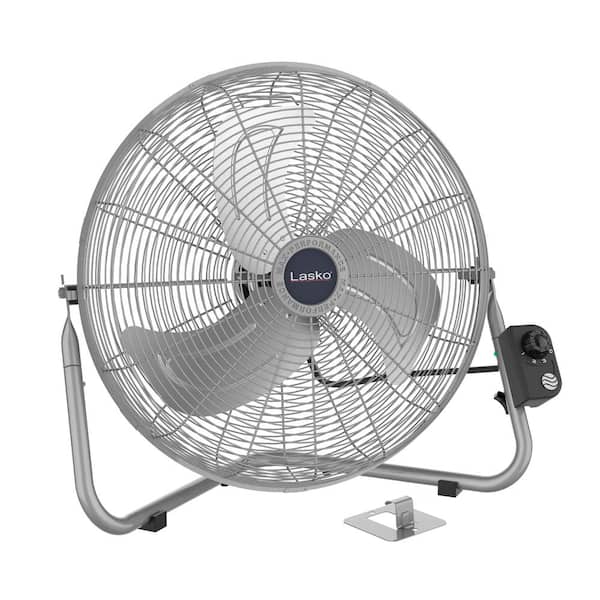
When a standard room fan cannot move enough air for a garage, workshop, or basement, a heavy-duty upgrade is necessary. The Lasko High-Velocity 20-Inch Floor Fan with Adjustable Tilt Head is one of the best options for homeowners who need strong, directional airflow in large utility spaces to maintain comfort and air quality.
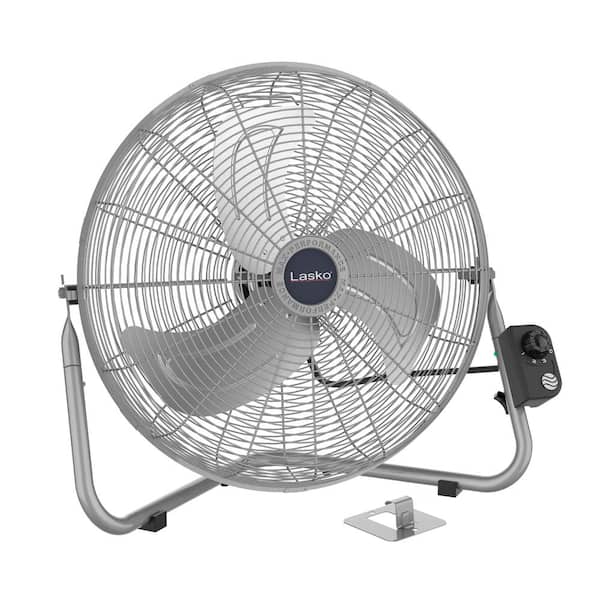
Top Pick: Lasko High-Velocity 20-Inch Floor Fan with Adjustable Tilt Head
Score: 9.1/10 — A powerful, practical floor fan for garages, workshops, basements, and large rooms where strong directional airflow matters more than smart features or decorative styling.
Quick Take: Choose the Lasko High-Velocity 20-Inch Floor Fan if you need powerful, portable airflow for a garage, workshop, utility room, or large indoor space. It is best for users who value air movement, adjustable direction, and straightforward controls over smart features or decorative styling.
Lasko High-Velocity 20-Inch Floor Fan with Adjustable Tilt Head
The Lasko High-Velocity 20-Inch Floor Fan with Adjustable Tilt Head is designed for situations where a standard air circulator or basic pedestal fan may not be enough.
With its 20-inch blade span and high-velocity design, it is intended to push air through larger spaces such as garages, workshops, basements, exercise rooms, and utility areas. When dealing with environmental stressors like high humidity in a basement, this fan serves as a critical companion to moisture control systems for damp rooms (see our GE ADEL50LZ review for a specific recommendation), helping to circulate dry air across the floor and prevent stagnant pockets of moisture from settling against walls (for managing standing water, see our Ridgid SP-650C sump pump guide or the Basement Watchdog BW1033 guide).The major appeal of this model (Lasko High-Velocity 20-Inch Floor Fan with Adjustable Tilt Head) is its combination of power and simplicity. It offers three speed settings, allowing you to dial airflow down for general circulation or increase it when you need stronger ventilation. This versatility makes it useful for cooling down a warm room, helping air move through a workspace, or improving comfort while doing projects in a garage. Unlike standard oscillating fans that sweep a small area, the high-velocity nature of the Lasko High-Velocity 20-Inch Floor Fan creates a concentrated "jet" of air that can be felt from a significant distance, making it an ideal tool for "spot cooling" a specific area of a large room.
Its adjustable tilt head is especially useful because high-velocity airflow works best when it can be aimed. Instead of only blowing straight ahead, the fan can be angled toward a workbench, across a room, toward a doorway, or upward to help circulate trapped warm air. (For those considering a permanent fixture, see our Hunter Comfort Select buying guide or the full performance review and our detailed review of the Hunter Comfort Select). By angling the head, users can create a "vortex" effect in a room, pushing air up and around to eliminate stagnant heat pockets that often accumulate near the ceiling in workshops or attics. This directional control allows the user to customize the airflow path to maximize efficiency based on the room's layout.
This is not the best choice if you want a Hunter Comfort Select Ceiling Fan (see our buying guide and full performance review for living room options) for a formal living room or a connected smart fan with app control. The industrial aesthetic is purposeful, prioritizing durability and air volume over visual blending. It is better suited to buyers who want dependable air movement, a utility-focused build, and a price-conscious alternative to expensive commercial ventilation equipment. If your priority is a silent sleep environment, the "QuietMotor" technology helps, but the volume of air moved will naturally produce more noise.
For smaller spaces, you might consider a more compact option like the Honeywell TurboForce Air Circulator Personal Fan, though it lacks the high-volume throw of the Lasko.
| Specification | Details |
|---|---|
| Model Number | 2265QM |
| Category | Ventilation & Fans |
| Fan Type | High-velocity floor fan |
| Blade Span | 20 inches |
| Speed Settings | 3 |
| Airflow Direction | Adjustable tilt head |
| Noise Technology | QuietMotor technology |
| Best For | Garages, workshops, large rooms, utility spaces |
Pros
- 20-inch blade span is well suited to moving air in larger spaces
- Three speed settings provide useful control over airflow intensity
- Adjustable tilt head makes it easier to direct air where it is needed
- QuietMotor technology helps keep operating noise more manageable
- Strong fit for garages, workshops, basements, and utility rooms
- Simple, practical design without unnecessary complexity
Cons
- Utility-focused appearance may not suit decorative spaces
- No smart controls or app-based features
- High-velocity airflow may be too intense for small bedrooms
- Floor placement requires open space for best performance
Understanding High-Velocity Airflow: How it Works
To understand why the Lasko High-Velocity 20-Inch Floor Fan with Adjustable Tilt Head differs from a standard household fan, one must understand the concept of CFM (Cubic Feet per Minute). While a standard desk fan is designed for "evaporative cooling"—blowing air directly on the skin to speed up sweat evaporation—a high-velocity fan is designed for "air exchange" and "bulk movement." The primary goal of a high-velocity unit is to displace a large volume of air quickly, regardless of whether a person is standing directly in front of it.
The Lasko High-Velocity 20-Inch Floor Fan utilizes a larger blade span and a more aggressive blade pitch. The pitch refers to the angle of the blades; a steeper angle "bites" more air per revolution, pushing a larger volume of air forward. When combined with the 20-inch diameter, the fan can move massive columns of air across a room. This is critical in workshops where sawdust, paint fumes, or chemical vapors need to be pushed toward a door or exhaust vent to maintain a healthy breathing environment.
The "QuietMotor" technology addresses the primary drawback of high-velocity fans: turbulence noise. While this unit is a manual floor fan, those looking for automated control in HVAC systems might find our Honeywell Home ST9400C review useful for understanding fan timers. In cheaper models, the motor can produce a high-pitched whine, and the blades can create a loud "chopping" sound as they slice through the air. Lasko's implementation aims to balance the torque required to move a 20-inch blade with a motor housing that dampens vibration. This ensures that while the wind noise is present (which is inevitable with high CFM), the mechanical noise of the motor is minimized, making the fan usable in a home gym or basement without completely drowning out a conversation.
Furthermore, high-velocity fans leverage the "Wind Chill" effect more effectively than standard fans. By moving air at a higher velocity, the fan strips away the boundary layer of warm, moist air surrounding the skin more rapidly. In a hot garage during the summer, this can make a 90-degree environment feel significantly cooler, provided the air is moving fast enough to stimulate heat transfer away from the body.
Comprehensive Buyer's Guide: Choosing the Right Utility Fan
When shopping for ventilation in utility spaces, buyers often struggle between three main types of portable fans: oscillating pedestal fans, box fans, and high-velocity floor fans like the Lasko High-Velocity 20-Inch Floor Fan with Adjustable Tilt Head. Each serves a distinct purpose based on the physics of air movement and the intended environment.
Core Concept: Choose your fan based on "Throw" (how far the air travels) versus "Spread" (how wide the air covers).
When to Choose High-Velocity over Pedestal Fans
Pedestal fans are designed for comfort and aesthetics. They move air in a wide, gentle arc, making them ideal for a bedroom or living room. However, they lack the "throw" required for a garage or large workshop. A high-velocity fan creates a concentrated stream of air. If you are working at a bench and need to blow heat away from your face or move air from a cool doorway into a hot interior, the Lasko High-Velocity 20-Inch Floor Fan is the superior choice. Its tilt head allows you to aim this stream precisely, whereas a pedestal fan's oscillation is too broad for targeted cooling and often doesn't reach the far end of a large room.
Sizing the Blade Span
The 20-inch blade span of the Lasko High-Velocity Floor Fan is considered a "sweet spot" for residential utility use. Smaller fans (12-16 inches) often struggle to move enough volume to affect the ambient temperature of a large room, essentially creating a small "cone" of cool air that disappears a few feet from the device. On the other hand, larger industrial fans (24-36 inches) are often too loud for residential areas, pull excessive power that may trip older circuit breakers, and take up too much floor real estate. The 20-inch model provides enough power to clear a 20x20 foot garage while remaining portable enough to be moved easily from the basement to the attic.
Evaluating Speed Settings
Three speeds may seem basic, but they are essential for versatility in a utility environment:
- High Speed: Used for "purging" a room—getting rid of smoke, fumes, or trapped heat quickly. It is best used when you are not standing directly in the airflow path for long periods.
- Medium Speed: Typically used for active work, providing a steady breeze that keeps the user cool without blowing papers, light sawdust, or small tools off a workbench.
- Low Speed: Ideal for general circulation, preventing air from becoming stagnant in a basement or storage area, which helps reduce the "musty" smell associated with poor ventilation (often best managed with a high-capacity dehumidifier).
| Fan Type | Best Use Case | Air Throw | Noise Level | Mobility |
|---|---|---|---|---|
| High-Velocity (Lasko High-Velocity Floor Fan) | Workshops/Garages | High | Moderate-High | High |
| Pedestal Fan | Bedrooms/Living Rooms | Low-Medium | Low | Medium |
| Box Fan | Window Exhaust | Medium | Moderate | High |
Cooling Hack: To maximize cooling in a hot garage, place the fan near an open door or window, facing into the room to pull in cooler outside air. Conversely, to cool a room down quickly, face the fan out the window to exhaust hot air, creating a vacuum that pulls cooler air in from other openings.
Installation and Setup Guide
The Lasko 2265QM is designed for "out-of-the-box" functionality, meaning it requires minimal assembly. However, proper placement is the difference between a cool room and a noisy nuisance. Because this fan moves a high volume of air, it interacts heavily with the surrounding environment.
Initial Positioning for Maximum Efficiency
For maximum efficiency, place the fan on a level, stable surface. Because it is a high-velocity unit, it creates a significant intake zone behind the motor. A common mistake is placing the fan directly against a wall or in a tight corner. To avoid "starving" the motor of air, leave at least 12-18 inches of clearance behind the unit. If the intake is blocked, the fan will experience "air starvation," causing the motor to work harder, run hotter, and produce a more noticeable humming noise, which can ultimately shorten the lifespan of the QuietMotor technology.
Optimizing the Tilt Head
The tilt mechanism allows the fan to be angled from a horizontal position up to a steep incline. Depending on your goal, use these three configurations:
- For Floor Cooling: Keep the fan relatively level to push air across the ground. In many basements or garages, the air nearest the concrete floor is the coolest. Moving this air across the surface helps lower the overall ambient temperature.
- For Ceiling Circulation: Angle the head upward at approximately 45 degrees. This pushes warm air that has trapped against the ceiling back down and around, mixing the air layers for a more consistent temperature throughout the room.
- For Targeted Work: Aim th