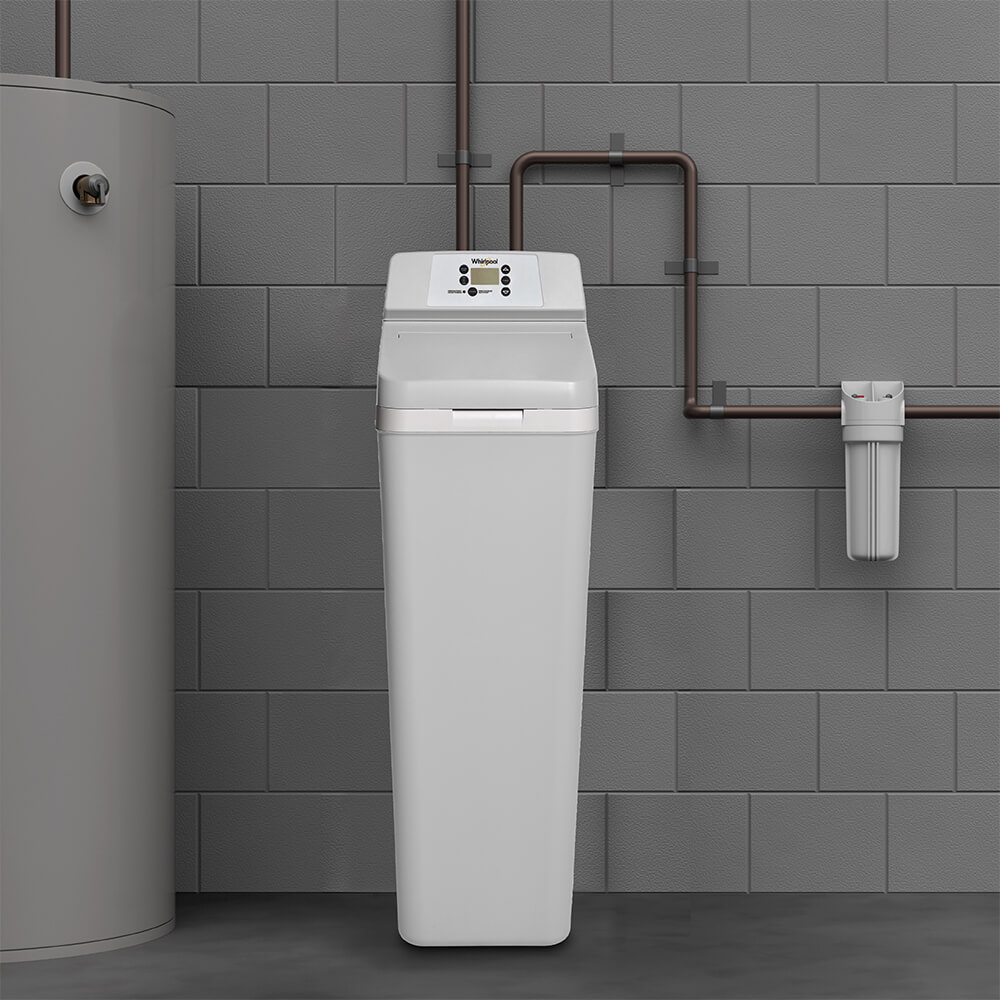
Hard water silently wages war on your pipes, appliances, and skin every single day — and if you're searching for a solution, the Whirlpool 40,000 Grain Water Softener has likely topped your research list. This 40,000-grain water softener promises whole-home soft water with smart, salt-saving technology that could pay for itself in appliance longevity alone. Read on for everything you need to decide if the WHES40E is the right fit for your household.
TL;DR — Quick Summary
- The Whirlpool 40,000 Grain Water Softener is a 40,000-grain, salt-based ion-exchange water softener designed for homes with up to 4–5 people.
- Its demand-initiated regeneration (DIR) system regenerates only when needed, reducing salt and water waste.
- Installation is DIY-friendly for those comfortable with basic plumbing; professional install is also widely available.
- Best for households with moderate-to-hard water (up to ~95 gpg) experiencing scale buildup, dry skin, or appliance wear.
- Not a water filter — it does not remove chlorine, sediment, or contaminants without an additional filtration stage.
Whirlpool WHES40E 40,000 Grain Water Softener
Our Top Pick for Whole-Home Water Softening
The WHES40E earns its place as a go-to residential water softener thanks to a proven grain capacity, intelligent salt usage, and a straightforward interface that doesn't require a plumber to program. It strikes the ideal balance between performance and value for most American households.
Design & Build Quality
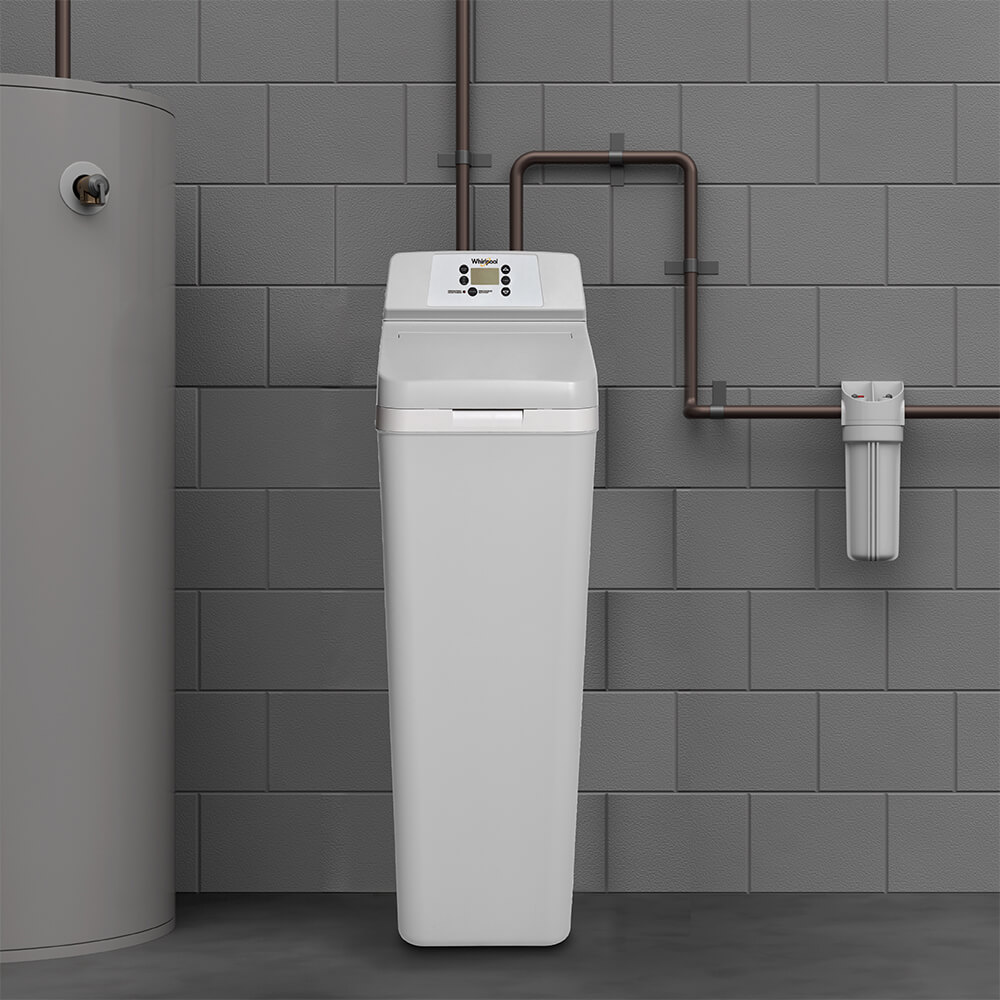
If you are also considering a dedicated filtration system to remove sediment or chemicals, see our GE GXWH40L whole house water filter guide for a comparison. The WHES40E ships as a single-tank cabinet-style unit, housing both the resin tank and brine tank in one compact footprint. That design choice is a meaningful space-saver for utility closets, garages, and basements where square footage is at a premium. The outer casing is a neutral gray-white that won't look out of place in most utility settings, and the construction feels solid without being unnecessarily heavy for a DIY install.
Whirlpool built the control head with a large, backlit LCD display that shows water hardness settings, days since last regeneration, and salt level alerts. The interface uses just a few buttons, and the programming wizard walks you through setup in under ten minutes. There's no app or Wi-Fi connectivity here — this is a deliberately straightforward appliance that prioritizes reliability over smart-home integration.
Performance & Capacity
The 40,000-grain capacity is the headline spec, and it's meaningful in real-world terms. For a family of four living in an area with moderate hardness (around 25 gpg), the WHES40E can soften thousands of gallons between regeneration cycles. Whirlpool rates this unit for homes with up to 4–5 occupants, though families with higher water usage or very high hardness levels (above 75 gpg) may see more frequent regeneration cycles.
The demand-initiated regeneration (DIR) system is arguably the most important performance feature. Rather than regenerating on a fixed schedule (say, every Tuesday at 2 a.m. regardless of actual use), DIR monitors your real water consumption and triggers regeneration only when the resin is approaching exhaustion. Over the course of a year, this translates to measurably less salt purchased and less wastewater sent down the drain — a genuine operating-cost advantage over timer-based competitors at a similar price point.
Flow rate is rated at 8.2 gallons per minute (GPM) at service, which is sufficient to maintain reasonable water pressure during typical household multi-point usage — running the dishwasher while someone showers, for example. Homes with very high simultaneous demand may notice slight pressure drops, but this is common across the softener category at this capacity tier.
Installation & Maintenance
Since this unit is often installed in basements alongside other water management tools—like the tools found in our best submersible utility pumps guide or a Ridgid SP-650C sump pump guide—proper spacing is key. The WHES40E is designed for do-it-yourself installation and comes with a detailed instruction manual plus bypass valve. You'll need standard plumbing tools — adjustable wrenches, Teflon tape, and potentially push-to-connect fittings like the SharkBite 1/2-inch coupling for easier installation — and the ability to connect to your home's main water line with 3/4-inch or 1-inch fittings. Most handy homeowners complete the physical install in two to four hours. If you're not comfortable soldering copper or working with existing galvanized lines, a one-time plumber visit is a worthwhile investment. For those dealing with overall basement moisture management, consider using a GE ADEL50LZ dehumidifier alongside tools like the Wayne ESP25 battery backup sump pump offers a deeper dive into protecting your home from flooding. For those managing water in more challenging areas, see our Ridgid SP-650C sump pump review for tips on protecting your basement from water issues. For a complete setup, consider our Basement Watchdog BW1033 guide for reliable flood prevention, or explore our Ridgid SP-650C sump pump guide if you have a high water table.
Ongoing maintenance for the Whirlpool 40,000 Grain Water Softener is refreshingly simple: add salt to the brine tank (Whirlpool recommends NSF-certified pellet or cube salt), check for salt bridges every few months, and clean the resin bed with a dedicated water softener cleaner annually or as needed if iron is present in your water. The unit handles regeneration automatically, and the control head will notify you when the salt supply runs low. Resin life typically spans 10–20 years under normal operating conditions, making internal maintenance a low-frequency concern for most owners.
Pros
- Demand-initiated regeneration saves salt and water versus timer-based models
- 40,000-grain capacity suits most 3–5 person households comfortably
- Cabinet design combines resin and brine tanks for a compact footprint
- Simple, guided programming — no advanced plumbing knowledge required to configure
- NSF/ANSI Standard 44 certified for softening effectiveness
- Whirlpool brand support and wide availability of parts and salt
- Low operating noise during regeneration cycles
Cons
- Does not filter chlorine, sediment, or other contaminants — softening only
- No Wi-Fi or smart-home connectivity
- Iron removal limited to approximately 8 ppm ferrous (clear-water) iron
- Salt-based systems add a small amount of sodium to softened water (relevant for low-sodium diets)
- Requires dedicated floor drain or utility sink nearby for wastewater discharge
- Brine tank capacity requires salt refills every 4–8 weeks depending on household usage
Disclosure: This site earns commission from purchases made through links on this page at no extra cost to you. Our editorial recommendations are independent of commercial relationships.
Technical Specifications at a Glance
| Specification | Detail |
|---|---|
| Model Number | WHES40E |
| Grain Capacity | 40,000 grains |
| Recommended Household Size | Up to 4–5 people |
| Service Flow Rate | 8.2 GPM |
| Regeneration Type | Demand-Initiated (DIR) |
| Max Hardness Treated | Up to 95 gpg |
| Iron Removal (Ferrous) | Up to 8 ppm |
| Salt Efficiency | ~4,000 grains per pound of salt |
| Inlet/Outlet Connection | 3/4 in. or 1 in. NPT |
| Electrical Requirements | 120V AC, standard outlet |
| Unit Dimensions (H × W × D) | Approx. 47 in. × 18 in. × 22 in. |
| Weight (Empty) | Approx. 104 lbs |
| Certifications | NSF/ANSI Standard 44 |
| Warranty | 1-year full, 3-year electronics, 10-year tank |
| Salt Type Recommended | NSF-certified pellet or cube salt |
Key Features Explained
Demand-Initiated Regeneration (DIR)
Monitors actual water usage and regenerates only when resin capacity is truly depleted — not on a preset schedule. This can reduce salt consumption by 25–35% compared to timer-based units under typical household patterns.
NSF/ANSI 44 Certification
Independent certification verifies the unit effectively reduces hardness minerals (calcium and magnesium) to claimed levels and meets structural integrity standards — a meaningful quality benchmark to look for.
Cabinet-Style Single Unit
Integrating the brine and resin tanks into one cabinet simplifies installation and saves valuable floor space. Ideal for smaller utility areas or tight mechanical rooms common in modern homes.
Low-Salt & No-Salt Alerts
The control head monitors brine tank levels and alerts you before the salt runs completely out, preventing hard water breakthrough — the damaging condition where unsoftened water reaches your fixtures and appliances.
Bypass Valve Included
The included bypass valve lets you reroute water around the softener for outdoor irrigation (no need to use softened water on plants) or during maintenance, without interrupting household water supply.
Iron & Manganese Reduction
Handles up to 8 ppm of clear-water (ferrous) iron alongside hardness minerals. Homes with higher iron levels or sediment will need pre-filtration to protect resin life and maintain performance.
Who Should Buy the WHES40E?
The WHES40E shines brightest in homes where hard water damage is already visible — calcium scale on showerheads and faucets (which can be avoided with proper water treatment to protect modern bath fixtures) (which can ruin the finish on premium fixtures like the MOEN Chateau 7430 Faucet Buying Guide (see also our detailed review of the MOEN Chateau 7430)), soap scum that never rinses clean, dishes with white spots from the dishwasher, or water heater elements that fail prematurely. If any of these sound familiar, a softener at this capacity tier will deliver noticeable improvements within days of installation.
Well-water households with iron concentrations under 8 ppm can also benefit, though you'll want to test your water thoroughly before purchasing.
If your water report shows iron above that threshold, manganese above 0.3 ppm, or significant sediment, plan for a GE GXWH40L whole house water filter or a Culligan WH-HD200-C whole-house filtration setup to remove sediment like the Culligan Whole House Heavy-Duty Sediment Water Filter System or the GE GXWH40L whole house water filter and possibly an iron filter upstream of the softener. Running heavily contaminated water through a softener resin bed without pre-treatment accelerates resin fouling and shortens the unit's effective lifespan.- Very large households (6+ people with heavy usage) — consider a 48,000–64,000 grain unit instead, such as the Fleck Digital Metered Ion-Exchange Water Softener.
- Homes primarily concerned with chlorine ta