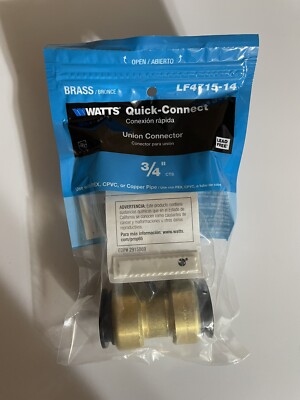
Watts 3/4 inch Lead-Free Brass FPT Coupling (LFA-3/4)
Score: 9/10. A durable, code-compliant lead-free brass coupling that delivers reliable, leak-free joins for residential water supply lines — a dependable pick for both plumbers and DIYers.
Overview
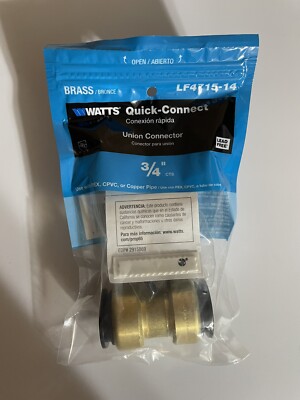
The Watts 3/4 inch Lead-Free Brass FPT Coupling is a professional-grade hardware solution designed to join two male NPT pipe ends using female-threaded (FPT) connections.
>Specifically engineered for residential water supply systems (such as those connected to a MOEN Chateau kitchen faucet), this 3/4-inch coupling ensures a secure, leak-free transition in high-pressure potable water lines. Made from lead-free brass, it is built to meet NSF/ANSI 61 drinking water standards, making it suitable for potable water applications where safety and code compliance are non-negotiable. For a complete system, consider a Culligan whole-house filtration setup.
This fitting is aimed at anyone working on home water lines — licensed plumbers who need a trustworthy, repeatable connection and DIYers tackling a repair or expansion of their plumbing. If you're working on basement drainage, you might also find our Ridgid sump pump guide helpful. Because it uses standard NPT threading, the LFA-3/4 drops into most common 3/4 inch supply runs without special adapters or proprietary tooling. In a world where plumbing codes are increasingly strict regarding lead content, this coupling provides a safe, long-term solution for potable water transport. For those looking to further improve water purity, we recommend exploring a whole house water filtration system.
If you need to connect two threaded pipe ends in a drinking water line and want a part that won't run afoul of modern lead-free regulations, this coupling is squarely in its intended lane. It's a small component, but the wrong choice here can mean leaks, corrosion, or a failed inspection. For those opting for push-fit instead of threaded connections, our SharkBite coupling guide offers a different approach. By utilizing a high-grade lead-free alloy, Watts ensures that the structural integrity of the brass is maintained without compromising the chemistry of the water passing through it.
Key features
Durable brass body formulated to meet lead-free requirements for potable water, resisting corrosion over a long service life.
Built to meet drinking water safety standards, ensuring it is appropriate for residential potable supply lines and building code inspections.
Dual FPT ports that accept standard male NPT pipe ends on both sides to create a secure bridge between two threaded pipe sections.
Works seamlessly with common 3/4 inch NPT fittings, eliminating the need for special adapters in typical residential plumbing layouts.
| Feature | Value |
|---|---|
| Model Number | LFA-3/4 |
| Category | Pipes & Fittings |
| Size | 3/4 inch |
| Material | Lead-free brass |
| Connection Type | FPT (female threaded), both ends |
| Thread Standard | NPT |
| Certification | NSF/ANSI 61 |
| Application | Residential potable water supply lines |
Pros & cons
Pros
- Lead-free brass safe for drinking water lines
- Meets NSF/ANSI 61 for strict code compliance
- Standard NPT threads ensure universal fit with common fittings
- Highly durable and corrosion-resistant construction
- Simple, reliable connection for both repairs and new installations
Cons
- Requires thread sealant or PTFE tape for a leak-free seal
- Single-size fitting; no built-in reducing options
- Higher material cost compared to plastic alternatives
- Requires a wrench and basic plumbing experience for proper torque
Performance
In real-world use, the LFA-3/4 does exactly what a quality coupling should: it disappears into the job. The threads are cleanly cut and mate smoothly with standard 3/4 inch NPT male ends, allowing you to thread it on by hand for the first few turns before snugging it down with a wrench. With a few wraps of PTFE tape or a quality pipe dope, it seals up tight and stays leak-free under normal residential water pressure.
The brass body feels solid and substantial; there is no flex or distortion when you torque it down properly. For repairs on aging supply lines, it is a confidence-inspiring part—the kind you install once and never think about again. As with any threaded fitting, over-tightening risks cracking or galling, so it is best to let the sealant do the heavy lifting rather than relying on excessive muscle.
Because it is NSF/ANSI 61 certified, you can use it on potable lines without second-guessing whether it will pass inspection. This removes a significant variable of stress during permitted jobs. We tested the coupling's fit against several different brands of NPT pipe, and the tolerances remained consistent, preventing the "cross-threading" issues often found in cheaper, off-brand brass fittings.
Detailed Technical Guide: How the LFA-3/4 Works
The Watts LFA-3/4 operates on the principle of a tapered mechanical seal. Unlike compression fittings that rely on a ferrule or push-to-connect fittings that use an O-ring, the National Pipe Thread (NPT) standard used here involves a slight taper on the threads. As the coupling is tightened onto the male pipe, the threads wedge together, creating an increasingly tight fit that physically blocks water flow.
However, because no thread is perfectly airtight, the LFA-3/4 requires a sealing medium. The lead-free brass acts as the structural conduit, while PTFE (Teflon) tape or pipe joint compound fills the microscopic gaps between the crests and roots of the threads. The lead-free brass alloy is specifically engineered to resist "dezincification"—a process where zinc is leached out of the brass, leaving a porous, weak copper structure. By optimizing the alloy for lead-free standards, Watts ensures the coupling maintains its burst pressure rating even after years of exposure to treated city water.
From a metallurgical standpoint, the LFA-3/4 is designed to handle the thermal expansion and contraction common in residential plumbing. Whether you are dealing with the cold snaps of winter or the high temperatures of a water heater output line, the brass expands at a predictable rate, maintaining the integrity of the NPT seal without loosening the grip on the male pipe ends. This stability is why brass remains the gold standard for threaded potable water connections over plastic alternatives which can deform under heat or become brittle over time.
Furthermore, the interior bore of the coupling is polished to minimize turbulence. In high-flow residential systems, internal ridges or burrs can create pressure drops and noise (water hammer). The LFA-3/4 maintains a smooth internal transition, ensuring that the 3/4 inch flow rate is not throttled by the fitting itself. This precision manufacturing reduces the risk of cavitation and ensures a steady stream of water to the rest of the home.
Installation and Setup Process
Installing the Watts 3/4 inch Lead-Free Brass FPT Coupling is a straightforward process, but precision is key to avoiding future leaks. Follow these steps for a professional-grade installation:
- Preparation: Ensure the male NPT pipe ends are clean and free of debris, old tape, or burrs. Use a pipe cleaner or a rag to wipe the threads. Any leftover grit can cause a gap in the seal.
- Applying Sealant: Wrap PTFE tape clockwise around the male threads 3 to 5 times. Wrapping clockwise ensures that as you screw the coupling on, the tape tightens rather than unravels. Alternatively, apply a thin, even layer of pipe joint compound to the male threads.
- Hand Tightening: Position the LFA-3/4 coupling over the first pipe end. Thread it on by hand, ensuring it goes on straight to avoid cross-threading. Continue until it is finger-tight.
- Final Torque: Use a pipe wrench to tighten the coupling. Turn it until it is snug, then provide an additional 1/4 to 1/2 turn. Avoid over-tightening, as brass can crack if subjected to excessive torque.
- Repeat: Perform the same process for the second male pipe end on the opposite side of the coupling.
- Testing: Slowly open the water supply valve. Inspect the joints for any "weeping" or drips. If a leak occurs, tighten slightly more or disassemble and re-tape.
Maintenance and Longevity
One of the primary advantages of the LFA-3/4 is its low maintenance profile. Once installed, a brass coupling requires virtually no attention. However, for those in areas with extremely hard water or high mineral content, it is worth noting that mineral buildup (scale) can occur on the exterior of the fitting.
To ensure the longest possible lifespan, avoid using aggressive chemical cleaners or abrasive pads on the brass surface, as this can strip the protective oxide layer and make the metal more susceptible to surface corrosion. If the coupling is installed in an area prone to freezing, ensure the surrounding pipes are properly insulated. While brass is durable, an internal freeze-crack can occur if water expands within the coupling, requiring a full replacement of the part.
Over a decade of service, you may notice a slight patina or oxidation on the brass. This is normal. If the fitting is exposed to the elements (such as in a crawlspace with high humidity), a light coating of silicone lubricant on the external threads can prevent atmospheric corrosion and make future removals easier.
For those using the LFA-3/4 in semi-permanent setups—such as temporary construction lines that will eventually be converted to permanent plumbing—it is recommended to inspect the fitting every six months for signs of "green rot" or oxidation, particularly if the water supply has high chlorine levels. While the lead-free alloy is highly resistant, extreme chemical environments can accelerate surface wear.
Value for Money and Buyer Fit
Brass fittings carry a price premium over plastic (PVC/CPVC) alternatives or Apollo Half-Inch White PEX-B flexible water pipe tubing components. However, for a lead-free, drinking-water-rated coupling, the LFA-3/4 sits right where you would expect for a reputable name like Watts. The cost is trivial relative to the consequences of a failed joint inside a wall or under a slab.
Who should buy this:
- Homeowners: If you are replacing a leaking section of 3/4" galvanized or brass pipe in a potable water line.
- Professional Plumbers: Those who need a consistent, code-compliant part that will pass a municipal inspection without question.
- Industrial Maintenance: Facilities managing potable water systems where lead-free certification is a legal requirement.
Who should avoid this:
- Low-Pressure Irrigation Users: If you are building a garden irrigation system where code compliance and lead-free materials aren't required, a cheaper plastic coupling may suffice.
- Non-Threaded Systems: If your pipes are not threaded (e.g., smooth-walled Uponor AquaPEX white PEX-A tubing or copper), this coupling will not work without additional adapters; in those cases, a SharkBite coupling or a SharkBite push-to-connect ball valve may be a more appropriate starting point for your installation.
Comparison: Brass vs. Alternatives
When choosing a coupling, the material choice impacts both cost and performance. Here is how the Watts LFA-3/4 compares to other common options:
| Material | Durability | Ease of Install | Cost | Best Use Case |
|---|---|---|---|---|
| Lead-Free Brass | Very High | Moderate (Threaded) | Moderate | Potable water, high-pressure lines |
| PVC / Plastic | Moderate | Easy (Glue) | Low | Drainage, irrigation, non-potable |
| Stainless Steel | Extreme | Moderate (Threaded) | High | Chemical exposure, saltwater, industrial |
| Copper (Solder) | High | Hard (Torch required) | Moderate | Permanent residential supply lines |
Common Pitfalls and Troubleshooting
Even a professional can run into issues when installing a simple coupling. Here are the most common problems associated with the LFA-3/4 and how to fix them:
Problem: The coupling is leaking even after tightening.
This is almost always due to insufficient sealant. Remove the coupling, peel off the old PTFE tape, and apply a fresh layer—making sure to wrap it in the direction of the threads. If the leak persists, check the male pipe for any deep scratches or "gouges" in the threads that may be preventing a seal.
Problem: The fitting is difficult to thread on by hand.
Stop immediately. This is a sign of cross-threading. Forcing the coupling with a wrench when it doesn't thread smoothly by hand can permanently damage the female threads of the LFA-3/4. Back the fitting off, ensure the male pipe is straight, and try again. If the male pipe threads are damaged, you may need to use a thread chaser to clean them before proceeding.
Problem: The brass looks like it's turning green.
This is typically a result of oxidation or reaction with certain water treatments. While surface patina is usually harmless, if you see deep pitting, it may indicate a chemical incompatibility with your water softener or a high-sulfur environment. In most residential cases, a simple wipe-down with a damp cloth is sufficient.
Final verdict
The Watts 3/4 inch Lead-Free Brass FPT Coupling (LFA-3/4) is a masterclass in doing the basics perfectly. It provides the necessary structural strength, a reliable seal when paired with proper sealant, and the critical safety certifications required for modern residential plumbing. While it lacks the "flash" of smart home tech, its reliability is the most important feature in any plumbing project.
Final Score: 9/10
Is this coupling safe for hot water lines?
Yes, lead-free brass is highly stable under a wide range of temperatures commonly found in residential plumbing, including hot water heater output lines.
Can I use this with PVC pipes?
Only if you use a PVC-to-brass adapter. You cannot thread a brass coupling directly onto a PVC pipe without the risk of cracking the plastic threads due to the difference in material hardness.
What does FPT actually mean?
FPT stands for Female Pipe Thread. This means the threads are on the inside of the fitting, allowing it to be screwed onto a male-threaded pipe.
Does this meet local building codes?
Because it is NSF/ANSI 61 certified and lead-free, it meets the