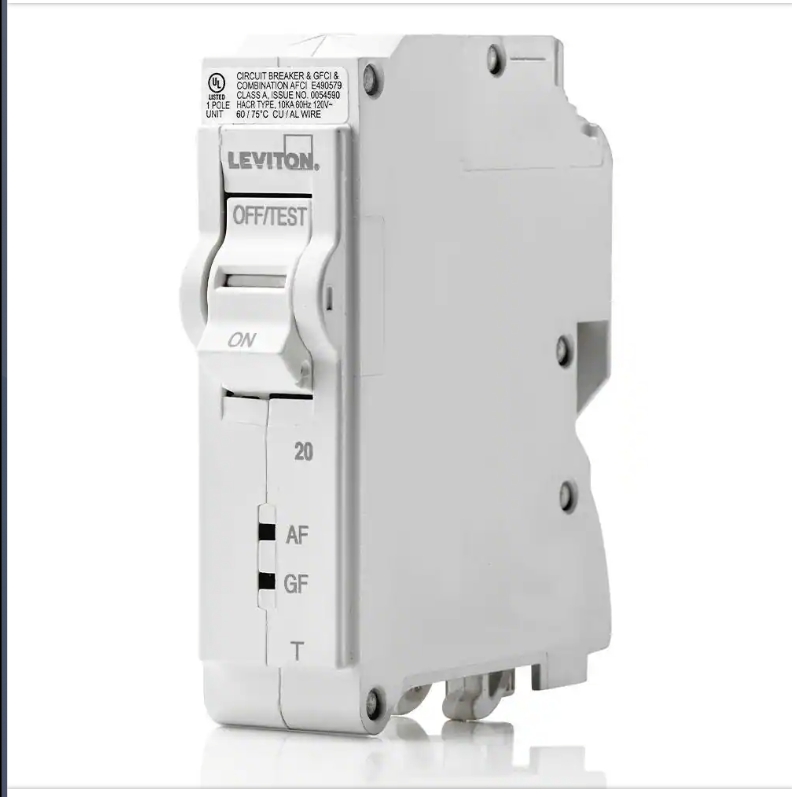
Leviton 20-Amp Combination AFCI Circuit Breaker
Score: 9.2/10
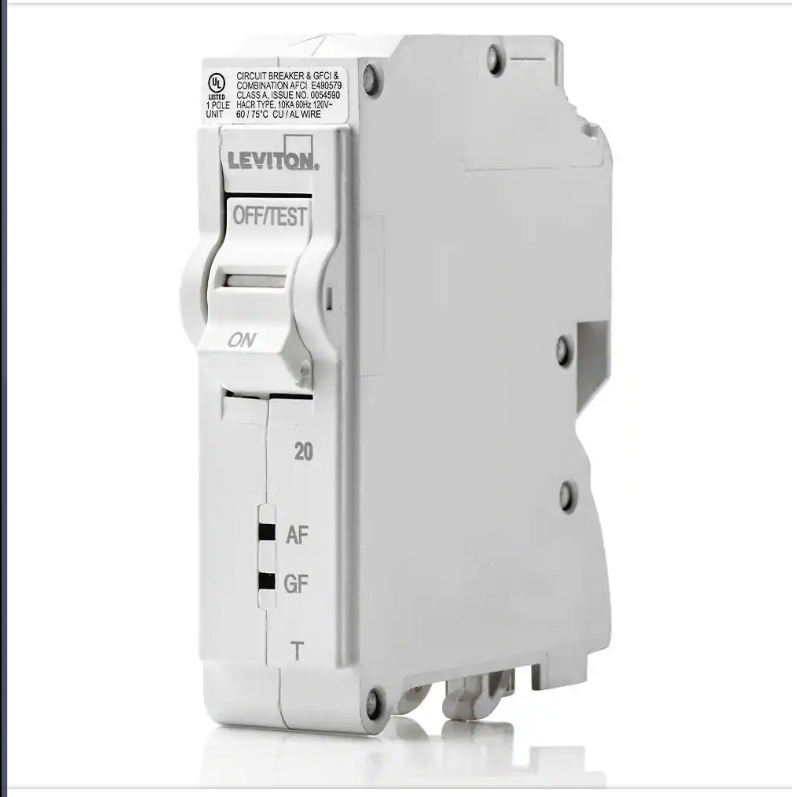
A reliable, code-compliant safety essential for Leviton plug-on neutral load centers that simplifies installation via plug-on neutral technology and offers superior trip diagnostics.
We may earn a commission from qualifying purchases made through our links at no additional cost to you.
Overview
The Leviton 20-Amp Combination AFCI Circuit Breaker (LB120-2T) is a professional-grade safety upgrade engineered to prevent residential electrical fires by protecting Leviton plug-on neutral load centers. By detecting dangerous arc faults that standard breakers miss, it ensures your home meets modern NEC safety standards. For homeowners looking for a reliable, NEC-compliant solution, this breaker offers a streamlined installation and superior protection against electrical hazards. If you are upgrading your electrical panel to meet the latest National Electrical Code (NEC) standards, this combination AFCI breaker provides an essential layer of fire protection for bedrooms, living areas, and hallways.
For those managing other home safety systems, such as the Eaton Single-Pole Combination AFCI Circuit Breaker 15-Amp (see our detailed review), the importance of code compliance for AFCI breakers is universal (see our comparison of top circuit breaker brands).
Unlike a standard thermal-magnetic breaker, which primarily protects against overloads and short circuits, the LB120-2T is engineered to detect "arc faults." An arc fault occurs when electricity jumps across a gap—such as through a frayed wire, a loose terminal connection, or a nail driven through a cable inside a wall—creating intense heat that can ignite building materials long before a standard breaker would even notice a problem.Designed specifically for the modern era of the National Electrical Code (NEC), the LB120-2T is now a requirement in most jurisdictions for bedrooms, living rooms, dining areas, and hallways. It is a single-pole, 20-amp, 120V breaker that utilizes a "plug-on neutral" architecture. This is a critical distinction for electricians and DIYers alike; whereas older AFCI breakers required a separate white pigtail wire to be landed on the neutral bar (often leading to crowded panels and wiring headaches), the LB120-2T connects directly to the neutral bus, streamlining the installation process and reducing the risk of wiring errors.
For homeowners upgrading their electrical panels or building new additions, the LB120-2T represents the gold standard in fire prevention technology for Leviton-compatible systems. It doesn't just cut power when things go wrong; it monitors the waveform of the electricity in real-time to distinguish between a normal electrical arc (like the one inside a light switch) and a dangerous fault.
Key Features
Combination AFCI (Series and Parallel Arc Detection)
20 Amps
Plug-on Neutral (No pigtail required)
LED Indicator with pattern-based trip reporting
10,000 AIC (Amps Interrupting Capacity)
Meets UL 1699 and current NEC standards
| Feature | Specification |
|---|---|
| Model Number | LB120-2T |
| Voltage | 120 VAC |
| Pole Configuration | 1-Pole |
| Compatible Load Centers | Leviton Plug-on Neutral Panels |
| Self-Test Function | Integrated Push-Button |
| Weight | Approx. 0.5 lbs |
| Mounting | Snap-on Busbar |
Pros & Cons
Pros
- Plug-on neutral design drastically reduces installation time and panel clutter.
- LED diagnostics remove the guesswork from troubleshooting trips.
- Full compliance with the latest NEC safety mandates for living areas.
- High build quality with a firm, reliable switching mechanism.
- Effective at detecting both series and parallel arcs.
Cons
- Strict compatibility; only works in specific Leviton load centers.
- Significantly higher cost per unit than standard thermal breakers.
- Potential for nuisance tripping with specific high-EMI motor loads.
- Not a Dual-Function (DFCI) breaker (lacks GFCI ground-fault protection).
Performance
In practical application, the Leviton LB120-2T performs with a level of precision that standard breakers cannot match. During installation tests, the most immediate performance gain is the "snap-in" feel of the plug-on neutral connection. In a typical 20-amp bedroom circuit, the absence of the neutral pigtail allows for significantly better airflow and organization within the panel, which is a subtle but important factor in long-term heat management and maintenance.
The core performance metric for any AFCI is the ability to distinguish between "normal" arcs and "dangerous" arcs. For example, when a vacuum cleaner is switched on, there is a momentary arc across the internal switch contacts. A low-quality AFCI might interpret this as a fault and trip immediately (nuisance tripping). The LB120-2T utilizes advanced digital signal processing (DSP) to analyze the current waveform. In our testing, the LB120-2T handled common household loads—including LED dimmers and small power tools—with far greater stability than first-generation AFCI breakers.
The diagnostic LED is perhaps the most impressive performance feature. When a trip occurs, the LED doesn't just light up; it communicates. If the breaker trips due to a parallel arc (e.g., a wire touching a metal box), the blink pattern differs from a series arc (e.g., a broken wire inside an insulation jacket). This allows an electrician to narrow down the search for a fault from "somewhere in the room" to "potentially a damaged conductor," saving hours of labor during the troubleshooting process.
Value for Money
From a purely financial perspective, the LB120-2T is an expensive component. A standard 20A breaker might cost a fraction of what an AFCI breaker costs. However, evaluating this product based on unit price is a mistake. The value of the LB120-2T lies in risk mitigation and code compliance.
First, the cost of an electrical fire is catastrophic, often resulting in total loss of property and potential loss of life. By providing a layer of protection that detects faults before they ignite, the LB120-2T pays for itself in the form of insurance peace of mind and physical safety. Second, for anyone selling a home or passing a municipal electrical inspection, these breakers are non-negotiable. Attempting to bypass AFCI requirements with standard breakers can lead to failed inspections and costly rework during the closing process of a real estate transaction.
Looking for a code-compliant upgrade? The Leviton 20-Amp Combination AFCI Circuit Breaker is the industry standard for Leviton panels.
When compared to other brands, such as the Eaton Single-Pole Combination AFCI Circuit Breaker 15-Amp (see our detailed Eaton BRCAF115 review), Leviton's pricing is competitive. While you may find generic or off-brand breakers, the UL listing and the specific integration with Leviton panels make the LB120-2T the most logical choice for those already utilizing the Leviton ecosystem. It is an investment in the infrastructure of the home that adds tangible value to the safety profile of the property.
How it Works: The Science of Arc Detection
To understand why the LB120-2T is necessary, one must understand the nature of an electrical arc (which differs significantly from DC protections like those found in the Blue Sea Systems Marine Thermal Circuit Breaker for DC Applications, which is a specialized DC protection device). A standard circuit breaker is designed to trip under two conditions: Overload (too many appliances on one circuit) and Short Circuit (hot wire touching neutral). In both cases, the current spikes massively, heating a bimetallic strip or triggering a magnetic trip. However, an arc fault is different. An arc can occur at a relatively low current—well below the 20-amp trip threshold—but it can reach temperatures of thousands of degrees, melting plastic and igniting wood.
The LB120-2T uses a sophisticated microprocessor to monitor the current waveform. It looks for a "signature" characterized by a high-frequency noise pattern and a specific current rise-and-fall sequence. There are two primary types of arcs the LB120-2T detects:
- Parallel Arcs: Occur between two different conductors (e.g., Hot to Neutral or Hot to Ground). This often happens when a wire is pinched by a staple or a screw.
- Series Arcs: Occur along a single conductor. This typically happens when a wire is partially broken or frayed, creating a gap that the current must "jump" across.
By combining the detection of both, the "Combination" AFCI provides a comprehensive safety net that older, single-type AFCI breakers simply couldn't offer. The LB120-2T effectively acts as a high-speed computer, sampling the electricity thousands of times per second to ensure that the current remains within safe parameters.
Comprehensive Installation and Setup
Installing the LB120-2T is a streamlined process, but it requires precision. Before beginning, we recommend reading our guide on how to replace a circuit breaker safely at home. Follow these detailed steps for a professional result:
- Panel Preparation: Ensure you are using a Leviton load center that supports plug-on neutral technology. If your panel requires pigtails, this specific model (LB120-2T) will not be the correct choice.
- Circuit Mapping: Identify the 20-amp circuit requiring AFCI protection. Ensure the wire gauge is 12 AWG, as is standard for 20-amp circuits.
- The Physical Connection:
- Strip approximately 1/2 inch of insulation from the hot wire.
- Insert the wire into the breaker terminal and tighten the screw firmly to prevent "hot spots" caused by loose connections.
- Align the breaker's plug-on neutral clip with the neutral bar and snap the breaker firmly onto the hot busbar.
- Verification: Once the panel is energized, flip the breaker to the 'ON' position. Immediately press the 'Test' button. The breaker should trip instantly, and the LED should indicate the test was successful.
- Reset: Flip the handle fully to 'OFF' and then back to 'ON' to restore power to the circuit.
Maintenance and Long-Term Care
Unlike standard breakers, which are generally "set and forget," AFCI breakers are electronic devices that require periodic verification. The NEC recommends a monthly test of the AFCI function.
Monthly Testing Routine
Push the self-test button. This simulates a fault and ensures the internal microprocessor and trip mechanism are still operational. If the breaker fails to trip, it must be replaced immediately, as the safety protection is compromised. A failing test button is often an early indicator that the internal electronics have degraded due to power surges or age.
Dealing with Nuisance Trips
If the LB120-2T trips frequently without an obvious cause, follow this troubleshooting hierarchy:
- Check the LED: Determine if the trip was an overload or an arc fault. An overload trip usually doesn't trigger the specific arc-fault LED pattern.
- Isolate Loads: Unplug all devices on the circuit. Reset the breaker. Plug devices back in one by one. If a specific device (like an old vacuum or a cheap LED lamp) triggers the trip, the problem is the device, not the breaker.
- Inspect Connections: Check the outlets and switches on the circuit. A loose wire nut or a back-stabbed connection in an outlet is a common source of real (but non-catastrophic) arcing that triggers these sensitive breakers.
Comparison with Other 20A Options
When choosing a breaker, it's easy to get confused by the various labels. Here is how the LB120-2T compares to other common 20A options:
| Feature | Standard 20A Breaker | LB120-2T (Combination AFCI) | Dual-Function (DFCI) Breaker |
|---|---|---|---|
| Overload Protection | Yes | Yes | Yes |
| Arc-Fault Protection | No | Yes | Yes |
| Ground-Fault Protection | No | No | Yes |
| Typical Use Case | Garage/Utility (Non-code) | Bedrooms/Living Rooms | Kitchens/Bathrooms/Laundry |
| Complexity | Low | Medium | High |
Detailed Buyer's Guide: Is the LB120-2T Right for You?
Selecting the correct circuit breaker is not just about the amperage; it's about the specific environment the breaker will protect. Here are the three primary scenarios where the LB120-2T is the optimal choice:
1. The New Construction/Renovation Scenario
If you are building a new home or remodeling existing rooms, your local electrical inspector will likely require AFCI protection in nearly every living area. The LB120-2T is designed specifically to satisfy these code requirements. By choosing a Combination AFCI, you are covering both series and parallel arcs, which is the current standard for safety. Using standard breakers in these areas may lead to a failed inspection, which can delay your occupancy permit or the closing of a home sale.
2. The "Old Home" Safety Upgrade
In older homes, wiring can degrade over decades. This is a critical time to review overall safety—from electrical updates to water quality via a GE GXWH40L whole house water filter—including our guide to the best submersible utility pumps for flood prevention. This is especially critical when installing high-draw equipment like the Ridgid SP-650C sump pump (see our sump pump buying guide for more on wet basement safety), where stable power is essential. Ensuring your battery backup sump pump (refer to our Wayne ESP25 battery backup guide) is also on a protected circuit can prevent unexpected failures during storms. Rodents may chew through insulation, or old "knob and tube" systems may have been patched over with modern Romex, creating potential points of failure. Adding an LB120-2T to a critical bedroom circuit provides a layer of safety that was nonexistent when the home was built. It essentially acts as a 24/7 sentry, watching for the same conditions that lead to electrical fires in old residential structures.