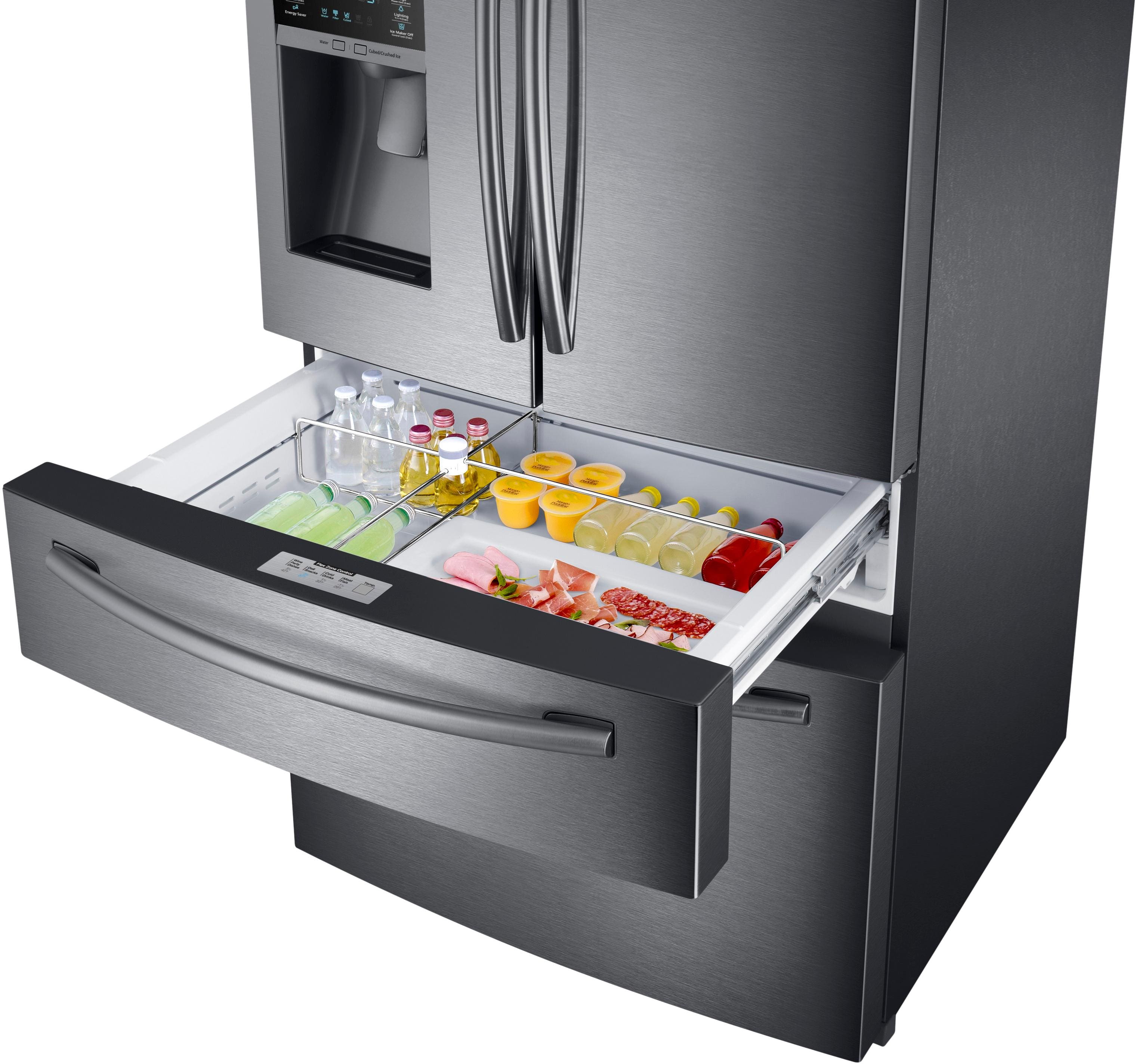
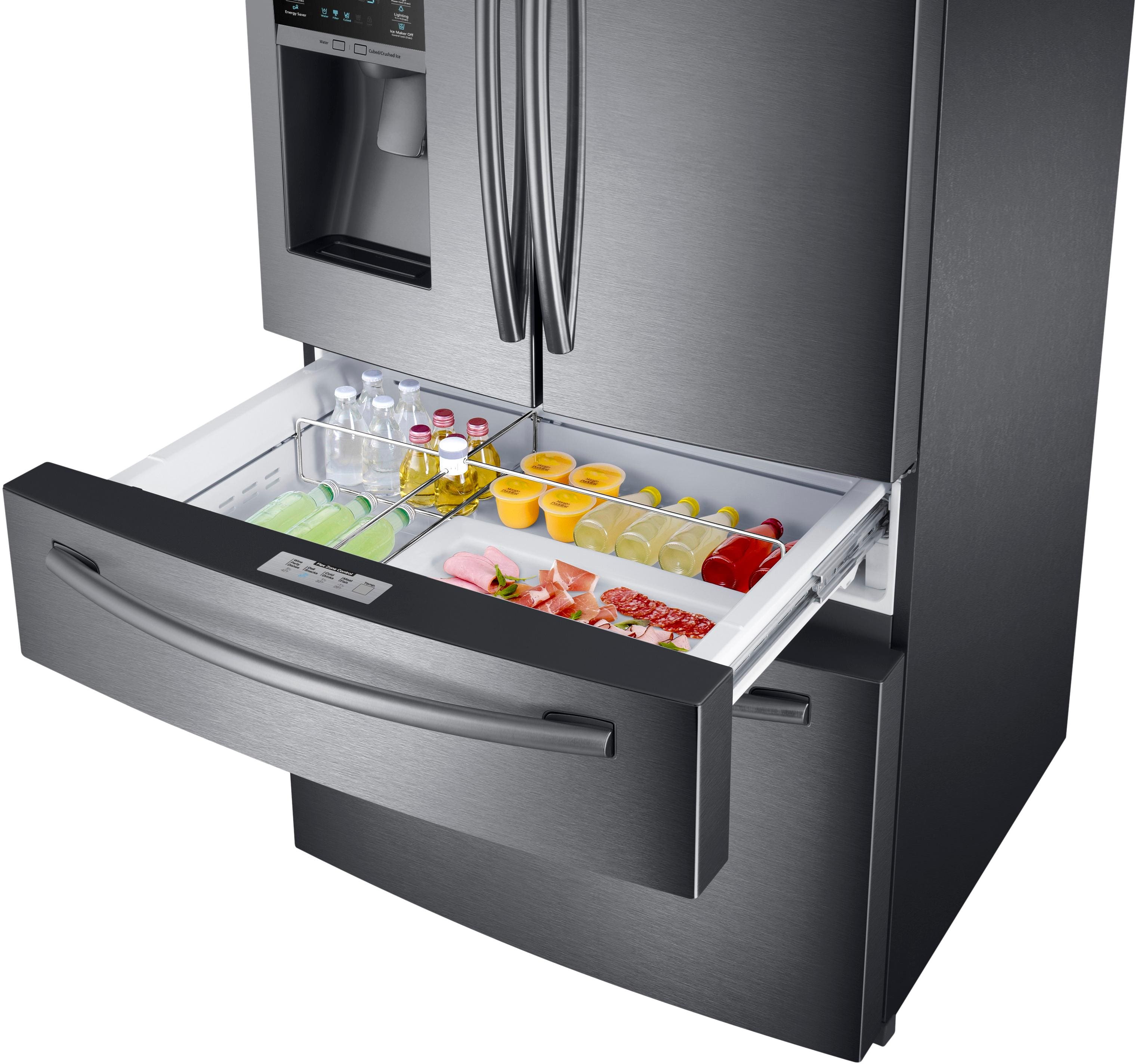
If your storage needs shift through the year — more freezer space at the holidays or more chilled drinks in summer — the Samsung 28 cu. ft. 4-Door French Door Refrigerator with FlexZone Drawer (RF28R7351SR) is a top-tier choice for those seeking a versatile, large-capacity refrigerator that adapts to changing family needs. This 28 cubic foot, 4-door French door refrigerator centers on the FlexZone drawer, a middle compartment that switches between temperature modes to handle everything from deli meats to chilled wine to frozen overflow. This guide walks through the specifications, daily-use features, installation considerations, and maintenance tips so you can decide if it fits your kitchen and lifestyle.
Top Pick: Versatile Large-Family Cooling
Samsung 28 cu. ft. 4-Door French Door Refrigerator with FlexZone Drawer
A powerhouse of storage flexibility, this model is ideal for large households that prioritize adaptable temperature zones over flashy smart-screen interfaces.
TL;DR: The Samsung RF28R7351SR provides 28 cu. ft. of space with a unique FlexZone drawer that adapts to five temperature settings. It features a clean, dispenser-free exterior, Twin Cooling Plus for humidity control, and a fingerprint-resistant finish. It is a standard-depth unit, meaning it offers maximum storage but will extend past typical kitchen counters.
Samsung 28 cu. ft. 4-Door French Door Refrigerator with FlexZone Drawer
The Samsung RF28R7351SR is engineered for the "power user" of the kitchen. Unlike standard French door models that offer a static split between fridge and freezer, this unit introduces a transitional middle zone. This design recognizes that a family's needs in July (beverages and fresh produce) are vastly different from their needs in December (frozen appetizers and holiday platters). By allowing the user to dictate the temperature of the FlexZone drawer, Samsung effectively gives you a "swing" compartment that maximizes the utility of every cubic inch.
Beyond the flexibility, the unit focuses on food preservation. Twin Cooling Plus technology operates two separate evaporators—one for the fridge and one for the freezer. In traditional single-evaporator systems, dry air from the freezer often leaks into the refrigerator, causing "freezer burn" on fresh produce or drying out deli meats. By isolating these systems, Samsung maintains a higher humidity level in the fridge, which keeps leafy greens crisp and berries fresh for significantly longer periods.
From a design perspective, the RF28R7351SR targets the minimalist. By moving the water dispenser inside the refrigerator wall, the exterior remains a seamless slab of fingerprint-resistant stainless steel. This not only creates a cleaner aesthetic but also slightly improves energy efficiency by reducing the number of thermal bridges through the door. For households with children, this also eliminates the common issue of leaking external dispensers or "play-button" accidents.
| Feature | Specification (Model RF28R7351SR) |
|---|---|
| Total Capacity | 28 cu. ft. |
| Configuration | 4-Door French Door |
| FlexZone Settings | 5 Temperature Modes |
| Width | 35 7/8 in. |
| Height | 70 1/16 in. |
| Depth (with handles) | 36 3/8 in. |
| Finish | Fingerprint-Resistant Stainless Steel |
| Cooling Technology | Twin Cooling Plus |
| Water Dispenser | Internal |
| Energy Rating | ENERGY STAR® Certified |
Strengths
- Adaptable FlexZone drawer for seasonal storage needs
- Massive 28 cu. ft. capacity for bulk shopping
- Clean, seamless exterior without external dispensers
- Twin Cooling Plus prevents produce from drying out
- Fingerprint-resistant finish reduces daily cleaning
Trade-offs
- Standard depth means it will protrude past 24" counters
- Lack of smart-screen/IoT features for tech enthusiasts
- Internal dispenser requires opening the door to fill
- Large footprint requires significant kitchen clearance
Deep Dive: How the FlexZone Technology Works
The centerpiece of the RF28R7351SR is the FlexZone drawer. To understand why this is superior to a standard deli drawer, one must look at the thermal architecture. A standard deli drawer relies on "passive cooling"—it simply exists in the coldest part of the refrigerator. The FlexZone, however, uses a dedicated cooling loop and an independent sensor. This allows the compartment to maintain a temperature distinct from the main cabin.
The Five Modes of FlexZone:
- Meat/Fish: Maintains a temperature just above freezing, ideal for proteins that need to stay very cold but cannot be frozen.
- Cold Drinks: Optimized for beverages to be "refreshingly cold" without the risk of freezing liquid.
- Deli/Snacks: A moderate setting perfect for cheeses and pre-cut vegetables.
- Freeze: Effectively extends your freezer capacity by bringing the drawer down to 0°F.
- Custom: Allows for fine-tuning based on specific ingredient requirements.
When switching modes, the refrigerator's logic board adjusts the airflow and compressor speed specifically for that zone. It is important to note that transitioning from "Freeze" back to "Deli" takes longer than the reverse, as the system must allow the insulated walls of the drawer to warm up slowly to avoid condensation buildup on the interior surfaces.
For the average user, this means the refrigerator evolves. During a Thanksgiving hosting event, the FlexZone can be set to "Freeze" to accommodate extra frozen turkeys or bulk appetizers. Once the holidays end and the focus shifts to fresh spring produce and chilled salads, a simple button press shifts the zone back to a deli setting. This removes the "Tetris" struggle of trying to fit oversized platters into a standard shelf.
Installation and Physical Integration
Installing a 28 cu. ft. unit is a significant logistical undertaking. Because this is a standard-depth model, it is designed to hold more food but takes up more floor space. Many homeowners mistake "French Door" for "Counter Depth," but the RF28R7351SR is built for maximum volume.
If you are looking for alternatives, consider the LG French Door Smart Refrigerator, the GE Profile Large Capacity French Door Refrigerator, the Frigidaire Gallery French Door Refrigerator, the Café Smart 4-Door French Door Refrigerator, or the Whirlpool 25 cu. ft. French Door Refrigerator.
Related parts & accessories
Before purchasing, you must verify your "clearance envelope."
The Door Swing Radius: Because the doors are wide, they require a full 90-degree swing to allow the interior drawers to slide out completely. If the unit is placed against a wall, the door may hit the wall before it opens far enough to let you remove the crisper bins for cleaning. We recommend at least 2-4 inches of "breathing room" on the hinge side.
Ventilation Requirements: Refrigerators dissipate heat through the back and bottom. If you slide this unit too tightly into a custom alcove, the compressor will have to work harder to shed heat, leading to higher electricity bills and a shorter lifespan for the inverter. Ensure there is at least one inch of space between the back of the fridge and the wall.
Crucial Setup Tip: After the refrigerator is moved into place, do not plug it in immediately. Depending on how it was transported (especially if it was tilted), the refrigerant oil may have migrated. Let the unit sit upright for 2 to 4 hours to allow the oil to settle back into the compressor. Plugging it in too early can cause immediate compressor failure or loud rattling noises.
Comprehensive Maintenance Guide for Longevity
To keep the RF28R7351SR running at peak efficiency for a decade or more, a proactive maintenance schedule is required, much like the routine checks we suggest for high-impact systems like a Ridgid SP-650C sump pump. This philosophy of preventative care is similar to how we recommend monitoring an A.O. Smith water heater or maintaining the components of an LG compact washer. Just as moisture control via a GE ADEL50LZ dehumidifier buying guide protects your home's air quality, regular cleaning of your refrigerator's internal fans and sensors prevents premature wear—a maintenance point we also highlight in our LG window AC review.
The Condenser Coil Cleaning
The most common cause of refrigerator failure in high-capacity units is a clogged condenser coil. These coils are located at the bottom/back of the unit and pull heat away from the coolant. Over time, pet hair, dust, and kitchen grease create a "blanket" over these coils. When this happens, the compressor must run 24/7 to keep the food cold, which eventually burns out the motor.
We recommend vacuuming the bottom rear vent every six months—similar to how you would maintain home air quality with a Filtrete MERV-12 air filter. Use a flexible duster or a vacuum hose to remove debris. This simple 10-minute task can add years to the life of your appliance. If you have pets that shed, you should increase this frequency to once every three months.
Water Filtration Management
To prevent mineral buildup from affecting your appliance, we recommend reviewing our GE GXWH40L whole house water filter guide or exploring the Culligan WH-HD200-C system to treat water at the source.
The internal water filter (HAF-QIN/EXP) does more than just improve taste; it protects the internal plumbing. This process helps prevent mineral buildup in appliance solenoids, extending the life of the internal plumbing. Mineral buildup from hard water can clog the small solenoids and valves that control water flow to the ice maker. Replace the filter every six months, regardless of whether the indicator light has triggered. If you notice a decrease in water pressure from the internal dispenser, it is a sign the filter is saturated.
Additionally, it is a good habit to flush about a gallon of water through the system after replacing a filter to clear any trapped air bubbles or carbon fines from the new filter medium. This ensures the water flow is smooth and the ice cubes are clear.
Gasket Care and Seal Integrity
The rubber seals (gaskets) on the French doors are what keep the cold air in. Over time, food spills (like honey or jam) can get into the folds of the rubber, causing it to stick or tear. Every month, wipe the gaskets with a damp cloth and mild soap. Avoid using harsh chemicals or bleach, as these can dry out the rubber and cause air leaks, which lead to frost buildup in the freezer.
A quick "dollar bill test" can help you determine if your seals are still tight. Place a dollar bill halfway in the door and close it. If the bill slides out easily with no resistance, the gasket may be losing its magnetism or shape, and the unit should be leveled or the gasket cleaned.
Daily Maintenance
Wipe spills immediately; rotate heavy items to prevent shelf bowing.
Quarterly Maintenance
Check door seals for gaps; clean the ice bucket to prevent odors.
Bi-Annual Maintenance
Replace water filter; vacuum condenser coils.
Annual Maintenance
Level the unit to ensure doors close automatically.
Comparison: Standard Depth vs. Counter Depth
One of the biggest points of confusion for buyers is whether to choose a standard-depth model like the RF28R7351SR or a more compact fit. The Bosch 800 Series 36-Inch Counter-Depth French Door Refrigerator or the KitchenAid Counter-Depth French Door Refrigerator are excellent alternatives for smaller kitchens. This decision fundamentally changes the utility of your kitchen and the amount of food you can store.
| Feature | Standard Depth (RF28R7351SR) | Counter Depth Models |
|---|---|---|
| Storage Volume | Maximum (28 cu. ft.) | Reduced (Typically 20-24 cu. ft.) |
| Kitchen Layout | Protrudes into walkway | Sits flush with cabinets |
| Grocery Capacity | Ideal for Costco/Bulk shopping | Better for frequent, smaller trips |
| Aesthetic | Functional/Traditional | Modern/Built-in look |
| Energy Efficiency | Slightly lower (more air to cool) | Slightly higher (smaller volume) |
Common Pitfalls and How to Avoid Them
While the RF28R7351SR is a robust machine, users often encounter "phantom" problems that are actually the result of improper usage. Understanding these can save you a costly service call.
The "Frosting" Issue
Some users report frost buildup in the freezer or the FlexZone drawer. This is rarely a mechanical failure and almost always a result of "air leakage." If a door is left slightly ajar, or if a large item (like a frozen pizza box) is preventing the seal from closing fully, warm moist air enters the unit. This moisture flash-freezes onto the coils and walls.
To prevent this, always ensure that no items are protruding past the shelf edge and that the refrigerator is perfectly level. A slight backward tilt helps the doors swing shut naturally via gravity.
Ice Maker "Clumping"
In larg