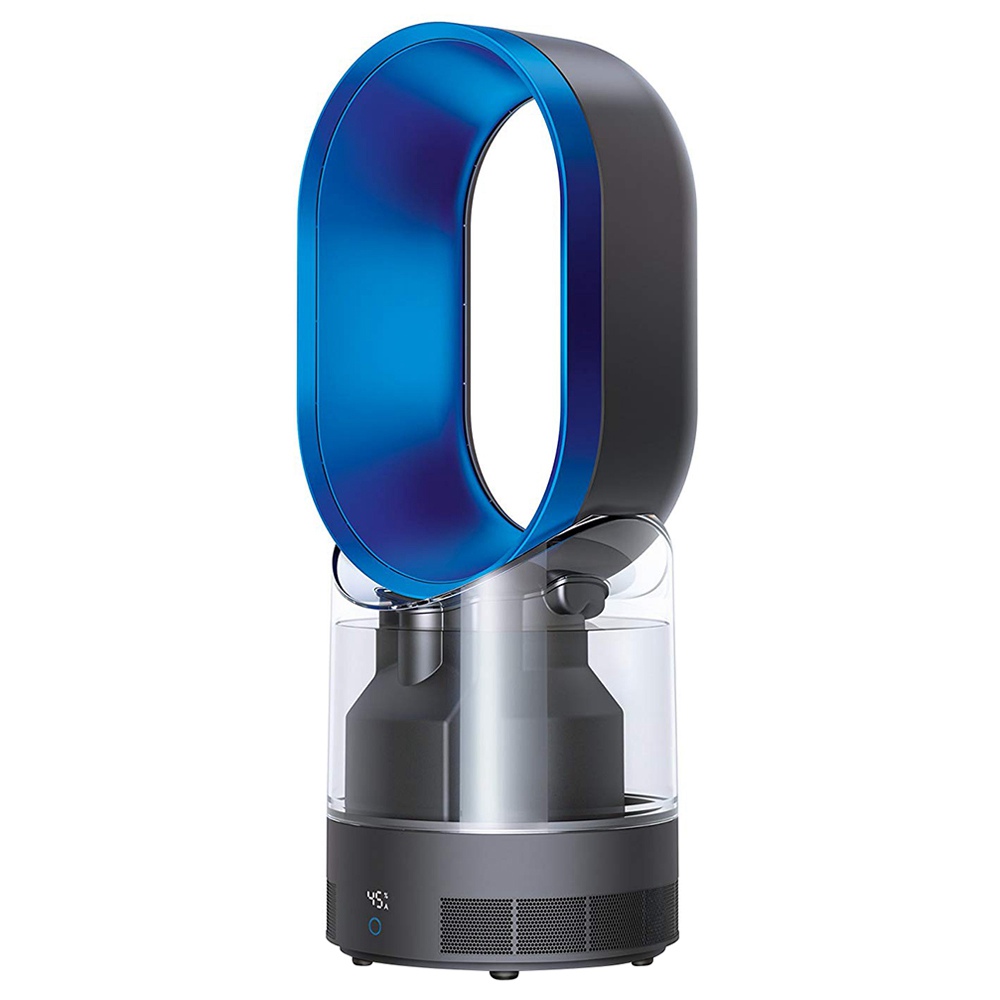
The Dyson AM10 occupies a unique space in home climate control: it's not merely a humidifier, nor just a fan, but a hybrid appliance engineered to solve the persistent shortcomings of both categories. Most humidifiers create localized damp zones that breed bacteria and leave mineral residue; most fans simply chop air with blades. The Dyson Humidifier and Cool Fan with UV Cleanse Technology uses ultraviolet-C light to sterilize water before it becomes mist, then projects that mist through Dyson's bladeless Air Multiplier loop for even, room-scale distribution.
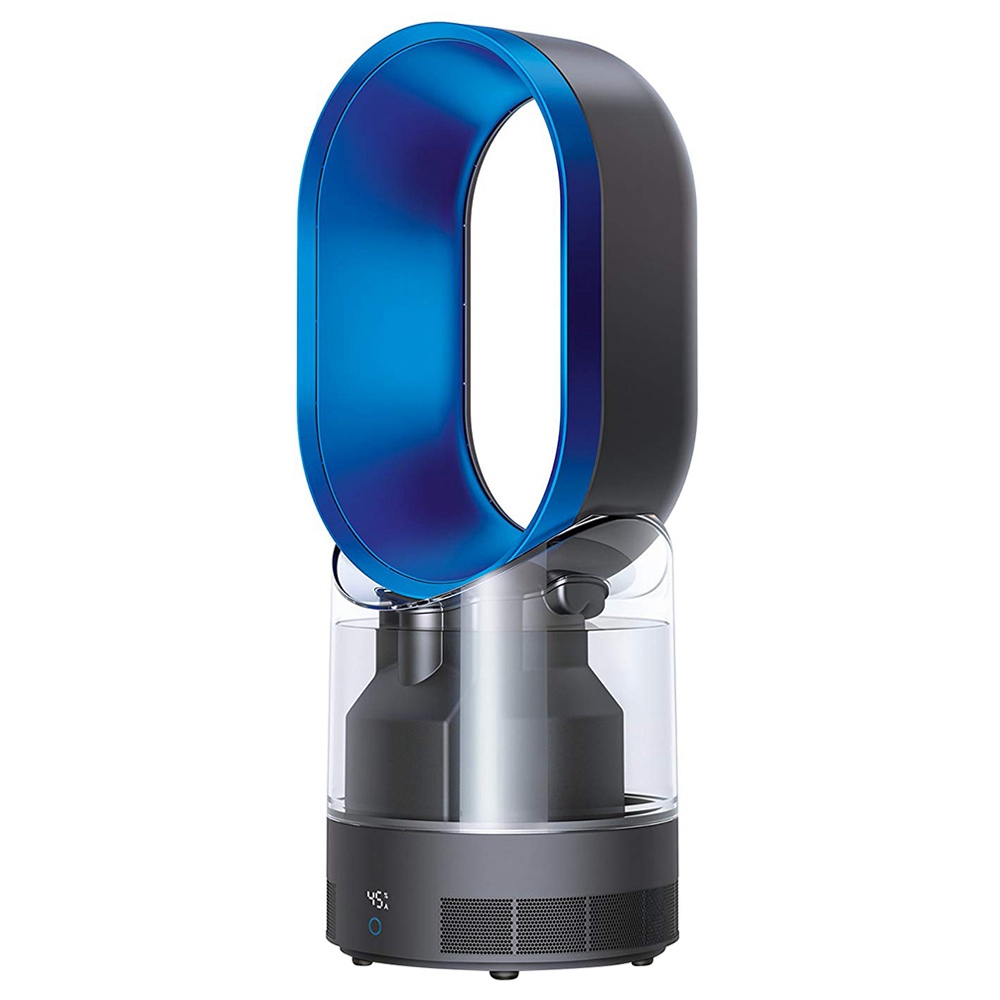
Top Pick: Dyson Humidifier and Cool Fan with UV Cleanse Technology
The AM10 remains the cleanest implementation of ultrasonic humidification paired with bladeless airflow. Its UV-C kill chamber addresses the hygiene flaw inherent to ultrasonic tech, while Air Multiplier projection eliminates the damp-zone problem. It runs quietly, doubles as a summer fan, and demands less daily fuss than evaporative alternatives like the Aprilaire Whole-Home Bypass Humidifier.
Related parts & accessories
The AM10 is best for bedrooms and living rooms up to 400 square feet where hygiene, quiet operation, and year-round utility matter more than raw tank capacity. For homeowners looking at whole-home ventilation improvements, a Panasonic WhisperGreen Select guide can provide insight into managing air exchange.
For those looking for permanent heating and cooling solutions, our MrCool DIY-24-HP-WIF115 buying guide offers a comprehensive look at HVAC alternatives, which can be more energy-efficient than standalone units.TL;DR
- What it is: 2-in-1 ultrasonic humidifier and bladeless cooling fan with UV-C water sterilization
- Best for: Dry-climate bedrooms, nurseries, heated winter homes, allergy and eczema sufferers
- Tank capacity: 3 liters (up to 18 hours on lowest setting)
- Coverage: Rooms up to ~400 sq ft
- Key differentiator: UV-C kills 99.9% of bacteria in water; Air Multiplier projects mist evenly
- Maintenance: Monthly citric acid deep-clean cycle; distilled water strongly recommended
- Status: Discontinued but widely available refurbished/resale; parts still supported
- Trade-offs: Premium price, modest tank vs. 6L competitors, no HEPA filtration, no app on base model.
For a modern alternative with app support, consider the Dreo Smart Humidifier, or explore options like the Levoit Classic 300S or the Levoit Large-Room Warm and Cool Mist Ultrasonic Humidifier for larger spaces.
Dyson Humidifier and Cool Fan with UV Cleanse Technology
The Dyson AM10 launched in 2015 as the company's first dedicated humidifier, bringing its signature Air Multiplier bladeless fan technology to the humidity category. The core premise was simple but radical: ultrasonic humidifiers are effective at adding moisture but notoriously unhygienic, while evaporative humidifiers are cleaner but slower, noisier, and require filter replacements. Dyson's answer was to keep ultrasonic's fine-mist advantage but insert a UV-C sterilization chamber before the transducer, then project the resulting sterile mist through the same loop amplifier used in their premium fans.
The result is a machine that doesn't look like a humidifier. The base is a squat cylinder housing the impeller, UV chamber, transducer, water reservoir interface, and control electronics. The loop amplifier — a 222 mm diameter ring — sits atop the base and contains no moving parts; it's purely an aerodynamic structure that accelerates and projects air. The water tank is a 3-liter translucent container that drops vertically into the base, sealed by a quarter-turn cap with an integrated O-ring. A credit-card-thin magnetic remote stores on the loop's upper curve and controls every function via infrared.
Three finish combinations were produced: White/Silver (most common), Iron/Blue (limited), and Black/Nickel (limited). All share identical internals. The AM10 was succeeded by the PH01/02/03 series (Humidify+Cool Formaldehyde), which added HEPA filtration, formaldehyde destruction, and Dyson Link app connectivity — but at significantly higher price points and with more complex maintenance.
The AM10 remains the purest expression of the humidifier-fan hybrid concept.
Looking for the cleanest air possible? Get the Dyson Humidifier and Cool Fan with UV Cleanse Technology for optimized bedroom air.
For those also concerned with air purity, we recommend reviewing our Filtrete MERV-12 air filter review to ensure your HVAC system is complementing your room-scale air quality.How the Technology Works
To understand why the AM10 behaves differently from every other humidifier on the market, you have to look at the water path from tank to air. Most ultrasonic humidifiers work like this: a piezoelectric transducer vibrates at ultrasonic frequency (typically 1.7 MHz), shattering water into micron-scale droplets that a small internal fan blows upward. The mist rises, cools, and settles — usually within a meter or two of the unit. This creates a damp microclimate around the humidifier: wet floors, condensation on nearby surfaces, and a breeding ground for mold and bacteria in the tank and on the transducer itself. (If you're fighting excessive moisture in other areas—perhaps necessitating a Ridgid SP-650C sump pump—see our GE ADEL50LZ dehumidifier buying guide or read our GE ADEL50LZ review. Managing both humidity and dehumidification, and perhaps auditing your broader filtration with a Filtrete MERV-12 air filter, is key to a healthy home environment.).
The AM10 inserts two critical interventions into that chain. First, before water reaches the transducer, it flows through a sealed UV-C exposure chamber. Ultraviolet-C light (wavelength 254 nanometers) is germicidal: it penetrates microbial cell walls and damages DNA, preventing reproduction. Dyson's chamber is designed so that every milliliter of water passes within millimeters of the UV emitter, receiving a calculated dose sufficient to kill 99.9% of bacteria, viruses, and mold spores. This is not the same as the UV lights found in some units, such as the Honeywell Germ-Free Cool Mist Humidifier with UV Technology, which often only irradiate surfaces the light directly hits. The AM10's flow-through chamber ensures total water volume treatment.
Second, the sterile mist doesn't exit through a simple vent. It's channeled into the base of the Air Multiplier loop amplifier. Inside the loop, a mixed-flow impeller (derived from Dyson's bladeless fan lineage) draws air through the base at up to 30 liters per second. The mist entrains into this high-velocity airstream, which accelerates through a 1.3 mm annular aperture around the loop, creating a low-pressure zone that pulls surrounding room air along with it — the Coandă effect. The result: a smooth, high-velocity sheet of humidified air that travels meters across the room rather than pooling at your feet.
This projection capability fundamentally changes placement flexibility. You don't need the AM10 on a nightstand next to your head. It can sit in a corner, on a dresser, or even on the floor (on hardwood — not deep carpet) and still raise humidity uniformly across a 15×20 foot bedroom. The loop also oscillates 90 degrees side-to-side, sweeping the humidity plume across an even wider arc.
Critically, the humidification and fan functions are mechanically independent. The impeller runs whether the transducer is active or not. In summer, you disable humidification entirely and the AM10 becomes a premium bladeless desk/floor fan with 10 speed settings, sleep timer, and oscillation. In winter, you run both. In shoulder seasons, you might run the fan on low with humidification on auto. This dual-mode utility is rare — most humidifier-fan combos are compromises that do neither well. If you only need simple humidification without the fan projection, units like the Pure Enrichment MistAire Ultrasonic Cool Mist Humidifier or the Vicks Warm Mist Humidifier with Medicine Cup are reliable, budget-friendly choices.
The UV-C Chamber in Detail
The UV-C chamber is a precision-molded quartz glass tube that wraps around a low-pressure mercury vapor lamp. Water enters at the bottom, spirals upward in a helical path around the lamp (maximizing dwell time and proximity), and exits at the top directly into the transducer cup. The lamp is rated for approximately 9,000 hours of continuous operation — roughly 375 days of 24/7 runtime — though in typical intermittent use it lasts years. The chamber has no user-serviceable parts; if the lamp fails, the base unit requires service. A photodiode monitors UV output and will disable humidification if intensity drops below the germicidal threshold,
preventing unsterilized mist from being released.
Piezoelectric Transducer and Mist Generation
The transducer is a 1.7 MHz piezoelectric ceramic disc bonded to a metal diaphragm. When driven by the base's oscillator circuit, it vibrates longitudinally, creating standing pressure waves in the water above it. At the wave crests, cavitation occurs: microscopic bubbles form and collapse, ejecting droplets of 1–5 microns diameter. This is the same principle used in medical nebulizers. The droplets are small enough to remain suspended in the airstream rather than falling as visible fog. The transducer cup has a float sensor that cuts power if water level drops too low, preventing dry-fire damage.
Air Multiplier Loop Aerodynamics
The loop amplifier is not merely a ring — it's an airfoil cross-section. Air enters the base, passes through the mixed-flow impeller (9 asymmetric blades, 2,800 RPM max), and is forced into the loop's annular plenum. The 1.3 mm aperture accelerates the air to roughly 55 mph at the exit lip. This high-velocity sheet attaches to the inner surface of the airfoil (Coandă effect) and entrains surrounding air at a ratio of roughly 15:1. For the AM10, this means the 30 L/sec primary flow becomes ~450 L/sec of projected airflow at the loop exit. The mist, being lighter than air, stays entrained in this sheet and travels with it.
Key Specifications
| Specification | Detail |
|---|---|
| Model Number | AM10 |
| Product Category | Hybrid Ultrasonic Humidifier / Bladeless Fan |
| Humidification Technology | Ultrasonic piezoelectric transducer (1.7 MHz) with UV-C pre-sterilization |
| UV-C Wavelength | 254 nm (germicidal) |
| Claimed Bacterial Reduction | 99.9% in water before aerosolization |
| Water Tank Capacity | 3.0 liters (0.79 US gallons) |
| Maximum Run Time | Up to 18 hours (lowest humidification + fan setting) |
| Typical Run Time (Auto Mode) | 10–14 hours depending on target humidity and room conditions |
| Recommended Room Coverage | Up to 400 sq ft (37 m²) |
| Fan Technology | Air Multiplier (mixed-flow impeller, bladeless loop amplifier) |
| Airflow Settings | 10 discrete speeds |
| Maximum Airflow | ~30 L/sec (approx. 64 CFM) |
| Oscillation | Motorized, ~90° side-to-side |
| Controls | Magnetic infrared remote (stores on loop), onboard power/humidity buttons |
| Display | LCD on remote shows target humidity, current humidity, fan speed, mode, timer |
| Climate Control (Auto) Mode | Yes — maintains target RH 30–70% in 5% increments |
| Sleep Timer | 15 min to 9 hours in 15/30/60 min increments |
| Deep Clean Cycle | Built-in program (citric acid solution, ~20 min cycle) |
| Power Consumption (Humidifying) | ~40 W typical, up to 60 W max |
| Power Consumption (Fan Only) | ~5 W (low) to 40 W (high) |
| Operating Voltage | 120 V / 60 Hz (North America model) |
| Sound Level (Low) | ~28 dB(A) at 1m |
| Sound Level (High) | ~55 dB(A) at 1m |
| Dimensions (H × W × D) | 24.6 × 8.7 × 8.7 in (625 × 222 × 222 mm) |
| Weight (Empty) | 7.9 lb (3.6 kg) |
| Weight (Full Tank) | ~14.5 lb (6.6 kg) |
| Finish Options | White/Silver, Iron/Blue (limited), Black/Nickel (limited) |
| Warranty | 2 years parts & labor (Dyson direct); varies by retailer |
| Certifications | ETL/UL, FCC, CE (varies by region) |
| Replacement Parts Available | Water tank, tank cap/seal, loop amplifier, remote, base gasket |
| Smart/App Connectivity | No (base AM10); Dyson Link app support added only on later PH-series |
| Air Purification | No HEPA or carbon filtration |
Setup & First Use — Step by Step
Unboxing the AM10 reveals a deceptively simple assembly: the base (containing impeller, UV chamber, transducer, and electronics), the loop amplifier (the ring), the