This site earns a commission from qualifying purchases made through affiliate links on this page. Our editorial opinions are independent and not influenced by commercial relationships.
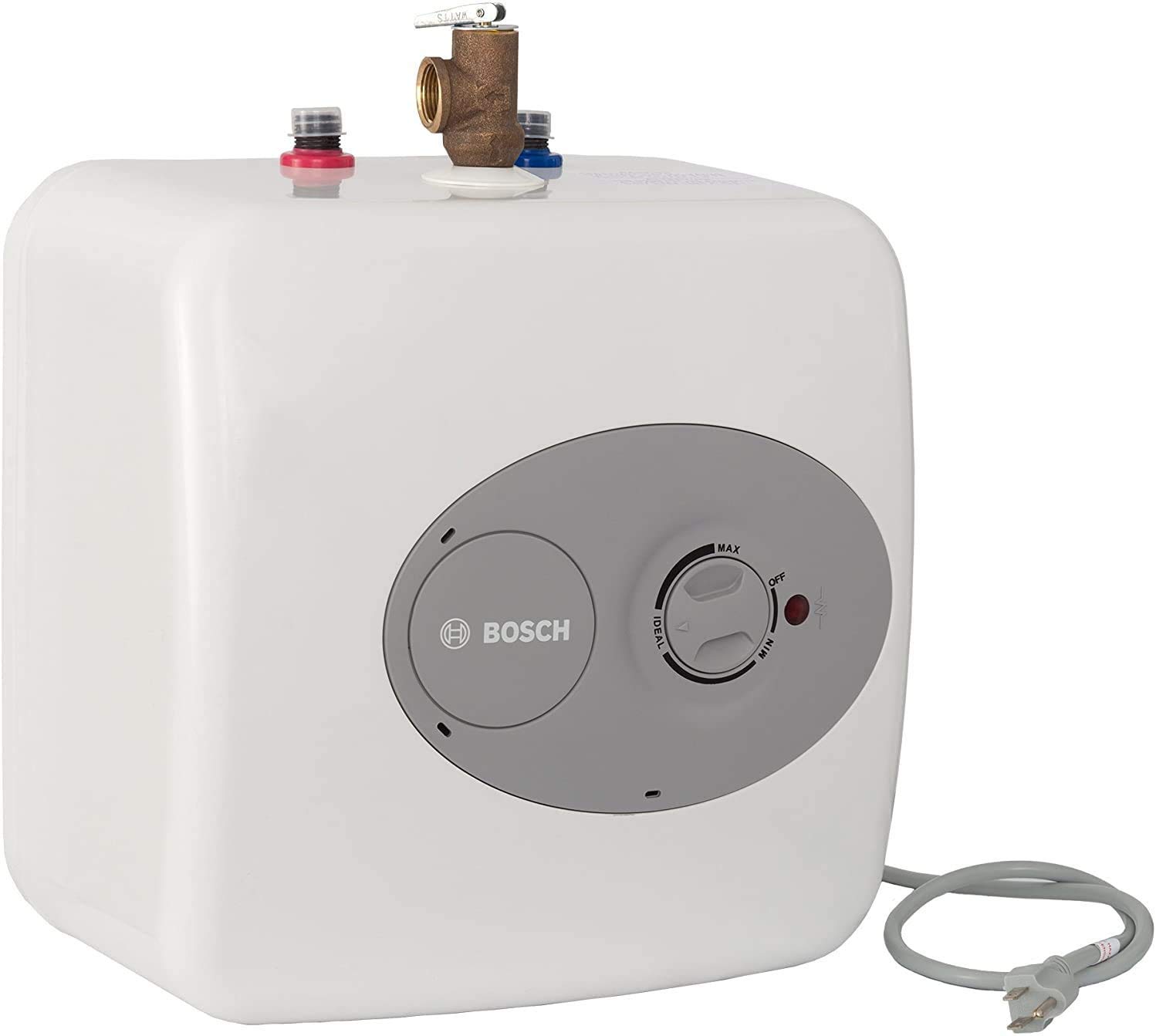
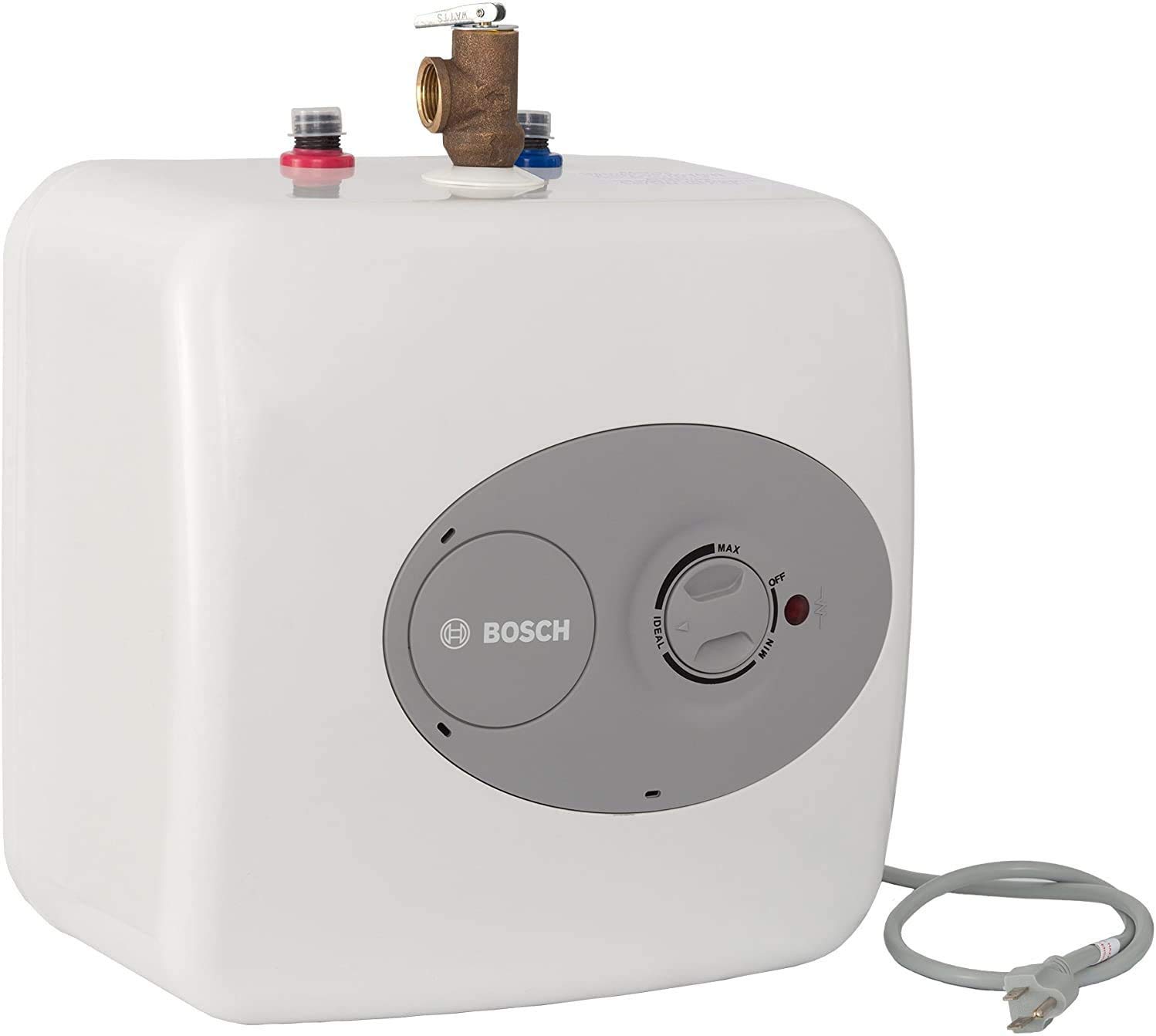
Bosch Tronic 3000 T Review
A compact, efficient point-of-use water heater earning 8.2/10 — standout value for its 120V simplicity, 0.93 energy factor, and flexible mounting, with the expected trade-offs of a 7-gallon capacity and modest recovery rate.
Overview
The Bosch Electric Mini-Tank Water Heater Tronic 3000 T is a high-efficiency point-of-use storage unit designed to eliminate the frustrating wait for hot water at remote fixtures—making it an ideal upgrade for those looking to improve their modern bath configuration (consider pairing it with a high-efficiency faucet like the Pfister Stellen LG529-STGS). For homeowners looking to stop wasting water and time, this compact solution provides immediate hot water delivery without the need for expensive electrical upgrades.
Rather than replacing your home's central water heater, it works alongside it — installed directly under a sink, in a cabinet, or tucked into a utility closet close to wherever hot water is needed most. That targeted approach means you get near-instant delivery without gallons of cold water running down the drain first.
This unit is ideally suited for homeowners dealing with a long pipe run from the main water heater to a distant bathroom, kitchen, or laundry room. It's also a practical solution for garages, workshops, home bars, and accessory dwelling units (often paired with compact appliances like the LG compact washer) where running a full hot-water line isn't cost-effective. At 7 gallons, it holds enough reserve for hand-washing, light dishwashing, and general daily use at a single fixture or small cluster of fixtures without demanding a dedicated 240-volt circuit — it runs on standard 120-volt household current.
Bosch (known for their high-efficiency mini-split heat pumps and HVAC systems) have a decades-long reputation in the water heating segment, and the Tronic 3000 T reflects that heritage with a glass-lined tank, a multi-position design that can mount vertically or horizontally, and a straightforward dial thermostat. It isn't loaded with smart-home connectivity or flashy features, but that simplicity is part of the appeal — it just works, and it works consistently.
Key Features
Installs directly under a sink or next to a fixture to eliminate long cold-water wait times and reduce water waste at remote locations.
Can be installed vertically (inlet on top or bottom) or horizontally, giving you genuine flexibility in tight or oddly shaped installation spaces.
Plugs into a standard household outlet — no electrician required for most installations, dramatically lowering setup costs compared to 240-volt alternatives.
Bosch's proprietary glass lining resists corrosion and scale buildup, extending tank life and protecting water quality over years of daily use.
A dial thermostat lets you set your preferred water temperature, with a range that supports both energy-saving lower settings and higher-output needs.
An included magnesium anode rod provides an additional layer of anti-corrosion protection, helping the tank meet and maintain its rated service life.
| Feature | Value |
|---|---|
| Tank Capacity | 7 Gallons (26.5 L) |
| Power Source | Electric (120V / 60 Hz) |
| Wattage | 1,440 Watts |
| Amperage Draw | 12 Amps |
| Circuit Requirement | Standard 120V household outlet (15A circuit recommended) |
| First-Hour Rating | Approx. 7 gallons (tank capacity based) |
| Recovery Rate | Approx. 7–9 gallons/hour at 90°F rise |
| Temperature Range | Up to 140°F (60°C) |
| Mounting Options | Vertical (top or bottom inlet) / Horizontal |
| Inlet/Outlet Connection | 3/4-inch NPT |
| Tank Lining | Glass-lined steel |
| Anode Rod Material | Magnesium |
| Energy Factor (EF) | 0.93 |
| Unit Dimensions (H × W × D) | Approx. 22.5 × 15.2 × 15.2 inches |
| Unit Weight (Empty) | Approx. 26 lbs (11.8 kg) |
| Warranty (Tank) | 6 Years |
| Warranty (Parts) | 2 Years |
| Certifications | UL Listed, Energy Star Eligible |
Pros & Cons
Pros
- Runs on 120V — no rewiring or electrician required for most homes
- Flexible multi-position mounting suits tight under-sink spaces
- High 0.93 energy factor keeps operating costs low
- Glass-lined tank with magnesium anode rod for long-term durability
- Industry-leading durability: Solid 6-year tank warranty from a reputable brand
- Noticeably reduces cold-water wait time at remote fixtures
- Compact footprint fits in most under-sink cabinets
- Simple installation accessible to confident DIYers
Cons
- 7-gallon capacity is limiting if multiple fixtures draw simultaneously
- Recovery rate is slower than 240V point-of-use units
- No digital display or smart-home connectivity
- Dial thermostat lacks precision temperature control
- Not a replacement for a whole-home water heater
- Can be bulky for the smallest under-sink configurations
Performance
In everyday use, the Bosch Tronic 3000 T does exactly what it promises. In a representative scenario — picture a bathroom sink with roughly 35 feet of pipe separating it from a central tank water heater — users commonly report the difference in hot-water wait time as dramatic: from well over a minute of running water to under five seconds. For hand-washing and face-washing routines, that's a genuine quality-of-life improvement that's easy to take for granted once you're accustomed to it.
The 7-gallon reserve handles a short shower at a remote bathroom fixture without issue when the unit is paired with the main water heater — think of it as a buffer that pre-heats the water waiting in the pipe rather than a standalone solution for full showers. For its intended use case — supplemental hot water at a single sink or small dishwasher — it rarely runs short. Where it does hit a wall is during back-to-back high-volume draws: filling a large pot from a kitchen sink or running a dishwasher while someone washes hands simultaneously will deplete the stored hot water faster than the 1,440W element can recover it.
Recovery is steady but not quick. At a 90°F temperature rise, expect roughly seven to nine gallons per hour — meaning after a full depletion you're waiting roughly 47–60 minutes for a full tank of hot water. In practice, light daily use rarely drains the tank completely, so recovery happens gradually and invisibly throughout the day. The thermostat, while basic, holds temperature reliably once set; there's no noticeable temperature spiking or inconsistent output during normal use. Noise is virtually nonexistent — just a faint hum from the heating element that you'd never notice unless you were actively listening for it.
How It Works: The Science of Point-of-Use Heating
To understand why the Bosch Tronic 3000 T is effective, one must understand the concept of "dead legs" in home plumbing. A dead leg is the section of pipe between the main water heater and the faucet. When you turn on the hot water, you must first flush out all the cold water that has been sitting in that pipe. In large homes or older structures, this can result in several gallons of wasted water and minutes of waiting.
The Tronic 3000 T operates as a localized storage buffer. For those optimizing their basement utilities, pairing efficient heating with a reliable Ridgid SP-650C sump pump (see our sump pump buying guide) ensures overall home system reliability (similar to how a battery backup sump pump protects your basement from unexpected failures). By installing the 7-gallon tank inches away from the faucet, the "dead leg" is virtually eliminated. The unit keeps a small volume of water at a precise temperature using a resistive heating element. When you open the tap, the hot water is already there. Because it is a storage tank rather than a tankless-on-demand unit, it doesn't require the massive electrical surge (often 240V/30A+) that tankless units need to flash-heat water instantly. Instead, it uses a modest 1,440W element to maintain the temperature of the 7 gallons of water, making it compatible with standard 120V home circuitry.
The efficiency of this system is further enhanced by the 0.93 energy factor. This means that very little heat escapes through the walls of the tank (standby loss). High-density insulation ensures that the element only kicks in when the water temperature drops below the threshold set on the dial thermostat, preventing the unit from constantly drawing power. This is a critical distinction from older, poorly insulated mini-tanks that act like "electric radiators" in your cabinet, wasting energy and heating up the surrounding air.
Furthermore, the glass-lining process creates a fused enamel layer that prevents the steel tank from interacting with the water. Without this, the oxidation process would rapidly corrode the tank from the inside out. The magnesium anode rod serves as a "sacrificial" element; it is more chemically active than the steel of the tank, meaning it corrodes first, effectively pulling the oxidative stress away from the tank walls. This dual-layer protection is what allows Bosch to offer a 6-year warranty on a compact unit.
Detailed Buyer's Guide: Is This the Right Size for You?
Choosing between a 4-gallon, 7-gallon, or larger point-of-use heater depends entirely on your specific usage patterns. The Bosch Tronic 3000 T occupies the "middle ground" and is generally the safest bet for most homeowners.
When to Choose 7 Gallons (The Tronic 3000 T)
The 7-gallon capacity is ideal if you are servicing a sink where you might perform slightly more intensive tasks than just hand-washing. For example, if you are installing this under a kitchen prep sink where you might rinse several dishes or fill a small pot, the extra capacity over a 4-gallon model prevents the water from turning lukewarm mid-task. It is also the preferred choice for garage workshops where you might be cleaning greasy tools or parts, requiring a more sustained flow of hot water. If the sink is shared by two people in a guest suite, 7 gallons provides enough buffer for two consecutive face-washes without waiting for a recovery cycle.
When to Downsize to 4 Gallons
If you are installing the unit in a very cramped powder room or a small vanity where the only use is occasional hand-washing, If space is at a premium, the Bosch Tronic 3000T 4-Gallon Mini-Tank is often sufficient and saves valuable cabinet real estate. If the physical dimensions of the 22.5-inch height of the Bosch Tronic 3000 T are too tall for your cabinet, a smaller model is the only alternative. In high-density urban apartments where every single inch of under-sink space is dedicated to cleaning supplies, the smaller footprint of a 4-gallon unit is a decisive advantage.
When to Upgrade to Tankless or 240V Units
If your goal is to provide hot water for a full shower or a high-capacity bathtub in a remote wing of the house, 7 gallons will not be enough—you may need a higher-capacity solution. If you are considering a standard tank, check out our A.O. Smith EES-40 review for a full-sized capacity comparison.
If you need more capacity, consider a high-efficiency full-sized unit like the A.O. Smith 40-Gallon Tall Electric Water Heater or a hybrid model like the Bradford White AeroTherm 50-Gallon Hybrid Heat Pump Water Heater.
In those cases, you would need either a much larger storage tank or a high-kilowatt tankless unit. However, be aware that those options almost always require a dedicated 240V circuit, which can add $500–$1,500 to your installation cost for electrical panel upgrades and wiring. Additionally, tankless units have a "startup lag" (the time it takes to heat the water passing through the heat exchanger) that mini-tanks do not have, meaning the Tronic 3000 T actually provides faster immediate heat for small volumes of water.Setup and Installation Deep Dive
The Bosch Tronic 3000 T is designed for "plug-and-play" simplicity, but "play" still involves some plumbing. Here is a detailed breakdown of the installation process and potential pitfalls.
Electrical Requirements
The unit requires a 120V, 60Hz power source. While it can run on a 15-amp circuit, it is highly recommended that the circuit is not overloaded with other high-draw appliances (like a space heater or a microwave) because the 1,440W draw is significant during the initial heating phase. If you notice your circuit breaker tripping, you may need a dedicated line for the water heater. Ensure your outlet is GFCI-protected, especially in bathrooms or kitchens, as this is a critical safety requirement for any appliance in contact with water.
Plumbing Integration
The unit features 3/4-inch NPT connections. Most home plumbing uses 1/2-inch or 3/8-inch lines, meaning you will need a set of adapters (bushings) to transition the pipe size (check out our SharkBite U008LFA 1/2-Inch Coupling guide for fitting options). A common installation mistake is neglecting the installation of a shut-off valve (see our Watts LFA-3/4 shut-off valve review) immediately before the unit. If the tank ever leaks or needs maintenance, you do not want to have to shut off the water to the entire house just to service one mini-tank.
Regarding the mounting, the "multi-position" claim is accurate. Whether you mount it vertically or horizontally, you must ensure the temperature and pressure relief valve (T&P valve) remains accessible. (If you're upgrading your entire fixture, consider the Delta Essa 14453LF-SS, the Pfister Stellen, or the classic